Making retirement meaningful: 11 ways the 1,000-hour rule can help
During our careers, we’re surrounded by messages about grinding toward mastery, often framed around the 10,000-hour idea popularized by Malcolm Gladwell in Outliers. That standard makes sense in competitive, early-career years. It makes less sense later on.
Psychologist Raymond Cattell distinguished between fluid intelligence, the quick problem-solving ability common in youth, and crystallized intelligence, the judgment built over decades.
Retirement is less about logging another 10,000 hours and more about investing a focused 1,000 hours each year in what truly matters, using experience with intention rather than chasing peak output.
Finding Purpose Through Structured Time

When the alarm clock ceases to dictate the day’s rhythm, many individuals fall into what sociologists call the Roleless Role. This phenomenon, popularized by researcher Ernest Burgess in 1960, describes a period where society offers no clear expectations or duties for the elderly, leading to a profound sense of drift.
By committing to roughly twenty hours a week of intentional activity, a retiree fills the five-year danger zone, following their departure from the workforce with 5,000 hours of deliberate practice.
In the book Flow: The Psychology of Optimal Experience, Mihaly Csikszentmihalyi argues that the happiest people are those who lose themselves in autotelic activities, tasks that are worth doing for their own sake. Without a plan, the default state of the human mind is entropy.
Skill Acquisition as a Mental Anchor

In the realm of cognitive science, the concept of Neuroplasticity suggests that the brain remains capable of forming new neural pathways well into old age, provided it is stimulated correctly. A study by Denise Park et al. demonstrated that seniors who learned high-challenge skills, such as digital photography or quilting, showed significant improvements in memory compared to those who engaged in social activities or easy puzzles.
True expertise requires focused, repetitive effort. For a retiree, aiming for 1,000 hours in a single year, roughly 19 hours a week, allows for the achievement of competent proficiency. This level of mastery is high enough to provide a sense of accomplishment but low enough to be reachable within a manageable timeframe.
It provides a reason to wake up, a set of problems to solve, and a visible trajectory of growth.
The Value of Consistent Social Ties

Loneliness in the later stages of life is often described as a silent epidemic, yet the solution is frequently oversimplified.
According to the Harvard Study of Adult Development, which has tracked the lives of 724 men for over 80 years, the single most important predictor of health and happiness is the quality of our relationships. Dr. Robert Waldinger, the director of the study, emphasizes that it isn’t the number of friends you have that matters, but the depth of those connections.
This could involve joining a dedicated volunteer group, a specialized club, or a collaborative project. As people age and perceive their time as limited, they become more selective about their social partners, prioritizing emotional depth over networking.
This rule ensures that these relationships have the time to flourish into something substantial.
Physical Health and the Longevity Dividend

Longevity Dividend is a term coined by S. Jay Olshansky to describe the social and economic benefits of extending the healthy lifespan of the population. Applying the 1,000-Hour Rule to physical health means dedicating roughly 2.7 hours a day to movement, recovery, and nutritional education.
Adults over 65 spend 10 or more hours each day sitting or lying down. These individuals don’t run marathons; they engage in sustained, low-intensity physical activity, such as gardening, walking, and manual labor. By aiming for 1,000 hours of movement a year, a retiree mirrors this lifestyle.
It also allows for The 1% Rule of marginal gains; the idea that small, consistent improvements in health accumulate into massive changes over time. When you spend these hours a year focusing on your body, you are adding life to your years, ensuring that the meaningful retirement you planned for is one you are physically capable of enjoying.
Mentorship and the Transfer of Wisdom

Retirement ends a role, not relevance. What disappears is the title; what remains is judgment refined by decades of decisions. Instead of letting that insight go to waste, structure it. Commit serious, scheduled time to guiding a small circle of younger professionals with rigor and continuity.
This is lived wisdom, what the Greeks called phronesi, transmitted through dialogue, challenge, and example.
Platforms like SCORE can help, but depth comes from sustained relationships. Done well, mentorship converts experience into legacy and keeps hard-earned knowledge in circulation rather than in retirement.
Creative Expression and the Legacy Drive
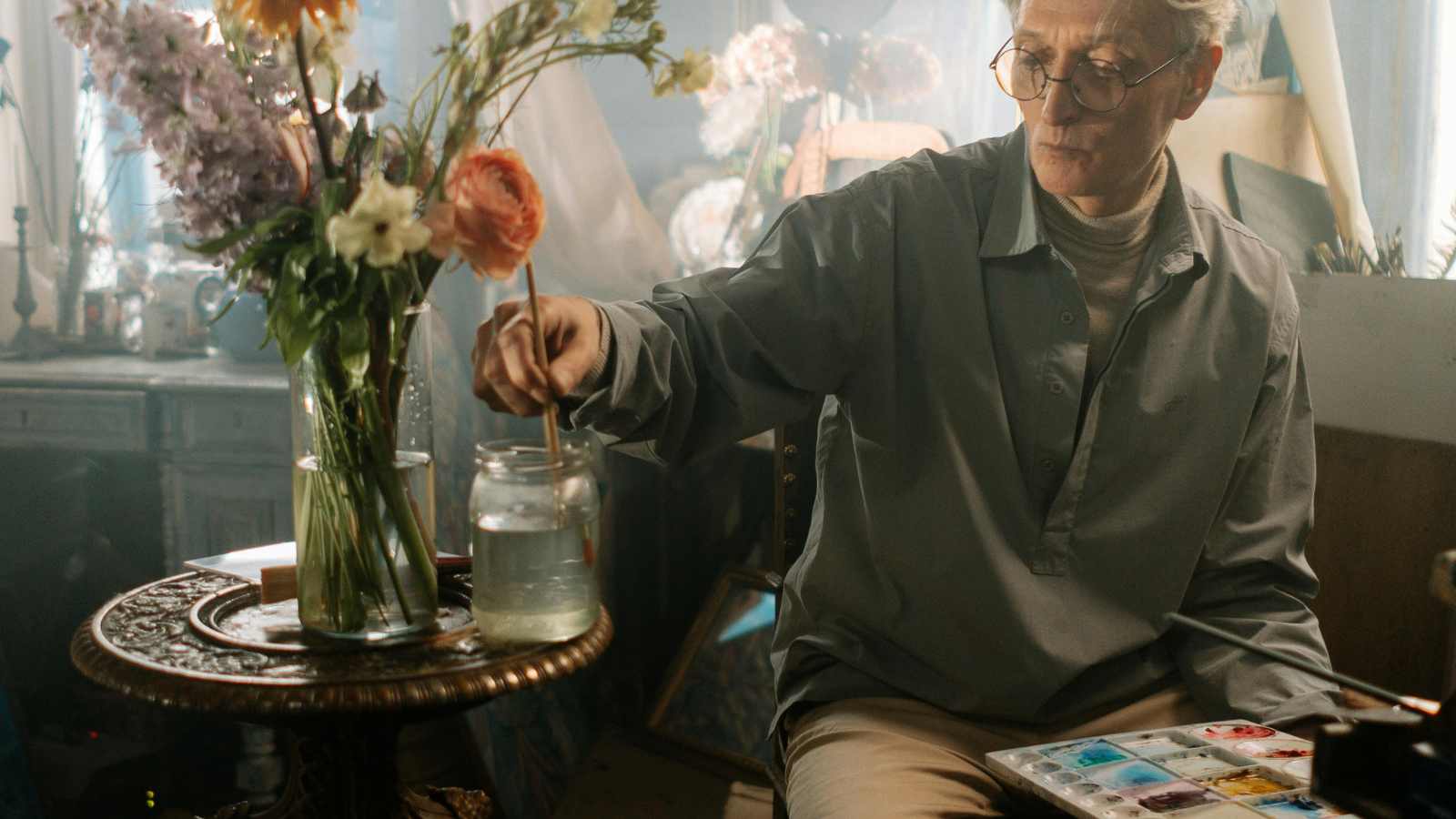
As the professional ego recedes, a different kind of drive often emerges: the need to leave something behind. Erikson argued that the primary tension of later life is Generativity versus Stagnation, the need to create or nurture things that will outlast the self.
Whether it is writing a memoir, building a piece of furniture, or cultivating a complex garden, the rule ensures that the project moves from the realm of someday into the realm of today. History is filled with examples of late-bloomers who used structured time to redefine themselves.
Grandma Moses didn’t start painting seriously until her late 70s.
Peter Roget published the first Thesaurus at age 73 after a lifetime of obsessive list-making. This suggests that age can bring a unique synthesis of experience and insight that younger creators lack.
Cognitive Resilience through Strategic Reading

If the average person reads at 250 words per minute, 1,000 hours of reading equates to roughly 15 million words, or approximately 150 to 200 substantial books a year.
Unlike fluid intelligence, the ability to solve new problems, crystallized intelligence can continue to grow well into one’s 80s.
This involves reading multiple books on the same subject to gain a deep, nuanced understanding of a field.
A study followed 3,635 people over 12 years and found that book readers lived an average of two years longer than non-readers. The researchers noted that deep reading promotes slow cognitive processes, thereby strengthening connections between different parts of the brain.
Environmental Stewardship as a Daily Mission
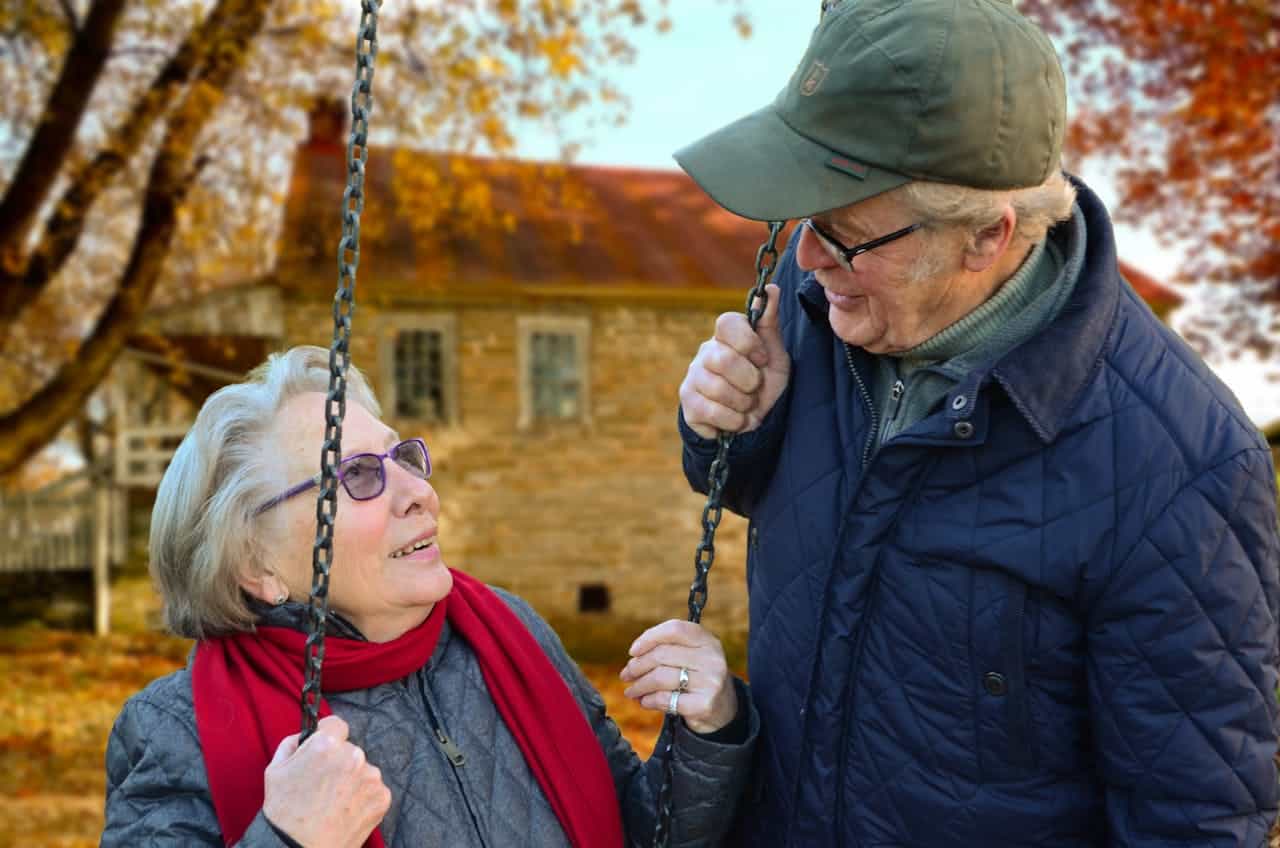
Retirement can align daily life with global responsibility. The 1,000-Hour Rule becomes environmental stewardship, grounded in Aldo Leopold’s Land Ethic: nature holds intrinsic value, not just utility.
Devoting 1,000 hours yearly to conservation, sustainable gardening, or advocacy fosters eco-generativity, not mere volunteering.
Rachel and Stephen Kaplan’s Attention Restoration Theory shows that nature replenishes mental focus; a 2019 Scientific Reports study links 120 weekly minutes spent outdoors to better health.
Such commitment advances intergenerational equity and, per the Corporation for National and Community Service, boosts life satisfaction among older volunteers, connecting personal purpose to planetary continuity.
Financial Management and Economic Legacy

Retirement anxiety often stems from the shift from accumulation to drawdown, not from pure scarcity. Franco Modigliani’s Life-Cycle Saving theory frames the goal as smooth consumption over time, which demands managing sequence-of-returns risk and adhering to the 4% withdrawal rule.
Applying the rule to taxes, portfolios, and estate strategy, including provisions under the SECURE Act 2.0, turns finance into stewardship rather than hoarding. The Employee Benefit Research Institute links financial control to lower stress.
Tools like donor-advised funds and qualified charitable distributions convert disciplined planning into philanthropic impact, ensuring wealth reflects values rather than fear.
Travel as a Philosophical Exploration

Most travel consumes places; few experiences absorb them. Depth requires duration. Spending extended time in one setting, learning its language rhythms, daily habits, and social codes, moves you from spectator to participant. The ethos mirrors the Slow Food movement: immersion over speed.
Research in the Journal of Personality and Social Psychology links cross-cultural exposure to greater cognitive flexibility and creativity.
Lingering long enough to see beyond monuments into values reshapes perception. Travel shifts from checklist to apprenticeship in perspective.
The Discipline of Interiority and Meditation
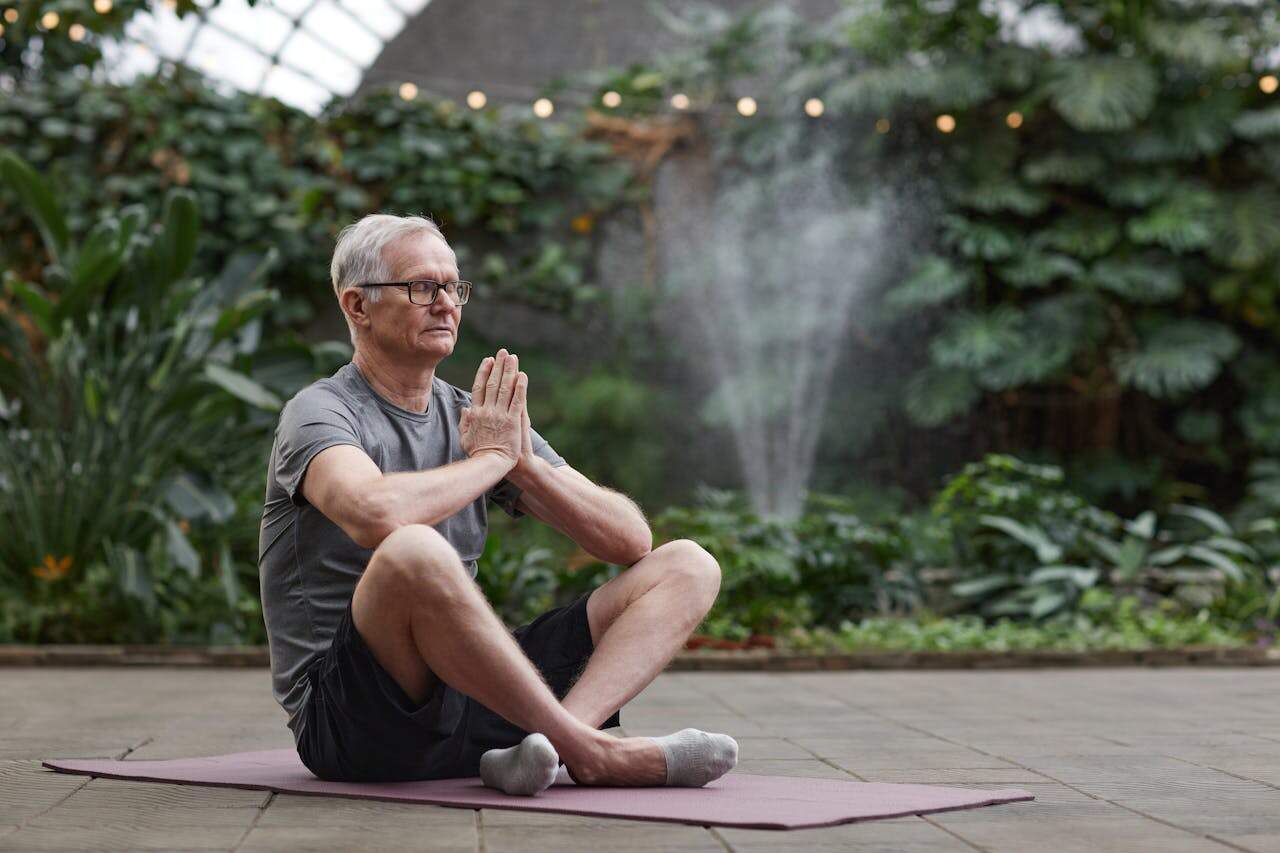
The deepest work of later life is internal. With fewer external demands, attention can turn inward, toward integration rather than distraction. In Erik Erikson’s final developmental stage, fulfillment depends on making a coherent sense of one’s life.
Work from the Max Planck Institute and the UCLA Mindful Awareness Research Center suggests sustained meditation strengthens attention and emotional regulation in older adults.
Regular contemplative practice quiets rumination and builds steadiness. Over time, reflection becomes less an exercise and more a disciplined orientation toward clarity and acceptance.
Key Takeaway
- Shift from grind to intention: Retirement isn’t about chasing another 10,000 hours of peak performance (an idea popularized by Malcolm Gladwell). It’s about investing 1,000 focused hours a year in what matters most, drawing on the “crystallized intelligence” described by Raymond Cattell.
- Structure prevents drift: Purposeful weekly commitments counter the “roleless role” identified by Ernest Burgess and align with Mihaly Csikszentmihalyi’s finding that deep engagement, not idle time, drives fulfillment.
- Growth is still possible: Research by Denise Park shows older adults improve memory by learning demanding new skills, proving the brain remains adaptable with challenge and repetition.
- Relationships and health compound: The long-running Harvard Study of Adult Development highlights relationship quality as central to well-being, while consistent movement and marginal health gains extend vitality.
- Legacy is built, not wished for: Whether through mentorship, creativity, stewardship, financial planning, immersive travel, or reflection, structured time turns experience into contribution, adding depth, resilience, and meaning to later life.
Like our content? Be sure to follow us