New research reframes toxic masculinity claims: 12 reasons
Modern social commentary often popularizes concepts long before they are empirically validated. Few examples illustrate this more clearly than toxic masculinity, a term that moved from academic obscurity to mainstream culture without a standardized definition.
Its ambiguity allowed it to function less as a precise psychological framework and more as a broad moral indictment of male behavior, deepening cultural polarization. Because policy and clinical interventions depend on accurate data, researchers have increasingly examined whether these behaviors are actually widespread among men.
Using latent profile analysis on 15,808 participants from the New Zealand Attitudes and Values Study, researchers examined how men clustered across eight measures of personality and worldview. The findings showed that most men did not fit hostile or predatory behavioral profiles, undermining sweeping generalizations about masculinity.
By distinguishing specific antisocial patterns among men from broader ideological claims, the study replaced them with measurable behavioral data.
The term was never built on a definition

Shepherd Bliss coined the term ” toxic masculinity in the 1980s, not to condemn men at large but to describe, with laser precision, his own father – a militarized, authoritarian figure whose behavior felt suffocating rather than protective. The concept was local, biographical, almost therapeutic.
Bliss used it within the mythopoetic men’s movement, a space concerned with rescuing masculine identity from rigidity rather than dismantling it entirely. For two decades, the phrase barely registered in academic databases, appearing in fewer than 20 texts per year between 1990 and 2011. After 2017, those returns numbered in the thousands – overwhelmingly from non-academic sources.
That explosion matters because the concept left the laboratory before anyone agreed on what it measured. A survey of feminist articles published after 2016 found that more than half of the top sixty academic returns offered no definition at all. The term appeared as shorthand, dropped into abstracts about everything from Game of Thrones to immigration policy, linked freely to misogyny, homophobia, aggression, and emotional repression, but never operationalized into anything testable.
Scholars called for clarification for years; very little arrived. By the time Deborah Hill Cone and her colleagues at the University of Auckland sat down to study its actual prevalence, they were working with a concept that had saturated public conversation without ever being empirically defined.
Most men tested out of the label entirely

Cone’s team analyzed data from 15,808 heterosexual men aged 18 to 99 in New Zealand, drawn from the country’s nationwide Attitudes and Values Study. Using eight indicators of problematic masculinity (gender identity centrality, sexual prejudice, disagreeableness, narcissism, hostile sexism, benevolent sexism, opposition to domestic violence prevention initiatives, and social dominance orientation), they ran a latent profile analysis to see how men actually clustered.
The largest group, comprising 35.4% of the sample, was classified as Atoxic. These men scored at the low end of every single indicator. Two additional profiles, together accounting for 53.8% of respondents, expressed only low-to-moderate patterns across the eight measures. In total, roughly 89% of the men studied showed no significant alignment with the more aggressive or harmful traits commonly associated with the label.
Only 3.2% fit what most people mean when they say it

The profile that most closely resembles the popular cultural image of toxic masculinity – characterized by high hostile sexism, pronounced narcissism, strong opposition to domestic violence prevention, elevated social dominance orientation, and marked disagreeableness – accounted for just 3.2% of the sample. The researchers labeled them Hostile Toxics.
These men also showed high levels of sexual prejudice, although their benevolent sexism scores stayed moderate. They tended to be older, unemployed, single, religiously observant, and politically conservative, with higher reported levels of emotional dysregulation and financial deprivation.
A competing view suggests that 3.2% of 15,808 is still a meaningful number in real-world terms, particularly given that attitudes at that intensity have documented links to non-consensual sexual behavior and resistance to intimate partner violence interventions. The study itself does not dismiss the group; it quantifies it. The friction between small prevalence and serious consequences is exactly the kind of tension that sharper policy conversations need to hold rather than resolve by choosing one side.
A second toxic profile ran on a completely different logic

Beyond the Hostile Toxics sat a separate group, the researchers called Benevolent Toxics, comprising 7.6% of the sample. These men diverged sharply from the hostile profile in how their problematic attitudes were structured.
Rather than open hostility toward women, their scores peaked in benevolent sexism – the paternalistic form that idealizes women as delicate, deserving of protection, and defined by domestic or romantic roles. Their hostile sexism was moderate, not absent. They also showed the highest rates of sexual prejudice in the sample, alongside moderate opposition to domestic violence prevention.
Benevolent sexism does not announce itself as harm. A 2024 study published by Alba, Cross, and Hammond, drawing on three community samples of Australian women totaling 724 participants, found that women’s experiences of protective paternalism were associated with greater psychological distress, lower relationship satisfaction, and perceiving partners as more patronizing and undermining- even when the behavior looks like care.
The man who insists on walking a woman to her car, assumes she cannot negotiate her salary, or deflects her career ambitions with praise for her nurturing qualities, is not expressing hostility in any obvious register. But outcomes accumulate. The study, which separates these two toxic profiles into distinct categories rather than merging them under a single label, is one of its more instructive contributions: the damage does not always wear the same face.
Being proud to be a man is not the red flag it was assumed to be

One of the study’s more counterintuitive findings concerned gender identity centrality – the degree to which a man’s sense of self is organized around being male. In much popular discourse, strong masculine identification has been treated as a precursor to defensive or aggressive behavior, as though pride in gender were a symptom of something lurking underneath. The Auckland data disagreed.
Gender identity centrality turned out to be a weak indicator of problematic masculinity across profiles. Men who scored high on centrality did not cluster meaningfully in the toxic profiles, nor did it reliably separate them from the Atoxic group. The Hostile Toxic profile showed moderate centrality, not the highest in the sample.
This challenges the implicit assumption that men who invest heavily in their masculine identity are more dangerous or regressive than those who hold it loosely. The finding echoes broader research suggesting that the relationship between identity strength and negative behavior depends almost entirely on the content of that identity, whether it leans toward dominance and restriction or toward protectiveness and community.
Pride in being a man is, in itself, not a diagnosis.
Two middle groups account for the majority, and they are rarely discussed

The two profiles that received the least public attention in coverage of the study are also the ones describing the majority of men. The LGBT-tolerant Moderate group (27.2%) and the Anti-LGBT Moderate group (26.6%) together account for more than half of the sample. Both showed low-to-moderate scores across most of the eight indicators. Where they diverged was on sexual prejudice: the Anti-LGBT Moderate profile scored meaningfully higher on negative attitudes toward gay men and women, while keeping other indicators in the moderate range.
The Anti-LGBT Moderate profile was also associated with older age, suggesting generational patterns in that specific attitude rather than an overall toxic orientation. Men in both groups tended to be employed and in relationships, with broadly moderate rather than extreme political views. Neither profile aligned with the hostile or paternalistic patterns of the two smaller toxic groups.
What this means practically is that the majority of men in the study occupied a contested but non-extreme middle ground – men whose attitudes on one dimension (sexual orientation) warrant attention, but who cannot be meaningfully described through the same framework used for the 3.2%.
Education and body image predicted profile membership more than ideology did

The demographic patterns attached to each profile deserve attention because they shift the conversation from values to conditions. Men in the Hostile Toxic group were more likely to be unemployed, single, and living in areas of greater material deprivation. Higher education consistently predicted membership in the Atoxic profile and lower probability of being in either toxic group. Body dissatisfaction was also tracked with the problematic profiles, while higher body satisfaction pointed toward the Atoxic cluster.
These correlations do not make toxic attitudes the inevitable product of poverty or social exclusion – the research is cross-sectional and cannot establish cause. But they point toward something significant. The man most likely to hold hostile views is not primarily defined by a coherent ideology he chose; he is more often defined by a set of circumstances that left him economically marginal, socially isolated, and resentful in ways that attach to available targets.
Gallup data from 2023 and 2024 found that 25% of U.S. men aged 15 to 34 reported feeling lonely regularly, significantly above the national average of 18%. A 2024 Survey Center on American Life study found that 17% of men report having zero close friends; a more than fivefold increase since 1990. Hostility tends to grow in soil that loneliness has already loosened.
The manosphere distorts which men are actually visible

A growing online ecosystem known as the manosphere has been taking shape across social media forums, promoting traits such as misogyny, dominance, and opposition to feminism as the definition of authentic masculinity. The problem with this framing is not that such men don’t exist (the Hostile Toxic profile confirms they do) but that the platform amplification makes 3.2% look like a cultural majority.
A 2024 study found that just five days of use caused misogynistic content on a test TikTok account’s recommendation feed to quadruple. The algorithm is not neutral; it is optimized for engagement, and hostility engages.
Equimundo’s 2023 State of American Men reports that two-thirds of young men ages 18 to 23 said they felt no one really knows them. That is the audience the manosphere found first – not ideologically committed men seeking confirmation of beliefs they already held, but men adrift enough to receive whatever came through the feed.
The radicalization literature consistently shows that entry into these communities typically begins with searches for fitness tips, dating advice, or financial guidance, not political alignment. Extreme content arrives after the door is already open. Treating the 3.2% as representative of men broadly does not just misread the data – it abandons the other 96.8% to a narrative about them they did not author.
Hostile sexism has a distinct structural profile, separate from narcissism or disagreeableness
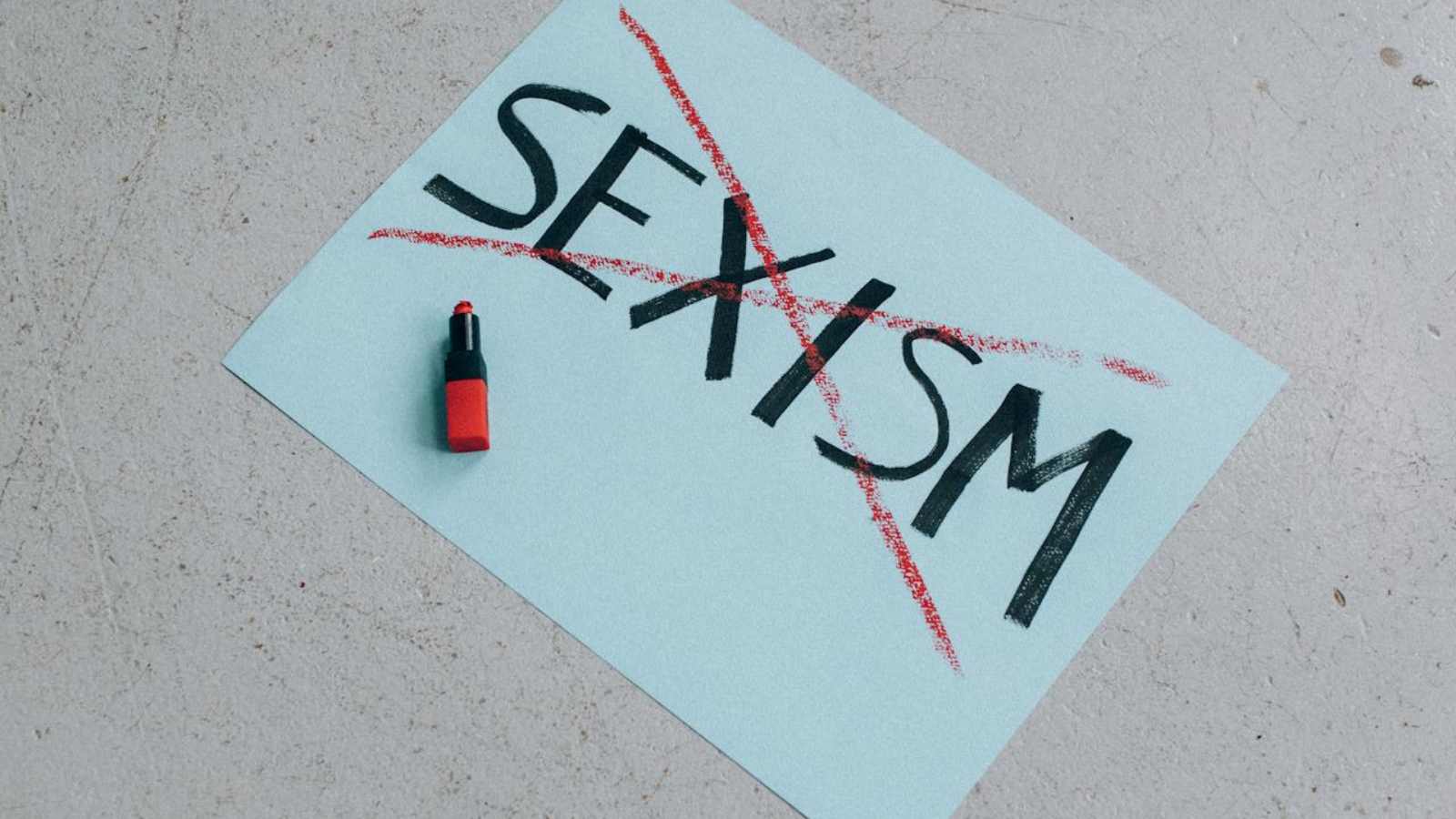
One of the more granular findings in the study concerns how the eight indicators behaved relative to one another within profiles. Hostile sexism and social dominance orientation co-occurred most strongly in the Hostile Toxic group, consistent with an established body of research linking the two constructs.
Social dominance orientation (a preference for hierarchical group arrangements) tends to predict hostile sexism more reliably than benevolent sexism. The logic holds: hostile sexism is an active assertion of male superiority, while benevolent sexism is more tied to dependence and idealization, which correlates better with right-wing authoritarianism.
Disagreeableness and narcissism, meanwhile, did not concentrate exclusively in the hostile group. The Benevolent Toxic profile showed moderate levels of both traits, suggesting that these personality traits are not the exclusive property of overtly hostile men.
A man can be self-aggrandizing and difficult while still maintaining paternalistic rather than aggressive attitudes toward women. Disaggregating these indicators rather than collapsing them into a single toxic score is what makes the Auckland study methodologically more precise than most prior work in this area, and what makes its conclusions harder to dismiss as ideologically motivated.
The research has built-in limits that matter

The study’s authors are explicit about what the data cannot do. The sample was limited to heterosexual, cisgender men in New Zealand – a high-income, democratic, Western nation. The findings may not generalize to non-heterosexual or non-cisgender men, or to cultural contexts beyond New Zealand.
Prior work has found hypermasculinity concentrated among socially marginalized men in South Africa, and the concept of zhi nan ai (roughly, straight male cancer) has emerged as a parallel critique in China, each shaped by specific economic and social pressures that New Zealand data cannot capture.
Cross-cultural manifestations of problematic masculinity often look quite different from each other. The design is also cross-sectional, meaning it captures a moment rather than a trajectory. Whether a man’s profile is stable over decades or responsive to employment, relationship status, and social connections cannot be answered by this data.
Future longitudinal work would need to track whether the same men remain in the same profiles as their circumstances change – and that question matters enormously for understanding whether toxic attitudes are personality-anchored or situation-responsive.
Positive masculinity exists, and the research made space for it

A recurring point in the study, and in the broader commentary it generated, is the cost of treating all masculine traits as suspect. The researchers deliberately framed their goal as separating problematic masculinity from constructive forms. Men who scored low across every indicator were not described as lacking masculine identity – they were classified as the largest single group in the sample, labeled Atoxic, and noted as the plurality.
Research cited in the study’s background section, including work by McDermott and colleagues published in 2019, found that some aspects of masculinity are associated with positive psychological outcomes. Protectiveness, resilience, risk tolerance, and purpose-orientation are traits that can be oriented constructively or destructively depending on context, relationship quality, and social support.
The Auckland study does not argue that masculinity is inherently healthy. It argues that the version of it dominant in public debate (aggressively sexist, narcissistic, and contemptuous of equality) describes a small minority while leaving the majority without a vocabulary for what they actually are.
The label may have outlived its analytical usefulness

The original coinage was personal and precise. Its migration into mass media made it broad and blunt.
Academic researchers have noted for years that the term functions descriptively without being theorized; attached as a modifier to misogyny, homophobia, and aggression without explaining the mechanism through which masculinity produces those outcomes in some men and not others.
The Auckland study is one of the clearest empirical demonstrations yet that toxic masculinity as a mass noun does not describe a mass phenomenon.
A more critical reading suggests that a label applied indiscriminately not only fails to hold the men it is meant to hold accountable, but it also actively alienates the majority who do not recognize themselves in it, making them more resistant than reflective.
The 7.6% Benevolent Toxic and 3.2% Hostile Toxic profiles together represent slightly more than one in ten men in the sample. Designing cultural interventions, media narratives, and institutional policy around the assumption that those traits define male behavior broadly is not just empirically wrong. It is strategically counterproductive. Precision, in this case, is not a concession to comfort – it is the sharper tool.
Key takeaways:

- Latent profile analysis reveals that contemporary masculine identity is non-monolithic, clustering men into distinct behavioral profiles based on actual beliefs rather than sweeping demographic assumptions.
- The completely benign Atoxics profile constitutes the largest single group at 35.4% of the population, registering the lowest possible scores across all markers of social malice.
- Combining the baseline segment with moderate, tolerant profiles proves that 89.2% of men exhibit low-to-moderate baselines on harmful behavioral scales, forming a cooperative majority.
- The highly aggressive Hostile Toxic profile is a statistical anomaly, restricted to a minor 3.2% fragment of the population characterized by narcissism and opposition to domestic violence prevention.
- Paternalistic restriction emerges as a separate Benevolent Toxic trajectory comprising 7.6% of men, proving that problematic behavior can mask itself as protective care rather than overt hostility.
Disclaimer – This list is solely the author’s opinion based on research and publicly available information. It is not intended to be professional advice.
Like our content? Be sure to follow us