Is online culture reshaping Gen Z’s social skills?
The U.S. Surgeon General’s recent advisories have noted that younger adults are far more willing to name anxiety, depression, and burnout rather than mask them with stoicism.
Yet paradoxically, this same generation is routinely dismissed as socially inept, fragile, or incapable of real human connection. Older generations praise resilience while ignoring how often it was built through silence, suppression, and untreated harm. So, the discomfort may not actually be about Gen Z’s social skills at all. It may be about contrast. For the first time, older Americans are encountering a cohort that refuses to normalize emotional neglect as maturity or conflict avoidance as strength.
When a generation heals publicly, it exposes what earlier generations were forced to endure privately; exposure can feel like weakness to those who survived by hardening. The question, then, isn’t whether Gen Z is broken. It’s unsettling because they are the first to model a different definition of social health.
A Generation Raised Online, Not Ruined by It
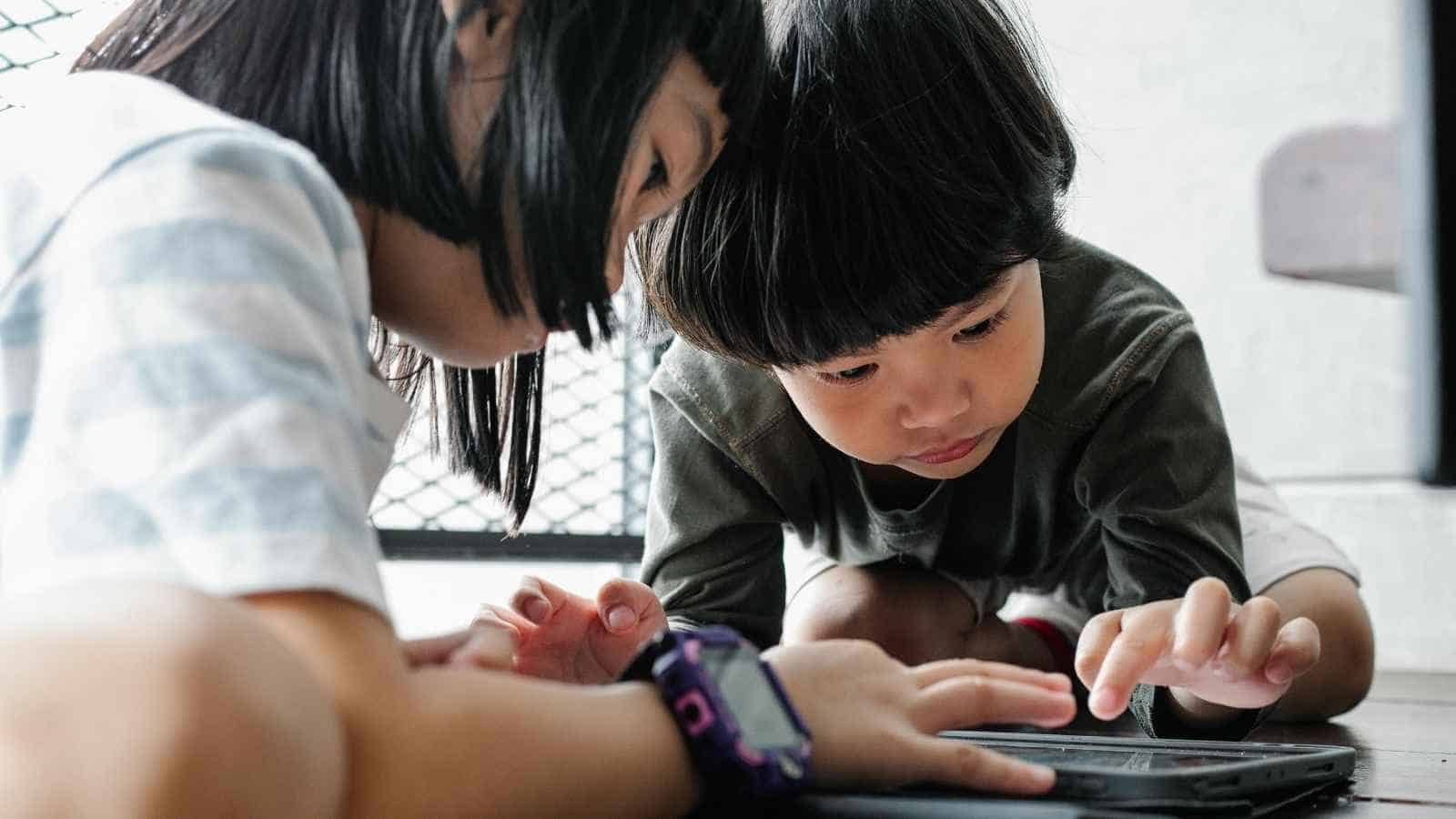
It’s tempting to frame Gen Z as a cautionary tale, but that instinct says more about adult anxiety than young people themselves. This is the first generation to grow up with smartphones, social media, and algorithmic feeds as a constant backdrop, not a novelty.
Nearly all Gen Z adults are daily internet users, according to Pew Research, yet that fact alone tells us nothing about competence or character. Many are digitally fluent, globally aware, and more comfortable navigating differences online than older generations ever were offline.
The real question isn’t whether the internet shaped them; it’s how that shaping altered the balance between connection, performance, and resilience.
When the Mall Disappeared, the Feed Took Its Place
American teens have had a physical “third space” for decades: malls, parks, libraries, skate spots, places to loiter, flirt, argue, and belong without adult supervision. As those spaces disappeared due to safety concerns, zoning changes, and economic decline, hanging out migrated elsewhere.
Discord servers, TikTok comment sections, and group chats became the new commons. These spaces offer community without geography, which is genuinely empowering for kids who never fit locally. But they also remove the embodied friction of sharing space with people you didn’t choose. Offline third spaces taught negotiation and tolerance in ways that simply don’t.
The Biliteracy Paradox: Fluent Everywhere, Comfortable Nowhere
Cognitive researcher Maryanne Wolf has warned that constant digital reading rewires the brain toward skimming, pattern recognition, and emotional shorthand skills optimized for speed rather than depth. Many young adults now operate in two registers: Digital English (emojis, irony, compressed emotion) and formal professional language.
Employers increasingly report that younger workers struggle with tone, long-form writing, and conflict emails, not because they lack ideas, but because they were trained in a different communicative rhythm. This is the biliterate brain under strain, not a generation in decline.
Digital Exhaustion Is Real, and It’s Widespread

The Human8 What Matters report found that roughly seven in ten Gen Z respondents described themselves as digitally weary, despite being the most connected cohort in history. Endless feeds collapse rest, entertainment, and social validation into a single glowing rectangle, leaving little time for psychological recovery. Even Gen Z creators now openly discuss burnout, disengagement, and the pressure to remain visible. When connection becomes compulsory, withdrawal stops being antisocial and starts being self-preservation.
Parasocial Comfort, Social Skill Tradeoffs
Online communities and parasocial relationships fill real emotional gaps, especially for isolated teens. YouTube creators, streamers, and niche online spaces can offer a sense of belonging without judgment, which is no small thing.
But these relationships are structurally one-sided and emotionally low-risk. They don’t require compromise, repair, or sustained disagreement, which are the very muscles real relationships depend on. The concern isn’t that Gen Z mistakes creators for friends; it’s that parasocial ease can make real-world messiness feel inefficient by comparison. Comfort scales better than connection, and algorithms know it.
The Block Button and the Decline of Emotional Friction
Blocking, muting, and unfollowing are useful tools, especially against harassment; they also teach a subtle lesson. Discomfort is framed as optional. Gallup Workplace estimates that 54% of Gen Z are more likely than older cohorts to disengage entirely from work-related matters rather than work through them. Offline, that strategy doesn’t translate cleanly. You can’t mute a coworker, algorithm-filter a roommate, or block a family member forever.
Authenticity vs. Performance in the Age of Algorithms

Gen Z didn’t invent performance culture, but they inherited its most optimized form. The rise of un-influencers and anti-aesthetic content shows a real hunger for authenticity. Yet even rebellion is now monetized, ranked, and fed back through algorithms that reward consistency and visibility. The result is a constant tension: be real, but not invisible. Express yourself but stay legible to the feed. Living with a perpetual imagined audience shapes behavior long before it shapes personality.
Social Skills Are Context-Dependent
One of the laziest critiques of Gen Z is that they lack social skills. In reality, they excel in certain environments and falter in others. Many are adept at community building, emotional articulation online, and navigating identity-based spaces with care. Where challenges emerge is in unstructured, unscripted, offline interactions, where there are no reaction buttons or curated exits. Skills develop where practice exists. Remove the arena, and the muscles atrophy.
What Gen Z Gets Right and What We Get Wrong About Them
Gen Z is often more open about mental health, more skeptical of hustle culture, and more willing to reject performative professionalism. Those are strengths, not weaknesses. The systemic failure lies in building a digital world optimized for engagement rather than development, then blaming young people for adapting rationally to it. As the U.S. Surgeon General warned in recent advisories on youth mental health and social media, the burden of mitigation cannot rest on individuals alone.
The Way Forward Isn’t Less Internet, It’s More Reality
The solution isn’t banning phones or romanticizing the pre-digital past. It’s rebuilding offline spaces, re-normalizing boredom, and allowing young adults room to be awkward without penalty. Social skills are not innate traits; they’re learned behaviors shaped by environment. Gen Z doesn’t need condemnation; they need time, mentorship, and incentives that reward presence over performance. Online culture reshaped the terrain. What we do next determines whether that terrain becomes a trap or a bridge.
Key Takeaway
- Gen Z is not socially broken; they are highly digitally fluent, emotionally literate, and more open about mental health than older generations, challenging old norms of stoicism.
- Online spaces like Discord, TikTok, and YouTube have replaced traditional third spaces, providing community but reducing exposure to unscripted, friction-filled social interactions.
- The biliteracy paradox shows that Gen Z excels in Digital English but often struggles to switch to formal, professional registers, reflecting new cognitive demands rather than incompetence.
- Digital exhaustion, parasocial relationships, and frictionless conflict (e.g., Block buttons) reshape resilience and real-world problem-solving, highlighting systemic pressures of online life.
- Gen Z’s social orientation is a response to the incentives of digital culture; healing, authentic engagement, and practical skill-building require environments that balance online connection with real-world p
Disclosure line: This article was developed with the assistance of AI and was subsequently reviewed, revised, and approved by our editorial team.
20 Odd American Traditions That Confuse the Rest of the World

20 Odd American Traditions That Confuse the Rest of the World
It’s no surprise that cultures worldwide have their own unique customs and traditions, but some of America’s most beloved habits can seem downright strange to outsiders.
Many American traditions may seem odd or even bizarre to people from other countries. Here are twenty of the strangest American traditions that confuse the rest of the world.