12 signs you’ve confused true feminine power with toxic independence
Women today are more educated, financially empowered, and professionally ambitious than at any other point in modern history. In the United States, women now earn the majority of college degrees, according to the National Center for Education Statistics. Meanwhile, research from the Pew Research Center shows women are either the primary or co-breadwinner in nearly half of opposite-sex marriages.
But alongside this rise in empowerment, psychologists and relationship experts have increasingly discussed a growing emotional tension: the difference between healthy independence and emotional self-isolation. Studies consistently show that strong social support and emotional interdependence are linked to better mental health, lower stress, and longer-lasting relationships.
Independence itself is not the problem. The issue begins when self-sufficiency becomes a defense mechanism against vulnerability, trust, or partnership.
True feminine power is not about needing nobody. It is about having the freedom to choose connection without losing yourself in the process.
Here are 12 signs that you may have mistaken genuine empowerment for toxic independence.
You treat asking for help as a personal failure

There is a particular kind of exhaustion that comes from being the person who never needs anyone. Millions of women have been trained, sometimes by survival, sometimes by repeated disappointment, to read dependency as weakness and self-sufficiency as the highest form of strength. The result is a woman who can manage a team, raise a child, negotiate a contract, and fall apart alone in the car, all before 9 a.m.
The APA’s 2023 Stress in America survey, drawing from a nationally representative sample of over 3,000 adults, found that women report significantly higher average stress levels than men, 5.3 versus 4.8 out of 10, and are nearly twice as likely to say no one understands how stressed they are. Yet one in three high achievers delays treatment due to stigma, treating therapy as lost time rather than necessary maintenance, a pattern that lands harder on women who have built entire identities around not needing rescue.
Feminine power, the kind that actually sustains rather than just impresses, includes the ability to receive. To let someone carry the groceries, finish the project, hold the space, without interpreting it as a transaction that diminishes you.
Your boundaries are walls, not filters
Boundaries became the word of the decade. Self-help culture handed them out like prescriptions, and women, many of whom spent years tolerating too much, grabbed them with both hands. The movement was necessary. But somewhere between toxic relationships and wellness Instagram, boundaries shifted from being a relational tool into a lifestyle aesthetic.
A boundary, properly understood, is a filter. It lets certain things in and keeps others out based on your values and capacity. A wall, by contrast, keeps everything out with equal force. One is discerning. The other is defensive. The woman with real boundaries can say no to what drains her and yes to what challenges her, because she is navigating from a position of self-knowledge rather than self-protection.
Women with genuine boundaries are still capable of deep intimacy, accountability, and discomfort – because they know which discomforts are worth tolerating. Women who use boundaries as walls tend to exit relationships, jobs, and friendships the moment they require vulnerability or sacrifice. The language sounds healthy. The result is chronic isolation dressed up as self-respect.
Philosopher Simone de Beauvoir wrote in The Second Sex that one of the most persistent traps for women is defining freedom as the absence of entanglement. Real freedom, she argued, is the capacity to engage fully without losing yourself – not the refusal to engage at all.
You’ve stopped letting people love you in their language
There is a particular form of relational rigidity that appears as standards but functions as control. It shows up when a partner’s act of love, showing up unannounced with dinner, calling instead of texting, expressing worry, gets received as an intrusion instead of care, because it didn’t match the format you approved. Dr. Gary Chapman’s framework of the five love languages is often cited here, but the deeper issue is less about languages and more about receptivity.
Women who confuse independence with power often have a specific, narrow acceptable zone for how love can arrive. Anything outside that zone – gestures that feel like too much, questions that feel like surveillance, closeness that feels like pressure – triggers the withdrawal reflex. Over time, partners stop trying, not because they stop caring, but because the message they keep receiving is ‘you’re doing it wrong’.
Avoidant attachment, for the record, is not a personality type. It is a coping mechanism.
The woman who has mistaken emotional armor for power will often describe herself as ‘’hard to love’’ with a kind of pride that is actually a muffled cry. No healthy person is hard to love. Complicated, yes. Layered, absolutely. But love is not a performance review – and insisting on impossible conditions is not standards, it is self-sabotage with better branding.
Softness feels like surrender to you
Ask many women raised in high-conflict homes, or in cultures that penalize femininity, what softness means, and the word will land somewhere between naive and dangerous. Softness got people hurt. Softness got people left. Softness was what the women before them were told to perform in order to be taken advantage of. So hardness became armor, and armor became identity, and by adulthood, the armor fit so well that taking it off feels like an amputation.
Softness is not passivity. It is not agreement, smallness, or the absence of standards. It is the capacity to be moved, to feel, to respond rather than just react. It is integration – the ability to hold multiple emotional states without being destroyed by them. The woman who cannot cry, cannot admit she’s scared, cannot say ‘I miss you’ without immediately taking it back, has a nervous system that learned to survive at the cost of connection.
And connection is not a weakness women can afford to sacrifice. Harvard’s 75-year Study of Adult Development, the longest running longitudinal study on human wellbeing in existence, found that the quality of close relationships was the single strongest predictor of health and happiness across a lifetime – not achievement, not wealth, not independence.
You perform certainty even when you’re lost

Feminine power, the real version, includes the dignity of ‘’I don’t know’’. The performed version insists on always knowing, always leading, always having the plan – because uncertainty feels too close to the helplessness that was once used against you. There is a difference between a woman who is decisive and a woman who has confused decisiveness with the inability to be wrong.
The corporate world rewards this. Research by Catalyst found that women who display confidence and certainty are more likely to be taken seriously in leadership contexts, but also more likely to be penalized when that certainty is revealed as overcalculation or bluff. The adaptation, unfortunately, is to double down rather than recalibrate. What starts as a professional coping strategy becomes a private identity.
In personal relationships, perceived certainty is particularly corrosive. It means you can’t be surprised, can’t be redirected, can’t receive wisdom from people who might actually see you more clearly than you see yourself. Genuine sustained attention to another person is one of the rarest and most powerful acts a human being can offer. You can’t offer it if you’ve already decided you know everything.
Your relationship with men is mostly adversarial

Not all friction with men is internalized misogyny. A lot of it is reasonable, earned, historically documented, and statistically supported. Women have every reason to distrust systems built by and for men. But there is a difference between structural critique and relational strategy, and when the two collapse into each other, every individual man becomes a proxy for every systemic failure, which is both unfair and exhausting.
The adversarial stance shows up in specific ways. Interpreting offers of help as condescension. Reading romantic pursuit as predation. Assuming that a man who disagrees with you is dismissing your intelligence rather than just disagreeing.
Treating vulnerability in a male partner as weakness, you’re now responsible for carrying. These are not feminist positions. They are responses to pain that were never properly processed.
You can be a woman with entirely valid grievances against patriarchy and still have a negative sentiment toward the specific man in front of you. Both can be true.
Real feminine power can hold a critique of systems and tenderness toward individuals simultaneously.
You’ve made achievement your whole personality

Achievement is seductive because it is measurable. Unlike love or friendship or peace of mind, a promotion, a degree, a salary figure, a public recognition – these come with receipts. Women, who were historically entirely blocked from achieving, have every reason to treasure them. But there is a particular kind of overidentification that happens when achievement stops being something you do and becomes everything you are.
The woman who can’t enjoy a weekend because productivity guilt follows her into every hour of rest. The one who filters potential partners through their ambition rather than their character. The one who mentions her job title in casual conversation, not because it’s relevant, but because it’s load-bearing for her self-worth.
Psychologist Abraham Maslow would call this a misalignment between esteem needs and self-actualization, using external markers to fill a gap that only internal coherence can actually close. More bluntly, American author Toni Morrison put it plainly: if you have some power, then your job is to empower somebody else. A woman whose entire identity is constructed from personal achievement is not powerful. She is defended.
Commitment feels like a trap, not a choice

There is a version of freedom that is just avoidance with a better origin story. The woman who has survived controlling relationships, who has watched other women disappear into marriages and emerge unrecognizable, who has read enough to know that the institution of marriage has historically functioned as a legal transfer of ownership, she has earned her wariness. And then wariness becomes habit, and habit becomes identity, and suddenly she’s not free so much as she is perpetually at a safe distance from her own life.
Commitment phobia is widely discussed in psychological literature, but what gets less attention is its gendered dimension. Women are statistically more likely to initiate divorce; about 69% of divorces in the United States are initiated by women, according to a study published in the American Sociological Review in 2015.
Analysts often read this as evidence of female empowerment. A more uncomfortable reading is that many women have been socialized to anticipate disappointment so systematically that they exit before the thing they fear can happen.
Genuine feminine power includes the capacity to commit to a person, a project, a version of yourself, without needing guaranteed outcomes. Commitment is not the absence of freedom. It is one of the most demanding exercises. It means choosing something daily, with full knowledge that it can go wrong, because the choosing itself is part of who you are.
You’re always the one who cares less
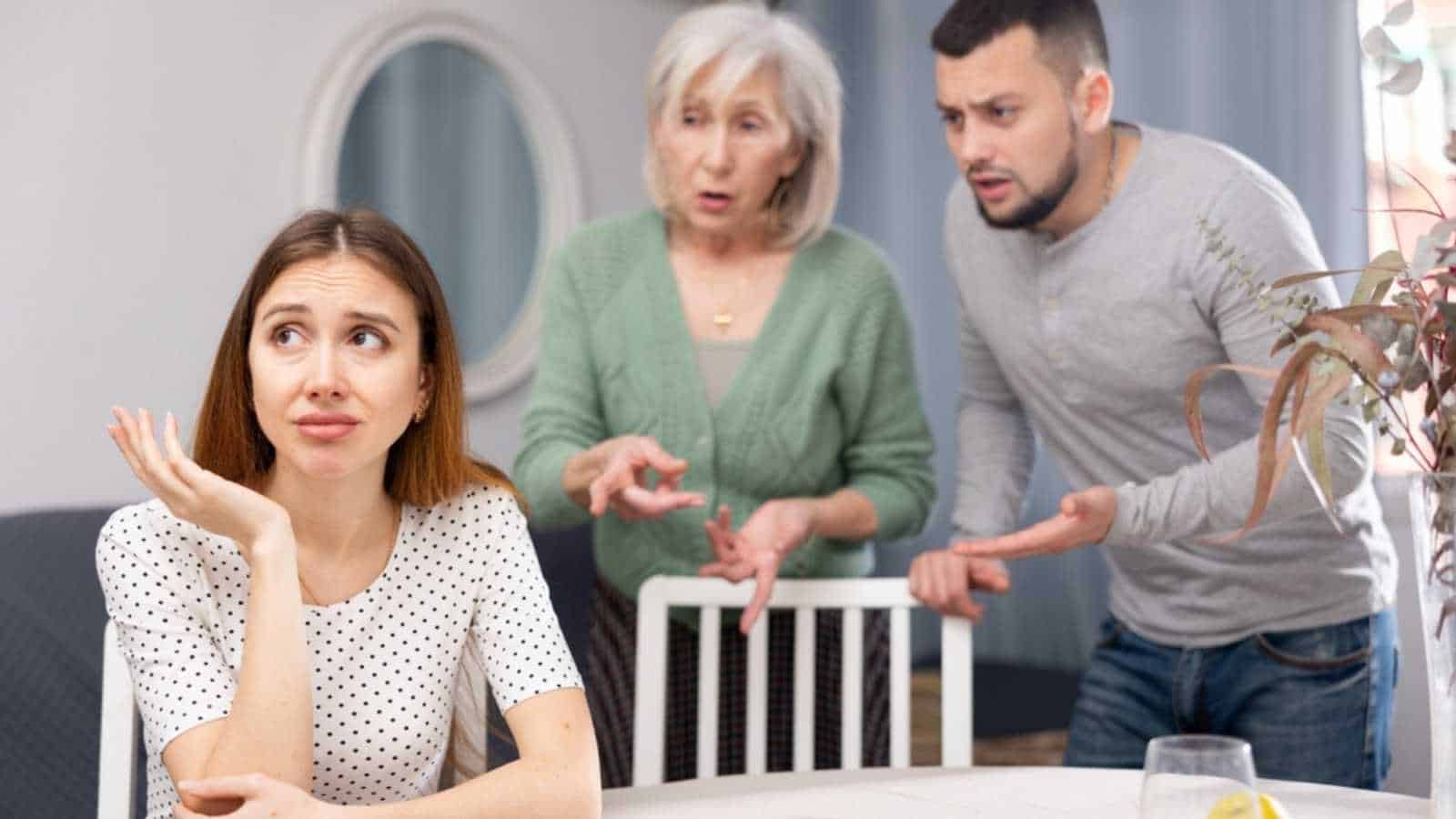
Caring less became a power move somewhere in the last decade. The cultural logic was sound at first: women had been penalized for decades for caring too much, for being too needy, too emotional, too available. The antidote, supposedly, was indifference. Keep people guessing. Never text first. Perform detachment as a survival strategy. The problem is that strategies often become character traits.
The woman who has decided that whoever cares less wins is operating from a game theory model of intimacy – one that treats relationships as competitions with losers rather than systems with feedback loops. And she will win, repeatedly, which means she will end up alone in her victory, unable to articulate why the connection keeps failing to materialize despite all her strategic execution.
You cannot wall off your feelings from one person and offer them freely to another. The mechanism doesn’t discriminate.
Caring deeply, showing it, and being the one who shows up first are not weaknesses. They are data about who you are. The person worth being with will meet that, not exploit it.
You’ve redefined loneliness as a preference

Solitude and loneliness are not the same thing, but the woman who has built an identity around independence can lose the ability to tell the difference. The confusion arises when the framing around loneliness-“I like being alone, I don’t need people, relationships complicate things”-is so thoroughly rehearsed that it starts to feel like truth even when the body is telling a different story.
The body does tell a different story. Loneliness activates the same neural pathways as physical pain. Chronic loneliness is associated with a 26% increase in the risk of premature mortality, an effect size comparable to obesity and smoking 15 cigarettes a day. These are not small data points. They are the body’s way of communicating what the mind has rationalized away.
The woman who has confused preference with resignation will often describe her situation in terms of standards: she hasn’t found anyone who meets them. And sometimes that’s true. But standards that exclude everyone are not discernment. They are a defense mechanism that has graduated to a philosophy.
You’ve outsourced your emotional processing to your productivity

Grief does not disappear when you get busy. It relocates. The woman who responds to every emotional crisis by creating a plan, starting a project, getting a promotion, or restructuring her schedule is converting them into fuel without addressing their source.
This pattern has a clinical name – overcompensation – but the cultural reward structure for it is so powerful that it rarely gets questioned. Women who achieve greatly in the aftermath of loss or trauma are celebrated, which teaches a very specific and dangerous lesson: that the appropriate response to pain is output. Gabor Maté, physician and trauma expert, argues in The Myth of Normal that most high-achieving adults are running from something, and that the culture applauds the running while ignoring the wound that started the race.
What makes this sign particularly difficult to identify is that the results look healthy on the outside. The woman is functional, accomplished, even inspiring. Inside, she hasn’t cried about her mother in four years, can’t remember the last time she sat still without reaching for her phone, and interprets therapy as an indulgence for people without real problems. She has mistaken motion for processing and output for healing.
You believe needing love makes you less powerful

The belief, sometimes explicit, more often just ambient, that a woman who wants love, romantic love, familial love, communal love, is somehow less than a woman who has transcended it. That desire is exposure, and exposure is danger, and danger is best avoided by simply not wanting things that other people can take away.
This belief was built from centuries of women’s desires being used against them – leveraged into compliance, exploited for control, weaponized in divorce courts, inheritance law, and social shaming. The historical context is real. But internalizing that history as personal identity means living defensively inside a war that no longer requires the same armor.
Without love and belonging, self-actualization doesn’t produce flourishing. It produces very productive, very lonely, very defended women who have achieved a great deal and feel strangely hollow about it all.
True feminine power, the kind that doesn’t need to announce itself, is capacious enough to include desire. It can want a partnership and have principles. It can love deeply and hold its center. It can be moved without being swept away. That is not vulnerability as weakness. That is strength with full range of motion – and it is far rarer, and far more difficult, than the performance of needing nothing at all.
Key takeaways

- Independence becomes toxic the moment it stops being a choice and starts being the only available setting – when you can no longer receive care even when you want to.
- Boundaries are a filtering tool, not a personality. A woman who exits every relationship, friendship, or situation the moment it requires vulnerability is not protecting herself – she is just alone with a better vocabulary.
- The performance of not caring – caring less, needing less, feeling less – does not make a woman powerful. It makes her unreadable to the people worth keeping and perfectly legible to those who will exploit her.
- Achievement, emotional suppression, and relentless productivity are three of the most socially rewarded ways a woman can avoid processing pain, which is precisely why they are the hardest patterns to question.
- True feminine power is not the absence of need. It is the capacity to want partnership, to ask for help, to love deeply, and to still hold your own center.
Disclaimer – This list is solely the author’s opinion based on research and publicly available information. It is not intended to be professional advice.
Like our content? Be sure to follow us