The 12 Breakthroughs Transforming Wellness in 2026
The health landscape is experiencing a seismic shift in 2026. From groundbreaking medications that treat multiple conditions to a renewed focus on nervous system regulation, this year marks a turning point in how we approach wellness.
Gone are the days of one-size-fits-all treatments—today’s health trends prioritize personalization, prevention, and true biological optimization. Whether you’re curious about the latest medical breakthroughs or looking to enhance your daily wellness routine, these 12 trending topics reveal where health and medicine are headed right now.
1. GLP-1 Medications Expand Beyond Weight Loss

The conversation around GLP-1 medications like Ozempic, Wegovy, and Zepbound has dominated healthcare headlines, and 2026 is proving these drugs are far more than weight-loss tools. According to U.S. News & World Report, 52% of polled health experts identified increased use of GLP-1 medications as the top health trend of 2026.
Beyond their FDA-approved uses for diabetes and obesity, these medications are now treating conditions you might not expect. Wegovy received approval for cardiovascular risk reduction, Zepbound is treating sleep apnea, and Ozempic is slowing chronic kidney disease in people with Type 2 diabetes. Future applications may include heart failure, fatty liver disease, and even Alzheimer’s and addiction disorders.
The medications work by enhancing hormones that regulate hunger, fullness, and blood sugar. They slow stomach emptying to help people feel satisfied longer, reduce appetite by acting on brain receptors, and support blood sugar control by improving insulin release. Clinical studies show these drugs can also improve conditions like prediabetes, high blood pressure, high cholesterol, osteoarthritis, fatty liver disease, PCOS, and inflammatory states.
2. Your Nervous System Is the New Wellness Foundation

Forget obsessing over calories or step counts—2026’s biggest wellness shift is nervous system regulation. Health experts are recognizing that without a calm, regulated nervous system, no other wellness intervention truly sticks.
Your nervous system is your body’s primary signaling network, linking your brain to hormones, metabolism, immunity, and digestion. When it stays in a stress response for too long, healing, hormonal balance, and repair all take a back seat. According to Harvard Health Publishing, prolonged stress keeps the nervous system in a heightened state of alert, disrupting sleep, digestion, immune function, and emotional regulation over time.
This isn’t about adding more tasks to your to-do list. The shift in 2026 is toward passive, supportive therapies that allow your body to downshift naturally—practices like breathwork for vagal toning, HRV-based recovery protocols, salt therapy, sound-based relaxation, and consistent daily rhythms. When your body receives consistent signals of safety through rest, movement, and mindful practices, these systems begin to rebalance naturally.
Looking to shift to a calm state? Follow these 3 Simple Somatic Movements You Can Do To Calm Your Nervous System
3. Women’s Longevity Gets Its Own Lane

Women age fundamentally differently than men, and science is finally catching up. In 2026, the longevity market is pivoting to women’s healthspan, moving beyond managing menopause symptoms to addressing ovarian aging itself.
The ovary functions as “command central” for women’s health, and its decline during menopause dramatically accelerates systemic aging. This leads to a cascade of conditions women suffer far more and longer than men—from immune disorders to dementia to osteoporosis. Unlike women, men experience no such “gonadal death” and stark “before and after” health decline.
Research from 2026 shows that women who start hormone therapy during perimenopause have 60% lower odds of developing cardiovascular disease, breast cancer, and stroke compared to those who start later. Women spend nearly 40% of their lives post-menopause, making this care critical for the next 30-40 years of health.
The new framework positions “ovary-span” as the lynchpin to women’s healthspan. Scientists are working on breakthrough solutions including ovarian stem cell therapies and treatments for ovarian fibrosis. Hormone replacement therapy is boomeranging back as longevity medicine, and strength training is being reframed as non-negotiable for women’s longevity.
You may want to read: 10 reasons why women tend to live longer than men
4. CAR T-Cell Therapy Becomes Safer and More Accessible

Cancer treatment is entering a new era with advances in CAR T-cell therapy that are making this powerful treatment safer and available to more patients. At the Tandem 2026 conference, researchers unveiled breakthrough data showing next-generation CAR-T constructs delivering deep responses with markedly improved toxicity profiles.
CAR T-cell therapy involves tweaking a person’s immune cells—known as T cells—to produce proteins called chimeric antigen receptors that recognize and destroy cancer cells. First introduced in 2017, it’s now used to treat many forms of blood cancer and is being explored for childhood brain cancer.
The latest advances include dual-targeting CAR-T constructs like KITE-753, which achieved an 86% overall response rate and 79% complete response rate with no grade 3 or higher side effects. Manufacturing time has been reduced to just 13 days, making treatment feasible for patients with rapidly progressive disease.
Perhaps most exciting is the development of off-the-shelf CAR-T products like CB-011, an allogeneic therapy with immune cloaking that achieved a 92% overall response rate with 75% complete response—and no graft-versus-host disease. This could expand access for the majority of eligible patients who don’t currently receive autologous CAR-T due to logistics and timing constraints.
5. Food as Medicine Moves Into Healthcare Systems

The “food as medicine” approach tied for second place among health experts as a defining trend of 2026. While the concept recognizes that foods we eat directly impact our health, its current popularity signals a renewed emphasis on returning to the basics of whole and nutritious food.
This isn’t just a wellness buzzword—it’s being integrated into actual healthcare delivery. The Food is Medicine framework includes a pyramid of food-based programs addressing specific health needs, from intensive medically tailored meals for patients with complex chronic diseases to broader population-based interventions.
According to research published in the Journal of the American College of Cardiology, evidence supports positive effects of Food is Medicine strategies on food insecurity, diet quality, glucose control, hypertension, body weight, disease self-management, and self-perceived health.
Healthcare institutions are recognizing the tangible benefits of making food an integral part of treatment. Instead of simply prescribing a “pill for an ill,” an ever-growing number of physicians choose to integrate dietary changes in their healthcare recommendations. This approach addresses the root cause of disease, not just the disease itself, combining the best of conventional Western medicine with evidence-supported complementary treatments.
You may want to read: These Are The Foods You Should Be Eating To Get All of Your Essential Vitamins
6. Artificial Intelligence Accelerates Medical Breakthroughs

AI integration in healthcare is moving from experimental to essential in 2026. According to Clinical Lab Products, experts expect AI systems to take on a more active role in managing lab workflows with guardrails and human oversight.
The capabilities span multiple domains. In digital pathology, algorithms assist in pattern recognition, reduce scoring subjectivity, and provide high-value insights for cancer diagnosis and precision medicine. AI-supported precision medicine tailored to individual genetics, environment, and lifestyle will enable providers to predict Alzheimer’s or kidney disease years before symptoms appear, according to Boston Consulting Group.
Perhaps most transformative is AI’s role in drug development. Agentic AI will compress the timeline for new drug development from years to months by generating new molecules and simulating how they’ll interact and behave in the body. This acceleration could bring life-saving treatments to patients exponentially faster.
Genetic testing powered by AI allows doctors to predict how a patient will respond to certain medications, enabling personalized prescriptions that boost effectiveness and reduce side effects. The shift to hyper-personalized medicine moves away from traditional one-size-fits-all approaches, reducing the margin for error and pinpointing issues at a molecular level.
You may want to read: Why Asking AI for Medical Advice Can Be Dangerous: A Cautionary Tale
7. Your Gut Microbiome Holds Hidden Health Keys

The “hidden microbiome” is revealing surprising secrets about human health. Researchers at the University of Cambridge discovered that an understudied group of bacteria called CAG-170 appears to play a central role in keeping us healthy.
The study, published in Cell Host & Microbe, looked at over 11,000 gut bacteria samples from people across 39 countries. Researchers consistently found that people with diseases including Crohn’s, obesity, colorectal cancer, Parkinson’s, and multiple sclerosis had lower levels of CAG-170 bacteria in their gut.
These bacteria appear to help us digest main food components and keep the whole microbiome running smoothly. They produce Vitamin B12, though researchers think this supports other gut bacteria species rather than directly supporting the humans whose guts they inhabit.
The findings open the door to developing new probiotics specifically designed to support healthy levels of CAG-170 in the gut. According to lead researcher Dr. Alexandre Almeida, “The probiotic industry hasn’t really kept up with gut microbiome research—people are still using the same probiotic species that were being used decades ago. We’re now discovering new groups of bacteria like CAG-170 with important links to our health, and probiotics aimed at supporting them could have a much greater health benefit.”
You might be interested in reading: Did Your Birth Affect Your Gut Health? Here’s What Science Says
8. Sleep Apnea Treatment Gets a Pill

For the estimated 30 million Americans with obstructive sleep apnea, 2026 brings a game-changing development: the first oral medications specifically designed to treat this condition. The era of “CPAP for all” is ending, ushering in precision sleep medicine.
In December 2024, [the FDA approved Eli Lilly’s Zepbound (tirzepatide)](https://www.novasleepsolutions.com/blog/breaking-through-the-latest-findings-in-sleep-apnea-research-that-could-transform-your-t … [TRUNCATED, (original length: 137 chars)]) as the first drug treatment specifically for moderate-to-severe obstructive sleep apnea in adults with obesity. The medication led to substantial decreases in breathing interruptions during sleep while helping patients achieve meaningful weight loss and reducing cardiovascular risk factors.
Even more promising is AD109, a first-in-class anti-apneic neuromuscular modulator that directly addresses the neuromuscular root cause of upper airway collapse. By combining aroxybutynin (a novel antimuscarinic) with atomoxetine (a selective norepinephrine reuptake inhibitor), AD109 increases upper airway muscle tone during sleep.
Two Phase 3 clinical trials showed consistent, promising findings, with meaningful improvements in sleep apnea severity and oxygenation. The company plans to submit a New Drug Application to the FDA by early 2026. As study chair Dr. Sanjay Patel noted, “This is the first time we’ve seen a once-daily oral medication demonstrate such significant, durable effects in a broad patient population with OSA.”
You may want to read: Hidden Stroke Risks: How Sleep Apnea and Gum Disease Could Put Your Health in Danger
9. Red Light and Cold Therapy Go Mainstream
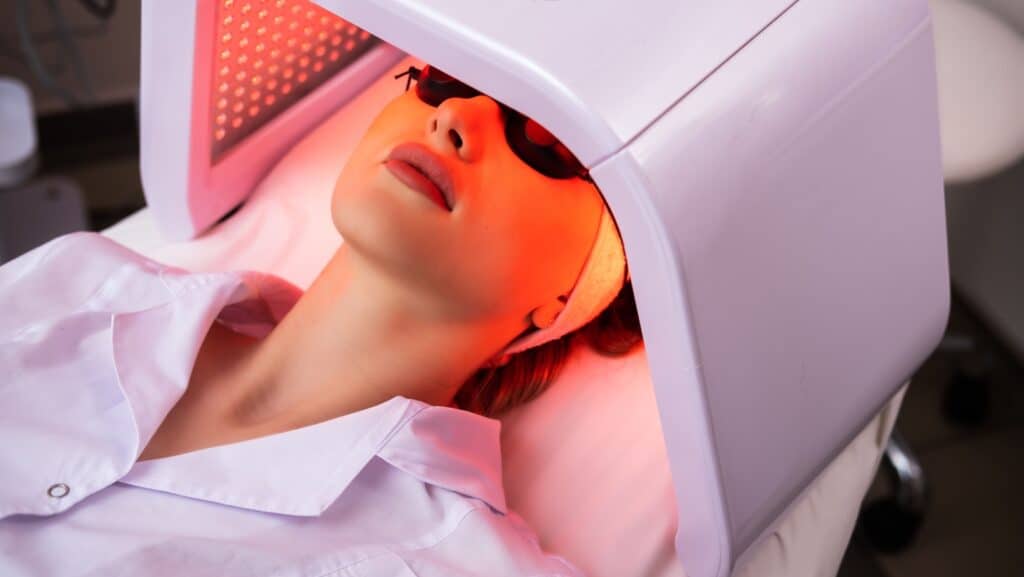
Biohacking modalities once reserved for elite athletes are becoming accessible wellness staples. Red light therapy and cold exposure—often used together—offer benefits for inflammation reduction, recovery, and mood regulation.
Red light therapy (photobiomodulation) works by enhancing mitochondrial function, increasing ATP production (cellular energy), and supporting cellular repair. Research shows it speeds up muscle repair, reduces soreness, lowers inflammation, improves circulation, and supports immune function.
Cold plunges create a complementary effect by rapidly improving circulation, reducing stress, and enhancing metabolic function. When you immerse in cold water, blood vessels constrict to protect the core. When you warm up, oxygen-rich blood flows back with added force.
The magic happens when you combine them. Research in the Journal of Athletic Training found that pairing cold water immersion with photobiomodulation enhanced recovery outcomes in athletes. The sequence matters: starting with cold exposure and finishing with red light therapy optimizes results by priming the body to absorb the light’s benefits. Together, they create stronger mitochondria and a more resilient stress-recovery system.
10. Brain Training Shows 20-Year Dementia Protection

A few weeks of targeted brain training at age 65+ may shield the mind from dementia for up to two decades. New findings from the landmark ACTIVE study tracked 2,832 older adults for 20 years after they completed cognitive training sessions.
Funded by the National Institute on Aging and National Institute of Nursing Research, the study involved 10 training sessions in memory, reasoning, or speed of processing conducted in 60- to 75-minute sessions over about six weeks. Some participants received booster training 11 and 35 months after initial training.
The results were striking. Participants in the speed training group cut their risk of dementia by one-quarter compared with the control group—even 20 years later when most were in their 90s. After 10 years, those who completed speed training had a 29% lower dementia incidence, and each booster session was tied to additional reductions in risk.
Researchers believe the impacts from cognitive speed training were most durable because the training was adaptive and personalized. The training involved challenging players to progress through difficulty levels across different cognitive domains, enhancing neuronal connectivity while improving cognitive functioning and processing speed.
You may want to read: Alzheimer’s or Dementia? These Powerful Distinctions Matter The Most
11. Cancer Prevention Reaches New Milestones

Cancer research in 2026 is approaching with renewed focus on early detection and prevention. The World Health Organization announced that up to four in ten cancer cases worldwide could be prevented through context-specific prevention strategies.
These strategies include strong tobacco control measures, alcohol regulation, vaccination against cancer-causing infections like human papillomavirus (HPV) and hepatitis B, improved air quality, safer workplaces, and healthier food and physical activity environments. The findings underscore that addressing preventable risk factors not only reduces cancer incidence but also lowers long-term healthcare costs and improves population wellbeing.
On the treatment front, breakthrough targeted therapies are generating excitement. For acute myeloid leukemia, two menin inhibitors were recently approved for approximately 40% of AML cases. For pancreatic cancer, novel RAS inhibitors are showing promising early results in phase III clinical trials.
Cancer experts forecast that 2026 will bring continued advancements in personalized cancer vaccines, next-generation cell therapies moving earlier in treatment protocols, AI accelerating both discovery and diagnosis, and initiatives aimed at reducing disparities in cancer care. The convergence of scientific breakthroughs and implementation strategies is reshaping the trajectory of cancer care.
You may want to read: The Cost of Survival: How Cancer Patients Are Navigating the Financial Burden of Care
12. Precision Medicine Becomes Hyper-Personalized

The shift from one-size-fits-all medicine to truly personalized care is accelerating in 2026. Experts describe this as “body literacy”—a personalized approach to wellness focused on individual goals, biology, and how your body uniquely reacts to stress.
There’s growing skepticism about universal protocols and rigid routines. Rather than partaking in sweeping trends or viral moments, the shift focuses on understanding your specific needs. Genetic testing, advanced biomarkers, and continuous health monitoring are making this possible.
Hyper-personalized medicine provides tailored medical treatments matching the genetic profile of your lifestyle and environment. Using this approach in clinical diagnostics reduces the margin for error and pinpoints issues at a molecular level.
The trend extends to longevity science. In 2026, larger clinical trials are testing how epigenetic clocks and other aging biomarkers respond to interventions. These studies will reveal whether observed changes reflect true biological improvement, guiding strategies to promote healthy aging.
According to wellness experts, longevity now focuses on healthspan—immunity, vitality, and mental resilience—with consumers demanding personalized, science-backed, holistic wellness rather than generic advice.
You may want to read: Unlocking the Secrets of Longevity: Do We Stop Aging At A Certain Point?
The Takeaway: Health Is Getting Smarter and More Personalized

The health trends defining 2026 share a common thread: they’re moving away from generic solutions toward precision, prevention, and personalization. Whether it’s medications treating multiple conditions simultaneously, therapies targeting your unique nervous system needs, or interventions tailored to your genetic profile, healthcare is becoming more sophisticated and individualized.
These advances aren’t happening in isolation—they’re interconnected. GLP-1 medications treat sleep apnea. AI accelerates drug discovery for cancer. Gut microbiome research informs probiotic development. Women’s longevity science recognizes that hormones are longevity medicine. Each breakthrough builds on others, creating a healthcare ecosystem that’s more comprehensive, accessible, and effective.
The message is clear: proactive engagement with your health matters more than ever. Whether that means exploring new treatment options with your doctor, prioritizing nervous system regulation through daily practices, staying current with recommended screenings, or understanding your unique biological needs, the tools for optimizing health are more powerful and personalized than ever before. The future of health isn’t just about living longer—it’s about living better, with vitality and resilience at every life stage.
Disclosure: This article was developed with the assistance of AI and was subsequently reviewed, revised, and approved by our editorial team.
Like our content? Be sure to follow us on MSN and Newsbreak