The real reason avalanches keep catching people off guard
Most avalanche disasters begin long before the snow moves, shaped by invisible layers, human behavior, and ignored probability.
Winter has a way of persuading people that danger has gone dormant. Snow falls, settles, and quiets the world. Familiar landscapes are softened and smoothed, stripped of the sharp edges that signal risk in other seasons. Trails disappear beneath white blankets. Slopes look uniform and finished. The stillness feels earned, as if nature itself has exhaled and decided to rest.
That sense of rest is one of winter’s most convincing lies.
Snow does not signal stability. It hides instability. It covers complex terrain with a surface that looks consistent even when what lies beneath is fractured, layered, and under strain. Avalanches exploit this mismatch between what humans perceive and what is actually happening. They are not sudden acts of chaos. They are delayed consequences of decisions made long before anything moves.
People often talk about avalanches as if they come out of nowhere. They do not. What comes out of nowhere is the moment of failure, not the conditions that created it.
Why Snow Feels Trustworthy When It Is Not

Human beings are visual risk assessors. We judge danger by what we can see, hear, and feel. Fire crackles. Water moves. Loose rock shifts. These signals trigger caution. Snow, by contrast, appears calm even when it is structurally unsound. It absorbs sound. It smooths contrast. It looks soft even when it is dense enough to break bones.
This visual softness lowers psychological defenses. A steep slope covered in snow looks less severe than the same slope in summer when rocks, roots, and uneven ground are exposed. The terrain feels gentler, not because it is, but because its warning signs have been concealed.
Snow also carries cultural meaning that undermines caution. It is associated with beauty, recreation, holidays, and play. Ski trips, winter hikes, scenic drives. These associations frame snow as something to be enjoyed rather than interrogated. When danger is mentioned, it feels like an exception rather than an inherent property of winter landscapes.
Avalanches thrive in this gap between perception and reality.
The Architecture Inside Snow
Snow is not a single surface. It is a layered structure built over time, shaped by weather patterns that most people do not notice in detail. Each snowfall creates a new layer. Temperature changes alter how those layers bond. Wind sculpts dense slabs in some areas while stripping snow from others. Sunlight weakens bonds on one slope while preserving fragile crystals on another.
Some snow bonds well. Some never does. Weak layers can persist for weeks or even months, buried beneath newer snow that appears stable on the surface. These hidden weaknesses are not visible to the naked eye. A slope can look solid, support weight, and still be close to failure.
Avalanches occur when stress exceeds strength. The stress may come from new snow, wind loading, warming temperatures, or a single human step. The strength depends on how well layers have bonded. When that balance tips, gravity takes over.
The important point is this. The snowpack is already unstable before it moves. The avalanche is not the beginning of the problem. It is the end of it.
Experience Does Not Eliminate Risk
There is a comforting belief that experience protects people in avalanche terrain. Knowledge helps. Training helps. But experience also introduces a dangerous variable. Familiarity.
When people travel the same terrain repeatedly without incident, their brains recalibrate what feels safe. Each uneventful trip reinforces the idea that conditions are manageable. Over time, the absence of consequence becomes evidence of safety, even when the underlying risk has not changed.
This is not arrogance. It is how human learning works. The brain rewards outcomes, not decision quality. If nothing bad happens, the brain assumes the decision was sound. Near misses are not recorded as failures. They are recorded as successes.
This creates what risk psychologists call normalization of danger. Conditions that once triggered caution begin to feel routine. Margins shrink slowly. The line between acceptable risk and unacceptable risk moves without anyone noticing.
Avalanches punish this process brutally because snow does not care how many times it held before. Past stability does not make future stability more likely.
Group Dynamics and Shared Blindness
Most avalanche accidents involve groups, not individuals. Groups change how people think and decide.
Responsibility diffuses in groups. When everyone is involved, no one feels fully accountable. This makes it easier to defer judgment to the most confident person or to assume someone else has assessed the risk more thoroughly.
Groups also amplify optimism. Agreement feels like confirmation. When multiple people say conditions look good, that consensus feels meaningful even if everyone is relying on the same limited information. Doubt becomes socially uncomfortable. Speaking up feels like slowing things down or being overly cautious.
Ironically, groups of similar experience levels can be more vulnerable than mixed groups. When everyone has comparable skill and confidence, there is less likelihood that someone will challenge assumptions. The group moves smoothly and efficiently, which feels like competence, even as risk accumulates.
Avalanches do not care about group cohesion. They respond only to load, structure, and gravity.
The Illusion of Good Conditions
One of the most common features in avalanche accidents is good weather. Clear skies. Calm winds. Pleasant temperatures. These conditions feel reassuring, but they are often irrelevant to stability.
Avalanche danger frequently peaks after storms have passed. Snow has accumulated. Wind has loaded slopes. Weak layers are buried and stressed. The sky clears, and people head out, interpreting the calm as safety.
This is why avalanche warnings are so often misunderstood. A warning does not mean something will definitely happen. It means the conditions for failure exist. Humans are poor at responding to probabilistic risk. If nothing looks wrong, the warning feels abstract.
The absence of visible danger is interpreted as a green light, even when the underlying risk is high.
Near Misses Are the Most Dangerous Outcome
One of the most insidious contributors to avalanche accidents is the near miss. A small slide that stops quickly. A collapse that does not propagate. A day when conditions felt questionable but nothing happened.
These experiences do not create fear. They create relief. Relief tells the brain that the situation was manageable. It erases the warning and keeps the behavior intact.
Over time, near misses recalibrate risk tolerance. What once felt edgy begins to feel normal. The person or group moves closer to failure incrementally, without a clear moment where the decision shifts from safe to unsafe.
Snow does not learn from near misses. Humans do, and often in the wrong direction.
Why Avalanches Feel Sudden
Avalanches feel sudden because humans experience them only at the moment of failure. Everything before that happens quietly.
Snow does not sag visibly when it is overloaded. It does not crack slowly like stressed metal. It holds together until it does not. When failure occurs, it propagates faster than human reaction time.
This creates a narrative illusion. It feels like the avalanche came out of nowhere. In reality, the conditions for failure were present long before the first step was taken.
Avalanches are conclusions, not interruptions.
Language That Misleads
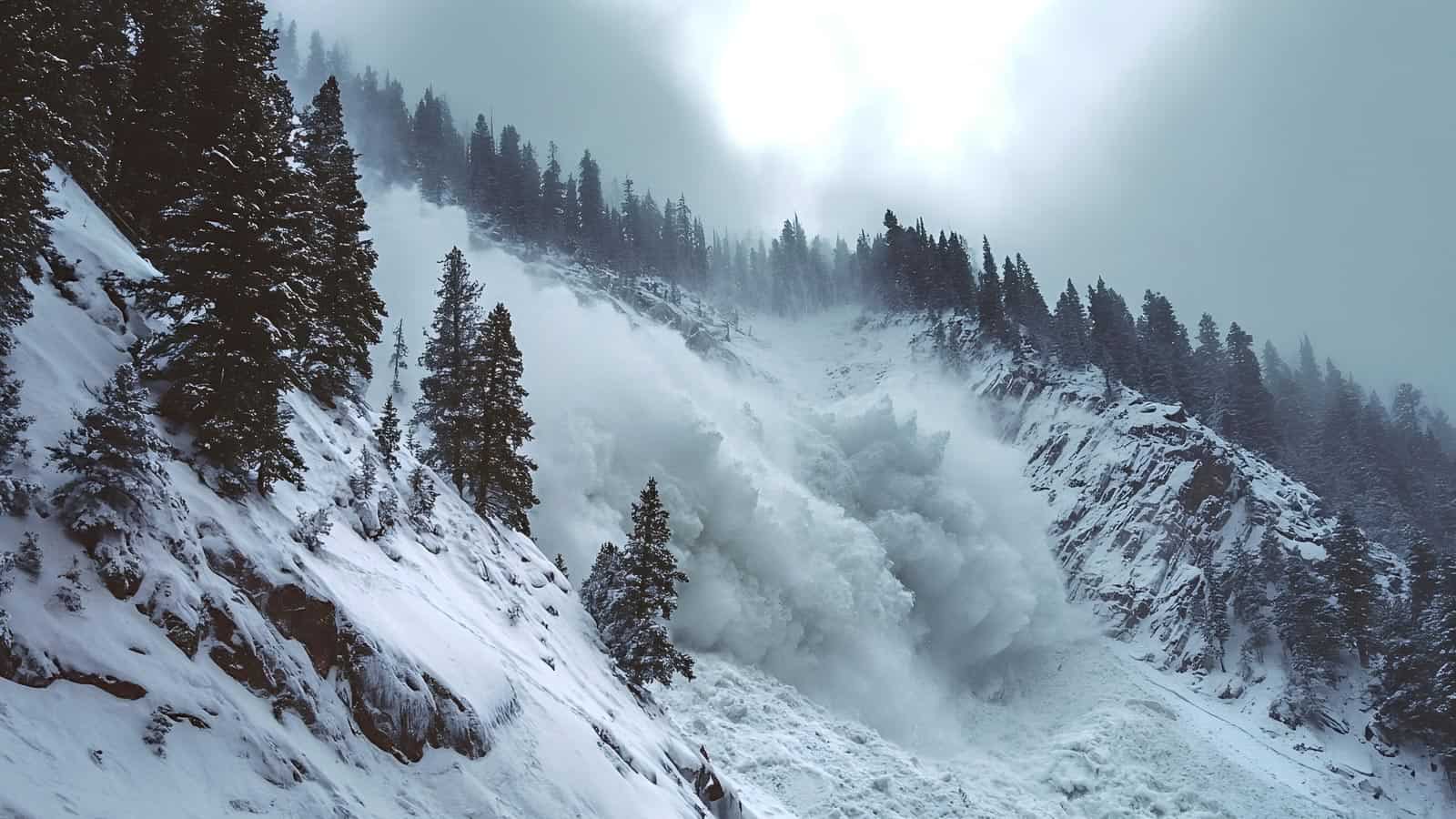
Avalanche risk communication relies on categories like low, moderate, and considerable. These terms are precise within professional contexts, but they are often misinterpreted by the public.
Moderate does not mean safe. It means avalanches are possible under certain conditions. Considerable does not mean guaranteed danger. It means human triggered avalanches are likely.
Humans instinctively downplay words that sound manageable. Moderate feels acceptable. Considerable feels avoidable. This linguistic gap creates false confidence, especially when combined with good weather and familiar terrain.
People do not ignore warnings because they are reckless. They ignore them because the language does not map cleanly onto lived experience.
Avalanches Beyond Recreation
Avalanche psychology extends beyond skiing and snowshoeing. It reveals how humans interact with systems that fail suddenly after long periods of apparent stability.
Financial bubbles. Infrastructure collapse. Environmental disasters. In each case, warning signs existed, but they were cumulative, abstract, or easy to normalize. The final failure feels abrupt only because the buildup was invisible or ignored.
Snow teaches a hard lesson about uncertainty. Stability is not safety. Calm is not security.
Living With Avalanche Risk
Avalanches are not anomalies. They are natural consequences of snow in steep terrain. Humans choose to live, travel, and recreate in these environments, which means learning to coexist with that reality.
This coexistence requires humility. Snow does not respond to confidence, experience, or intention. It responds to physics.
Respecting avalanche risk does not mean avoiding winter landscapes. It means understanding that beauty and danger are not opposites. They often occupy the same space.
Snow is not gentle. It is powerful. Treating it as such is not fear. It is clarity.
10 Easy Ways To Get Your Car Ready Before Winter Hits

Don’t wait until you are spinning out on an icy road, or unable to start your car on a frigid morning to get your car ready for winter.
Winter brings a whole new set of challenges for car owners. From icy roads to frigid temperatures, preparing your car for the winter months is crucial to ensure your safety and the longevity of your vehicle. Let’s get your car ready for winter and avoid unnecessary breakdowns and accidents. Learn more.