
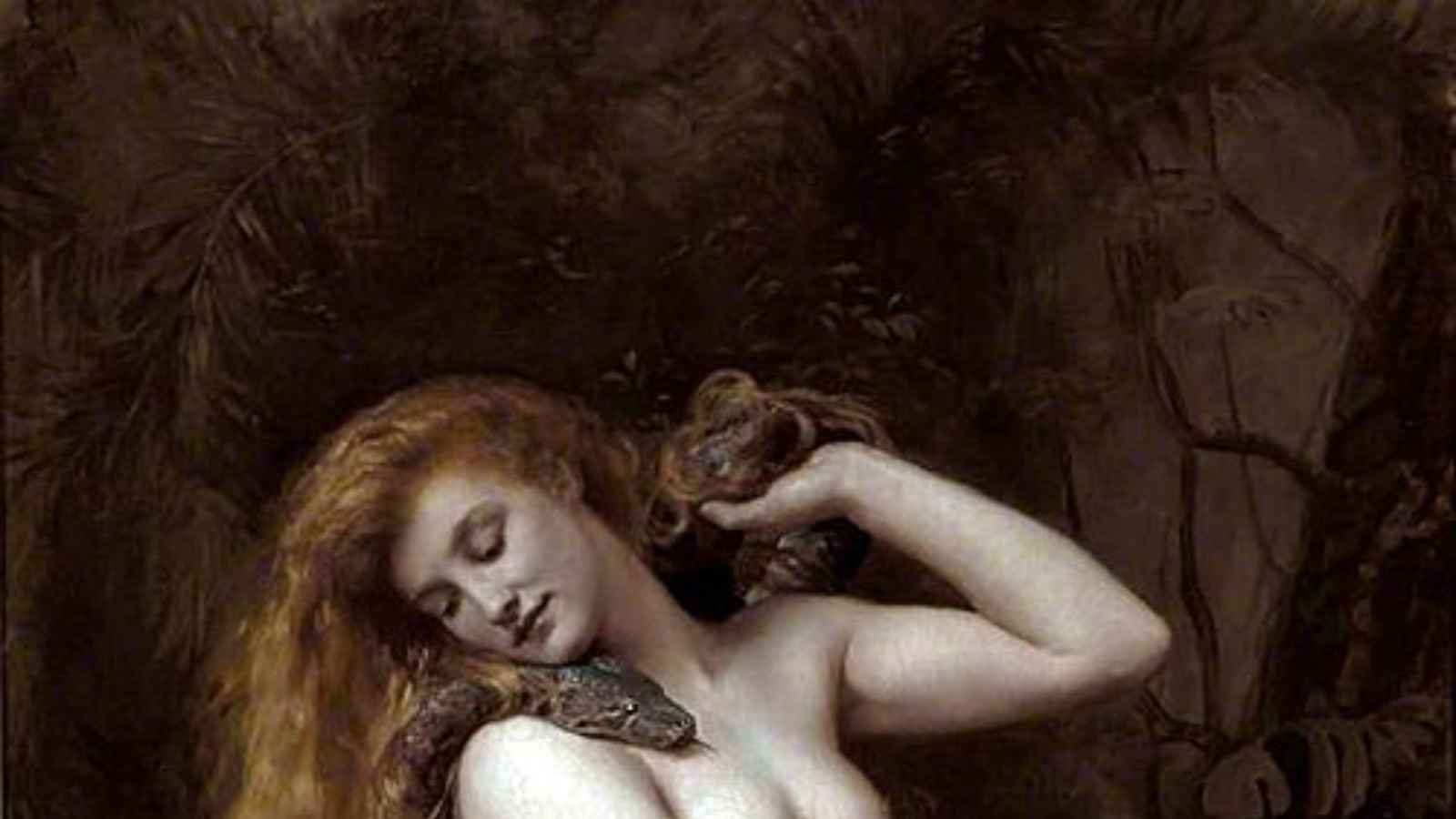
Was Lilith really Adam’s first wife? The story is stranger than the Bible suggests
You’ve probably heard the story: Before Eve, there was Lilith—a woman created alongside Adam who refused to submit to him and walked out of Eden.
There’s just one enormous problem with that version of the story.
The Bible never actually identifies Lilith as Adam’s first wife. That idea emerged much later in medieval Jewish folklore, while the figure herself appears to have far older roots connected to ancient beliefs about dangerous supernatural beings.
Over thousands of years, Lilith has undergone a remarkable transformation—from feared demon-like figure to rebellious first wife, feminist symbol, pop-culture character, and modern icon of female independence. So where did the story everyone thinks they know actually come from? The answer is considerably stranger than Genesis.
Lilith’s earliest origins are over 3,000 years old
Lilith’s roots stretch back more than 3,000 years, making her one of the oldest mythical figures in recorded history. Ancient Sumerian and Babylonian texts mention female night demons that inspired the later Hebrew concept of “lilit.” These references mark Lilith as a force long before she became a part of Jewish lore. In Isaiah 34:14, the name “Lilith” even appears in the Hebrew Bible, connecting her to earlier cultural beliefs.
The “first wife of Adam” idea is medieval, not biblical
Jewish Women’s Archive (JWA) website confirms that the medieval Jewish text, the Alphabet of Ben Sira (c. 700-1000 CE), describes Lilith as Adam’s first wife. This satirical work recasts the Genesis creation story by making Lilith Adam’s equal, created from the same earth. When Adam demands she submit to him, Lilith rebels, pronounces God’s name, and flies away. Modern scholars view this as a legend rather than a doctrine. It’s a twist that reshapes the Genesis narrative.
Lilith became a symbol of infant and maternal danger
In later Jewish folklore, Lilith took on a darker role, associated with infant mortality and maternal danger. Amid high child and maternal death rates in ancient times, she was blamed for stillbirths and complications during childbirth. Amulets and incantation bowls were used to ward off her evil influence, showcasing how folklore provided psychological comfort in times of distress.
Modern scholars stress that Lilith is not part of official Bible doctrine

Modern biblical scholars emphasize that Lilith’s story is not a part of the canonical Hebrew Bible. In fact, the Lilith-as-first-wife narrative only emerges much later in medieval folklore. According to the Christian apologetics ministry Answers in Genesis, the idea that Lilith was Adam’s wife is not found in the Bible itself, but originates in later medieval Jewish folklore and satirical texts, not traditional Jewish legal or theological texts. This highlights the difference between popular myths and established religious doctrine.
Feminist theologians have reclaimed Lilith as an icon
Academia.edu confirms that Lilith has been widely reinterpreted as a symbol of female autonomy and independence, especially for feminist theologians. Lilith embodies empowerment, challenging traditional gender roles in monotheistic religions. She now represents a bold stance for equality.
The name “Lilith” has surged as a baby name in the U.S.
The name Lilith has become increasingly popular in the United States. According to data·yze, in 2021, there were exactly 111 baby girls named Lillith. This trend reflects a growing preference among Millennial and Gen-Z parents for unique, mythologically charged names. Lilith’s rise in popularity shows how traditional names are being reimagined with modern sensibilities.
Lilith is now a recurring figure in TV, music, and gaming
Lilith’s presence in pop culture has only grown in recent years. TV series like The Chilling Adventures of Sabrina and Once Upon a Time have featured her as a powerful character. Musicians like Halsey have even named songs after her, such as “Lilith” from her 2021 album If I Can’t Have Love, I Want Power.
Interest in Lilith tracks a more exhaustive search and spirituality trends
Interest in Lilith correlates with growing trends in spiritual curiosity. Lilith has become a focal point for feminist and occult communities, blending myth and magic in modern discussions.
Key takeaway
Lilith’s journey from ancient myth to modern icon reveals how folklore adapts to cultural shifts. Once feared as a demon, she is now celebrated as a symbol of female empowerment, autonomy, and defiance. From ancient Mesopotamian texts to modern TV shows and baby names, Lilith’s evolution underscores how myths resonate with contemporary needs and beliefs.
More articles you might like:
- 12 Ancient Prophecies That Seem To Reflect Modern Life
- 10 Lessons From The Bible That Make Sense Even Outside Religion
- 12 People God Welcomes and Those He Turns Away