Why many people believe in the Big Bang, and not God
As telescopes peer deeper into the universe and surveys chart declining religious belief, more people are turning to the Big Bang as an evidence-based answer to where everything began.
The debate between cosmic origins and divine creation has shifted significantly as telescopes look deeper into the past and capture images that challenge ancient texts. For a growing number of individuals, the tangible data offered by astrophysics offers a more satisfying explanation than the verses found in holy books. This transition often stems from a desire for evidence that can be measured, tested, and seen rather than relying on faith alone.
It is not merely about rejecting religion but about embracing a narrative that evolves with each discovery by researchers and space agencies worldwide. While the concept of a creator provides comfort to millions, the mathematical precision of the Big Bang offers a different kind of awe. Understanding the mechanics of the universe can feel just as spiritual as any Sunday sermon.
The sheer Scale Of The Cosmos
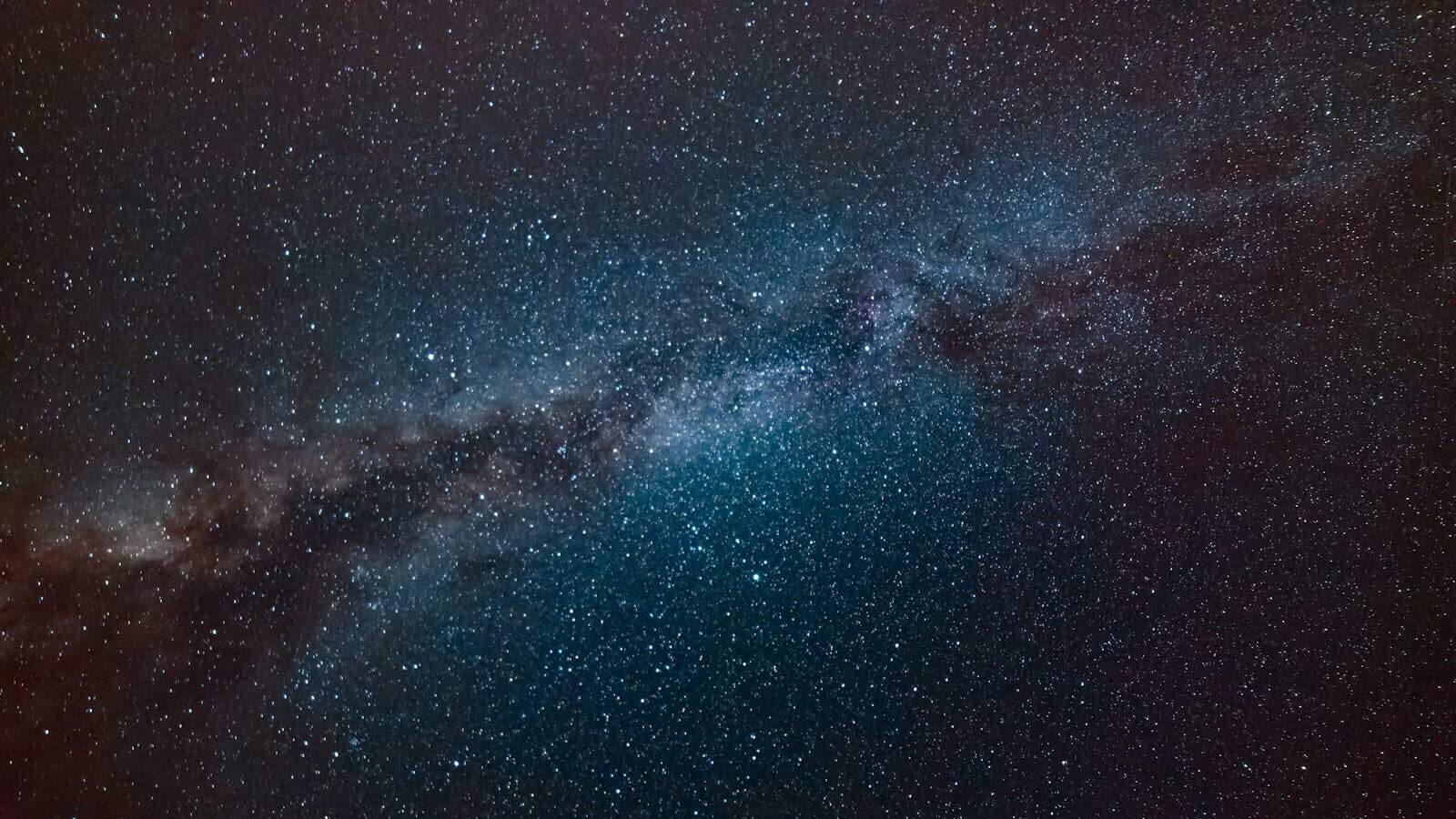
It is hard to believe humans are the central purpose of creation when the universe contains trillions of galaxies. The sheer vastness of space suggests that we are a tiny statistical accident rather than the stars of the show. This perspective can actually be liberating rather than depressing.
Religion often frames humanity as the apple of a creator’s eye, which feels arrogant to some observers. Astronomy humbles us by showing exactly how small our blue marble really is in the grand scheme. The Big Bang treats us as a byproduct, which better fits the data.
Tangible Evidence Over Ancient Scripture

People often gravitate toward what they can observe or measure with instruments such as the Hubble Space Telescope. The Cosmic Microwave Background radiation acts as a literal smoking gun for the explosive start of our universe. This leftover heat provides a snapshot of the cosmos when it was a mere infant.
Science does not require religious allegiance; rather, it points to the observed redshifts of distant galaxies. According to a Pew Research Center study, 81% ofAmericans say humans have evolved. That level of consensus makes the scientific model hard to ignore.
The Shrinking God Of The Gaps

Historically, humans attributed lightning and sickness to angry deities until they understood electricity and germs. As our knowledge base expands, the space left for supernatural explanations naturally becomes smaller. This concept is often referred to as the “God of the gaps” by philosophers.
Many find it logical to bet on the method that consistently solves mysteries rather than the one that preserves them. A Pew Research Center survey highlights this shift, noting that about 29% of U.S. adults now describe themselves as atheists, agnostics, or “nothing in particular.” As science explains the how, the need for a supernatural “who” diminishes.
Inconsistencies In Religious Texts

Holy books often contain contradictions or historical inaccuracies that can be difficult for modern readers to reconcile with reality. Critics point out that different scriptures offer conflicting accounts of creation that cannot all be true simultaneously. This pushes seekers toward a model that is independent of geography.
The scientific method thrives on self-correction, whereas dogma often struggles to admit when it is wrong. Gallup data from 2022 reveals that a record low 20% of Americans believe the Bible is the literal word of God. This decline suggests a hunger for narratives that match our modern understanding of history.
Evolution Links To Cosmic Origins

Biology and cosmology are deeply intertwined for those who view the world through a scientific lens. If you accept that humans evolved from primates, it is a short leap to take the universe evolved from a singularity. The two theories are mutually supportive.
Creation narratives often require a suspension of disbelief regarding the age of the Earth and the fossil record. A 2023 Pew Research report indicates that 73% of Americans have a fair amount or a great deal of confidence in scientists to act in the public interest. This trust extends to the explanations scientists provide for our origins.
The Problem Of Suffering

The randomness of a chaotic explosion better explains natural disasters than a benevolent planner. If a loving force designed the world, the existence of tsunamis and childhood cancer would become a philosophical nightmare. The Big Bang does not promise fairness.
A universe born of physics is indifferent to our pain, which, ironically, makes more sense to many people. Viewing suffering as a result of tectonic plates and cell mutation removes the anger one might feel toward a deity. It creates a logic that does not require moral gymnastics.
Predictive Power Of Math
One framework relies on retrospective interpretation, while the other uses math to predict future events with shocking accuracy. Physicists can calculate the movement of stars centuries in advance, while prophecies often remain vague. This reliability builds trust in the scientific process.
Math serves as a universal language that transcends culture and background, unlike religious tradition. We trust the laws of physics every time we board an airplane or use a smartphone. It feels consistent to trust those same laws regarding how time began.
Independence From Institutional Control

Organized religion has a history of controlling behavior and politics, which pushes people away. Accepting a scientific origin story allows individuals to form their own moral code without fear of divine punishment. It separates existence from obedience.
Younger generations are particularly keen on stepping away from rigid structures and traditional labels. The Survey Center on American Life found that 34% of Gen Z identify as religiously unaffiliated. This cohort prefers facts they can verify over rules they must obey.
Occam’s Razor And Simplicity
There is a philosophical principle stating that the simplest explanation is usually the correct one. Positing a complex, invisible, eternal being who exists outside of time raises more questions than it answers. The Big Bang is complex, but it starts with simple matter.
Adding a creator to the mix introduces an extra step that many consider unnecessary for the equation to work. Physics suggests that the universe is self-contained and requires no external agency to flip the switch. For many, that efficiency is the hallmark of truth.
The Universality Of Science

Gravity works the same way in Nigeria as it does in Nebraska, regardless of what you believe. Scientific truths do not depend on your culture, language, or where you were born. This universality appeals to a globalized society.
Religions are often associated with specific regions and can create divisions among groups of people. Science provides a common ground in which the same experiments yield the same results for everyone. The Big Bang belongs to us all equally.
15 Things Women Only Do With the Men They Love

The 15 Things Women Only Do With the Men They Love
Love is a complex, beautiful emotion that inspires profound behaviors. We express our love in various ways, some universal and others unique to each individual. Among these expressions, there are specific actions women often reserve for the men they deeply love.
This piece explores 15 unique gestures women make when they’re in love. From tiny, almost invisible actions to grand declarations, each tells a story of deep affection and unwavering commitment.