10 arguments that challenge the Big Bang Theory
What if the universe’s most famous origin story isn’t wrong so much as unfinished, built on assumptions that crumble the closer we look?
Looking up at the night sky, it is easy to feel small and wonder how this massive, glittering expanse came to be. Most of us grew up with the story that the universe exploded from a single, infinitely dense point and has been expanding ever since. It sounds like a solid Hollywood opening scene, but some scientists are starting to think the script has a few plot holes.
While the Big Bang is the prevailing model of cosmic origin stories, cracks are appearing in the foundation that cannot be ignored. New technology and deeper observations are revealing anomalies that do not fit the standard model we learned in school. It feels a bit like realizing your favorite documentary might actually be science fiction.
The Horizon Problem
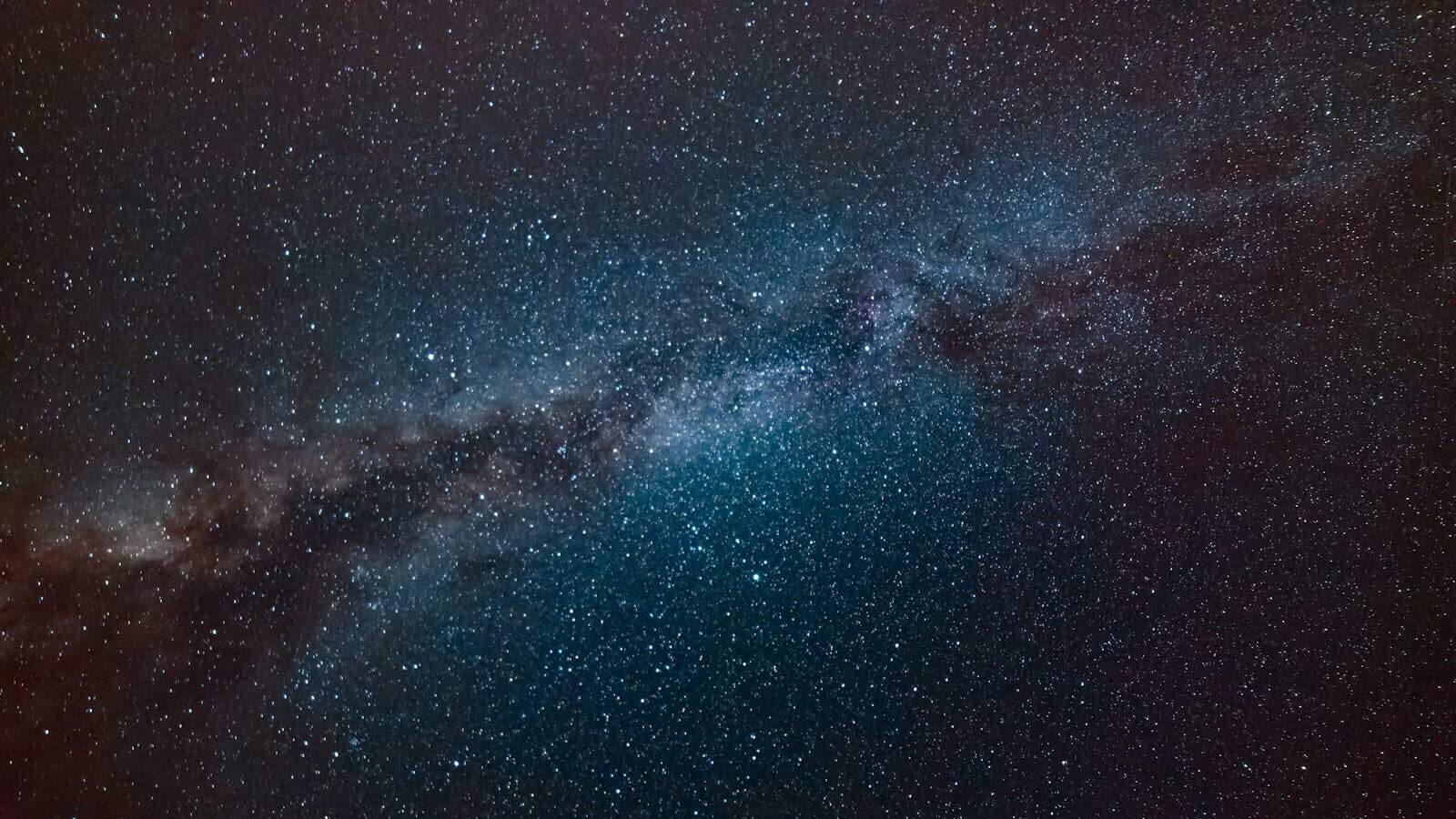
Imagine looking at the cosmic microwave background radiation, which is the leftover heat from the universe’s birth. It measures a steady 2.725 Kelvin everywhere you look, suggesting the entire cosmos is the same temperature from end to end. This uniformity is puzzling because there has not been sufficient time for heat to travel across the vast distances of space to equalize conditions.
Physics indicates that information and heat cannot travel faster than the speed of light; therefore, distinct regions should have different temperatures. The standard theory attempts to address this with “inflation,” a period of rapid expansion, but this is a theoretical band-aid rather than a proven fact. Without this unproven growth spurt, the even temperature of the universe makes zero sense.
The Flatness Problem
If you look at the geometry of the universe, it appears to be perfectly flat rather than curved like a ball or a saddle. For this to happen, the density of matter and energy right after the beginning had to be precise to within one part in a quadrillion. The odds of this happening by random chance are so astronomically low that it screams of fine-tuning.
Any slight deviation in those early moments would have caused the universe to either collapse back on itself or fly apart so fast that stars could never form. It implies that the initial conditions were set with a precision that cannot be explained by current physics. Finding such perfection in a chaotic explosion is like tossing a coin a million times and getting heads every single time.
Dark Matter And Dark Energy
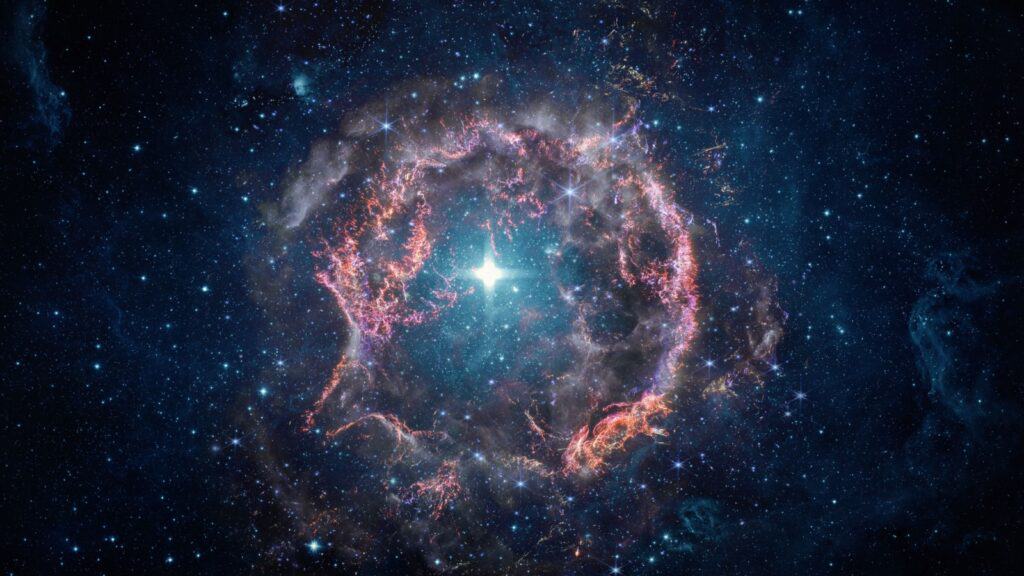
The standard model relies heavily on two invisible ghosts that we have never directly detected. NASA estimates that roughly 95% of the universe is composed of dark energy and dark matter, leaving only 5% for the usual matter we can actually see. It is deeply unsettling to realize that our leading theory accounts for only a tiny fraction of what is actually out there.
These concepts were introduced to reconcile the mathematics with observations that galaxies did not behave as expected under the laws of gravity. Critics argue that inventing invisible substances to save a theory is a sign that the theory itself might be flawed. We are essentially building our understanding of the cosmos on a foundation of 95% conjecture.
The Lithium Discrepancy

Big Bang nucleosynthesis predicts exactly how much of the lightest elements should have been cooked up in the first few minutes. While hydrogen and helium match the predictions, the amount of lithium-7 we observe is way off the mark. Astronomers find about three times less lithium in the oldest stars than the theory says should be there.
This “Lithium Problem” has persisted for decades despite improved telescopes and more accurate nuclear-physics data. It suggests we are either missing a massive piece of the puzzle regarding how elements form or that the initial conditions were different. A theory that fails to predict the basic ingredients of the universe definitely has some explaining to do.
Mature Galaxies In The Early Universe
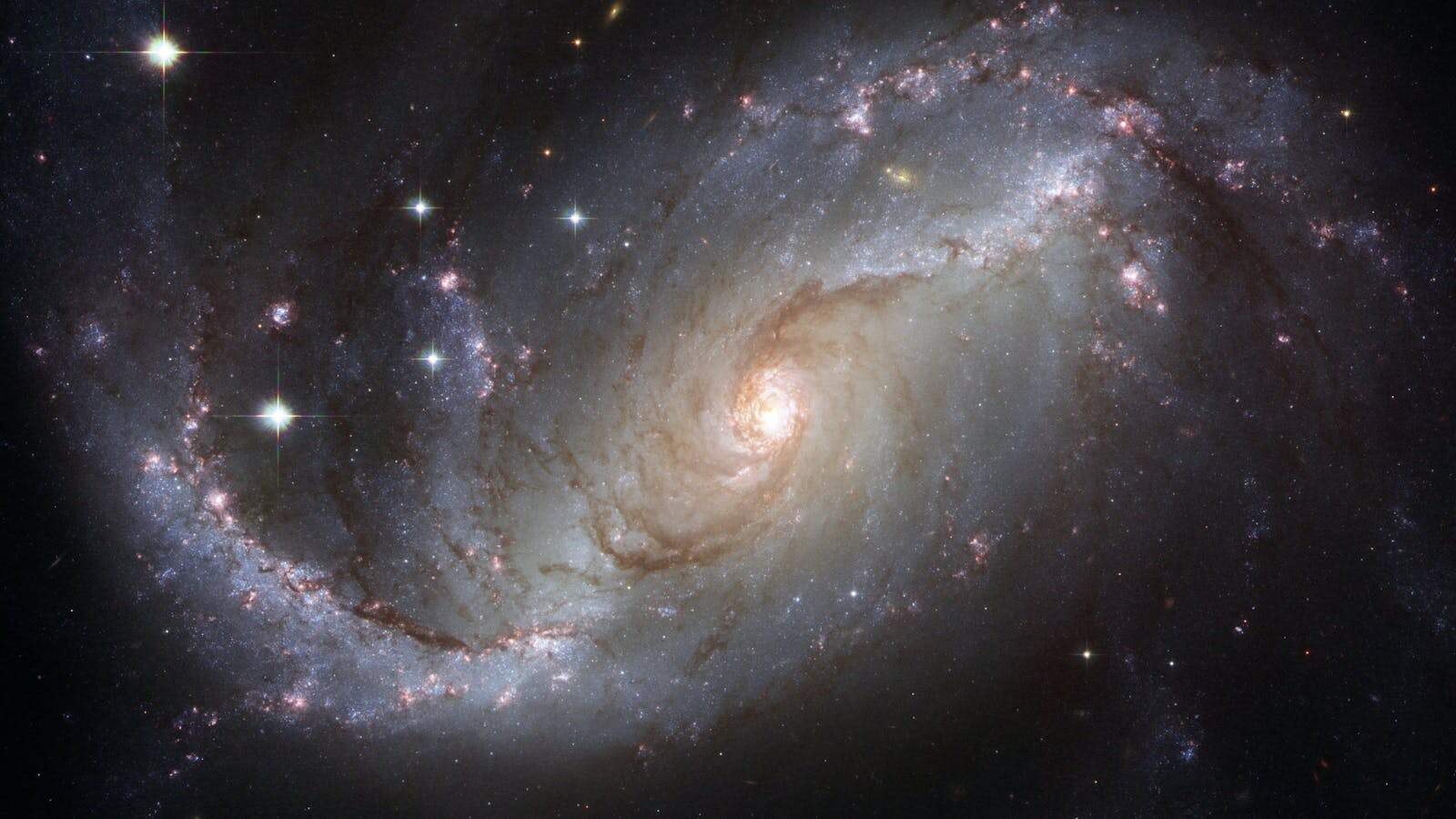
The James Webb Space Telescope has spotted massive galaxies that existed just 500 to 700 million years after the Big Bang. These “impossible” galaxies are as large and structured as the Milky Way, which should have taken billions of years to form. Finding such mature structures so early is like walking into a nursery and seeing a toddler with a full beard.
Standard models predict that the early universe should have been a chaotic place, with only small, forming clumps of matter. Instead, we see organized disks and massive star clusters that defy our timelines for cosmic evolution. These discoveries are forcing astronomers to rewrite the history books on how quickly the universe organized itself.
The Hubble Tension
We have two main ways to measure how fast the universe is expanding, and they yield two different answers. Measurements from the early universe suggest a rate of 67 km/s/Mpc, while observations of nearby stars point to a faster 73 km/s/Mpc. This statistically significant gap, known as the Hubble Tension, suggests our model of the universe is missing something big.
If the Big Bang theory were perfect, these two numbers would match up perfectly, regardless of how we measured them. The discrepancy implies that our understanding of the universe’s expansion history is either incomplete or flat-out wrong. It is like having two precise speedometers in your car that constantly give you different readings.
The Axis Of Evil
When scientists map the cosmic microwave background, they expect to see a random distribution of hot and cold spots. Instead, they found a strange alignment of these spots on a massive scale that lines up with the plane of our solar system. Kate Land and João Magueijo dubbed this the “Axis of Evil” because it threatens the idea that the universe has no preferred direction.
This alignment contradicts the Copernican principle, which states that the Earth is not in a special or central position in the cosmos. If this pattern is real and not just a statistical fluke, it suggests the structure of the universe is far stranger than we thought. Such a large-scale anomaly challenges the assumption that the cosmos appears uniform in all directions.
The Antimatter Problem

Laboratories show that energy creates matter and antimatter in equal amounts, meaning the Big Bang should have produced a fifty-fifty split. However, when matter and antimatter meet, they annihilate each other, which should have left the universe empty and filled only with radiation. The fact that we exist at all means something broke the symmetry and allowed matter to win.
We look out and see a universe dominated almost entirely by matter, with virtually no natural antimatter to be found. The standard theory provides no solid explanation for why this imbalance occurred or for the fate of all the antimatter. It is a massive accounting error that suggests we do not understand the fundamental rules of creation.
The Singularity Breakdown

At the very moment of the Big Bang, the universe was supposedly compressed into a point of infinite density and heat called a singularity. In this state, the laws of general relativity and quantum mechanics clash and break down completely. It is physically impossible to describe what happens at a singularity because our mathematics breaks down.
Relying on a starting point at which physics does not apply makes the entire theory difficult to accept in full. It suggests that the Big Bang may be an approximation of a more profound, more complex truth that we have not yet found. Basing a history of everything on a moment of physical impossibility is a major red flag for theorists.
Alternatives Are Gaining Traction

Because of these gaps, some scientists are dusting off old ideas or proposing novel new ones, such as the Steady State or Plasma Cosmology. These theories argue that the universe may be eternal or governed by electromagnetic forces rather than gravity alone. They offer explanations that avoid the need for a mysterious explosive beginning or invisible dark matter.
While these alternatives are currently the underdogs, the growing list of anomalies is giving them renewed momentum. Science is about questioning established truths, and the Big Bang is facing its most brutal interrogation yet. We might be on the verge of a significant shift in how we understand our place in the stars.
15 Things Women Only Do With the Men They Love

The 15 Things Women Only Do With the Men They Love
Love is a complex, beautiful emotion that inspires profound behaviors. We express our love in various ways, some universal and others unique to each individual. Among these expressions, there are specific actions women often reserve for the men they deeply love.
This piece explores 15 unique gestures women make when they’re in love. From tiny, almost invisible actions to grand declarations, each tells a story of deep affection and unwavering commitment.