
10 inventions that killed their inventors
Progress looks different when you realize some of humanity’s greatest leaps forward were paid for by the lives of the people who dared to take them.
Innovation usually pushes humanity forward, but sometimes the price of progress is incredibly high for the creators themselves. We often think of inventors as brilliant minds safely tinkering in a workshop, yet history is filled with risk-takers who tested their limits. These visionaries were so dedicated to their ideas that they became the very first casualties of their own machines. Their stories serve as a stark reminder that the path to a breakthrough is often paved with dangerous trial and error.
While we enjoy the benefits of modern technology, we rarely consider the dangerous experiments that paved the way for our daily conveniences. From flying cars to radioactive elements, these pioneers often ignored safety in their quest for the next big thing. Some of these accidents were sudden and shocking, while others were slow and painful realizations of a deadly mistake. It is a tragic irony that the creations meant to define their lives ultimately became the instruments of their deaths.
The Coat Parachute Of Franz Reichelt

Franz Reichelt was a French tailor who believed he could design a suit for aviators that would deploy as a parachute. He tested his prototypes with dummies from his apartment window, and the results were mixed at best, yet he felt ready for a live jump. On a cold morning in February 1912, he climbed the Eiffel Tower and hesitated for a long time before jumping to his death.
The crowd and cameras below watched in horror as his suit failed to deploy, causing him to fall straight into the frozen ground. His stubborn belief in his own design blinded him to the obvious flaws that physics would soon make clear. Instead of soaring through the sky as he had dreamed, he left a crater in the park and a cautionary tale for future daredevils.
The Titan Submersible Of Stockton Rush

Stockton Rush, the CEO of OceanGate, believed he could revolutionize deep-sea tourism by using unconventional materials for his submersibles. He famously dismissed established safety regulations, arguing that they stifled innovation and slowed down progress in the industry. A U.S. Coast Guard report released in August 2025 confirmed that negligence and a focus on speed over safety contributed to the tragedy.
The experimental vessel imploded during a descent to the Titanic, killing Rush and four others instantly. Critics had warned him for years that the carbon fiber hull was not designed to withstand the repeated crushing pressure of the deep ocean. His disregard for standard engineering protocols ultimately cost him his life and the lives of his passengers.
The Radioactivity Research Of Marie Curie

Marie Curie is a scientific legend who discovered radium and polonium, transforming physics and chemistry. She spent decades handling radioactive isotopes with zero protection, often carrying test tubes in her pockets or storing them in her desk drawers. In 2024 alone, the National Radiation Protection Committee reported 1,369 incidents involving medical ionizing radiation, showing the risks persist.
Over time, her constant exposure to high levels of radiation led to aplastic anemia, a blood disease that eventually claimed her life. Her notebooks remain highly radioactive today and must be kept in lead-lined boxes and handled with protective gear. She literally gave her life for her work, unaware that the glowing green light she loved was slowly killing her.
The Combat Submarine Of Horace Lawson Hunley
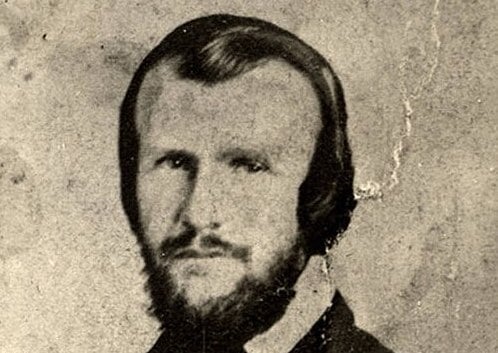
Horace Lawson Hunley was a marine engineer during the Civil War who was determined to build a submarine capable of breaking the Union blockade. His invention, the H.L. Hunley, sank twice during testing, killing part of the crew each time, but he refused to abandon the vessel. Tragically, he decided to captain the third mission himself, only to perish when the submarine sank for the final time.
The vessel was found more than a century later, buried in silt, with the remains of Hunley and his crew still at their posts. They had successfully sunk a Union ship but failed to return, suffocating in the dark waters off the coast of South Carolina. It was a grim end for a man who believed his machine would change the course of naval warfare.
The Flying Car Of Henry Smolinski

Henry Smolinski wanted to make the dream of a flying car a reality by fusing a Cessna Skymaster with a Ford Pinto. He believed that the average person should be able to drive to the airport and take off without changing vehicles. The global eVTOL (electric vertical takeoff and landing) aircraft market was valued at approximately $772 million in 2024, indicating that his vision remains viable.
During a test flight in California, the wings detached from the car mid-air, sending Smolinski and his pilot plummeting to the ground. The welding that held the heavy car to the aircraft frame was insufficiently strong to withstand the stresses of flight. Bad engineering turned a futuristic fantasy into a fatal wreck that ended his company immediately.
The Aerowagon Of Valerian Abakovsky
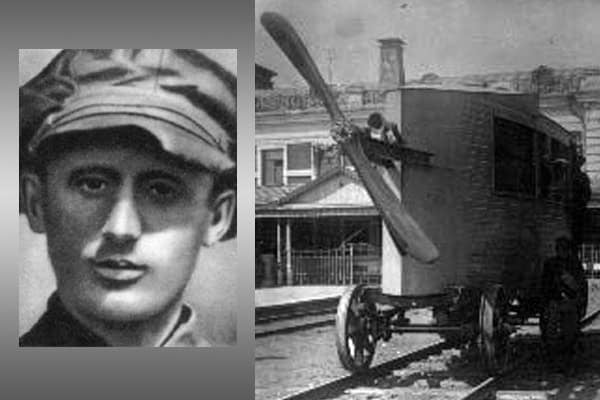
Valerian Abakovsky was a young Soviet inventor who built the Aerowagon, a high-speed railcar powered by an aircraft engine and propeller. It was designed to whisk Soviet officials across the vast distances of Russia at record-breaking speeds. According to the National Safety Council 403, railroad deaths in the U.S. totaled 954 in 2024, proving that speed on rails remains a serious hazard.
On its return trip to Moscow, the experimental train derailed at high speed, killing Abakovsky and several high-ranking diplomats. The lightweight chassis was too unstable for the rough track conditions under which it was operating. His quest for speed resulted in a disaster that buried the project and its creator in the same grave.
The Lead Additives Of Thomas Midgley Jr.
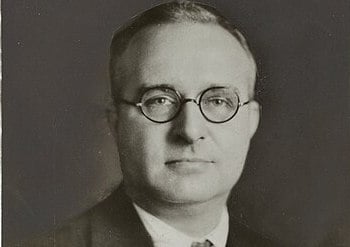
Thomas Midgley Jr. is often called one of the most destructive inventors in history for developing leaded gasoline and CFCs. However, it was a simple rope and pulley system he devised for his own disability that actually killed him physically. After contracting polio, he built a complex harness to help lift himself out of bed, but he became entangled in the ropes.
He was found strangled by his own device, a strange end for a man whose chemical inventions caused harm to millions. It seems almost fitting that a man who poisoned the atmosphere would die by a mechanism of his own making. His brilliance was undeniable, but his creations seemed to carry a curse that followed him to his very last breath.
The Rotary Printing Press Of William Bullock
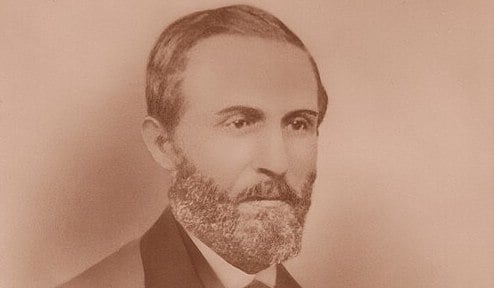
William Bullock made significant improvements to the printing press, enabling faster and more efficient newspaper production in the 19th century. While adjusting a drive belt on one of his machines, his foot was pulled into the heavy gears and crushed severely. Manufacturing Dive data released in late 2024 shows that nearly 400 manufacturing workers were killed on the job in the U.S. during 2023.
Gangrene set in quickly, and he died during the surgery to amputate his leg, becoming a victim of the industrial speed he helped create. It is a harsh reminder that heavy machinery cares nothing for the genius of the person operating it. A moment of carelessness around his own powerful invention cost him his life in a slow and painful way.
The Glider Of Otto Lilienthal

Otto Lilienthal was known as the “Glider King” and was the first person to make successful, repeated gliding flights. He made thousands of flights, documenting the physics of lift that would later inspire the Wright brothers. Aviation is safer now, with the International Air Transport Association recording only seven fatal accidents among 40.6 million flights in 2024.
During one of his routine flights, a gust of wind caused his glider to stall and crash from a height of about 50 feet. He broke his spine and died the next day, famously whispering, “Sacrifices must be made.” His passion for flight laid the groundwork for modern aviation, even though it demanded the ultimate price from him.
The Rocket Car Of Max Valier
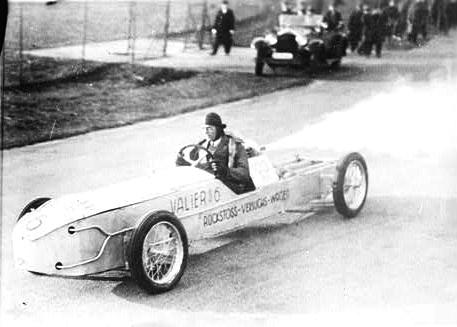
Max Valier was a pioneer in rocketry who dreamed of space travel long before it was technically feasible. He spent his time strapping volatile rockets to cars and sleds, hoping to find a propulsion system powerful enough for the stars. While testing a liquid-fueled engine in Berlin, the device exploded violently, sending a piece of metal straight into his heart.
He bled to death within minutes, becoming the first fatality of the modern space age. His experiments were incredibly dangerous, but they helped prove that liquid fuel was the future of rocketry. He never made it to space, but his explosive end helped launch humanity toward the moon decades later.
15 Things Women Only Do With the Men They Love

The 15 Things Women Only Do With the Men They Love
Love is a complex, beautiful emotion that inspires profound behaviors. We express our love in various ways, some universal and others unique to each individual. Among these expressions, there are specific actions women often reserve for the men they deeply love.
This piece explores 15 unique gestures women make when they’re in love. From tiny, almost invisible actions to grand declarations, each tells a story of deep affection and unwavering commitment.







.jpg?uselang=en#Licensing)

.jpg?uselang=en#Licensing)


.jpg?uselang=en#Licensing)