10 Things Early Christians Believed That Might Surprise Christians Today
What do you think would surprise an early Christian most about Christianity today?
Walk into a Christian church today and much of what you see probably feels timeless. Sunday worship, familiar prayers, pastors and priests, crosses, Bibles, hymns, and beliefs Christians have repeated for generations can make modern Christianity seem directly connected to the churches founded nearly 2,000 years ago.
But step inside a Christian community from the first few centuries, and some things might feel surprisingly unfamiliar.
The earliest Christians didn’t have a completed New Testament sitting on every believer’s shelf. They disagreed over important theological questions, debated which writings should be treated as authoritative, practiced their faith in ways that varied from place to place, and sometimes held attitudes toward money, war, fasting, and the end of the world that could surprise Christians today.
That doesn’t mean there was one universal version of “early Christianity” that modern believers abandoned. Early Christians themselves often disagreed. But their surviving writings reveal a developing religion that was sometimes messier, stranger, and more diverse than the polished version history tends to remember.
Here are 10 beliefs and practices from the first centuries of Christianity that might surprise Christians today.
1. Some Expected Jesus to Return Very Soon
Early Christianity developed under an enormous sense of expectation. The New Testament itself contains passages that reflect an intense anticipation of Christ’s return. Paul tells Christians in Thessalonica about what will happen to believers who are still alive when the Lord comes, while other New Testament passages urge believers to remain watchful and prepared.
Exactly how soon different early Christians expected this to happen is debated, and the New Testament also contains warnings against trying to determine the timing. But expectation of Christ’s return clearly shaped early Christian life. As decades became centuries, Christianity had to exist in a world in which Jesus had not yet returned.
That didn’t eliminate belief in the Second Coming. It changed what Christianity looked like while believers waited. Churches developed institutions, leadership structures, theological traditions, and increasingly elaborate ideas about how Christians should live across generations. A faith expecting history’s dramatic conclusion also had to learn how to live inside history.
2. They Didn’t Have the New Testament as We Know It
Imagine being Christian without a New Testament. For the first Christians, that wasn’t unusual. It was unavoidable.
The earliest Christian communities had Jewish scriptures, oral traditions about Jesus, letters circulated among churches, and eventually written Gospel accounts. But the familiar collection of 27 New Testament books did not arrive as a single completed package immediately after Jesus’s death.
Different Christian communities read different texts. Some writings that eventually entered the New Testament were disputed in parts of the ancient church, while other popular Christian works were read and respected without ultimately becoming part of the biblical canon.
Texts such as The Shepherd of Hermas, 1 Clement, and the Didache circulated among early Christians. Other writings claiming apostolic authority were eventually rejected. The broad contours of the New Testament emerged over time, but arguments over particular books continued for centuries.
Early Christians weren’t simply reading “the Bible” in exactly the way Christians understand that phrase today. They were living through the period in which Christianity was still determining which Christian writings belonged in it.
3. Many Took Fasting Much More Seriously
For many modern Christians, fasting is an occasional personal spiritual practice. For some early Christians, it was built into the weekly rhythm of life.
The Didache, an early Christian text generally dated to the late first or early second century, instructs Christians to fast on Wednesdays and Fridays. Interestingly, it specifically contrasts those days with the fasting practices of others, telling Christians not to fast on Mondays and Thursdays.
That tells us something revealing about early Christianity. Fasting wasn’t merely about avoiding food. It could also help define a community’s identity.
Early Christians also fasted in preparation for important religious moments, and fasting became increasingly important in Christian spiritual practice. A Christian from the second century might therefore find something unusual about a version of Christianity in which a believer could attend church for decades without fasting regularly at all.
4. Some Early Christians Were Deeply Suspicious of Military Service
Christian attitudes toward war and military service have changed dramatically across history. Several influential early Christian writers expressed serious objections to Christians killing other human beings.
Tertullian questioned whether military service was compatible with following Christ, while Origen described Christians as fighting through prayer rather than taking up arms. The historical picture isn’t completely simple, however. Evidence also indicates that Christians did serve in the Roman military, particularly as Christianity expanded.
But early Christian uneasiness about violence was real. This is particularly striking when compared with later Christian history, when Christian rulers commanded armies, churches developed theories of just war, and military service became entirely compatible with Christianity in many traditions.
A question that could be intensely troubling to an early Christian eventually became uncontroversial for millions of Christians.
5. Baptism Could Be Far More Intense Than It Looks Today
Today, baptism might happen during a Sunday service in a matter of minutes. Early Christianity could treat it as the culmination of a lengthy transformation.
As the church developed, people seeking baptism could spend significant time as catechumens—people being instructed and prepared before formally entering the Christian community. Preparation could include teaching, prayer, moral examination, fasting, and sometimes a lengthy period of waiting.
Baptism itself was loaded with meaning. It represented forgiveness, rebirth, entry into the Christian community, and a decisive break with an old life.
That seriousness occasionally produced a strange consequence. Because baptism was associated with the washing away of sins, some Christians delayed baptism until later in life. The Roman emperor Constantine famously received baptism only shortly before his death in 337.
The practice wasn’t simply “getting baptized.” For many early Christians, it marked one of the most consequential boundaries a person could cross.
6. They Could Be Surprisingly Radical About Wealth
Jesus’s warnings about wealth are difficult to miss, and some early Christians took them extremely seriously.
Acts describes members of the Jerusalem Christian community selling possessions and distributing resources according to people’s needs. Later Christian writers repeatedly warned wealthy believers about greed, luxury, and ignoring the poor.
John Chrysostom, writing in the fourth century, became famous for particularly forceful preaching about wealth and poverty. Other early Christian thinkers similarly treated generosity not as an optional virtue for especially charitable believers but as a fundamental obligation.
That doesn’t mean every early Christian lived communally or rejected private property. They didn’t. But some early Christian rhetoric about wealth would sound startlingly severe in many modern congregations.
The question wasn’t always simply, “How much should I give?” It could be closer to, “Why do I have so much while another Christian has nothing?”
7. Christians Disagreed Fiercely About Who Jesus Was
Modern Christianity often presents doctrines such as the Trinity as settled foundations of the faith. Getting there was anything but simple.
Early Christians agreed that Jesus was extraordinarily significant, but intense disputes developed over exactly how his humanity, divinity, and relationship with God should be understood.
Those arguments weren’t minor theological squabbles. They divided churches, involved bishops and emperors, produced councils, exiles, accusations of heresy, and some of the most important doctrinal statements in Christian history.
The Council of Nicaea in 325 is especially famous for confronting the controversy surrounding Arius and the relationship between the Father and Son. But Nicaea didn’t instantly end every dispute. Arguments continued for decades.
Eventually, formulations that became orthodox Christianity emerged from this long process of debate. For Christians accustomed to reciting the Nicene Creed as an ancient statement of faith, it’s easy to forget why a creed was necessary in the first place.
Christians were arguing about the questions it answered.
8. Women Could Hold Important Roles in Early Christian Communities
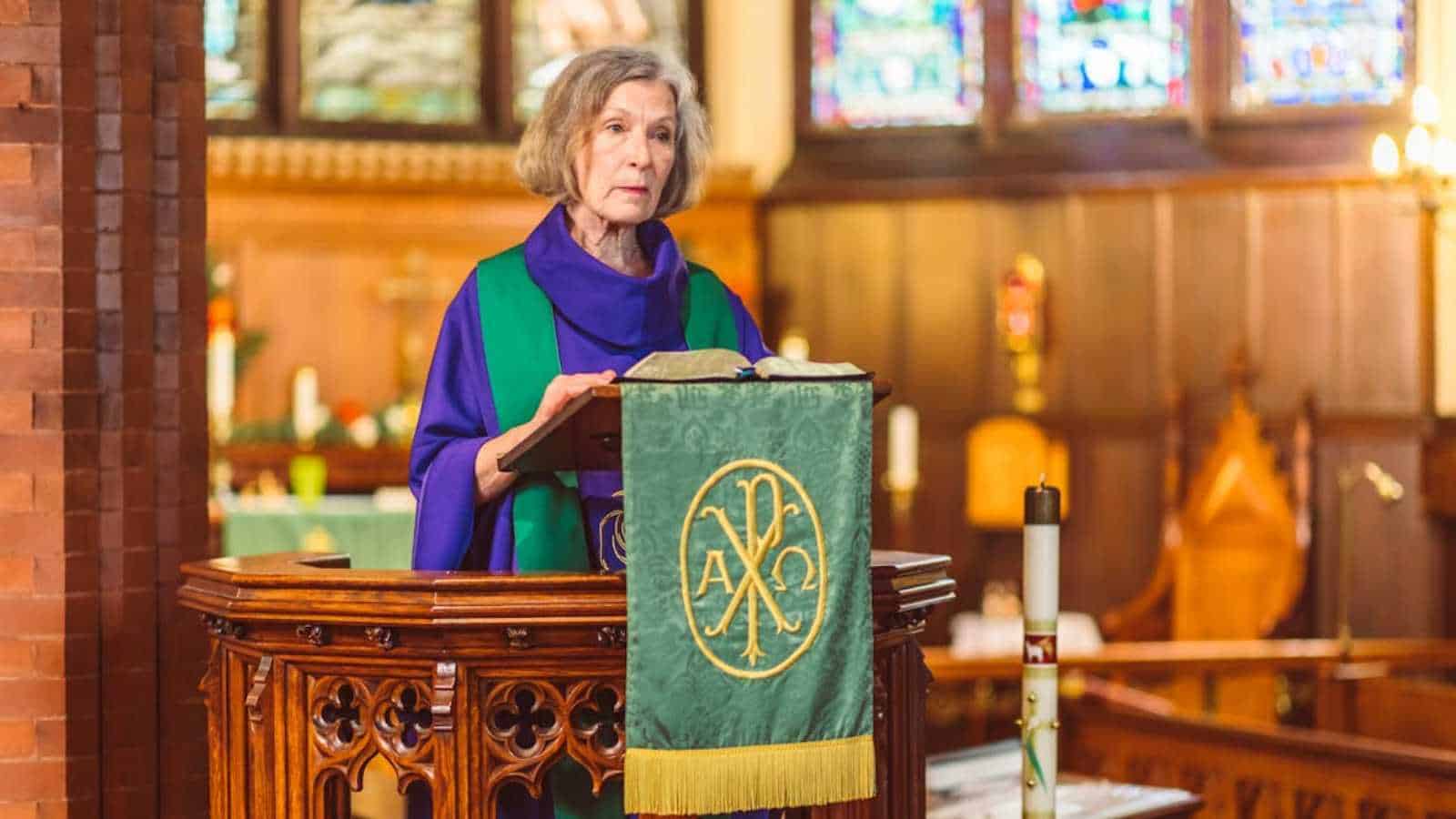
The role of women in early Christianity is both fascinating and heavily debated. The New Testament itself names women who played significant roles in the movement.
Paul calls Phoebe a diakonos of the church at Cenchreae, a Greek term that can be translated in different ways depending on context and later became associated with the office of deacon. Priscilla appears alongside her husband Aquila as an important teacher and coworker.
Paul also refers to Junia in Romans 16 in language that has generated a long-running debate about her relationship to the apostles. At the same time, other early Christian texts restricted women’s roles, and different communities appear to have drawn boundaries differently.
That’s precisely what makes the subject interesting. The earliest centuries don’t provide a simple answer that neatly supports every modern side of debates over women in ministry. Instead, they reveal women participating significantly in Christian communities while arguments over authority and leadership were already developing.
Some debates modern Christians consider contemporary have remarkably ancient roots.
9. Martyrdom Could Be Viewed as a Spiritual Victory
Most people instinctively think of avoiding death as a good thing. Early Christian martyr literature could turn that assumption upside down.
Christians living under periods of Roman persecution told stories of believers who refused to renounce their faith even when threatened with torture and execution. Martyrs were remembered not simply as victims but as witnesses whose deaths demonstrated extraordinary faithfulness.
The early-second-century letters associated with Ignatius of Antioch contain especially striking language about his approaching death. Later accounts such as the Martyrdom of Polycarp and the story of Perpetua and Felicity similarly presented steadfastness in the face of execution as spiritually triumphant.
That didn’t mean Christians were universally supposed to seek death. Church leaders sometimes warned against deliberately provoking authorities or recklessly pursuing martyrdom.
Still, martyrdom became one of early Christianity’s most powerful ideals. Rome could view an execution as punishment. Christians could remember the same death as victory.
10. Early Christianity Was Much More Diverse Than the Name Suggests
Perhaps the biggest surprise is that there wasn’t one perfectly uniform early Christianity. There were Christians who disagreed about Jesus, Jewish law, scripture, authority, worship, salvation, the material world, and numerous other questions.
Groups later described as Gnostics developed interpretations that other Christians strongly rejected. Marcion promoted a radically different understanding of scripture and rejected the Jewish God as the Father proclaimed by Jesus. Jewish-Christian groups maintained practices that increasingly separated them from predominantly Gentile Christianity.
Even among Christians whose theology eventually became mainstream, serious disagreements were common. Over time, particular beliefs, scriptures, leadership structures, and practices became dominant while alternatives were condemned as heresy or disappeared.
Looking backward can make that outcome seem inevitable. Living through it probably didn’t.
The Christians of the second century couldn’t simply flip to the back of a history book and discover which theological arguments would eventually prevail. They were having the arguments.
Christianity Didn’t Arrive Fully Formed
It’s tempting to imagine the earliest Christians practicing a simpler version of the religion we recognize today. Reality was more complicated.
Christianity’s foundational beliefs were rooted in Jesus, his earliest followers, Jewish scripture, and the first generations of the church. But the religion also developed as Christians encountered questions the first believers had never needed to answer in exactly the same way.
Which writings belonged in scripture? How should Christians understand Jesus’s relationship with God? Could a Christian fight in an army? How should churches be governed? What should believers do with wealth? What happened as generations passed and Christians continued waiting for Jesus’s return?
Christians debated those questions, sometimes fiercely. The answers helped shape the Christianity practiced by billions of people centuries later.
Perhaps the most surprising thing about early Christianity isn’t how different those believers were from Christians today. It’s realizing that they were still helping determine what Christianity would become.
READER QUESTION: What do you think would surprise an early Christian most about Christianity today?
More articles you might like:
- 12 Ancient Prophecies That Seem To Reflect Modern Life
- 10 Lessons From The Bible That Make Sense Even Outside Religion
- 12 People God Welcomes and Those He Turns Away