12 common-sense traits kids from the 60s and 70s had that feel rare today
The old childhood rule was simple: go outside, figure it out, and be home before the streetlights came on. For kids in the 60s and 70s, childhood had its own noisy little music: bike chains clicking, screen doors slamming, kids yelling across yards, and someone’s mom calling everyone in for dinner.
There were no tracking apps, no instant answers glowing in a pocket, and no parent checking a live location every ten minutes. That freedom came with real risks, and the past does not need a fresh coat of gold paint. Still, the numbers show something big has changed.
In England, research found that 86% of primary school children were allowed to travel home alone in 1971, but only 25% were allowed to do so by 2010. In the U.S., a study published in the American Journal of Preventive Medicine found that 47.7% of K-8 students usually walked or biked to school in 1969, compared with just 12.7% in 2009. That is more than a travel shift. It is a childhood shift.
This is not about wagging a finger at today’s kids. They are growing up in a world adults built: more traffic, more screens, more fear, tighter schedules, weaker neighborhood ties, and parents who often feel judged for giving a child too much freedom.
Save the Children reported in 2022 that only 27% of children said they regularly played outside near home, compared with 71% of baby boomers and 80% of adults ages 55 to 64 who said they did so as kids.
So the real question is not, “What’s wrong with kids now?” It is quieter, and maybe more important: what common sense skills fade when childhood loses room to roam?
True resourcefulness
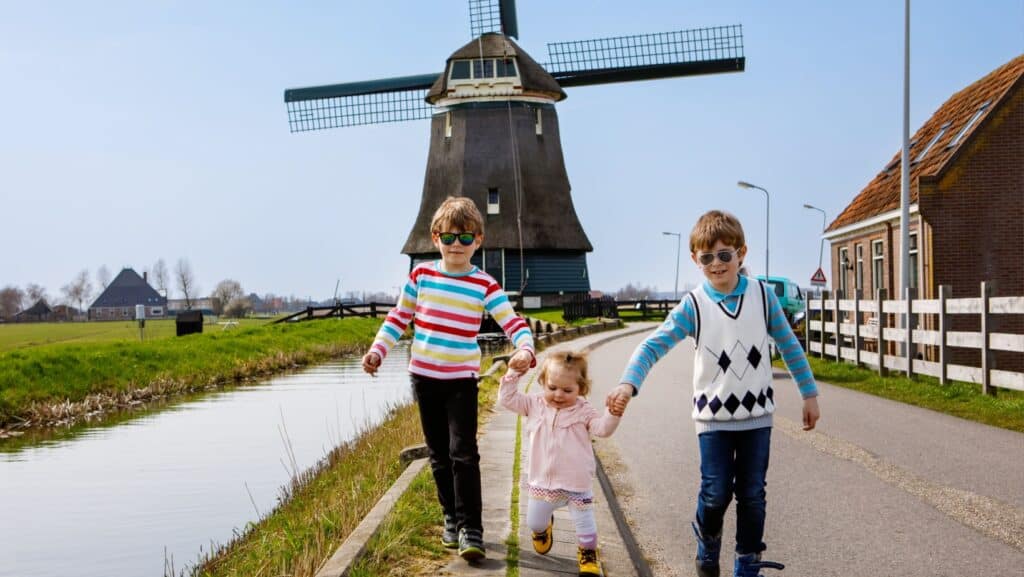
Kids from the 60s and 70s could turn almost anything into an afternoon. A cardboard box became a fort, a stick became a sword, a broken bike became a puzzle, and an empty lot became a whole kingdom before lunch. That kind of resourcefulness was not magic. It came from limits.
If a toy broke, there was no quick video tutorial at your fingertips and no overnight delivery to rescue the day. You tried tape, string, a neighbor’s wrench, or pure stubbornness. Peter Gray, David Lancy, and David Bjorklund argued in a 2023 Journal of Pediatrics commentary that the decline in children’s independent activity may be linked to poorer mental well-being because kids now have fewer opportunities to play, roam, and act without direct adult control.
That matters because resourcefulness grows through friction. A child who has to figure out how to make a game from nothing learns that problems are not always stop signs. Sometimes they are invitations.
Solving problems without screens
Before smartphones, a child who got confused had to pause, think, ask, test, or try again. If they got lost three streets over, they looked for a landmark. If two kids argued over the game rules, they had to negotiate, or the game would die. If the TV had nothing good on, too bad. The mind had to stretch.
Today, screens can give children directions, answers, jokes, games, music, and social contact within seconds. That is useful, but it also changes the shape of problem-solving. UVA Today reported in 2024 that Jamie Jirout, an associate professor at the University of Virginia, studies curiosity and says unstructured, screen-free time can help children build creativity, social growth, and life skills.
Jirout wrote with colleagues that “curiosity occurs when a student experiences a gap in knowledge.” That gap matters. It is the quiet space before the answer, the moment a child has to reach inward before reaching for a device.
Social awareness and risk assessment in public
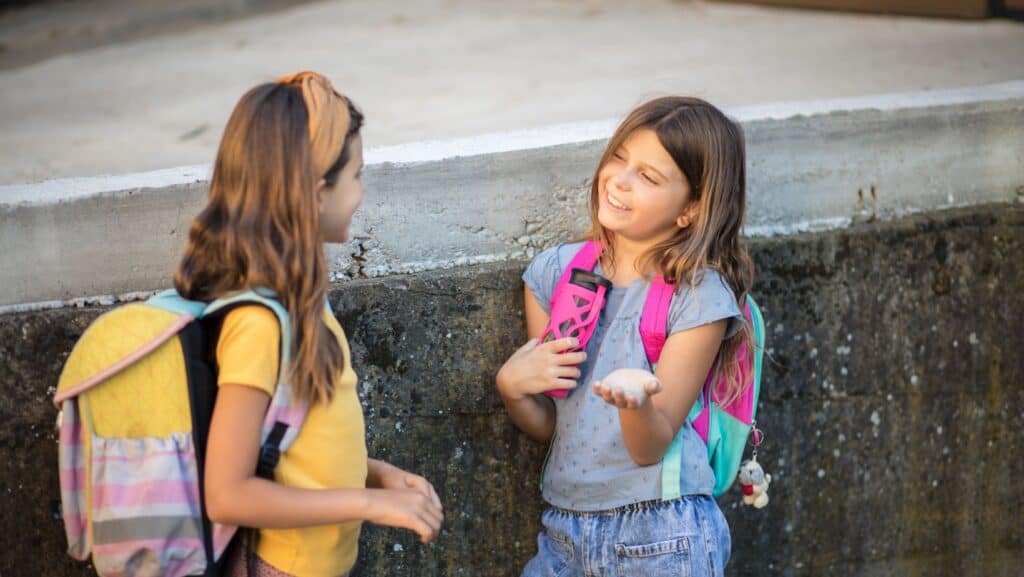
Many kids from the 60s and 70s learned public judgment by living in public. They walked to school, crossed streets, bought candy, talked to store clerks, avoided the grumpy house on the corner, and learned which adults felt safe. That did not make every situation safe, and some children were left with too much responsibility too soon.
Still, repeated small freedoms gave kids practice reading the room. The scale of the change is striking. The University of Westminster data reported by The Independent found permission for English primary school children to travel home alone fell from 86% in 1971 to 25% by 2010, while U.S. school travel research found walking or biking to school dropped from 47.7% in 1969 to 12.7% in 2009.
Those numbers show fewer children now get daily practice navigating streets, timing, strangers, weather, traffic, and small social risks. Social awareness is not just taught in lectures. It is built on sidewalks.
Managing boredom alone

Boredom used to be part of the furniture of childhood. It sat on porch steps, under trees, in the back seat of long car rides, and in those slow summer hours after lunch when nothing seemed to happen. Kids complained, then invented.
They made mud pies, built forts, created clubs, named imaginary enemies, and turned the same backyard into ten different worlds. UVA Today reported in 2024 that Jirout sees boredom as a gateway to creativity, social development, and life skills. She also said that when kids feel uncomfortable or bored, they may start asking what could make an activity more interesting. That is the heart of it.
Boredom can feel like an empty room, but children often furnish it with ideas. Modern childhood has fewer empty rooms. Phones, tablets, streaming, organized activities, and adult planning fill the cracks. The problem is that the cracks are where imagination used to grow wild.
Direct face-to-face communication and conflict resolution
Kids from the 60s and 70s had to speak up more often in person. If they wanted to play, they knocked on a door. If a game got unfair, they argued it out. If someone got mad, they had to face the silence, the glare, or the apology without hiding behind a screen.
Today’s children can still be socially sharp, but much of their communication travels through texts, group chats, disappearing messages, emojis, and carefully edited replies. That shift matters because face-to-face conflict teaches skills that are hard to learn from a screen: tone, timing, eye contact, repair, embarrassment, courage, and empathy.
In a 2024 Harvard EdCast, Peter Gray said that independent play is where children learn to solve problems, make friends, and navigate the natural bumps of play and life. Those bumps may be uncomfortable, but they are also lessons. A child who settles a rule dispute on the curb is learning a tiny version of adult life.
Respect for boundaries and community accountability
Older neighborhoods often had a loose, imperfect, but powerful web of adult eyes. A neighbor could tell you to stop throwing rocks. A store owner could remind you not to run inside. A coach, auntie, uncle, teacher, or friend’s parents might correct you before your own parents even heard about it. That could be annoying, and some adults overstepped.
Still, many kids learned that behavior had broader consequences. Save the Children’s 2022 data helps explain why this feels rarer now: only 27% of children said they regularly played outside near home, compared with 71% of baby boomers and 80% of people ages 55 to 64 who said they did as children.
Less outdoor neighborhood play means fewer casual lessons in shared space, noise, manners, fairness, and respect. A child can learn rules at home, but community accountability teaches something different: your choices ripple past your own front door.
Patience mentality

Children from the 60s and 70s waited for nearly everything. Photos had to be developed. Cartoons came on at a set time. A favorite song might not play on the radio for days. A letter took time. A library book could be checked out. Dinner did not arrive through an app because someone tapped a screen. Waiting was woven into the day, and patience grew because life kept asking for it.
The American Psychological Association reported in 2009 that children had 8 fewer hours of free, unstructured playtime per week than 20 years earlier, citing Tufts University psychologist David Elkind. That loss is about more than fun.
Free time and waiting time teach children to sit with delay without treating it like an emergency. Today’s instant world gives kids wonderful access, but it also trains the nervous system to expect quick relief. Patience is not born from lectures. It is built in the slow space between wanting and getting.
High frustration tolerance

A lot of childhood in the 60s and 70s involved small aggravations that nobody rushed to fix. A bike tire went flat. A kite got stuck. A board game dragged on. A friend went home mad. A knee got scraped. The ice cream truck left before you found your coins.
These were not grand tragedies, but they taught kids something useful: discomfort passes. Harvard’s 2024 EdCast with Peter Gray connects this directly to independence. Gray said adults are often so ready to solve children’s problems that kids are “not developing the sense that they can solve their own problem.” That line stings because it doesn’t blame parents.
Most parents help because they care. But if every rough edge gets sanded down, children may have fewer chances to build frustration tolerance. The older model was not always gentle, but it did give kids room to discover that irritation, failure, boredom, and delay do not have to break them.
Self-reliance and decision-making with agency
Self-reliance used to come in small daily doses. Kids chose which route to take home, which friend to visit, how long to keep playing, how to spend a quarter, and how to explain being late. Those choices were not always wise, but they had weight. That was the point.
Current data show that many children have far fewer opportunities to exercise that kind of agency. In the U.S., the share of K to 8 students who usually walked or biked to school fell from 47.7% in 1969 to 12.7% in 2009, according to Noreen McDonald’s school travel study.
In England, the share of primary children allowed to travel home alone fell from 86% in 1971 to 25% by 2010. Those numbers are really about practice. A child who never gets to make small choices may struggle later with bigger ones. Agency is like a balance on a bike. You learn it by wobbling under your own power.
Dealing with consequences alone

Kids in earlier decades often faced consequences more quickly and with less adult cushioning. If they forgot homework, lost a glove, broke a toy, or upset a friend, an adult might not appear right away to smooth it over. That could be hard, and some children needed more help than they got. Still, small consequences taught a kind of grounded responsibility.
The 2023 Journal of Pediatrics commentary by Gray, Lancy, and Bjorklund argues that independent activities may build mental characteristics that help children deal with stress across life. That is a careful way of saying something many older adults know in their bones: small mistakes can become sturdy teachers.
Modern parents often step in because schools, social media, and other parents make every mistake feel high stakes. But children need low-stakes consequences. They need the forgotten lunch, the awkward apology, the toy they cannot replace, the friend they have to win back with words. That is how accountability becomes real instead of theoretical.
Unstructured, imaginative play

The old play style had very few instructions. Kids invented games, changed rules, made forts, staged backyard dramas, held bike races, played store, argued over fairness, and started again after someone stormed off. That kind of play looked messy because it was trying to do many jobs at once.
The American Academy of Pediatrics clinical report, The Power of Play, states that “play is not frivolous” and that play promotes executive function, social-emotional skills, language, self-regulation, and strong relationships with caregivers. That is a lot of serious development hiding inside a muddy afternoon.
Research summaries also note that children’s free-play time dropped by a quarter between 1981 and 1997, a shift that helps explain why spontaneous play can feel less common now. The tragedy is not that kids have activities. Sports, lessons, and clubs can be great. The loss comes when every game has an adult referee, every hour has a purpose, and children rarely get to build their own world from scratch.
Emotional self-regulation without adult rescue

Many kids from the 60s and 70s had more practice sitting with hard feelings because adults were not always close by or quick to intervene. A child might cry after a fight, sulk under a tree, stomp home from a lost game, or sit alone until anger cooled. That was not always ideal.
Children need comfort, safety, and adults who notice when they are distressed. Still, there is a useful skill inside age-appropriate waiting: learning that a feeling can rise, roar, and pass. UVA’s 2024 boredom piece says that unstructured time can offer children a sense of control and autonomy they may lack on school or camp days, while the AAP says that play supports self-regulation and executive function.
Together, those points help explain what older childhood often gave by accident. It gave kids quiet practice managing themselves. Today, adults often rush in with screens, snacks, talks, fixes, and distractions. Love is good. Rescue is not always the same as love. Sometimes growth starts in the small pause before someone else solves it.
Key Takeaways
Many of the traits that now feel rare did not come from stricter character or better children. They came from a childhood with more independent movement, more unstructured play, more boredom, and more chances to face small consequences.
The data backs that shift: U.S. walking and biking to school fell from 47.7% in 1969 to 12.7% in 2009, while English primary school children’s permission to travel home alone dropped from 86% in 1971 to 25% by 2010.
Modern childhood has gained many protections, but it has also lost practice in patience, self-reliance, tolerance for frustration, social judgment, and face-to-face repair. Save the Children’s 2022 research found that only 27% of children regularly played outside near home, compared with 71% of baby boomers and 80% of adults ages 55 to 64 when they were children.
The goal is not to blame kids or shame parents. The better goal is to restore safe doses of freedom: more unstructured play, more screen-free boredom, more walking where possible, more chances to solve small problems, and more trust that children can develop good judgment through practice.
Disclaimer – This list is solely the author’s opinion based on research and publicly available information. It is not intended to be professional advice.
Like our content? Be sure to follow us