12 reasons schools are clinging to life while AI outsmarts them
The classrooms we grew up with (filled with textbooks, lectures, and homework) are quietly becoming relics. Generative AI can now draft essays, solve equations, summarize readings, and tutor students faster than any teacher in a crowded room. Students are already leaning on these tools, and schools are scrambling to respond.
By mid‑2025, 84% of U.S. high school students were already using generative AI for schoolwork, and 69% were turning to ChatGPT specifically to brainstorm, revise essays, and do research; often before they ever raised a hand in class. The gap between how students learn and how schools pretend they learn is widening, leaving education caught between old structures and a future shaped by machines.
This isn’t just about convenience. It’s about survival. Schools are still anchored in age-based cohorts, rigid curricula, and exams designed before smartphones existed. While students explore AI-enhanced learning at home, institutions cling to outdated models, unsure whether to resist, regulate, or reinvent themselves.
Students Are Already “Going Direct to AI”
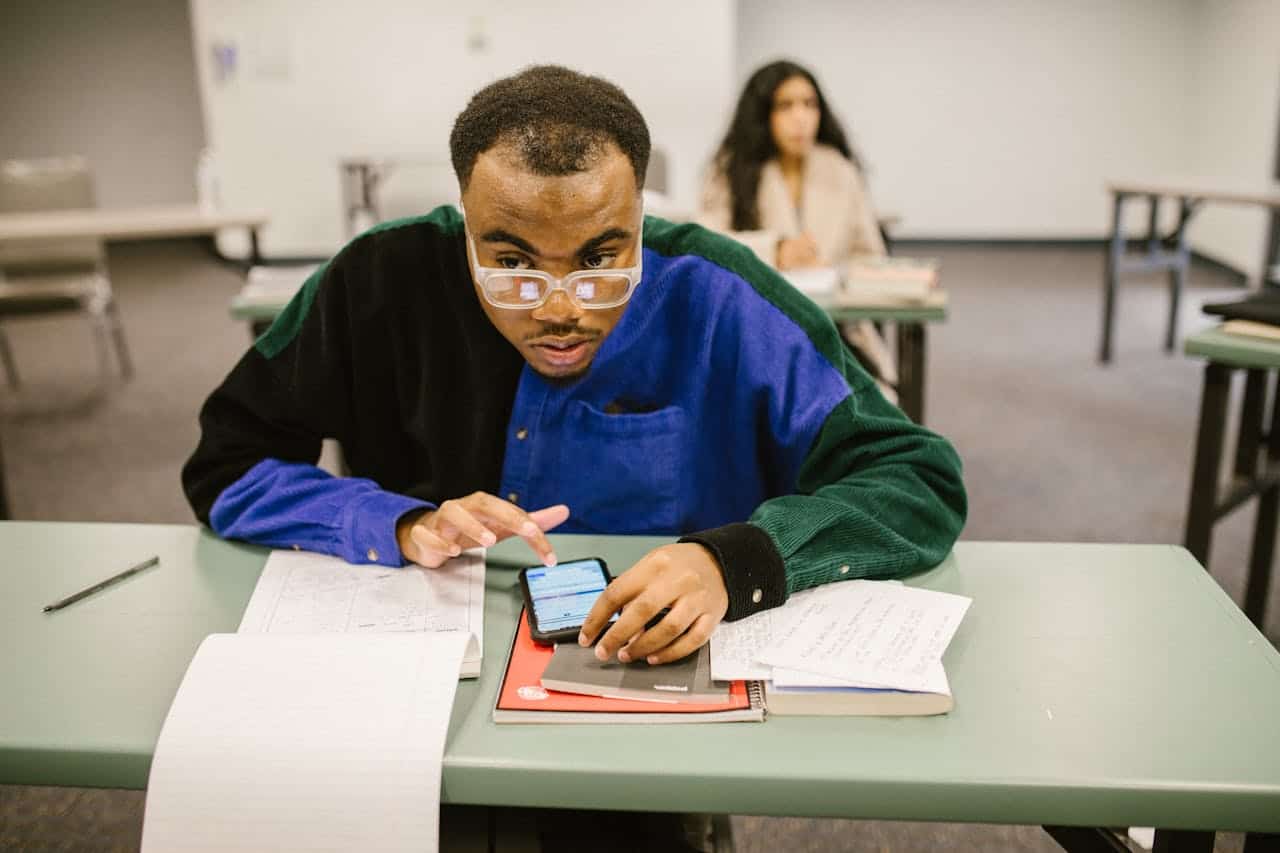
Generative AI has quietly become the default study companion for most teens. A 2025 College Board study found AI use for schoolwork rose from 79% to 84% in just five months, with 69% of students using ChatGPT to brainstorm, research, or revise assignments. About half of the students report outsourcing core academic work entirely, bypassing traditional instruction and disrupting the classroom ecosystem.
Educators are scrambling to catch up, with nearly 40% of schools banning AI outright, while others leave policies vague. Meanwhile, students are learning and producing at a pace schools cannot match. AI has already captured attention in ways classrooms cannot, forcing institutions to maintain rules that no longer reflect reality.
AI Now Performs Core “School Skills” On Demand
AI can summarize texts, solve complex math problems, generate code, and draft essays almost instantly, doing the very tasks schools were built to teach. Harvard psychologist Howard Gardner predicts that by mid-century, cognitive tasks (including synthesizing and creative thinking) may be performed so efficiently by AI that human practice becomes optional. Curriculum designed around memorization and repetition now feels almost ceremonial.
With AI handling these tasks on demand, seat time in classrooms looks symbolic rather than instructional. Teachers watch as students rely on machines to complete assignments that once required effort and reflection. The traditional classroom is struggling to define its value in a world where AI does much of the heavy lifting.
AI Is Personalizing Learning While Schools Still Teach to the Average

AI systems can tailor content, pacing, and challenges to individual students in ways traditional classrooms cannot. UNESCO notes that these systems support marginalized learners and students with disabilities, providing scalable, real-time guidance. Meanwhile, most schools remain locked in age-based cohorts, fixed curricula, and high-stakes exams, teaching to the middle and ignoring the extremes of talent and need.
Parents and students see the contrast at home. AI adapts instantly to their level, while classrooms deliver one-size-fits-all instruction. Industrial-era education looks blunt by comparison, and the learning experience increasingly feels disconnected from the way students naturally absorb information and explore knowledge.
Policy Vacuum: Systems Are Regulating AI With Bans, Not Strategy

AI has outpaced policy. A minority of schools have clear, uniform AI guidelines, while about 40% forbid it altogether. UNESCO warns that rapid AI developments are outrunning debates and regulations, urging human-centered, age-appropriate rules. Brookings emphasizes that risks currently outweigh benefits, particularly in equity, safety, and skill development.
The result is a paradox: students experiment at home with powerful AI tools while schools either ignore them or ban them outright. Administrators are forced to respond reactively, trying to preserve traditional metrics and control rather than shaping a learning environment where AI is integrated responsibly.
Teacher Shortages Make AI Look Like a Tempting Substitute
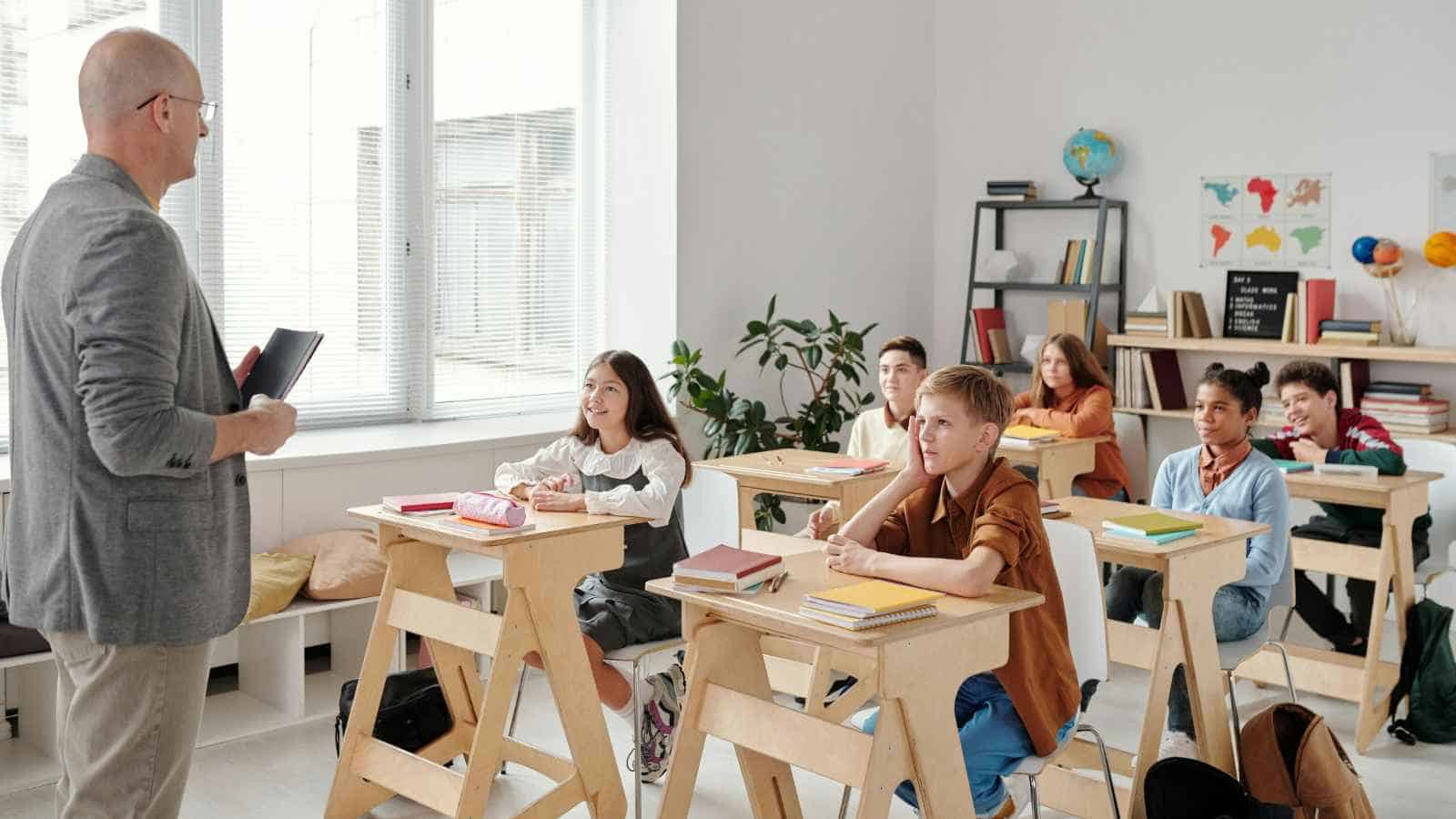
Teacher recruitment and retention are chronic challenges. The OECD reports that the share of principals citing staffing shortages rose from 29% in 2015 to 46.7% in 2022. In under-resourced schools, AI tools that generate lessons, grade assignments, and tutor students become alluring. They offer a cheaper way to compensate for gaps, even if experts caution that AI should augment rather than replace human educators.
Economic pressure creates incentives to lean on AI. Schools are trying to maintain credibility while quietly using software to patch holes in staffing. Students benefit in some ways, but the human connection and mentorship essential to education risk being undermined as AI fills gaps left by chronic underinvestment.
Assessment Systems Are Built on Tasks AI Excels At

Traditional assessment assumes students complete work independently, recalling information and demonstrating skills without external help. AI now performs those tasks effortlessly. Brookings warns that over-reliance on AI encourages “transactional task completion,” eroding critical thinking and knowledge retention. Students describe schoolwork as “so easy you don’t need to use your brain” when AI assists them.
Yet exams, essays, and problem sets still dominate evaluation, creating a mismatch. Schools measure effort in areas AI can automate, leaving students navigating an educational system that pretends these tasks are authentic demonstrations of learning.
AI Threatens to Widen Inequalities That Schools Are Failing to Close

AI could democratize access to tutoring and information, but uneven access risks amplifying existing inequities. Brookings reports that well-designed AI benefits disproportionately reach already-advantaged students, while under-resourced schools struggle with infrastructure, devices, and digital literacy.
UNESCO stresses that inequitable use of AI can exacerbate disparities across inclusion, gender, language, and culture. Affluent families build personalized AI-enhanced learning ecosystems, leaving underfunded schools as low-tech holding zones. AI risks becoming a tool that accelerates opportunity for some while leaving others behind.
The Curriculum Is Frozen While the Job Market Is Automated

Labor markets demand AI literacy, ethical reasoning, and adaptive skills, yet many schools remain focused on static knowledge. OECD and UNESCO warn that essential competencies, including data literacy and critical thinking about AI, are largely absent from curricula.
Schools emphasize syllabus completion over preparing students for real-world automation. Graduates may perform routine tasks efficiently but struggle to orchestrate AI, make judgments, or navigate ethical dilemmas. Curricula disconnected from labor-market realities are now a liability rather than a bridge to opportunity.
Parents Are Split: They See AI’s Benefits but Don’t Trust Schools With It

Parents are experimenting with AI at home, recognizing benefits while worrying about overuse and academic integrity. College Board surveys show nearly 60% of parents believe teens benefit from AI for schoolwork, yet students themselves remain ambivalent about risks. Administrators see value but fear plagiarism, loss of skills, and teacher unpreparedness.
Few schools have embedded AI literacy in mandatory curricula, leaving families to bridge the gap. Parents now juggle expectations for innovation and safety, while schools navigate the tension between supporting tools and controlling outputs that they can’t fully monitor.
AI Is Weakening Trust in Grades, Credentials, and the Value of School
If AI can produce polished essays and solve problem sets, traditional grades lose meaning. Brookings warns that unsupervised AI erodes trust in evaluation and classroom norms. Students’ social-emotional growth and relationships with teachers may suffer as hidden AI use undermines accountability.
Universities and employers are experimenting with AI-driven assessment models. Traditional transcripts risk obsolescence as alternative credentials and portfolios demonstrate skills more efficiently. Schools must rethink assessment or risk becoming obsolete in a digitally mediated education ecosystem.
Systems Are Betting on “More Tech” Without Fixing the Pedagogy

AI alone doesn’t transform learning; pedagogy does. UNESCO stresses that simply layering AI onto old teaching methods produces minimal gains. Brookings echoes that AI enhances learning only when embedded in inquiry-driven, collaborative, and ethically guided instruction.
Yet many schools use AI for grading, content generation, or remediation while retaining lecture-focused, exam-heavy models. The human skills AI cannot replicate (curiosity, empathy, ethical reasoning) remain underdeveloped. Schools cling to familiarity while AI accelerates routine tasks, exposing the gap between tools and transformative teaching.
The One Thing AI Can’t Do (Yet) Is the One Thing Schools Underinvest In

AI’s biggest challenge is also its gift. Howard Gardner and UNESCO emphasize that human agency, ethics, and social-emotional development cannot be automated. These are precisely the skills schools often treat as optional add-ons. AI handles routine, testable work, but cannot cultivate moral judgment, empathy, creativity, or ethical reasoning.
Schools cling to outdated practices while ignoring the human strengths AI cannot replicate. Survival-focused strategies emphasize what AI does best, leaving the core of education underinvested, underdeveloped, and dangerously misaligned with a future shaped by technology.
Final Thoughts
AI is transforming learning faster than schools can adapt. Classrooms, curricula, and assessments are straining under tools students already use to bypass traditional instruction. The challenge isn’t AI; it’s how schools respond. Those that cling to old models risk irrelevance, while those that focus on uniquely human skills can guide students through a world where AI accelerates knowledge but cannot teach empathy, ethics, or judgment.
How can schools embrace AI without losing what only humans can provide in education?
Disclaimer – This list is solely the author’s opinion based on research and publicly available information. It is not intended to be professional advice.
Like our content? Be sure to follow us