12 reasons women are drinking more than ever
For most of recorded history, heavy drinking was treated as a man’s problem. The research reflected it, the treatment programs were designed around it, and the cultural narrative reinforced it. That assumption is now crumbling under the weight of its own data.
Globally, the gap in risky drinking habits between men and women has shrunk dramatically, moving from roughly three men for every woman to nearly equal rates today, according to BMJ Journals. In the U.S., women in their teens and early twenties have begun reporting drinking and getting drunk at higher rates than their male peers, in some cases for the first time since researchers began measuring such behavior.
The mortality numbers tell a sharper story. Between 2016 and 2021, alcohol-related deaths increased by nearly 35% in women and 27% in men, according to the CDC. A separate study published in PLOS Global Public Health, tracking deaths from 1999 to 2024, found that the largest rise in alcohol-induced deaths was 255% among women aged 25 to 34, outpacing the 188% increase seen in men of the same age.
These are not marginal differences. They are a statistical signal that something has fundamentally shifted in how women relate to alcohol, and why.
What follows are 12 of the most significant reasons that the shift is happening.
The pandemic accelerated it

Before COVID-19 existed, there was already a slow-moving trend of women increasing their alcohol consumption. The pandemic didn’t start something from scratch; it poured fuel on an existing fire. Alcohol sales rose by 54% during initial stay-at-home orders in 2020, and multiple studies found that women were disproportionately more likely than men to report rising drinking levels – particularly those experiencing elevated stress.
Women shouldered an outsized share of pandemic-era disruption: one study tracking COVID-era stressors found that cisgender women experienced a 64% increase in home disruptions and a 94% increase in healthcare barriers compared to pre-pandemic norms, while simultaneously being more likely than men to report clinically significant anxiety. Alcohol stepped in as the affordable, immediate, socially acceptable release valve.
Dr. George Koob, director of the National Institute on Alcohol Abuse and Alcoholism, said plainly: women are more susceptible to major depressive disorder and anxiety at roughly double the rate of men, and when stress in society increases, it is not surprising that the drinking follows. What was surprising – to some – was how quickly what began as situational drinking calcified into habitual use. The pandemic ended. The drinking, in many cases, didn’t.
Stress became a permanent condition, not a passing one

Strip away the pandemic, and the fundamental problem remains: modern life, in its ordinary, non-crisis form, demands an extraordinary amount from women. The 2025 Women in the Workplace report from LeanIn.Org found that 6 in 10 senior-level women now report experiencing burnout – not as a temporary spike, but as a chronic operating condition.
Among female attorneys specifically, a study found that the prevalence of depression, anxiety, stress, and risky drinking was all significantly higher in women than in men, with one in four women in that sample contemplating leaving the profession due to mental health concerns.
When the work never really ends, when the mental labor of running a household layers on top of a career, when performance expectations allow no visible fragility, alcohol becomes the one thing that doesn’t require an explanation or schedule.
The marketing machine targeted women directly and deliberately

The alcohol industry did not passively benefit from women drinking more. It actively engineered it. Since the 1990s, companies have shifted their advertising strategies to capture the female market, and the pivot has been systematic: slimmer cans, fruity flavors, pink and purple labeling, sugar-free alternatives, and low-calorie positioning. Slogans like wine o’clock and mommy juice didn’t emerge organically from culture; they were seeded by brands and amplified by the retail environments that carry them.
Alcohol brands deliberately reflect and reproduce aspects of feminine identity to normalize consumption and encourage interaction. Brands wrapped this in the language of femvertising: the strategic deployment of feminist messaging to sell a product. Campaigns aligned alcohol with empowerment, independence, and self-reward. The message, dressed up as liberation, was straightforward – you work hard, you deserve a drink.
The parallel drawn by multiple public health researchers is to cigarettes in the late 1960s, when tobacco companies targeted women with campaigns built around emancipation imagery. The resulting spike in lung cancer among women came decades later. Researchers are now watching a similar arc unfold with alcohol-related liver disease, cancers, and cardiovascular deaths in women.
Mommy wine culture made dependence look like humor

There is a particular category of drinking normalization that warrants its own examination, separate from broader industry marketing, because it operates within communities rather than on broadcast channels. Mommy wine culture, the sprawling social media ecosystem of memes, merchandise, and mutual validation built around mothers needing wine to survive parenthood.
Motherhood is exhausting, undervalued, and structurally isolated in ways that have not improved meaningfully in decades.
What makes this cultural formation particularly insidious is the social pressure it generates in both directions. Mothers who participate normalize progressively heavier drinking as simply part of having an authentic mothering experience.
Mothers who don’t drink may find themselves excluded from social circles or expected to justify the absence of alcohol at gatherings. And critically, the humor-first framing makes it genuinely difficult for a mother developing a real dependency to recognize her situation as a problem rather than just a relatable joke shared with friends.
Women’s bodies process alcohol more harshly and more quickly
The biological reality of how women metabolize alcohol deserves clear articulation, because it remains widely misunderstood even by women who drink regularly. At the same amount consumed, a woman will have a higher blood alcohol concentration than a man of similar body weight.
Women have lower quantities of the gastric enzyme alcohol dehydrogenase, which begins breaking down alcohol before it reaches the bloodstream. Less enzyme activity means more alcohol passes into the circulation unprocessed.
The rate of progression to cirrhosis in women is 13.5 years on average, compared to 20 years in men, controlling for the fact that women were consuming less alcohol over that period. In other words, women reach the same level of liver damage faster, on less alcohol, in fewer years.
And even after abstinence, women with cirrhosis showed lower five-year survival rates than men who had abstained. The organ damage does not reliably reverse.
For women who are drinking daily under the impression that moderate drinking is fine – or even protective, under older and now largely discredited research – that number carries real clinical weight.
Loneliness and social disconnection drove people toward the bottle
The U.S. Surgeon General issued an advisory in 2023 declaring loneliness and social isolation a public health epidemic. Women, particularly young women and mothers, were identified as among the hardest-hit groups. This timing matters: the advisory came as alcohol consumption data for the post-pandemic years were still being processed, and the relationship between loneliness and drinking had already been well established in the literature.
People who felt lonelier on average consume more alcohol over time, and social isolation, as an objective condition, not just a feeling, is a direct predictor of heavy drinking during the pandemic, partly because isolation intensified loneliness. Alcohol, with its short-term anxiolytic effect and its cultural framing as a social lubricant, fills the space that social connection leaves empty. It mimics the neurological signature of belonging without requiring the vulnerability that genuine connection entails.
The feedback loop is where the damage accumulates. Alcohol is a central nervous system depressant, and heavy drinking over time intensifies the very conditions it appears to relieve: depression, social withdrawal, anxiety, and shame, creating a cycle that becomes progressively harder to interrupt.
Increases in loneliness during the pandemic were particularly pronounced among low-income individuals, those with chronic health conditions, and young women. That last group corresponds almost exactly with the demographic showing the steepest increase in alcohol-induced deaths.
Trauma sits at the root of an enormous share of women’s drinking
The relationship between trauma and alcohol in women is one of the most consistent findings in addiction research, and one of the least discussed in the cultural conversation about why women drink.
People with a history of childhood physical or sexual abuse face, respectively, a 74% and 73% greater risk of developing a substance use disorder in their lifetime than those without such histories. Women are statistically more likely than men to have experienced childhood abuse or sexual assault.
A study of U.S. women by Epstein, Saunders, Kilpatrick, and Resnick found that PTSD symptoms following childhood rape were associated with twice the number of subsequent alcohol abuse symptoms, with PTSD functioning as the mediating pathway between the rape and the drinking.
The short-term relief is real. The long-term damage is also real and cyclical; alcohol disrupts sleep architecture and worsens anxiety, which intensifies the PTSD symptoms, which drives more drinking.
Exposure to intimate partner violence follows a similar pattern. Given that domestic violence rates increased during pandemic-era lockdowns, the intersection of these risk factors compounded in ways that public health infrastructure was not positioned to address. Women do not typically walk into a treatment center and open with their assault history – but in many cases, the assault history is where the drinking started.
The mental health crisis in young women is directly linked to drinking rates

Rates of depression, anxiety, eating disorders, and suicidal ideation have been climbing among teenage and young adult women for over a decade, a trend that predates the pandemic and has only deepened since. The mental health crisis and the drinking crisis are not separate phenomena.
The 2019 U.S. data that first drew serious research attention showed young women aged 18 to 22 reporting both drinking and intoxication at higher rates than their male peers – a reversal of historical norms. Researchers noted that this shift paralleled the documented rise in mental health conditions among the same demographic.
Women have twice the risk of men for depression and anxiety, and heavy drinking worsens both. A woman who begins drinking to blunt anxiety finds that the next morning her anxiety is reliably worse, not better, but the same neuroscience that drives addiction also drives the repetition of behaviors that provide temporary relief regardless of their long-term cost.
What makes this particularly difficult to interrupt is that the women most likely to drink in response to mental health struggles are often those least likely to seek formal treatment. Among reproductive-age women meeting clinical criteria for alcohol use disorder in a Harvard study using 2015-2021 data, only 4% received treatment.
The perimenopause and menopause window carries its own risks

A 2025 study published in a peer-reviewed journal examined 936 women aged 40 to 65 and found that perimenopausal women, those in the transitional phase before menopause, reported the highest levels of menopausal symptoms, the strongest drink-to-cope patterns, the most negative mood, and the lowest overall well-being scores of any group in the study. The relationship between perimenopause and hazardous drinking was partially mediated by those negative reinforcement drinking motives, meaning the desire to chemically blunt uncomfortable experiences was actively driving consumption.
Perimenopause can last up to a decade. During that period, erratic estrogen activity precedes an eventual decline in both estrogen and progesterone, disrupting the neurochemical systems responsible for mood, sleep, and behavior.
Hot flashes, night sweats, insomnia, mood volatility, and anxiety are common. The instinctive response, a glass of wine to relax, actually worsens most of these symptoms: alcohol disrupts deep sleep architecture, can trigger vasodilation that intensifies hot flashes, raises cortisol, and, as a depressant, deepens the very emotional instability it appears to blunt.
The concern extends beyond discomfort. During menopause, estrogen’s protective effects on the cardiovascular system and bones diminish. Alcohol raises the risk of both cardiovascular damage and fracture by additional mechanisms during exactly this window.
Women navigating midlife are being told by their symptoms that they need relief, by the culture that wine is the answer, and by the biology that it is actually making things worse. Most have not been told the last part clearly.
Financial independence gave women their own drinking money and privacy

The economic history of women’s alcohol consumption is under-discussed. For most of the twentieth century, women’s lower rates of drinking were partly explained by factors of access, autonomy, and money.
Drinking outside the home costs money; buying alcohol requires independence; heavy drinking is harder to conceal when you have no private income and no private space. As women’s economic participation grew, so did all three of these variables. By 2011, women accounted for nearly 60% of all wine purchases in the United States.
Economic independence doesn’t cause drinking. But it does remove the practical barriers that historically constrained it. A woman with her own income, her own bank account, and her own home has the same material access to alcohol as any man – and studies suggest the marketing industry recognized this structural shift and moved accordingly.
A more nuanced view is that economic liberation and the pressures that came with it created a contradictory situation: women gained access to alcohol’s temporary relief at the same time they took on new categories of stress that required relief. The income bought both the wine and the workload that seemed to justify it.
The glass after a long day is not a pathology for most women who pour it. But the industry built an entire consumer culture around the version of it that makes a habit look like a reward.
Research was built for men, leaving women dangerously underinformed
Until the 1990s, most alcohol research was conducted almost entirely on male subjects. The assumption was that findings would generalize. They did not.
The biological differences in how men and women process alcohol, in enzyme levels, body water ratio, hormonal interactions, and disease progression timelines, mean that decades of research on safe drinking levels, health effects, and addiction patterns were quietly inapplicable to half the population. Women did not know this. Many clinicians did not know this either.
A 2016 descriptive review found that women were enrolled in as few as 1% of disulfiram trials and 3% of benzodiazepine trials used to establish the efficacy of approved AUD medications – numbers too low to detect any sex differences in response. Even for the better-studied drugs like naltrexone and acamprosate, women represented only around 22-23% of trial participants.
The Gallup survey published in 2025 found that for the first time in its tracking history, a majority of Americans – 54% – now believe that even moderate drinking is bad for health. Women are more likely than men to hold that view, at 60% versus 47%. The shift in belief has been sudden; the correction of decades of misrepresentation came very late for the women who made decisions based on the old consensus.
Alcohol use disorder in women is massively undertreated
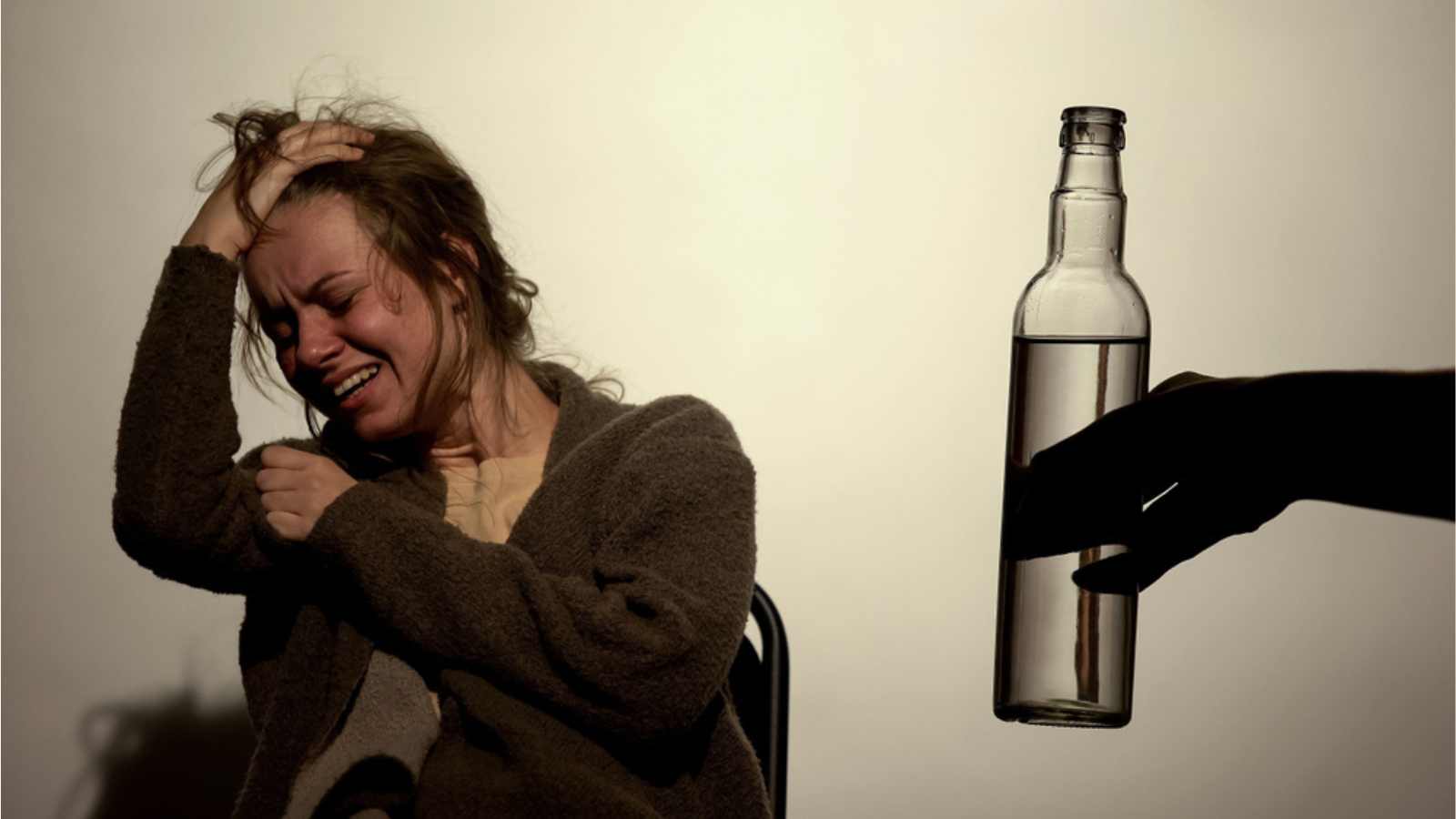
Among reproductive-age women who met clinical criteria for alcohol use disorder in a large Harvard study, only 4% had received treatment. Among all adults, the vast majority – 78.1% – of those with alcohol dependence receive no care at all.
For women, the barriers are not simply systemic; they are deeply personal and social. Stigma operates differently for women than for men. A man described as a heavy drinker is often characterized by a certain rugged cultural familiarity. A woman with the same level of consumption is more often characterized as failing in the roles society assigned her.
Women are more likely to experience severe barriers to treatment than men; pregnant women face even more. Many fear losing custody of children. Many are operating in professional environments where disclosure feels career-ending.
Many, particularly those classified as high-functioning, do not identify their drinking as a problem at all, partly because the definition of problematic drinking they’ve absorbed was written around a different kind of drinker and a different kind of life.
The telescoping effect means that by the time many women do seek help, the damage is more advanced than it would be in a man with an equivalent drinking history. Emergency room visits related to alcohol rose 70% among women from 2006 to 2014, compared to 58% among men.
Alcohol-related hospitalizations increased by nearly 70% in women over roughly the same period, versus 43% in men. These are not future projections. They are the record of what happens when a population drinks more, hits physical consequences faster, and accesses care less.
Key takeaways

- The gender gap in alcohol is closing fast, and women are paying a disproportionate biological price for it.
- Women’s bodies reach dangerous thresholds faster and on less alcohol than men’s, making the same drinking habits measurably more lethal.
- Stress, trauma, and untreated mental health conditions are the primary engines driving women toward the bottle.
- The alcohol industry deliberately engineered a drinking culture around women while clinical research left them almost entirely out of the trials that determined safe use and treatment.
- Roughly 1 in 4 women will develop alcohol use disorder in their lifetime, but only 4% receive treatment.
Disclaimer – This list is solely the author’s opinion based on research and publicly available information. It is not intended to be professional advice.
Like our content? Be sure to follow us