12 signs men really don’t care about you at the gym
The hardest lift some women do at the gym has nothing to do with dumbbells.
It is walking in, reading the room, guarding personal space, dodging stares, ignoring comments, and still trying to focus on the workout they came for. The gym should smell like effort, rubber mats, chalk, and fresh starts. For many women, though, it also comes with a second workout: staying alert enough to feel safe.
That matters because this is not rare. RunRepeat surveyed 3,774 gym members and found that 56.37% of female gym members had experienced harassment at the gym, compared with 21% of male members. BarBend’s survey of more than 1,300 mostly female respondents found that only 12.8% said they had never felt unsafe in a training environment, which means 87.2% had felt unsafe at least sometimes. The same survey found that 93.4% said unwanted attention had disrupted their workout performance or intensity.
So when we talk about men who “don’t care” at the gym, this is not about women needing male approval. It is about respect, safety, boundaries, space, and basic decency in a place everyone pays to use.
They Never Make Eye Contact Unless You’re Noticeable for Appearance

There is a big difference between respectful awareness and only noticing a woman when her body catches attention. A man who respects the room can make normal eye contact, share equipment politely, and move through the space without seeming out of place.
A man who does not respect you may ignore you as a person until your outfit, shape, or movement gives him something to stare at. BarBend found that 90% of its female respondents had been stared at in the gym, and RunRepeat found that 1 in 4 female gym members had experienced unwanted attention.
That kind of attention is not connection. It is pressure. The brutal sign is not that he fails to flatter you. The sign is that his awareness switches on only when your appearance becomes useful to him. Respect sees the lifter, not just the body lifting.
They Never Offer Help, Even When You’re Struggling

Most women do not want random men interrupting their set to lecture them on form. BarBend found that 76.2% of respondents had received unsolicited training advice, and many women described it as intrusive, distracting, or insulting. Still, there is a difference between unwanted coaching and basic safety awareness.
If someone is pinned under a bar, dizzy after a set, dropping equipment dangerously, or clearly in distress, a decent gym-goer checks in or alerts staff. Men who do not respect you either invade with advice when nobody asked, or disappear when basic human concern is needed.
Good gym etiquette lives in that middle ground: do not disturb people just to feel important, but do not ignore someone in a real safety moment. Nick Rizzo’s RunRepeat report clearly placed the responsibility on fitness spaces, saying studios and health clubs need to “provide a safe environment for members.” That standard should shape members, too.
Their Conversations Never Include Your Opinions or Expertise

Some men act as if women in the gym are decorations, not lifters, athletes, trainers, beginners, experts, or people with their own goals. They may talk around you, explain things you already know, ignore your advice, or include every man nearby before asking what you think.
The 2025 PLOS ONE study by Emma Cowley and Jekaterina Schneider found that women in gyms often reported barriers linked to body image, clothing, the gym environment, and interactions with others.
ScienceDaily’s summary of that study said women had to “fight for space in the gym and to be taken seriously,” while navigating harassment and unsolicited comments from men. That is the heart of this sign. It is not about demanding attention. It is about not being treated like furniture in a room where you are also working, sweating, learning, and paying for the space.
They Never Notice Changes in Your Workout or Body
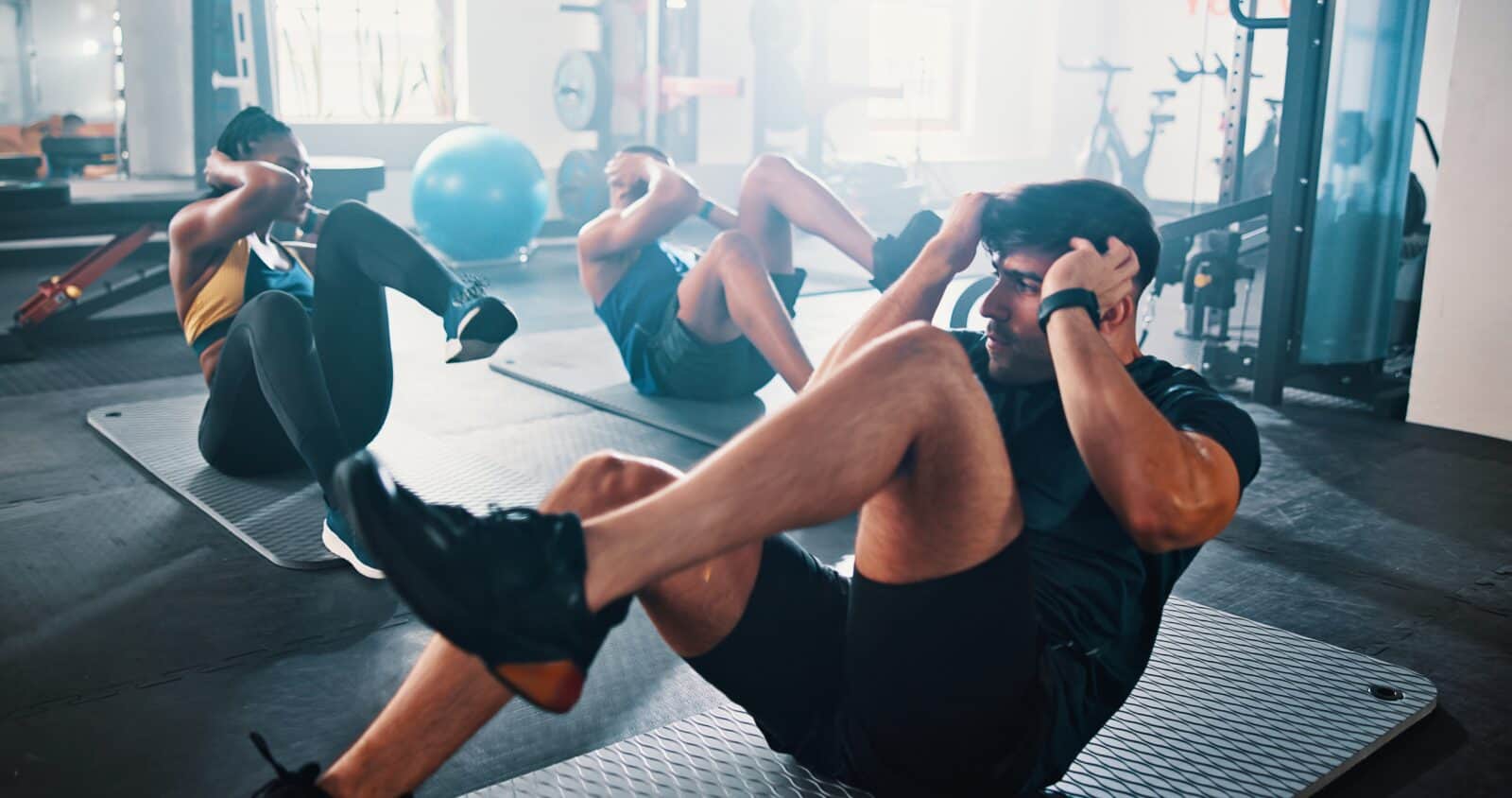
This point needs careful framing because women are not at the gym to be inspected. A respectful man does not need to comment on your body, track your weight, or monitor your routine.
Still, there is a form of healthy gym community where people notice effort in a non-creepy way: a consistent schedule, a stronger lift, better form, or a tough workout completed with grit. Men who do not respect you either reduce progress to appearance or ignore the work completely.
The PLOS ONE study found that women often feel judged for their appearance and performance, leading to a sense of inadequacy in gym spaces. That is why recognition has to be careful. “Strong lift” is different from body commentary. Respectful noticing honors effort. Disrespectful noticing turns a woman’s training into a visual event.
They Stare at Other Women While Completely Ignoring You

Staring is one of the clearest ways gym culture can turn uncomfortable. BarBend’s survey found that 90% of respondents had been stared at, 66.3% had received comments about their bodies, and 66.2% had had their personal space invaded.
If a man’s eyes keep roaming around the room, but he cannot offer ordinary respect to the women near him, that is not harmless social awkwardness. It signals that women are being sorted by visibility, appeal, or usefulness rather than being treated as members sharing the same space.
This is not about jealousy or wanting a man to notice you. It is about the cold message behind selective attention: women who attract his gaze matter as objects, and women who do not are invisible. Both sides of that are disrespectful.
They Don’t Ask Questions About Your Goals or Progress

A gym does not have to be a social club, and many women prefer to train in peace. But if a man claims to be friendly, helpful, or interested, yet never asks one real question about your goals, progress, preferences, or comfort, his attention may be shallow.
Real respect sounds like curiosity without pressure: “Are you using this?” “Do you need a spot?” “Is this space okay?” “What are you training today?” The 2025 PLOS ONE study found that women’s gym experiences are shaped by the physical environment and interactions with others, suggesting that small social moments matter.
Study author Emma Cowley told Theravive, “We aimed to understand how gym environments impact women’s confidence, comfort, and ability to fully engage in exercise.” That quote fits here because a gym culture that ignores women’s goals also weakens their ability to train freely.
They Never Celebrate Your Wins, Big or Small
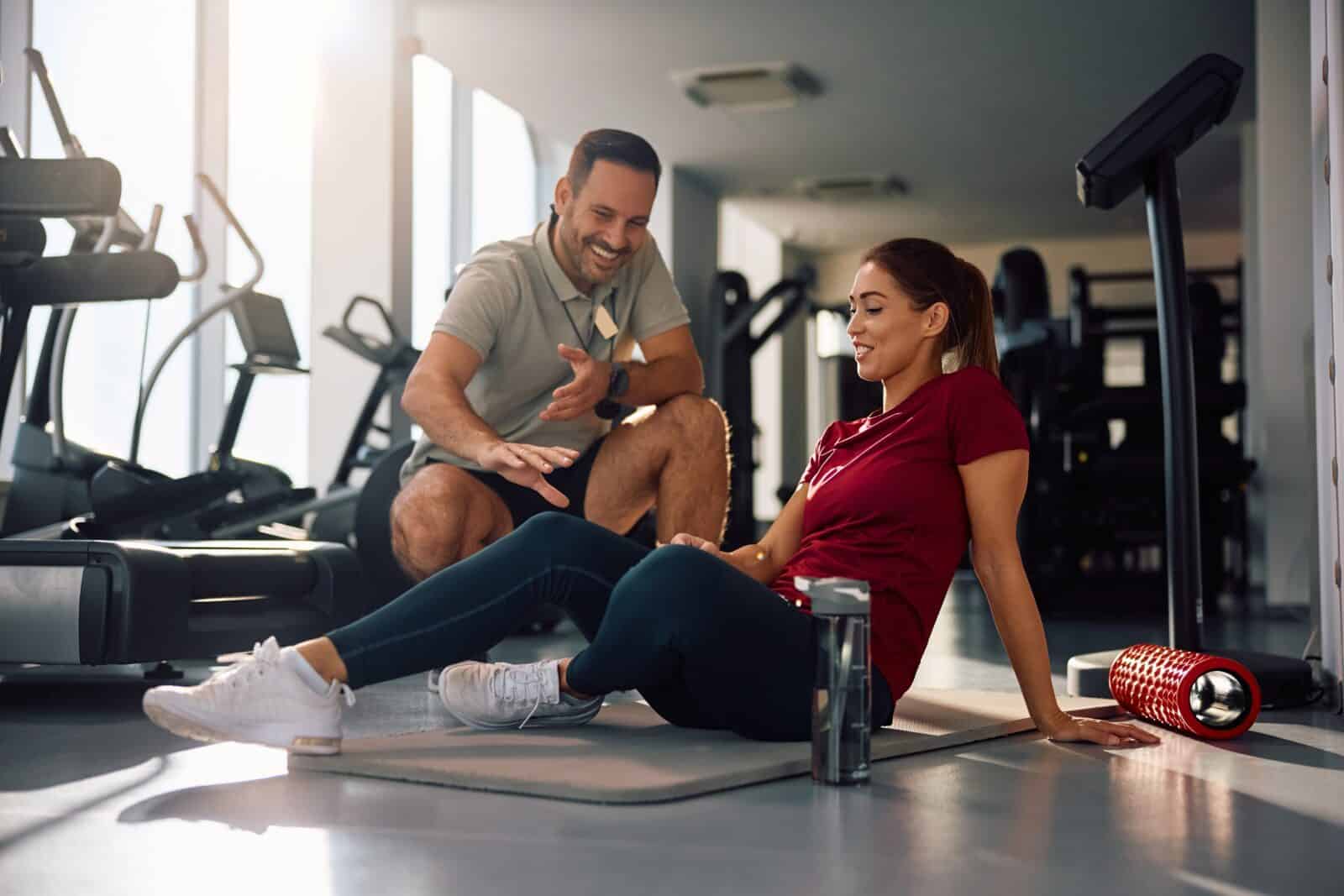
A win at the gym can be tiny to someone else and huge to the person who earned it. Showing up after a bad week, adding five pounds to a lift, finishing a run, walking into the weight room for the first time, or returning after injury can all matter.
Men who do not respect you may ignore those wins or, worse, turn them into jokes, corrections, or body comments. BarBend reported that 41% of women in its survey said harassment affected workout intensity often, very frequently, or almost always.
That means the atmosphere around a woman can shape how hard she trains. A respectful celebration does not have to be loud. It can be a nod, a simple “nice work,” or leaving her alone because she clearly wants to focus. The point is not praise. The point is a culture where women’s effort is not mocked, sexualized, or erased.
They Don’t Respect Your Boundaries or Personal Space

This is one of the most serious signs because boundaries are not optional in a shared training space. Standing too close, hovering near machines, blocking exits, touching without consent, taking photos, asking again after a no, pulling out headphones, or “spotting” without permission can all make the gym feel unsafe.
RunRepeat found that 92.31% of harassment cases against women went unreported, while 30.13% of female gym members who experienced harassment changed their routine, schedule, or avoided certain areas.
BarBend found that 66.2% of its respondents had personal space invaded, 33% had photos or videos taken without consent, and 14% reported being touched or groped. Those numbers are heavy because they show that boundaries are not just a matter of etiquette. They decide who gets to train freely and who has to plan around fear.
They Never Make Concessions for Your Comfort

Good gym culture is made of small acts. Wiping equipment. Giving people room. Not filming strangers. Asking before working in. Moving when someone feels boxed in. Keeping comments to yourself.
Men who do not respect you refuse these small concessions because their comfort is the only one they count. RunRepeat found that more than half of members who witnessed or heard of harassment said it negatively affected them, and people who had only witnessed or heard about harassment were 15.63% more likely to cancel their membership.
That means bad behavior spreads beyond one person. It changes the whole room. Psychologist Carly Dober has described gyms and fitness centers as “traditionally very masculine spaces,” a useful reminder that comfort has often been designed around men by default. Basic courtesy is one way to rebalance the room.
Their Body Language Says “I Don’t Want to Engage With You.”

Body language can be a boundary, and that is not always a bad thing. Many people go to the gym to focus, not chat. The red flag is colder than that: a man who uses dismissive posture, eye-rolling, smirks, crowding, or pointed avoidance to signal that your presence is annoying, beneath him, or irrelevant.
Women often use headphones, limited eye contact, and a closed posture to protect themselves from unwanted attention. BarBend noted that many women use headphones or an intentionally unapproachable expression, yet some men still remove headphones or wave in women’s faces to get attention.
So body language at the gym is complicated. Respectful distance says, “I’ll let you train.” Disrespectful body language says, “You do not belong here.” Women can usually feel the difference.
They Treat You Like You Don’t Exist During Peak Hours

Peak hours reveal gym character fast. Equipment is scarce, patience is thin, and everyone has to share. Men who respect the space ask before taking plates, avoid cutting in line, do not crowd women out of weight areas, and treat busy hours as a shared puzzle. Men who do not care make women invisible when fairness matters most.
The PLOS ONE study found that women often reported having to fight for space in gyms and be taken seriously, especially in environments where appearance and performance were judged. BarBend also found that about 75% of respondents reported being engaged in unwanted conversation.
RunRepeat found that 25.65% of harassed female gym members stopped using gyms completely or switched facilities. During peak times, disregard can push women out of the workout they came to do. That is not toughness. That is bad gym culture.
They Don’t Care When You’re Injured or Clearly Unwell

The clearest test of gym respect is what happens when someone is hurt, dizzy, trapped, panicked, or clearly unwell. A decent person does not need to know you to check in, call staff, clear space, or ask if help is needed.
Men who do not respect you may keep lifting, keep staring, keep filming, or act like your distress is none of their concern. BarBend found that only 12.8% of respondents said they never felt unsafe in a training environment, and RunRepeat found that 28.69% of harassed female gym members felt unsafe or uncomfortable at their gym.
That is why injury moments matter so much. Safety is not just a policy on the wall. It is a culture built by the people in the room. A gym where people ignore obvious distress is not serious about strength. It is only serious about equipment.
A Short Reflective Close

A woman should not have to choose between getting stronger and feeling safe. She should not need a hoodie in summer, a fake phone call, a changed schedule, or a women-only corner just to finish a workout in peace.
The gym can still be a great place. Many men are respectful, helpful, and fully capable of sharing space without making it strange. But the signs above matter because they reveal a simple truth: respect is visible. So is the lack of it.
Key Takeaways

Men who do not respect women at the gym usually show it through two patterns: indifference when basic safety or courtesy matters, and boundary-crossing when they feel entitled to attention. Both can make women feel unwelcome in a space meant for health.
The strongest data points are hard to ignore. RunRepeat found that 56.37% of female gym members had experienced harassment, 92.31% of cases against women went unreported, and 25.65% of harassed women stopped using gyms or switched facilities. BarBend found that 87.2% of respondents had felt unsafe at the gym at least sometimes, and 93.4% said unwanted attention disrupted workout performance or intensity.
The fix is not complicated, but it does require action. Respect personal space. Do not stare. Do not give advice unless asked. Do not film strangers. Do not touch anyone without consent. If someone is hurt, help or get staff. If a friend is acting creepy, call it out. The gym should be a place where strength is built, not a place where women have to spend half their energy protecting their peace.
Disclaimer – This list is solely the author’s opinion based on research and publicly available information. It is not intended to be professional advice.
Like our content? Be sure to follow us