12 ways some industries profit from poverty
Poverty is usually discussed as a social problem, but there is another side to it that deserves more attention. It can also function as a business model. When someone has little savings, weak credit, limited transportation, or nowhere else to turn, companies can charge that person more for borrowing money, filing taxes, finding housing, getting medical care, or buying basic household goods.
The size of this market is enormous. In 2023, 36.8 million Americans lived below the official poverty line, producing an official poverty rate of 11.1 percent. The Supplemental Poverty Measure, which considers taxes, government benefits, housing costs, work expenses, and medical spending, placed the rate at 12.9 percent.
That means tens of millions of people are regularly navigating systems where urgency weakens their ability to compare prices, reject fees, or wait for a better deal.
Payday lenders sell immediate relief at an enormous price

Imagine needing $300 because your car broke down three days before payday. A traditional bank may not approve a small emergency loan, and waiting is not an option if that car is how you get to work. Payday lenders step into that gap by offering fast money with few questions, but the convenience can be extremely expensive.
The Consumer Financial Protection Bureau says a common payday-loan charge is $15 for every $100 borrowed. On a two-week loan, that works out to an annual percentage rate of almost 400 percent.
Earned-wage and paycheck-advance apps can operate differently, but fees for expedited transfers, subscriptions, and tips can still produce steep effective borrowing costs. The CFPB calculated an illustrative APR of 109.5 percent for a typical employer-linked wage advance, rising to 580.4 percent in one smaller, shorter transaction example.
Medical debt turns illness into a long-term financial product
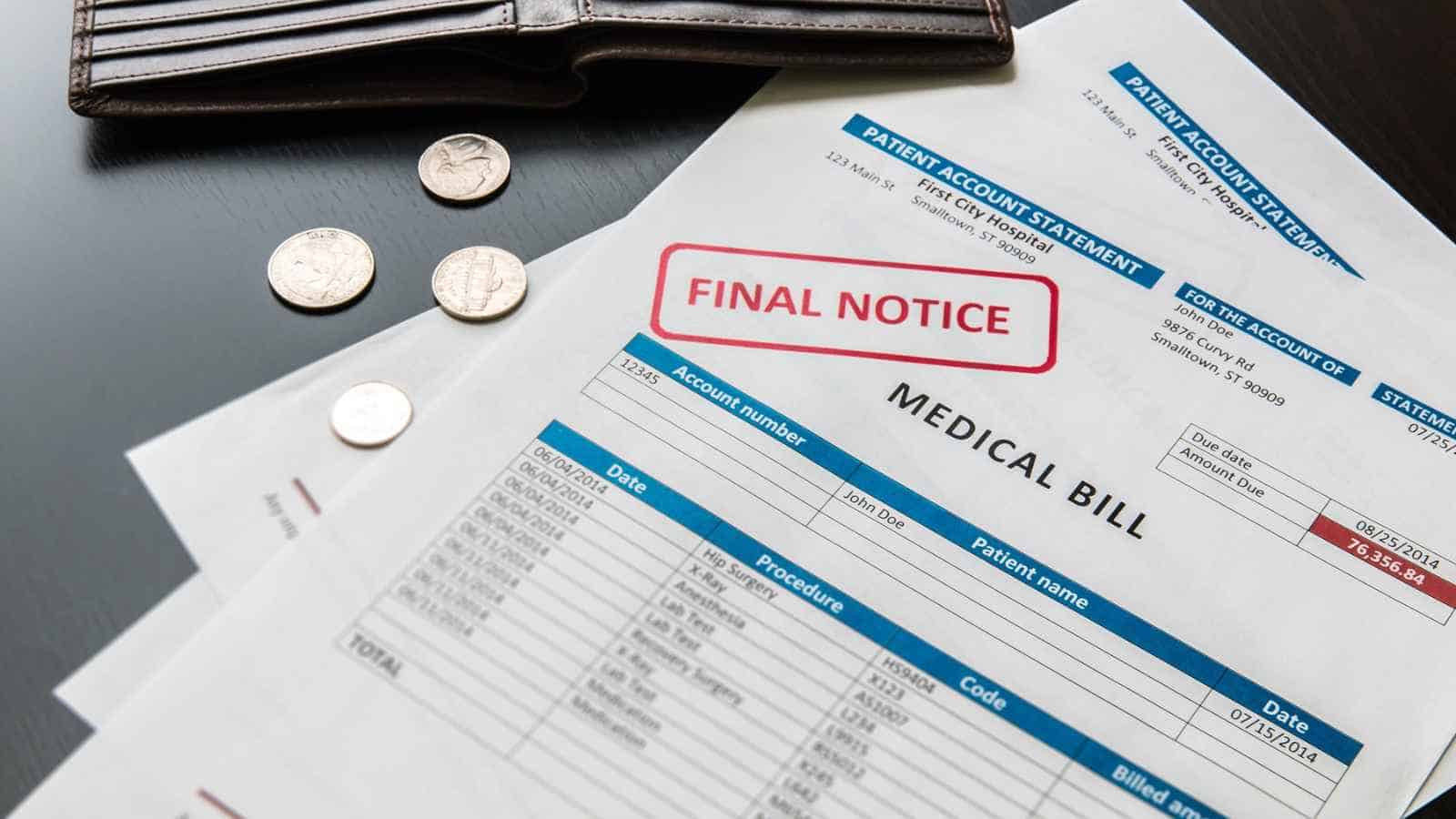
Medical care is one of the clearest examples of how poverty can generate revenue. A person does not usually shop for emergency treatment the way they shop for a television. When someone is sick, injured, or frightened, the immediate concern is receiving care. The price often becomes clear only after the treatment has already been provided.
KFF estimates that Americans owe at least $220 billion in medical debt. About 14 million adults owe more than $1,000, and roughly 3 million owe more than $10,000. For households already struggling with rent, food, or transportation, these bills can lead to payment plans, collection accounts, credit-card balances, or additional loans.
The original medical provider may eventually be paid, but collection agencies, lenders, and other financial companies can continue earning money from the debt for years.
Tax preparation companies take a cut of anti-poverty benefits
The Earned Income Tax Credit is one of the largest sources of annual financial relief available to working households with low or moderate incomes. IRS statistics show that about 23 million tax returns claimed roughly $64 billion through the credit for tax year 2023. For many families, that refund is used to catch up on rent, repair a vehicle, pay overdue utilities, or replace household essentials.
That much money arriving during a short filing season naturally attracts private businesses. Paid preparers may charge for completing the return, transferring the refund, loading money onto a prepaid card, or providing an advance before the IRS processes it.
A Government Accountability Office review found that lower-income taxpayers were more likely to use tax-time financial products and that Americans spent at least $500 million on them in 2017.
For-profit colleges convert limited opportunity into student debt

For-profit colleges often market themselves to people who have been poorly served by traditional education. Their advertising tends to emphasize flexible schedules, quick credentials, online learning, and direct paths into employment. Those promises can sound especially attractive to working parents, first-generation students, veterans, and adults trying to escape low-wage jobs.
The danger appears when high tuition is financed with federal grants and student loans, but the resulting credential does not produce enough income to repay the debt. A New York Federal Reserve analysis noted that for-profit undergraduate students received about 15 percent of Pell Grant and Stafford loan funding at the time examined, amounting to more than $14.5 billion.
Later New York Fed research found that attending a for-profit institution was associated with more borrowing, larger loan balances, higher default risks, and weaker labor-market outcomes than attending similarly selective public schools.
Private prison companies earn money when beds remain occupied

A private prison company is paid to house incarcerated people, which means confinement becomes the service being sold. Governments may use private operators in the hope of lowering costs or expanding capacity quickly. The basic financial incentive, however, remains uncomfortable: revenue depends on government contracts tied to incarceration and detention.
The prison economy also includes phone services, electronic monitoring, commissary sales, transportation, health care, and debt collection.
The debt chain can profit after the original loan fails

The first fee on a payday loan may be only the beginning. A borrower who cannot repay on time might be offered a renewal or rollover, which requires another fee without meaningfully reducing the principal. The lender collects more money, but the borrower still owes the original balance.
Additional charges can come from late payments, returned checks, insufficient funds, repayment plans, or prepaid debit cards. The CFPB gives the example of a $300 payday loan carrying a $45 charge. Rolling it over once can raise the cost to $90 after four weeks, even though the borrower still owes the original $300. If the account eventually reaches a collection company, another business gains the opportunity to earn money from the same emergency.
Private Medicaid contractors earn revenue from public health programs

Medicaid exists to provide health coverage to eligible low-income adults, children, pregnant women, older people, and people with disabilities. Increasingly, states deliver that coverage through managed-care organizations that receive public money to oversee networks, approve services, process claims, and manage patient care.
This has created a huge private contracting market. CMS reported that more than 83 million of the roughly 98 million people enrolled in Medicaid during 2022 received some or all of their care through managed-care arrangements. Five publicly traded companies accounted for half of Medicaid managed-care organization enrollment nationally, according to KFF.
Some reported Medicaid revenue growth of between 3 and 18 percent in 2023 even as their enrollment declined. Profit itself is not proof of abuse, but the arrangement becomes troubling when financial incentives reward restricted networks, delayed approvals, or reduced access to treatment.
Housing insecurity creates layers of profitable fees

A renter with savings can usually walk away from a bad apartment, challenge a questionable charge, or pay the cost of moving. Someone living paycheck to paycheck may have none of those choices. Application fees, reservation deposits, late charges, screening costs, utility fees, towing bills, and security-deposit deductions can all become part of the price of remaining housed.
Recent enforcement cases show how large those charges can become. In 2024, the Federal Trade Commission accused Invitation Homes of advertising rents without including mandatory fees that could total more than $1,700 per year.
The company agreed to a proposed $48 million settlement. Separate CFPB data found that renters who incurred late fees paid an average of $85 by November 2024, and nearly 60 percent of renters charged at least one late fee received two or more.
SNAP supports a large contractor and retail economy
The Supplemental Nutrition Assistance Program is designed to help households afford food. In fiscal year 2023, an average of 42.1 million people participated each month, and federal SNAP spending reached $112.8 billion. Those numbers show how essential the program is, but they also reveal the scale of the economic activity surrounding it.
The entire $112.8 billion is not corporate profit. Most of it represents benefits used by households to purchase food. Still, a program of that size requires payment processors, technology systems, card providers, consultants, retailers, compliance services, data systems, and administrative contractors.
Companies can earn reliable revenue from managing the infrastructure, and stores gain access to a large customer base whose food spending is partly supported by federal funds.
Digital advertising can identify and target economic vulnerability
Poverty no longer needs to be visible for marketers to recognize it. Internet providers, advertising platforms, apps, and data brokers can infer financial stress through location, browsing history, purchase behavior, credit interests, household income, housing searches, and the type of device someone uses.
An FTC investigation found that major internet providers and their advertising businesses grouped consumers into categories connected to economic status, including “working class,” “last income decile,” and “tough times.” The report also documented targeting categories based on household income, education, credit and lending interests, apartment searches, health interests, food, gambling, and financial services.
That information can help legitimate companies reach customers, but it can also steer vulnerable people toward expensive loans, inferior financial products, unhealthy food, or poor housing options.
Rent-to-own stores and pawnshops charge for the inability to wait
A person with $800 can buy a refrigerator outright. Someone with only $25 available this week may have to rent the same appliance through a weekly payment plan. Each payment appears manageable, but the total cost can end up far above the normal retail price.
The FTC has reported that rent-to-own prices can reach two or three times the retail cost, and sometimes more. Its national customer survey found that 59 percent of rent-to-own customers had household incomes below $25,000 at the time studied.
Journalist Gary Rivlin’s earlier investigation into pawnshops, check cashers, payday lenders, tax-refund products, and rent-to-own businesses described a “poverty industry” generating about $33 billion annually. That estimate is old, but the underlying model remains familiar: people pay a premium because they cannot afford to wait, save, or qualify for cheaper credit.
Government aid intermediaries profit from complexity
Public assistance rarely travels directly from the government to the person who needs it. There are application systems, eligibility checks, contractors, payment platforms, service providers, consultants, administrators, and compliance companies sitting between the funding source and the intended recipient.
Anne Kim argues that this complicated structure has produced a network of private interests operating across health care, housing, criminal justice, nutrition, workforce training, tax preparation, and other safety-net programs. Complexity can serve a legitimate purpose, especially when governments need to prevent fraud and manage large programs.
It can also create more points where money is diverted into administrative costs, fees, contracts, and profits before help reaches the household it was supposed to support.
Disclaimer – This list is solely the author’s opinion based on research and publicly available information. It is not intended to be professional advice.
You May Also Like: 6 useless things Americans waste money on that keep them poor
Like our content? Be sure to follow us