12 reasons America is running out of jobs
The American dream of a secure, lifelong career is quietly slipping away.
A massive structural shift is permanently shrinking the traditional workforce as companies replace human payroll with software and automation. It’s not just a temporary downturn or a typical recession.
Data from Goldman Sachs suggests that up to 300 million jobs globally are at risk of automation, and that the U.S. could see 25% of its work hours automated. This transition is leaving millions of professionals stranded without viable career paths.
Generative AI is taking over cognitive work

Generative artificial intelligence has moved rapidly from a novelty to a core corporate cost-cutting tool. It’s no longer just a cool trend for tech enthusiasts to play with over their morning coffee. The technology has already begun eating into professional white-collar roles across the United States.
U.S. occupations are at risk of being automated by artificial intelligence. Within these vulnerable roles, up to half of the workload could be replaced. As Kash Rangan from Goldman Sachs notes, generative AI can streamline business workflows and automate routine tasks with incredible speed.
Automation reduces the demand for workers in activities that machines can perform. When machines can perform cognitive tasks at lower cost, companies have a strong incentive to substitute machine labor.
Structural tech layoffs are becoming permanent

The technology sector is no longer hiring at all costs and has shifted its focus to lean efficiency. It’s a brutal reality that thousands of tech professionals are facing daily. Massive global tech layoffs topped 244,000 in 2025, with U.S. companies responsible for nearly 70% of those cuts.
These aren’t temporary corrections from over-hiring anymore. Alan Cohen, an analyst at RationalFX, points out that companies are rebuilding around AI-first operating models. Entire departments are being permanently eliminated as automation handles the heavy lifting.
The trend has spilled heavily into 2026. By mid-2026, tech layoffs will have already surpassed 120,000 workers globally. Tech giants are actively cutting headcount to fund massive investments in artificial intelligence infrastructure.
The retail apocalypse is accelerating store closures

Brick-and-mortar retail stores are disappearing from suburban malls and downtown streets alike. It’s an ongoing squeeze that has pushed physical stores to the brink. U.S. retailers announced over 8,000 store closures in 2025, a steep 13.2% increase from 2024.
Deborah Weinswig, CEO of Coresight Research, notes that inflation and a growing consumer preference to shop online have taken a heavy toll. Online platforms like Shein and Temu are capturing large market shares. Traditional retailers simply can’t compete with these low-cost digital platforms. This shift has a direct, painful impact on the retail workforce.
Warehouse robotics is replacing logistics workers
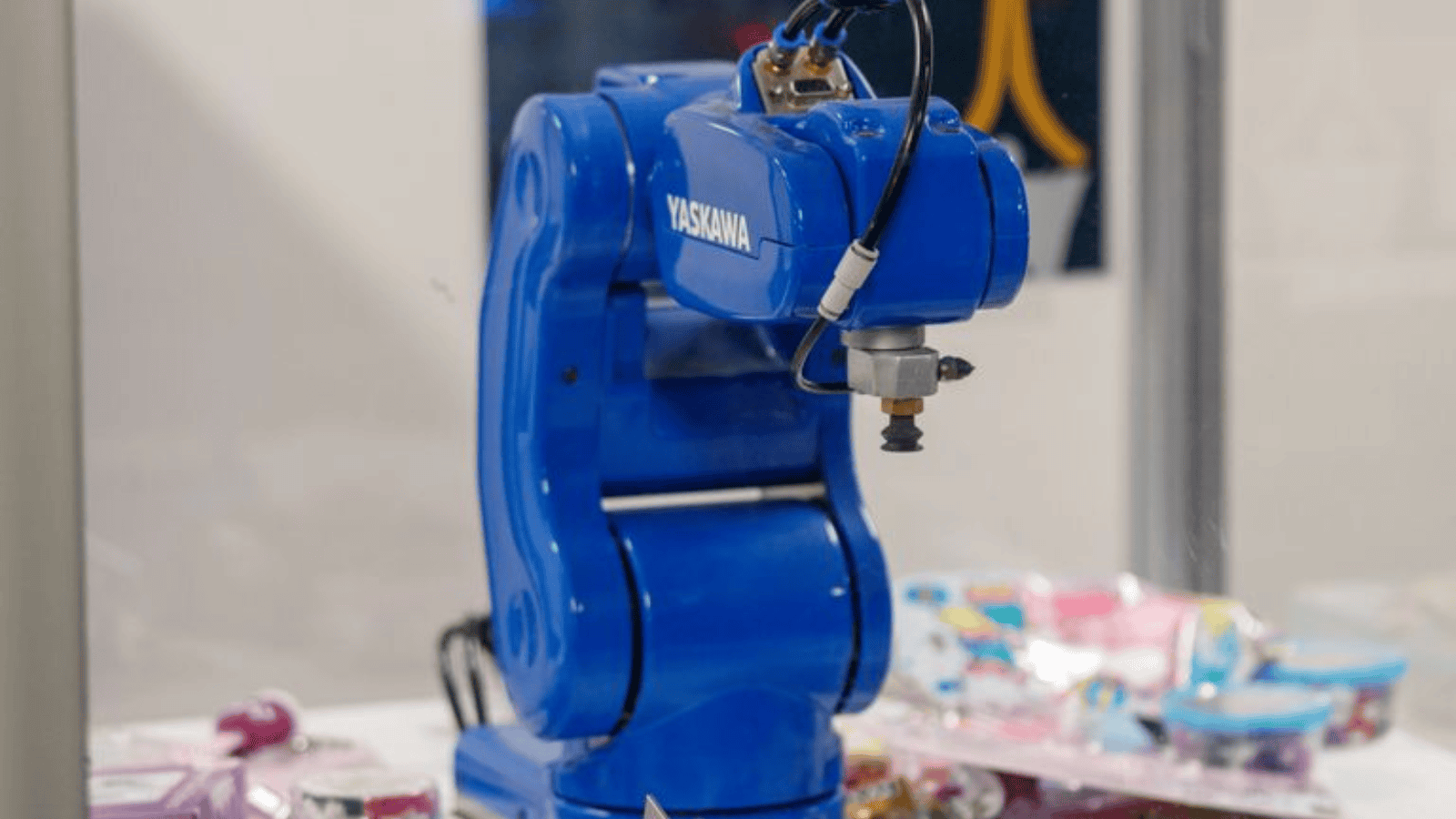
America’s massive logistics and fulfillment sector is rapidly automating its manual labor. It’s a massive trend driven by the explosive growth of e-commerce. By the end of 2026, roughly 4.7 million commercial warehouse robots will be installed in over 50,000 warehouses globally.
This robotic workforce is incredibly efficient. Automated picking systems improve order fulfillment speeds by up to 300% while cutting labor costs by 25% to 30%. Highly automated warehouses can operate seamlessly with 25% fewer workers than traditional facilities.
This transition has led to severe displacement for entry-level workers.
Research shows that facilities implementing advanced automation experience workforce reductions averaging 38.4% within 18 months. The hardest-hit roles are entry-level pickers, who face a massive 64.7% displacement rate.
Record office vacancies are killing downtown service jobs

The widespread adoption of remote and hybrid work models has hollowed out America’s downtown districts. It’s a structural change that has turned commercial centers into ghost towns. The national office vacancy rate reached a historic peak of 20.1% in the first half of 2024.
Before the pandemic, hundreds of thousands of daily commuters fueled local economies. Now, with 22% of paid workdays happening at home, those commuters have vanished. This massive drop in foot traffic has triggered an urban doom loop that destroys service-sector employment.
Local diners, dry cleaners, and retail shops are losing their customer base. Property values are falling, and businesses are closing down. This quietness on downtown streets translates directly into permanent job losses for thousands of low-wage service workers.
The gig economy is eroding traditional payrolls

Standard nine-to-five jobs with benefits are increasingly being replaced by project-based gig work. It’s a massive shift in how organizations structure their talent strategies. Over 70 million Americans now participate in freelance work, representing approximately 36% of the entire U.S. labor force.
Enterprises are embracing contingent labor to avoid the rising costs of permanent employees. While highly skilled freelancers can make a comfortable living, the average gig worker faces severe financial instability. In fact, only 12.8% of temporary agency workers receive employer-provided health insurance.
This transition shifts all economic risk from the corporation to the individual. Data reveals that 45% of gig workers report they cannot handle a $400 emergency expense without borrowing money. As companies increase their reliance on temporary contracts, the pool of stable full-time jobs continues to dry up.
Self-service kiosks are eliminating food and retail roles

Automated ordering screens have evolved from a retail novelty into an absolute operational necessity. It’s a rapid transition that is reshaping the fast-food and hospitality landscapes. The global self-service kiosk market is projected to exceed $39 billion by 2035.
Rising minimum wages and labor shortages are driving quick-service restaurant operators to automate. Kiosks eliminate ordering errors and boost consumer spending by up to 30% through automated upselling. Self-service screens do not ask for a raise, take sick days, or roll their eyes when order modifications get too complicated.
This shift is hitting young and less-educated workers the hardest. Nearly half of minimum-wage workers are between the ages of 16 and 24. As screens replace cashiers, these critical entry-level job opportunities are permanently vanishing.
Chatbots are hollowing out customer support teams

The traditional customer support agent is being replaced by conversational artificial intelligence. It’s a structural pivot that is leaving thousands of contact center employees jobless. Forrester predicts that AI will slash the number of customer service jobs in half by 2030.
Over 70% of customer service tasks are now considered to have high AI exposure. Advanced bots successfully resolve customer issues without any human intervention. Customer support bots do not sigh audibly when asked to process yet another mundane refund request.
Indeed, U.S. customer service job postings are down 10% from pre-pandemic levels. Companies are actively choosing to invest in automation rather than increase their customer support headcount. This means that once an agent leaves, the position is simply deleted rather than refilled.
Squeezed venture capital is freezing startup hiring

Federal Reserve interest rate hikes have quietly choked off a major engine of U.S. job creation. It’s a direct monetary chain reaction that has crippled the tech startup ecosystem. Higher interest rates make venture capital funds less attractive to large institutional investors than safe bonds.
With venture fundraising down, startups are facing a massive funding gap. Venture capital deals fell roughly 52% between 2022 and 2024, triggering a wave of cost-cutting. Firms that once spent aggressively to hire talent are now forced to freeze hiring and slash headcounts.
The days of easy venture-backed hiring are officially over. Higher interest rates lead to a direct decrease in the number of early-stage funding rounds. Fewer funded startups mean a dramatic reduction in new job creation across high-growth industries.
Automated hiring systems are blocking entry-level applicants

Job hunters are increasingly competing against automated screening algorithms rather than human recruiters. It’s a modern screening paradigm that has made landing an interview incredibly difficult. Human resources teams report using AI to automate resume screening and scheduling.
This algorithm-heavy approach is shutting out candidates who lack a perfect, keyword-matched resume. As a result, younger workers are finding themselves entirely locked out of the professional labor market.
Payroll data reveals a stark generational asymmetry in the job market. Early-career workers aged 22 to 25 in highly exposed roles saw a 13% to 16% decline in employment. The automation of the hiring gatekeeper is preventing a whole generation from launching their careers.
White-collar outsourcing is sending knowledge jobs overseas

The infrastructure that enables remote work has inadvertently made outsourcing American office jobs seamless. It’s an unintended consequence of the post-pandemic work-from-home revolution. If a professional task can be done from a home in Ohio, it can be done from an office in Manila.
American professionals are now forced to compete in a hyper-efficient global labor market. Enterprises are rapidly utilizing offshore platforms to source highly skilled remote talent at a fraction of U.S. salaries. North America currently accounts for 35% of global freelance earnings, but emerging markets are catching up fast.
Outsourcing is no longer limited to low-wage manufacturing or basic call centers. Knowledge services, including IT, marketing, and legal consulting, now make up 47% of all freelance work. This means that high-paying American office jobs are steadily migrating to lower-cost nations.
Enterprise software is automating back-office administration

Routine administrative and data-entry jobs are facing a steady, quiet extinction. It’s a relentless shift driven by the integration of workflow management software. Office and administrative support is the only major occupational group projected to consistently decline.
Tasks that were once distributed across an entire back-office team are now handled by a single operator with the right digital tools. As Nobel laureate Daron Acemoglu emphasizes, technological progress does not automatically lead to better jobs or higher wages.
Organizations are choosing to automate workflows where regulatory and administrative tasks are repetitive. This workflow compression means that companies can expand their operations without adding to their administrative headcount. The steady integration of enterprise software is permanently deleting millions of stable administrative roles.
Key takeaway

The traditional American job landscape is undergoing a permanent, technology-driven contraction. Employers are aggressively replacing traditional full-time roles with AI, automated kiosks, and global contract labor. To stay relevant in this rapidly changing market, workers must focus on building highly specialized, human-centric skills that machines cannot easily replicate.
Disclaimer – This list is solely the author’s opinion based on research and publicly available information. It is not intended to be professional advice.
Like our content? Be sure to follow us