12 ways the economy is straining people’s mental health
For many people, economic stress is no longer confined to bank accounts; it’s affecting sleep, relationships, physical health, and overall well-being. Recent surveys show that financial pressures remain one of the biggest sources of anxiety.
In a 2026 poll from the American Psychiatric Association, 62% of Americans said they were anxious about paying bills and expenses, while 71% reported feeling anxious about the economy overall. Motley Fool Money’s 2026 Financial Anxiety and Mental Health Survey found that 44% of Americans experience high or extremely high financial stress, and more than one-third say they worry about money five or more days each week.
Meanwhile, 51% report that financial stress disrupts their sleep, and 45% say it has contributed to anxiety, depression, or another mental health condition. These findings highlight a growing reality: economic uncertainty doesn’t just affect wallets; it can take a significant toll on mental health.
Here are 12 ways today’s economy is impacting emotional well-being.
Cost of Living Is Outrunning People’s Coping Skills

Cost-of-living pressure wears people down because it makes normal life feel like a test they did not study for.
The Federal Reserve reported that 73% of adults were doing at least okay financially near the end of 2024, but that still sat below the 78% high reached in 2021, and inflation remained the top financial concern, especially food and groceries.
Then, April 2026 CPI data added fresh pressure, with energy up 17.9%, gasoline up 28.4%, food at home up 2.9%, and fruits and vegetables up 6.1% over 12 months. For many households, that means fewer soft places to land: less therapy, fewer gym visits, fewer family outings, and more quiet math before every purchase.
Rula’s 2026 survey found that 50% of respondents cut back on therapy, gym, or personal health spending because of rising costs, which is the cruel loop here. The economy creates stress, then makes the tools for managing that stress feel too expensive.
Job Insecurity Is Keeping People in Fight-or-Flight

Job insecurity can make a person feel as if the floor might give way at any moment. The email from leadership sounds vague, the calendar invite has no context, the company says “restructuring,” and suddenly the nervous system starts working overtime.
WHO’s mental health at work guidance says unemployment, job and financial insecurity, and recent job loss are risk factors for serious mental health harm, including suicide attempts, and it also notes that economic downturns and public emergencies create risks such as job loss, reduced employment opportunities, and financial instability.
Gallup’s 2026 workplace report adds another layer: global employee engagement fell to 20% in 2025, its lowest level since 2020, and low engagement cost the world economy about $10 trillion in lost productivity. That is not just a corporate problem. It is a daily-life problem because people who feel disposable at work often carry that fear home, into their sleep, and their tone at the dinner table.
Inflation Turns Everyday Decisions Into Stress Math
Inflation turns ordinary choices into tiny negotiations with fear. A person goes to the store for eggs, fruit, toothpaste, and chicken, then leaves with fewer items and a heavier mood.
BLS data shows why those small moments sting: food rose 0.5% in April 2026 alone; food at home rose 0.7%; meats, poultry, fish, and eggs rose 1.3%; and fruits and vegetables rose 1.8%. Over 12 months, food at home rose 2.9%, fruits and vegetables rose 6.1%, and nonalcoholic beverages rose 5.1%. Those numbers may sound modest on a screen, but they add up in a household that already has rent, car insurance, prescriptions, and childcare.
The mental strain comes from having to choose again and again: cheaper groceries or better nutrition, car repair now or risk a breakdown, medicine now or wait another week. That kind of decision fatigue does not look dramatic from the outside. Inside the mind, it can sound like a dripping faucet that never stops.
Housing Insecurity Is Making “Home” Feel Less Safe
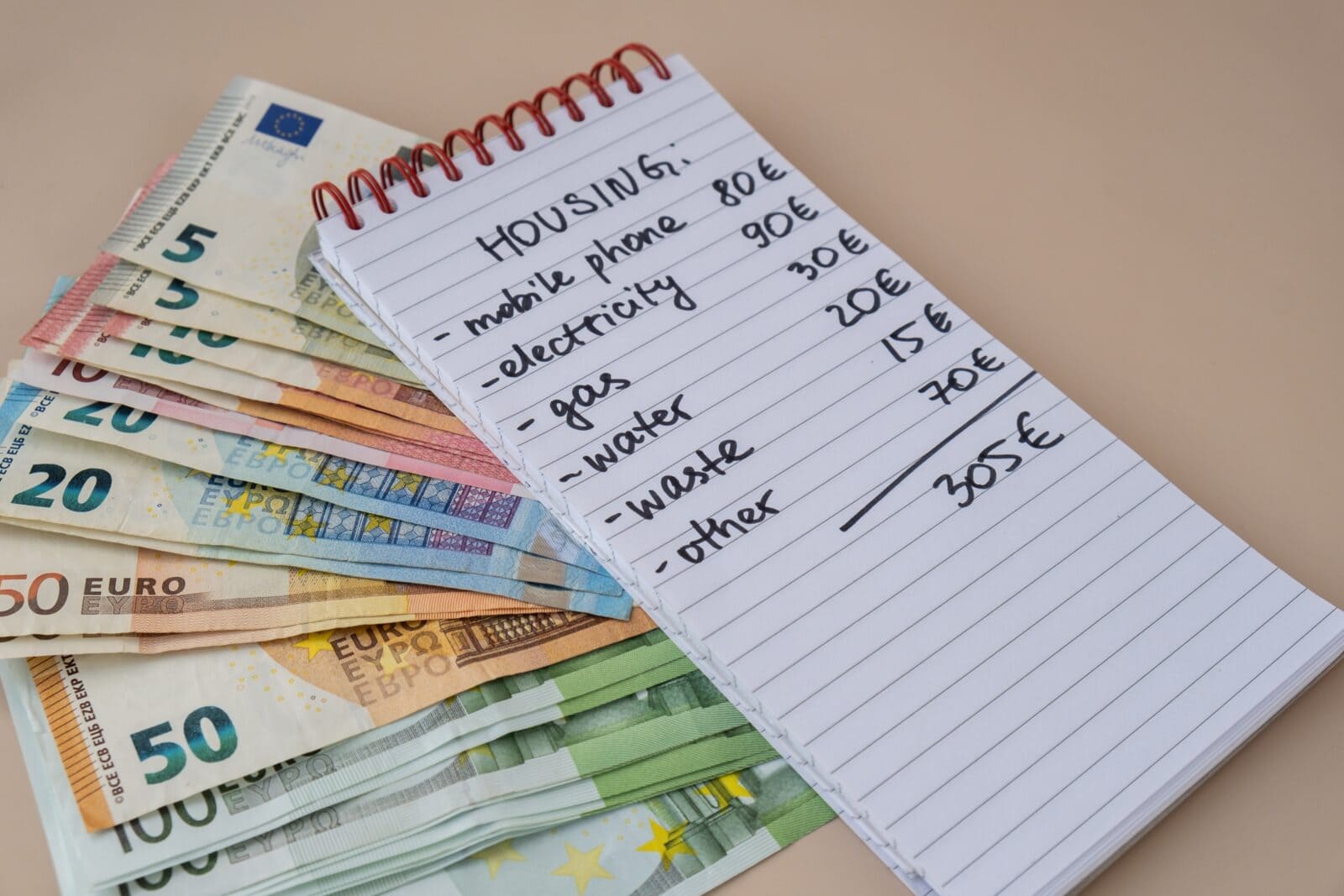
Home is supposed to be the place where the body unclenches, but housing costs can turn it into another source of alarm. Harvard’s Joint Center for Housing Studies reported that cost-burdened renter households rose to a record 22.7 million in 2024, representing 49% of all renters, and that the burden count rose for the fourth year in a row.
That means nearly half of renters were spending more than 30% of their income on rent and utilities, before groceries, transportation, medicine, childcare, debt, or savings were factored in. BLS data also shows shelter prices rose 3.3% over the 12 months ending in April 2026, with rent and owners’ equivalent rent both rising 0.5% in April.
Housing stress is especially acute because it affects safety, dignity, school stability, commute time, and family peace all at once. It is hard to breathe deeply when the roof over your head feels conditional.
Debt and Financial Worries Are Fueling Distress

Debt can turn payday into damage control. The money arrives, then leaves in pieces: credit cards, student loans, medical bills, car payments, late fees, collections, rent, groceries, and the one bill nobody wants to open.
A peer-reviewed study of U.S. adults found a strong association between financial worries and psychological distress, and the Federal Reserve’s 2024 household survey showed that 27% of adults were either just getting by or finding it difficult to get by. That is a lot of people living on the edge, even before a surprise car repair or medical bill comes due.
Debt also attacks the future. It makes planning feel foolish, rest feel undeserved, and small pleasures feel guilty. The practical step is not shame; shame just adds interest to the stress. The calmer move is to list debts clearly, call creditors early, look for nonprofit credit counseling when needed, and separate the size of the balance from the worth of the person carrying it.
Workload and Burnout in a “Productivity at Any Cost” Economy

Many workers are not simply tired. They are tired in a way that weekends no longer fix. Gallup’s 2026 State of the Global Workplace report found that global employee engagement fell to 20% in 2025, the lowest level since 2020, and estimated that low engagement cost the world economy $10 trillion, or 9% of GDP.
Rula’s 2026 report also found that stress or burnout rose 3.8% from 2025 to 2026 among respondents seeking support, with anxiety and depression rising 9.3% and 10.6%, respectively.
WHO says employers should prevent work-related mental health conditions by changing working conditions and reducing psychosocial risks, including through flexible work arrangements and systems that address violence and harassment.
That is a useful reminder because burnout is often sold back to workers as a personal weakness. Sometimes the real issue is a workplace that asks one person to carry three jobs, answer messages at night, and smile through it, as if gratitude were part of the salary.
Stigma and Cost Are Blocking Access to Care

The hard part is that many people now understand mental health better, but still cannot afford the care that might help. Rula’s 2026 report found that 81% of Americans recognize the importance of mental health, yet cost remains one of the two biggest barriers to care, cited by more than 1 in 4 respondents.
Its press release also reported that fewer than half of surveyed Americans had ever accessed mental health services, even as anxiety, depression, and burnout showed increases from 2025 to 2026.
WHO’s 2025 global mental health update shows the systemic problem is not only American: median government spending on mental health remains just 2% of health budgets, unchanged since 2017. So the person skipping therapy because rent is due is not simply “failing to prioritize wellness.”
They may be making the only choice the month allows. A practical first step is to check insurance directories, community clinics, employer assistance programs, sliding-scale therapists, university clinics, and local support groups before assuming help is out of reach.
Food Insecurity and Basic Needs Stress
Food insecurity has a way of turning the mind into a calculator and the body into an alarm system. USDA’s Economic Research Service reported that 13.7% of U.S. households were food insecure at some point in 2024, meaning 86.3% were food secure throughout the year, while the rest faced periods of limited or uncertain access to enough food.
Among households with children, 18.4% (6.7 million households) were food insecure. Add BLS data showing food at home up 2.9% and fruits and vegetables up 6.1% over the 12 months ending April 2026, and the emotional picture gets clearer.
Parents may water down meals, skip breakfast, pretend they are not hungry, or buy the cheaper option while worrying about nutrition. That kind of stress is not abstract. It sits in the cart, follows children to school, and can make a parent feel like they are failing at something no one should have to solve alone.
Low-Income and Marginalized Groups Carry More Stress

The economy does not press on every household with the same weight. The Federal Reserve’s 2024 survey found that 87% of adults with at least a bachelor’s degree were doing at least okay financially, compared with 47% of adults with less than a high school degree. It also reported that 77% of White adults were doing at least okay financially, compared with 65% of Black adults and 63% of Hispanic adults.
USDA data shows food insecurity is also uneven, with rates higher than the national average for households below the federal poverty line, single-parent households, Black and Hispanic households, and households in principal cities and rural areas.
WHO’s 2025 update says mental health conditions affect people across countries, ages, and income levels, but economic hardship can make both risk and access worse. That is why telling people to “just budget better” can sound cruel. Some people are not bad at coping. They are coping inside systems that give them less room to fall.
The “Awareness-Action Gap” in Mental Health

One of the most painful patterns right now is that people can name the problem, but still cannot reach a solution. Rula calls this an awareness-action gap: many people value mental health and know support could help, yet cost, access, insurance confusion, stigma, time, and provider shortages keep them from following through.
Its 2026 report found that 34% of Americans experience high financial worry, 50% cut back on health-related services due to rising costs, 54% feel exhausted from stretching their finances, and 19% experience all three. The report says, “When people struggle financially to meet their basic needs, the perceived cost of traditional therapy might be too great.” That sentence lands because it perfectly describes the trap.
People need help because the economy is heavy, so the economy makes help feel heavy too. A practical workaround is to start smaller: a primary-care visit, a support group, one low-cost session, a benefits call, a crisis line if safety is at risk, or a trusted person who can sit with the problem without judging it.
New Coping Tools: AI, Apps, and “Shadow Support.”

As care gets expensive and schedules get crowded, people are looking for support that feels cheaper, faster, and less exposed. That can include mental health apps, teletherapy, online communities, text-based coaching, AI chatbots, meditation tools, mood trackers, and anonymous spaces where a person can say the thing they are scared to say out loud.
Rula’s 2026 report found that anxiety rose 9.3%, depression rose 10.6%, and stress or burnout rose 3.8% from 2025 to 2026 among respondents seeking support, while cost remained a major care barrier. That helps explain why digital support feels tempting: it can be private, immediate, and easier to start.
Still, it should sit in the right place. Apps and AI tools may help some people organize thoughts, practice coping skills, or get through a hard moment, but they are not a replacement for emergency care, licensed treatment, or human support during severe symptoms. The goal is not to shame new tools. It is to keep them from becoming the only door people can afford.
A System Designed for Growth, Not Well-Being

The final strain is bigger than any one budget, job, or therapy appointment. Some economic systems reward constant output, flexible labor, long hours, low wages, insecure schedules, expensive housing, and thin safety nets, then tell individuals to manage the fallout with breathing exercises.
In his UN report, The Burnout Economy, Special Rapporteur Olivier De Schutter argues that poverty and mental health problems can reinforce each other, and that societies should move from treating mental health only as an individual biomedical issue to addressing social causes such as poverty, inequality, and economic insecurity.
The report puts it bluntly: “The vicious cycles connecting poverty to mental health problems are the price we pay for the current focus on stimulating competition and performance.”
That does not mean personal coping is useless. It means personal coping needs backup from better wages, stable housing, decent work, affordable care, food security, and a public culture that stops treating exhaustion as proof of character.
A Short Reflective Close
If your money stress shows up as insomnia, irritability, dread, brain fog, or a tight chest before payday, that does not mean you are weak. It may mean your mind is reacting to real pressure.
The data tells the same story from different angles: WHO says more than 1 billion people live with mental health disorders, BLS shows food and energy prices still biting, Harvard shows record renter cost burdens, USDA shows food insecurity touching millions of households, and Rula shows people cutting back on health care because of rising costs.
The kindest response is not denial. It is naming the pressure, seeking support where possible, and remembering that personal coping matters, but so do the conditions people are forced to cope with.
Key Takeaways
- Economic stress is now a mental-health issue, not just a budget issue.
- WHO reported in 2025 that more than 1 billion people worldwide live with mental health disorders.
- BLS reported that U.S. energy prices rose 17.9%, gasoline rose 28.4%, and food at home rose 2.9% over the 12 months ending in April 2026.
- Harvard’s Joint Center for Housing Studies reported that 22.7 million renter households were cost-burdened in 2024.
- USDA reported that 13.7% of U.S. households were food insecure at some point in 2024.
- The most practical response blends personal support with bigger fixes: affordable care, stable housing, safer work, fair pay, and less financial volatility.
Disclaimer – This list is solely the author’s opinion based on research and publicly available information. It is not intended to be professional advice.
Like our content? Be sure to follow us