The story of Neptune’s discovery is unlike any other in astronomy
Imagine predicting an entire planet’s existence with nothing but math, and then finding it right where the numbers said it would be.
The story of Neptune’s discovery is unlike any other in astronomy. Unlike the other planets, it was not spotted by chance or through centuries of careful sky watching. Instead, it was uncovered through mathematics; a celestial detective story where pen and paper solved a mystery the telescope had yet to reveal. What began as puzzling irregularities in the orbit of Uranus turned into one of the most dramatic scientific triumphs of the 19th century.
Uranus Throws a Curveball
In 1781, British astronomer William Herschel surprised the world by discovering Uranus. For the first time in recorded history, a new planet had been added to the known solar system. It doubled the size of humanity’s map of the heavens. Uranus’s orbit was carefully charted in the decades that followed, but astronomers noticed something odd: the planet wasn’t always where Newton’s laws of motion said it should be.
Sometimes Uranus lagged behind its predicted path, and other times it ran ahead. For decades, these discrepancies nagged at astronomers. Were Newton’s laws flawed? Or was something else tugging at Uranus from the darkness beyond?
By the early 1800s, most believed there must be an unseen planet exerting its gravitational pull. But where was it?
Two Mathematicians, One Mystery
The challenge of solving Uranus’s orbital puzzle drew the attention of two brilliant young men working independently in different countries.
In England, John Couch Adams, a shy mathematician from Cambridge, poured over Uranus’s data. He believed that by applying Newton’s laws, he could predict the position of the unknown planet. By 1845, Adams had completed his calculations. He even delivered them to the Astronomer Royal, George Airy, but the matter was delayed, lost in bureaucratic hesitation and perhaps a lack of confidence in Adams’s youth.
Across the Channel in France, Urbain Le Verrier, a determined and meticulous mathematician, tackled the same problem. Le Verrier’s personality could be abrasive, but his work was dazzlingly precise. By 1846, he announced that he had pinned down the location of the mystery planet. Unlike Adams, Le Verrier pushed hard for observational proof. He sent his predicted coordinates directly to Johann Galle at the Berlin Observatory.
The Night of Discovery
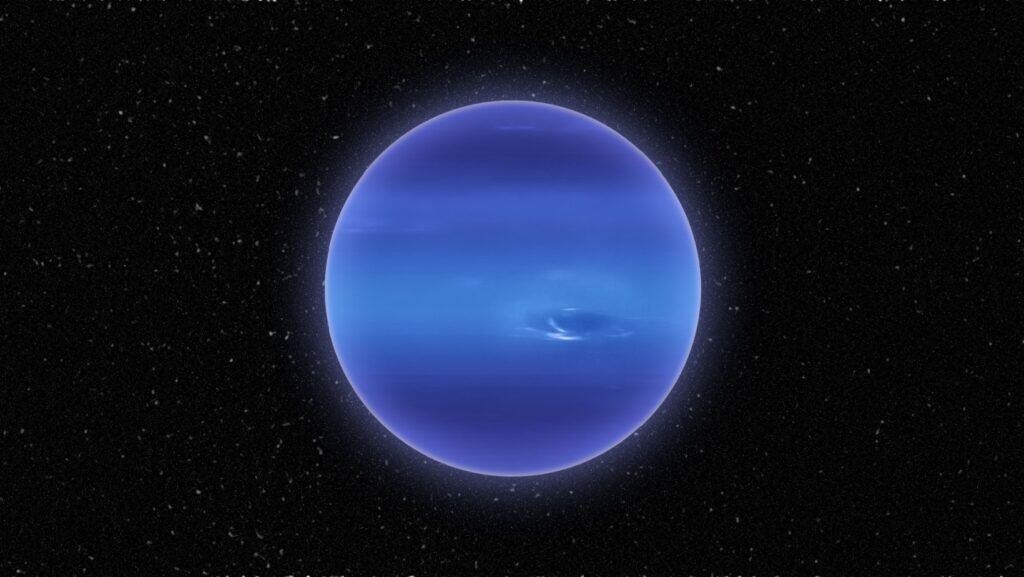
On September 23, 1846, Galle and his assistant Heinrich d’Arrest trained their telescope on the region of sky Le Verrier had identified. Within a single night of searching, they spotted a bluish disk that was not listed on any star chart. It was Neptune, lying less than a degree from the position Le Verrier had calculated.
The discovery stunned the scientific world. Here was a planet found not by chance but by mathematics. It was as if a detective had described the face of a suspect without ever seeing them, and the description matched perfectly.
A Triumph with a Shadow of Rivalry
News of Neptune’s discovery sparked both celebration and controversy. The French hailed Le Verrier as the discoverer, while the British insisted Adams deserved equal credit. The debate grew heated, tinged with national pride. Eventually, both men were recognized, though Adams himself admitted Le Verrier deserved the lion’s share of glory for pushing the discovery to its conclusion.
The rivalry was real, but so was the accomplishment: a planet had been found because two mathematicians trusted the power of Newtonian physics.
Why Neptune Mattered
Neptune’s discovery was more than an addition to the solar system. It was a test of science itself. If Newton’s laws could predict an unseen planet across billions of miles, then those laws truly described the universe with remarkable accuracy. It was a profound validation of physics at a time when doubt was creeping in.
It also changed how astronomers searched the skies. No longer was discovery left to chance or careful sweeping with telescopes. Now mathematics could lead the way. Decades later, that same method was used in the hunt for Pluto, though with less success since Pluto’s gravitational influence is much weaker.
A New World Revealed
Once Neptune was identified, astronomers began measuring its orbit, its faint moons, and its pale blue appearance. Unlike the gas giant Jupiter or the ringed Saturn, Neptune belonged to a different class of planet, an “ice giant,” made largely of water, ammonia, and methane ices deep within its atmosphere.
The color that so distinguishes Neptune comes from methane absorbing red light and reflecting blue. Even with the most powerful telescopes of the 19th century, Neptune appeared as only a tiny disk. It would not be until Voyager 2’s flyby in 1989 that humanity saw Neptune’s storms, winds, and moons in detail.
The Human Side of Discovery
The story of Neptune is also a human story of persistence, competition, and the role of personality in science. Adams, brilliant but reserved, hesitated to publish boldly. Le Verrier, ambitious and relentless, demanded recognition. Galle, often overlooked in the rivalry, was the steady observer who made the prediction real.
In this trio, we see the elements that often drive scientific progress: theory, persistence, and verification. Without all three, Neptune might have remained hidden for decades more.
Ripples in Astronomy
The discovery of Neptune also reshaped astronomy’s culture. It showed that international collaboration, even amid rivalry, could yield extraordinary results. It also hinted that the solar system might hold more surprises. For nearly a century, the search for another planet beyond Neptune obsessed astronomers, eventually leading to Clyde Tombaugh’s discovery of Pluto in 1930.
Although Pluto was later demoted to “dwarf planet” status, the spirit of that search, the belief that mathematics could uncover the unseen, lived on. Today, astronomers use similar principles to detect exoplanets orbiting distant stars. Subtle wobbles in starlight, gravitational tugs, and mathematical models allow us to find worlds that are otherwise invisible.
Neptune as a Symbol
In many ways, Neptune’s discovery represents a turning point in human knowledge. For millennia, planets were discovered by sight alone, visible to the naked eye or through telescopes. Neptune proved that intellect could outrun vision. It taught us that by trusting the language of mathematics, we could uncover truths hidden in the vastness of space.
When Johann Galle first confirmed Neptune through his telescope, he was not just adding another point of light to our map of the heavens. He was proving that human reason could reach into the darkness and pull out certainty.
The Last Classical Planet
Neptune also marked the end of an era. With its discovery, the solar system’s roster of “classical planets”, those that orbit the Sun directly and are large enough to dominate their region, was complete. Pluto’s reclassification in 2006 only reinforced Neptune’s place as the outermost true planet.
For astronomers in 1846, Neptune expanded the known solar system to unimaginable distances. For us today, it is a gateway to thinking about what lies beyond: the Kuiper Belt, the Oort Cloud, and exoplanets orbiting distant stars.
The Takeaway
The discovery of Neptune is often told as a tale of national rivalry, but it is better remembered as a story of human triumph. Two mathematicians dared to believe that unseen forces could be tracked and mapped. An astronomer turned prediction into proof. And the world gained not only a new planet but a new way of understanding the universe.
It remains one of the greatest detective stories in science: a world found with chalk and equations before any eye had ever seen it. Neptune, the blue giant at the edge of our solar system, will forever be the planet that mathematics revealed.