12 fascinating facts about Mary, the mother of Jesus
According to National Geographic, the “Most Powerful Woman in the World” isn’t a modern politician or a tech CEO, it’s a Jewish peasant who lived 2,000 years ago.
That title isn’t just a nice sentiment; staggering numbers back it. Her shrine in Mexico City attracts nearly 20 million visitors annually (even surpassing the Vatican), and Pew Research data shows that 63% of Hispanic Catholics consider devotion to her essential to their faith. She is a statistical and spiritual juggernaut who drives economies, bridges religions, and commands more devotion than any other woman in history.
If you think you know everything about this global icon, think again. We’re going to peel back the layers of history, theology, and plain old curiosity to see the real woman behind the halo. Here are 12 facts that might change how you see her.
She was likely a teenager when she gave birth
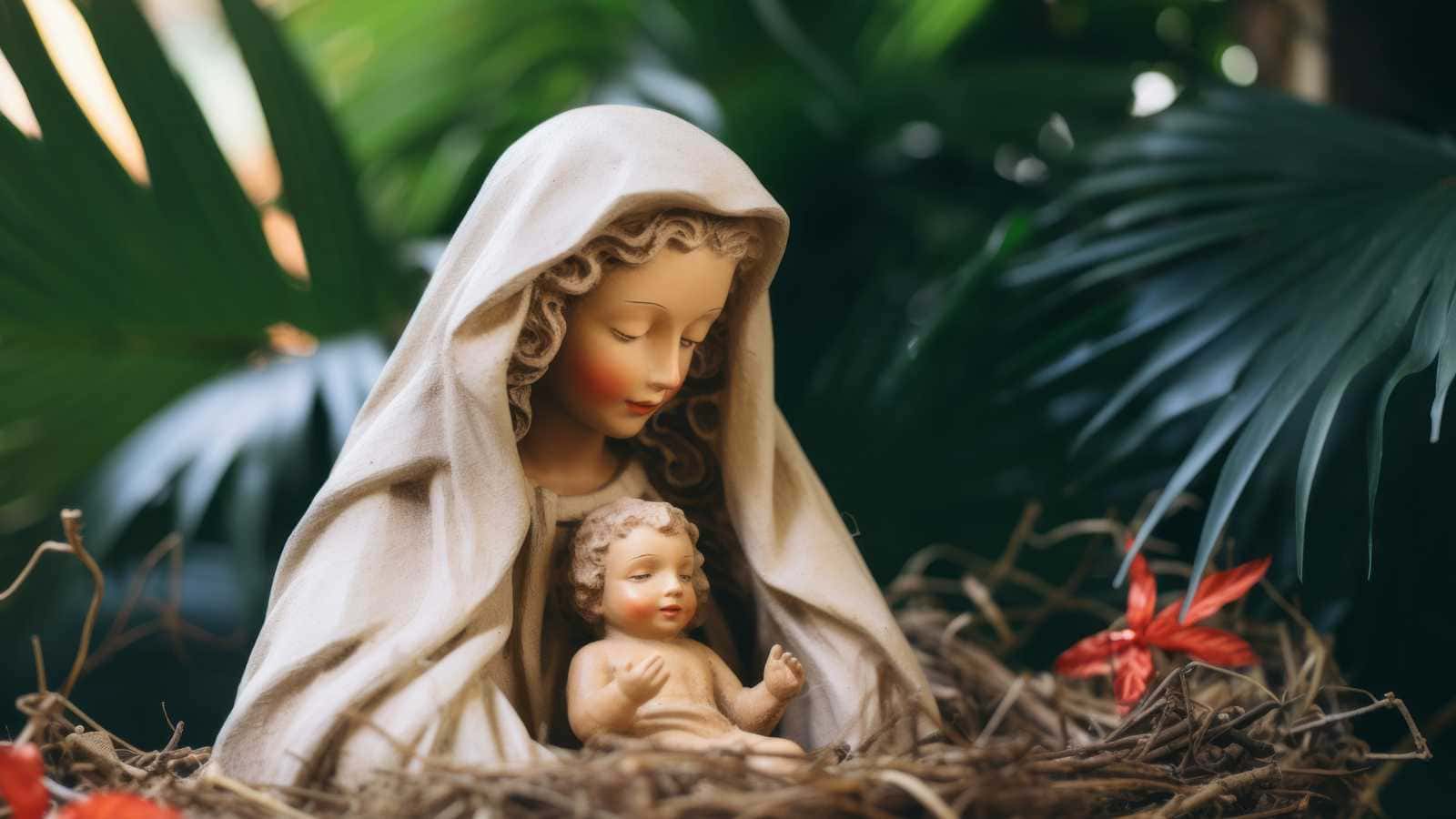
We often forget just how young Mary was during the Nativity. While the Bible doesn’t check her ID, historical sociologists and Jewish customs from the first century paint a clear picture. Girls in that era were typically betrothed shortly after puberty, placing Mary’s age at 12-14 years.
Imagine navigating a scandalous pregnancy, a Roman census, and a flight to Egypt while barely being out of middle school. It reframes her “yes” to the angel not as passive submission, but as gut-wrenching bravery. She wasn’t just a mother; she was a kid exhibiting nerves of steel in a culture where an “illegitimate” pregnancy could literally be a death sentence.
Her name might actually mean “rebellion.”

Most people assume “Mary” means something soft like “peace” or “grace,” but the etymology is way more punk rock than that. The Hebrew name Miryam likely stems from the root meri, which means “rebellion”. This connects her to the Old Testament Miriam, who led a victory dance after escaping slavery in Egypt.
Alternatively, some scholars trace it to the Egyptian root mry, meaning “beloved”. But honestly, I prefer the “rebellion” theory. It fits perfectly with her famous song, the Magnificat, in which she speaks of God toppling rulers from their thrones and sending the rich away empty-handed. That sounds like a revolutionary anthem.
The Quran mentions her more than the Bible does

This one usually floors people. Mary is the only woman mentioned by name in the entire Quran, and she appears there 34 times. Compare that to the New Testament, where she’s named only 19 times in the Gospels and 24 times in total.
Islam reveres her as Maryam, a woman of utmost purity and one of the most righteous women in history. There is even an entire chapter named after her (Surah 19, Surah Maryam). It’s fascinating that in a world often divided by religion, Mary stands as a bridge, revered by billions of Muslims and Christians alike.
You may confuse the immaculate conception

If I had a dollar for every time someone thought the “Immaculate Conception” referred to Jesus being born of a virgin, I could probably retire. FYI: The Virgin Birth is about Jesus; the Immaculate Conception is about Mary.
This doctrine, defined by the Catholic Church in 1854, claims that Mary herself was conceived without “original sin” in the womb of her mother, St. Anne. The logic is that to be a perfect vessel for God, she had to be spotless from nanosecond one. It’s a specifically Catholic dogma, so don’t feel bad if you missed the memo; most Protestants don’t teach it.
Her “parents” are fan-fiction favorites

Ever wonder how we know Mary’s parents were named Joachim and Anne? You won’t find them in your Bible. Their names come from a second-century prequel text called the Protoevangelium of James.
This text is essentially ancient historical fiction (or “apocrypha” if you want to be fancy). It fills in the gaps of Mary’s childhood, describing her as a miracle baby born to a wealthy, infertile couple and raised in the Temple like a consecrated dove. While the church rejected the book as scripture, the names Joachim and Anne stuck, and they are still celebrated as saints today.
She is a massive economic engine

Devotion to Mary isn’t just spiritual; it’s a significant stimulus package. The Basilica of Our Lady of Guadalupe in Mexico City is the most visited Catholic pilgrimage site in the world, drawing around 20 million visitors annually.
The economic impact is staggering. In 2023 alone, the pilgrimage season was estimated to generate 15.5 billion pesos (approx. $889 million USD) nationwide and 1.4 billion pesos for Mexico City, according to a Mexico News Daily report. From hotels to religious goods, Mary keeps the lights on for thousands of businesses. It’s wild to think a peasant girl from Nazareth is now a billion-dollar brand.
She has a “firefighter” reputation in Wisconsin

Did you know the only Vatican-approved Marian apparition in the U.S. happened in Wisconsin? In 1859, a Belgian immigrant named Adele Brise saw Mary in the woods near Champion, WI. But the real kicker is what happened 12 years later during the Peshtigo Fire of 1871, the deadliest fire in U.S. history.
As the firestorm consumed 1.2 million acres and killed up to 2,500 people, terrified locals fled to the shrine’s grounds. They prayed the rosary while lifting a statue of Mary. Miraculously, the fire scorched the outside of the fence but left the shrine and everyone inside it untouched, like an “emerald isle in a sea of ashes”. Talk about divine intervention!
Marigolds are literally “Mary’s gold.”
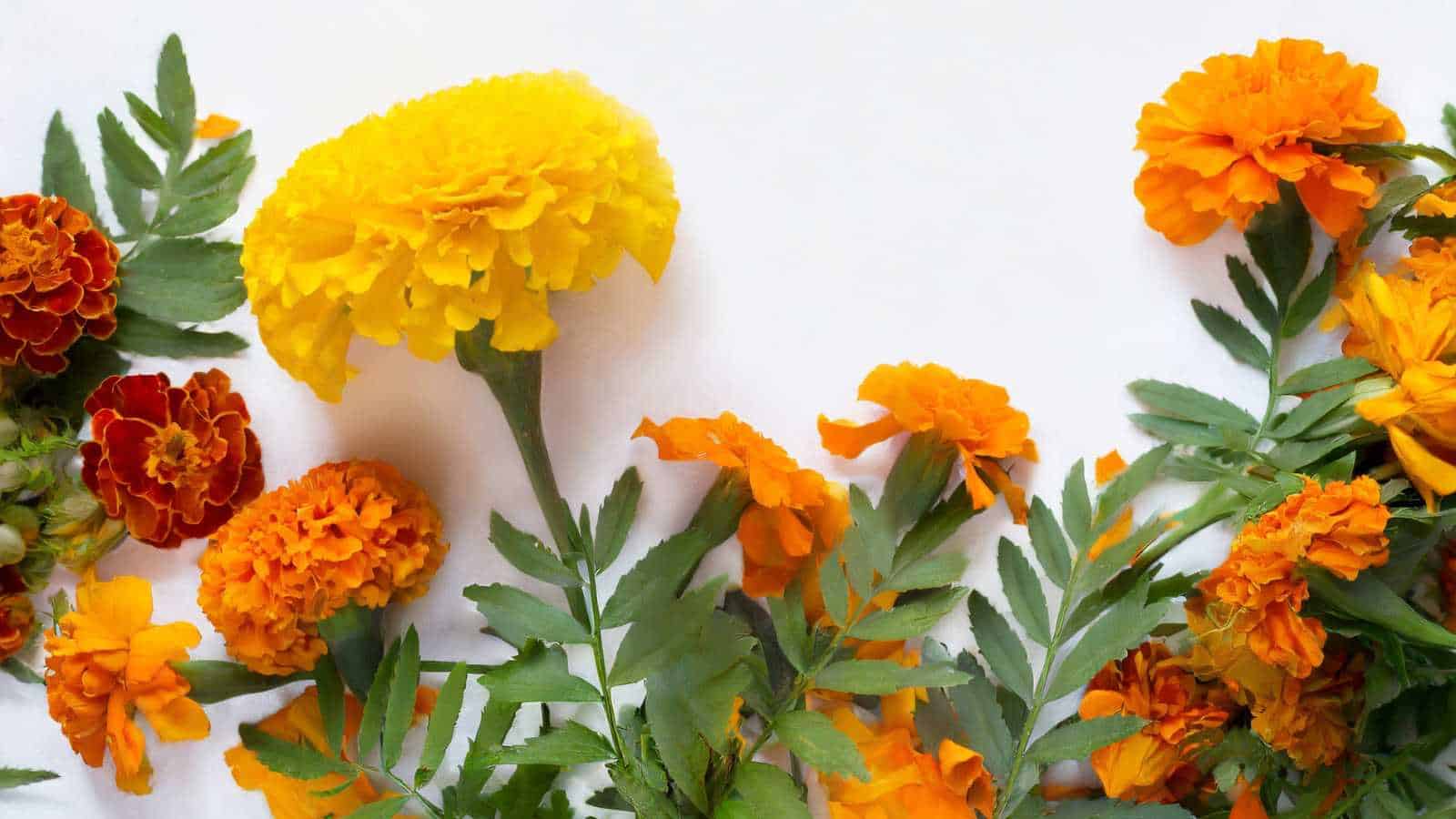
Next time you’re gardening, remember you’re planting a tribute to the Virgin. The familiar Marigold (Calendula officinalis) is called “Mary’s Gold”.
Medieval legend says that poor Christians who couldn’t afford to bring gold coins as offerings to the Virgin Mary would bring these golden flowers instead. The name stuck, even if the history got a bit lost after the Reformation. It’s a cool botanical reminder of how deeply she was woven into the daily life of our ancestors.
Protestants are starting to reclaim her

For a long time, mentioning Mary too much in a Protestant church might have earned you some side-eye. The Reformation pushed her to the sidelines to avoid “idolatry.” But recently, there’s been a vibe shift. Leading Evangelical scholars like Scot McKnight are arguing that ignoring Mary is actually unbiblical.
Even Martin Luther, the father of the Reformation, had deep respect for her, calling her the “noblest gem in Christianity after Christ.” Today, many Protestants are rediscovering her not as a “Queen of Heaven,” but as the ultimate model of discipleship, the first person to say “yes” to Jesus.
She lived in a “nowhere” town

Archaeology has been brutal to the romantic idea of a bustling Nazareth. In the first century, Nazareth was a tiny, insignificant hamlet of maybe 150 to 400 people. It was so irrelevant that it was not mentioned in the Old Testament or by the historian Josephus.
Residents likely lived in “troglodyte” dwellings, homes built into natural caves. This means Mary wasn’t just poor; she was living on the absolute margins of society. It makes the biblical question, “Can anything good come out of Nazareth?” sting a little more.
Her death is a mystery with two addresses

The Bible says absolutely nothing about Mary’s death. This silence has led to two competing traditions about where she spent her final days: Jerusalem or Ephesus (modern-day Turkey).
- Jerusalem: Supported by ancient texts describing her “Dormition” (falling asleep), surrounded by the Apostles.
- Ephesus: Based on the idea that she followed the Apostle John there. You can actually visit the “House of the Virgin Mary” near Ephesus today.
Catholic dogma leaves it open-ended, stating she was “assumed body and soul into heavenly glory,” but it sidesteps the question of whether she physically died first.
She was voted “most powerful.”

I mentioned it in the intro, but the scale of her influence is worth repeating. In 2015, National Geographic devoted its December cover to her, noting that the “Virgin Mary” is the “Most Powerful Woman in the World”.
Why? Because she captures the human imagination like no one else. She is the “universal symbol of maternal love” and suffering. Whether you view her through faith, history, or culture, she remains the ultimate icon of hope for the marginalized. That issue of the magazine was a bestseller, circulating to over 150,000 subscribers, proving that even in a secular age, we are still captivated by her mystery.
Key Takeaway

Mary of Nazareth is far more than a silent figure in a nativity scene. She is a historical survivor, a theological heavyweight, and a cultural icon who bridges the gap between billions of people across Islam and Christianity. Whether you see her as the Mother of God, a teenage rebel, or a symbol of maternal grit, her legacy is undeniable.
So, the next time you see a statue of Mary, don’t just see a religious symbol; know a woman who changed the trajectory of human history.
Disclosure: This article was developed with the assistance of AI and was subsequently reviewed, revised, and approved by our editorial team.
20 Odd American Traditions That Confuse the Rest of the World
20 Odd American Traditions That Confuse the Rest of the World
It’s no surprise that cultures worldwide have their own unique customs and traditions, but some of America’s most beloved habits can seem downright strange to outsiders.
Many American traditions may seem odd or even bizarre to people from other countries. Here are twenty of the strangest American traditions that confuse the rest of the world.
20 of the Worst American Tourist Attractions, Ranked in Order

20 of the Worst American Tourist Attractions, Ranked in Order
If you’ve found yourself here, it’s likely because you’re on a noble quest for the worst of the worst—the crème de la crème of the most underwhelming and downright disappointing tourist traps America offers. Maybe you’re looking to avoid common pitfalls, or perhaps just a connoisseur of the hilariously bad.
Whatever the reason, here is a list that’s sure to entertain, if not educate. Hold onto the hats and explore the ranking, in sequential order, of the 20 worst American tourist attractions.