12 realities that make renting the only option for singles
The nuclear family stopped being the default and became the minority. Single-person households are currently the most common household type in the United States, with roughly 38.1 million Americans living alone as of 2023.
Marriage rates have hit historic lows across every age group under 45. The country’s actual living arrangements look nothing like the assumptions baked into its housing market. And yet the mortgage system, the construction industry, the tax code, and the entire infrastructure of American homeownership still run the numbers for a married couple with children, a 20% down payment pooled from two salaries, and a need for four bedrooms near a good school district.
A single person brings one, and the market charges accordingly at every stage – denial rates, debt-to-income ceilings, down payment timelines, and solo living premiums.
Two incomes are better than one

Median home prices increased roughly 207% between 2000 and 2024, according to a study from the Federal Reserve Bank of St. Louis. Over that same period, median per capita income grew by about 155%. To buy a typical U.S. home right now, Redfin estimates a buyer needs to earn at least $113,520 annually, which is 35% more than what the typical U.S. household earns in total, let alone a solo income. Single people are not being priced out by carelessness or bad timing. They are being priced out by arithmetic.
Married couples have long held a structural advantage in the housing market that has nothing to do with love and everything to do with credit. Two W-2s, two income histories, two sets of savings pooled into a single down payment application – lenders read that as reduced risk and price accordingly. A solo applicant walks into that same conversation with half the firepower and is often treated as twice the liability.
The median age of a first-time single female homebuyer is now 44, while for single men it is 39.
The singles tax is real, documented, and growing

Zillow’s 2024 analysis pegged the singles tax (the annual premium a solo renter pays compared to what each person in a shared household pays for the same unit) at $7,110 nationwide. Couples cohabitating in New York save a combined $40,200 annually by splitting rent – a figure that could otherwise fund a complete down payment fund in a few years.
A single renter paying that premium cannot simultaneously save aggressively for a down payment, fund retirement, maintain an emergency cushion, and service any student loan debt – and most singles carry at least three of those four obligations.
In 2022, 42 million U.S. households were considered housing-cost-burdened, defined as spending 30% or more of their income on rent alone. A 2024 Harvard report found 22.4 million U.S. households spending more than 30% of their income on rent, with 12.1 million spending above 50%. Single-income renters are disproportionately represented in both figures, partly by circumstance and partly because the housing stock that suits solo living ( studio apartments, one-bedrooms in walkable neighborhoods) concentrates in the most expensive urban markets where the singles tax bites hardest.
By contrast, renting keeps the singles’ tax transparent and manageable relative to ownership, where the same per-person cost premium exists but is hidden inside a mortgage, maintenance bill, and insurance premium that arrive in separate envelopes.
Saving 20% alone is far harder than people imply

The number sits right there in every mortgage explainer: 20% down. Clear. Reasonable. Simple. What those explainers rarely clarify is that 20% of a median U.S. home price currently amounts to roughly $87,000 – a sum that, at a savings rate of $500 per month, takes nearly 15 years to accumulate without touching it for anything else.
For a single earner on a median individual income, saving that amount while also paying rent, utilities, transportation, food, and any debt service is not a 15-year plan so much as an optimistic fiction.
The down payment is not even the full obstacle. Closing costs typically run:
- 2-5% of the loan value.
- Adding another $8,000 to $22,000 to the upfront requirement on a median-priced property.
- Then there is the cash reserve that lenders want to see post-closing – usually two to three months of mortgage payments sitting untouched in an account as proof of solvency.
For a single applicant, assembling those three pools of capital simultaneously, without a second income absorbing household expenses during the accumulation phase, means the window to buy a home often closes before it fully opens.
Mortgage rejection for single applicants is backed by the data

The average mortgage rejection rate hit 20.7% in 2024, more than double the 10.2% rejection rate recorded in 2019.
For solo applicants, the problem compounds: insufficient income became the single most common reason for mortgage denial by 2022, cited more frequently than bad credit history or excessive debt. Lenders do not moralize about single applicants. They run the debt-to-income ratios, watch the numbers exceed their acceptable thresholds, and generate a denial.
The gender dimension sharpens this further. In 2024, sole female applicants were 29.8% more likely than sole male applicants to be denied a mortgage, with a denial rate of 15.7% versus 12.1%, according to a LendingTree analysis of Home Mortgage Disclosure Act data.
The income gap contributes directly to this: for every dollar men earned in 2024, women earned approximately 82 cents, resulting in weaker debt-to-income ratios at the application stage. RentHop’s 2024 Singles Index found that single women across the 50 most populous U.S. cities would have to spend 1.21 times more of their annual income on renting a studio than their male counterparts.
Homeownership’s hidden costs

The average U.S. homeowner spent $21,000 in hidden costs in 2025, as per Bankrate’s study. That figure includes $8,808 in maintenance and repairs, $4,494 in utilities, $4,316 in property taxes, $2,267 in homeowners’ insurance, and $1,515 in internet and cable.
Homeowners insurance premiums alone rose 24% nationally from 2021 to 2024, with some coastal states seeing far steeper increases as extreme weather events repriced risk across the entire market. In Hawaii and California, annual hidden homeownership costs exceed $30,000. These costs fall entirely on a single income if you live alone, with no partner to absorb them when the HVAC dies, or the roof inspection comes back bad.
Two-thirds of homeowners report regretting their purchase. These are not uniquely single-person problems, but they land differently without a partner’s income to buffer the shock. A furnace failure that costs $6,000 to replace, split across two incomes, becomes an uncomfortable but manageable expense. Against one median salary, it is a financial emergency. Renting transfers that entire category of risk to the landlord. The maintenance call is still stressful, but it does not arrive as a bill.
Mobility is not a perk for single people

Homeownership locks you into a location in a way that renting simply does not. For someone without school districts, a co-owner, or a dual-income household to anchor them geographically, mobility is often the most effective salary lever available.
A single professional who can move to accept a better role does not have to negotiate a partner’s career, sell a home in a compressed timeframe, time a purchase in an unfamiliar market, or sit through months of transaction costs that eat into the gain the new salary was supposed to generate. High housing costs in new cities increasingly deter workforce mobility, as relocating often results in a net financial loss due to inflated living expenses. Renters face no equivalent constraint.
Flexibility in the labor market has been documented as having value. Companies with flexible workforce structures experience 25% lower turnover than those with rigid structures, and employees who can relocate without friction are better positioned to capitalize on internal mobility opportunities. For a single person with no property, no school-year calendar to respect, and no co-owner veto, a 12-month lease is the only thing separating them from the best opportunity in another city.
The debt-to-income problem

Lenders measure mortgage eligibility using the debt-to-income ratio, which compares gross monthly income to total monthly debt obligations.
The conventional ceiling for a qualified mortgage is 43% DTI, though many lenders prefer to stay below 36%. A single earner on a median individual income of roughly $42,000 has a gross monthly income of $3,500. A mortgage payment of $2,500 on a median-priced home alone represents 71% of that figure – before accounting for any existing student loan payments, car payments, credit card minimums, or other obligations. Getting below 43% DTI on a solo income, at current home prices and interest rates, requires either a very high income, a very cheap market, or a very large down payment.
The insufficiency-of-income reason for mortgage denial – already the most commonly cited by lenders – affects solo applicants at higher rates than any other demographic because the DTI math is unforgiving on one income. Mortgage rejection rates more than doubled between 2019 and 2024, and the primary driver was not creditworthiness but the gap between what incomes can service and what home prices now require.
Renting in your thirties is what the data actually shows
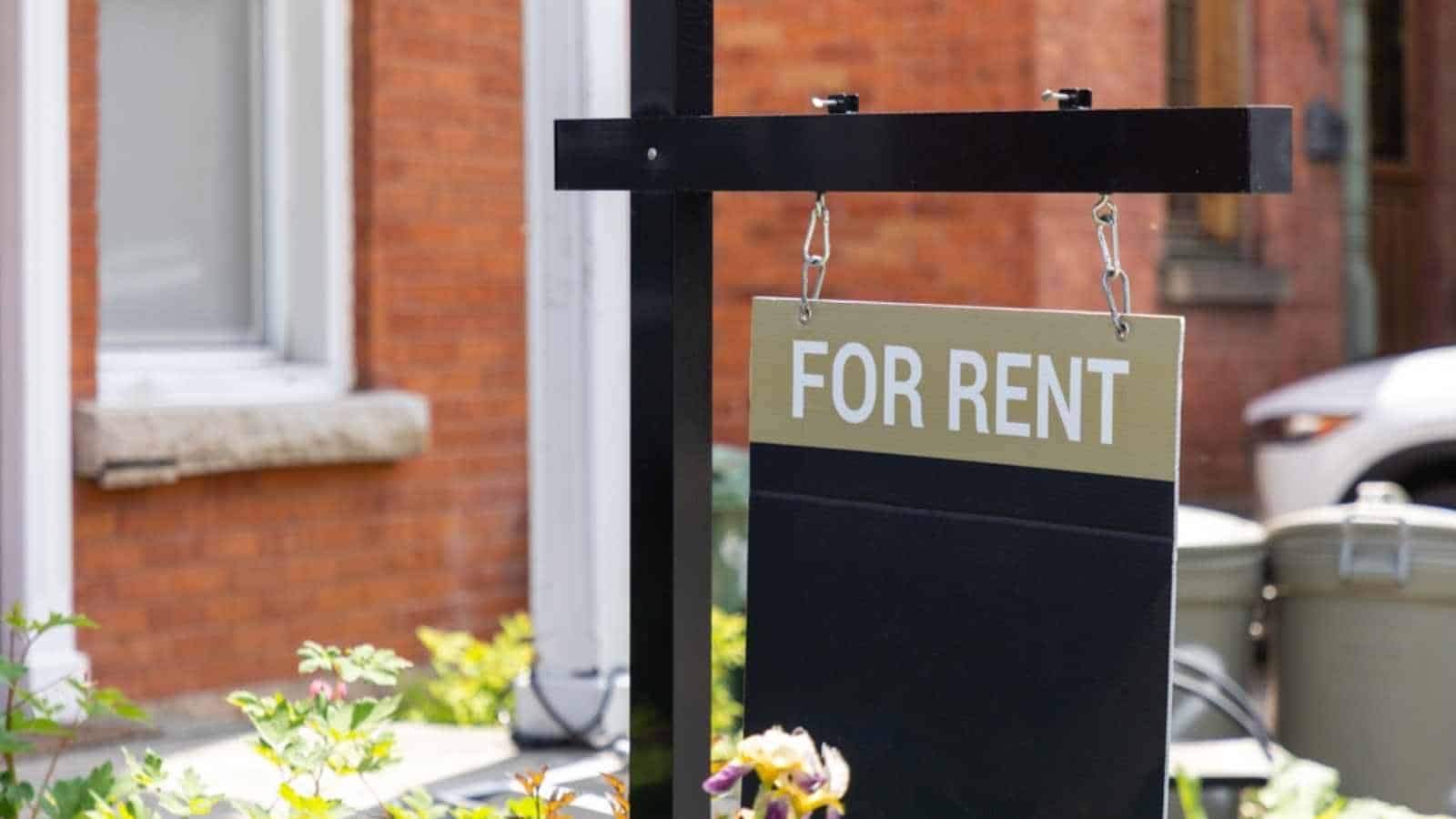
Only 28% of first-time homebuyers in the U.S. were single, according to recent NAR data, compared with 62% who were married couples. It is because the market structure rewards household formation and punishes solo income in ways that have intensified substantially over the past decade.
There is a persistent social pressure attached to homeownership – the idea that a mortgage is evidence of maturity and a lease is evidence of drift – that has almost no relationship to the actual financial realities single people navigate.
‘’The mass of men lead lives of quiet desperation partly because they have taken on obligations that consume their labor entirely,’’ –Henry David Thoreau
The emergency fund disappears into the down payment, and then what

Buying a home on a single income requires:
- More than just saving the down payment.
- Saving the down payment.
- The closing costs.
- A separate emergency fund.
- Maintaining all three obligations simultaneously after closing is important because lenders want to see reserves, and life does not pause for new homeowners.
More than half of aspiring homeowners told Bankrate in 2024 that the cost of living or their income level makes saving for a down payment functionally impossible.
A single person who stretches to buy sits with virtually no financial buffer at a moment when the property demands constant attention. The furnace does not care about the buyer’s liquidity position. The roof inspection arrives regardless of the month-end bank balance. Renting keeps that emergency fund intact, deployable, and not tied to a specific property’s maintenance calendar.
Dense cities fit solo living, but they price solo buyers out

Single people in their working years overwhelmingly cluster in dense urban environments – not by accident but because density supports the social infrastructure, walkability, professional networks, and transit access that a single-income household depends on.
A single professional in Manhattan can afford a subway system that replaces a car payment. A single person in central Chicago walks to everything that a suburban homeowner drives to. The urban environments that work best for single people are precisely the environments where homeownership costs are most extreme.
ATTOM’s 2024 Rental Affordability Report found that median three-bedroom rents are more affordable than owning a similarly-sized home in nearly 90% of local markets analyzed – and the gap is most pronounced in high-population urban counties where single people are most concentrated. The city that works for a single person’s life is often the one where buying simply does not pencil out.
Buying solo as an investment comes with risks most ignore

Yes, homeownership builds equity. Yes, real estate has historically appreciated. But the investment case for a single person buying under financial strain, in a high-cost market, with a stretched debt-to-income ratio, a depleted emergency fund, and no second income to stabilize the household during income disruption, is significantly weaker than the general talking point implies.
The average homeowner stays in their home for 12 years before selling. Over that same 13-year window, a renter who invests the difference between their rent and what a mortgage payment would cost – along with the property taxes, insurance, and maintenance they are not paying – into a diversified portfolio may come out ahead, depending on the specific market, the specific property, the timing of both the purchase and the sale, and the alternatives available for invested capital.
A single person who cannot afford to buy without overextending is choosing between controlled, predictable housing costs that leave room for other wealth-building and an overextended mortgage that consumes the capital that would otherwise compound in other forms.
The housing market was not built for one

U.S. housing policy, tax structure, and mortgage lending conventions developed over the mid-twentieth century primarily around the assumption of the married, dual-income household as the default unit.
The mortgage interest deduction, the standard financial model of two incomes pooling toward a down payment, the construction of large single-family homes in suburban environments requiring car ownership, and sharing childcare costs; all of it assumed a partner. Single-person households were either transitional stages (pre-marriage) or edge cases (widows, divorcees) that the system did not need to optimize for.
Single-person households are now among the fastest-growing household types in the country. The market has shifted faster than the structures built around it, and single people are paying the price of that lag in every form: the singles tax on rent, the down payment gap relative to couples, the mortgage denial rate, and the geographic constraint of buying in expensive markets where their careers actually live.
None of these is a personal failure. They are the predictable outputs of a system that still runs the numbers for two. Renting, for single people navigating this market, is not the gap between where they are and where they should be. It is frequently the most rational, flexible, and financially defensible position available to them – and the 44 million U.S. households currently renting their homes are proof that they have done the same math.
Key takeaways:

- The housing market was built around dual incomes, and single earners pay a measurable penalty at every stage – from mortgage denial rates to the annual cost of living alone.
- Saving a 20% down payment on one salary, while covering rent and living costs simultaneously, is not a 15-year plan for most singles – it is closer to an indefinite one.
- Hidden homeownership costs averaging over $21,000 annually land entirely on one income, with no partner to absorb the months when something breaks.
- Renting preserves the geographic mobility that single professionals depend on to grow their careers, an advantage that disappears the moment a property is purchased.
- For single people in high-cost urban markets, renting is not the gap between where they are and where they should be – it is the most financially defensible position the current market allows.
Disclaimer – This list is solely the author’s opinion based on research and publicly available information. It is not intended to be professional advice.
Like our content? Be sure to follow us