12 reasons women’s growing liberalism is deepening America’s divide
America’s political divide is no longer just red versus blue—it’s increasingly women versus men.
Politics in America isn’t just about parties anymore. It’s about identity, ideology, and increasingly, gender. Across Gen Z and younger millennials, women are shifting sharply to the left, while men either stall or drift right, creating what analysts call a historic gendered political divide.
Surveys show that around 40–44% of women ages 18–29 now identify as liberal, compared with roughly 25% of men in the same age group. Researchers from Brookings and the American Survey Center argue that this widening gap is reshaping voting patterns, social interactions, and even how young Americans relate to each other, turning gender into a political fault line in the U.S.
Young women are moving sharply left while young men stall
A decade or two ago, men and women in the same generation held more similar political views. Today, Gallup and American National Election Studies data reveal that women’s identification with liberal politics has climbed steadily, while men’s ideology has remained flatter or shifted conservative.
Analysts highlight that this divergence affects not only elections but social organization, making gender itself a predictor of political alignment. The result is a generation where political identity and gender intersect in ways that amplify polarization.
Women have become more affectively polarized than men
It’s not just labels that matter—emotions are heightened too. Political scientists Heather Ondercin and Mary Kate Lizotte find that women display higher affective polarization than men, meaning they feel stronger loyalty to their own party and greater animosity toward the other side.
This intensification is fueled by issues like abortion rights and party alignment, creating an emotional investment in politics that extends into friendships, relationships, and daily life. Cross-party empathy is shrinking, turning disagreement into moral stakes.
The partisan gender gap has turned structural
Over time, ideological sorting has cemented the gendered partisan divide. Democratic elites moving left on social justice and reproductive rights, coupled with Republicans shifting right, mean women whose policy preferences align with progressive causes increasingly see Democrats as their political home, while men whose values align with GOP orthodoxy cluster in conservative ranks.
Pew and PRB research show these mirror-image coalitions amplify “us versus them” narratives, turning routine political debates into gendered cultural conflicts.
Dobbs and abortion restrictions radicalized many women
The 2022 Dobbs v. Jackson decision, ending federal abortion protections, sharpened women’s partisan alignment. By late 2025, 18 states covering a third of the U.S. population had restrictive abortion laws, prompting Gallup data to show women’s support for broad abortion rights rising nearly 20 percentage points since the Obama era.
Maternal health outcomes worsened in some states, like Texas, reinforcing the perception that reproductive freedom is not only a moral issue but a life-and-death one. For many women, compromise on abortion now feels like moral betrayal, deepening political alienation from conservative positions.
Women’s liberalism is anchored in “justice” issues
Women’s leftward shift isn’t confined to one topic. Gallup and Scripps News report double-digit jumps in liberal stances on abortion, the environment, gun control, and race relations over the past twenty years.
Analysts from the Center for American Progress describe these issues as a moral “justice cluster,” where concessions on one area—like climate action or trans rights—feel inseparable from overall human dignity. This framing intensifies polarization, as compromise on policy is seen as compromise on morality itself.
Cultural flashpoints are gendered
Young women are consistently more progressive than young men on cultural debates. NBC polling shows major gaps on diversity, equity, and inclusion, gender-nonconforming rights, and traditional gender roles.
As both parties frame these topics as defining “the soul of the country,” liberal women perceive conservative resistance as a threat to equality, while the right interprets female liberalism as a challenge to social norms. These gendered cultural flashpoints heighten both perception and emotion in political debates.
Women’s anger at conservative leaders fuels partisan hostility
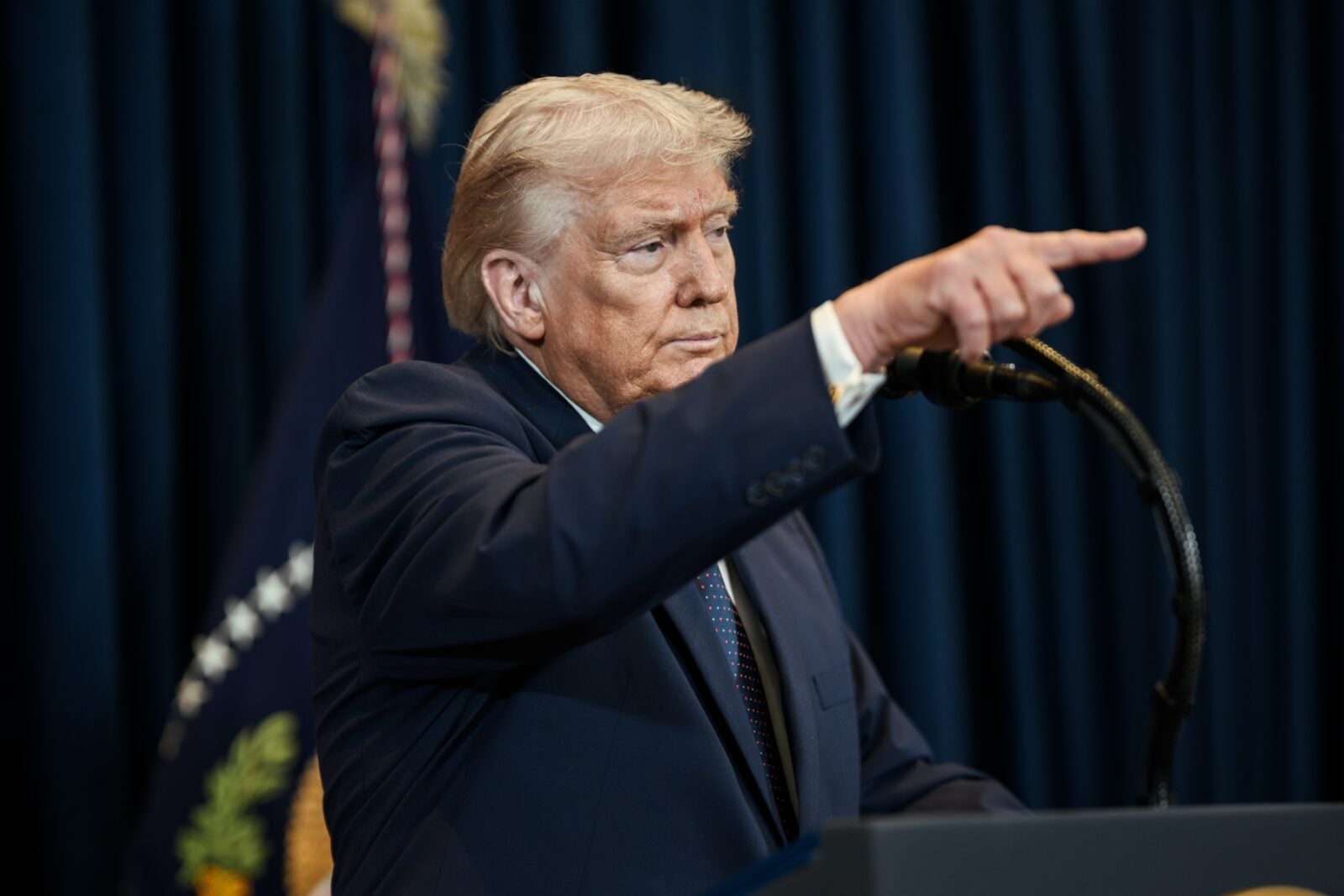
High-profile conservative figures amplify the divide. Surveys show young women hold stronger negative views of figures like Donald Trump and Elon Musk than men of the same generation, translating into concentrated Democratic identification.
NBC data highlights that roughly half of Gen Z women identify as Democrats, creating a high-intensity partisan bloc. Emotional investment against opposing leaders reinforces election cycles as battles of repudiation rather than policy negotiation.
Education and professional trajectories push women left
College-educated Americans are more likely to adopt liberal views, and women now earn the majority of degrees in the U.S. Campuses and professions where women dominate—higher education, healthcare, nonprofits—tend to cultivate liberal cultures, reinforcing progressive partisan identities.
Cambridge research shows that these trajectories widen the gendered political gap, as educational and professional environments provide both ideological exposure and networks that shape political alignment.
Women’s voting power magnifies the stakes
Women consistently vote at higher rates than men, favoring Democratic candidates in every presidential election since 1980. Their turnout advantage amplifies their influence on electoral strategies, pushing the Democratic Party toward firm stances on abortion, gun control, and climate policy.
Republicans, recognizing this demographic challenge, often tailor messaging sharply on gendered cultural issues, which can further alienate already liberal women and reinforce polarization.
Media and social media amplify liberal worldviews
Social media platforms provide ideological reinforcement for women. Networks emphasizing personal narratives about harassment, reproductive rights, and climate issues create echo chambers where conservative perspectives are framed as existential threats.
Analysis from American Progress and The Nation shows that women are clustering in liberal online communities, while men are increasingly exposed to conservative media, reducing shared frames and making cross-gender discussion more difficult.
Women’s liberalism is reshaping relationships and social life
The partisan gender gap extends into intimate and social spheres. Young women with liberal political identities report lower willingness to date, marry, or form close friendships with conservative men.
Studies show that Americans increasingly select spouses, friends, and even neighborhoods based on political alignment, meaning liberal women are socially clustering with co-partisans. This self-segregation transforms political difference into lifestyle difference, intensifying social polarization.
Global trends suggest a broader gendered realignment
U.S. women aren’t alone. Financial Times analysis finds young women in the U.K. and Germany are markedly more liberal than their male peers on immigration and racial justice. In the U.S., where polarization is already high, this gendered ideological split overlays existing racial, religious, and geographic divides, intensifying fracture lines in the electorate.
Scholars warn that overlapping identities—gender, generation, party—turn each election into a high-stakes contest, with women’s collective liberalism amplifying polarization on both sides.
More articles you might like:
- If America Is Producing Record Amounts Of Oil…Why Are We Still Importing It?
- 12 Reasons NYC Landlords Say New Political Pushes Are Hurting Their Businesses
- Why “Just Don’t Do Anything Illegal” Isn’t As Simple As It Sounds