A mom admits she’s not cut out to be a stay-at-home parent. Daycare changed how she sees that
The classic archetype of the stay-at-home parent is often painted in strokes of domestic serenity: sensory bins on the kitchen floor, homemade puree cooling on the counter, and a deep, instinctual fulfillment derived from witnessing every developmental milestone in real time. For generations, this arrangement was regarded as the gold standard for early childhood caregiving.
Yet a growing, vocal cohort of parents is challenging this long-held cultural script.
The tension erupted into public view recently when a mother made a candid admission. She loved being a parent, she explained, but full-time domesticity brought her zero joy. She simply was not good at it. The catalyst for her emotional shift was not a breakthrough in self-care or a parenting book, but her choice to enroll her nearly two-year-old son in daycare. Expecting guilt, she instead found what she termed the village – a professional support system that transformed her perception of modern motherhood.
This individual revelation highlights a much larger structural shift. The modern nuclear family is experiencing an isolation crisis, and in response, parents are aggressively redefining what it means to raise a child. The traditional ideal of the solitary, hyper-vigilant parent is giving way to a more pragmatic, outsourced model of collaborative care.
The myth of the self-sufficient household

Western society has operated under the assumption that the nuclear family should be entirely self-sufficient for decades. This expectation places an unprecedented psychological burden on mothers, who frequently find themselves navigating the grueling, repetitive demands of toddler care without the communal support networks that characterized human history.
Anthropological research indicates that raising children was historically an allopathic endeavor, a collaborative effort involving extended family, neighbors, and older community children. The modern isolation of the suburban home stripped away that infrastructure. When a parent attempts to replicate an entire community’s worth of socialization, education, and emotional labor single-handedly, burnout is a predictable systemic failure, not a personal one.
The post brought this reality to light through a simple gesture. After picking up her toddler, the mother discovered a purple construction-paper heart hidden in his breast pocket: a surprise arranged by his teacher to brighten her day. The realization that an educator understood the emotional weight of dropping a child off and actively sought to comfort the parent shattered the notion that commercial childcare is merely cold, transactional supervision.
Instead, institutional care is increasingly stepping into the vacuum left by the collapse of traditional local communities.
Professionalizing early development

Beyond the emotional relief for parents, the shift toward structured early childhood education reflects an evolving understanding of child development. The idea that a parent’s love is the sole ingredient required for optimal early growth is being challenged by cognitive science.
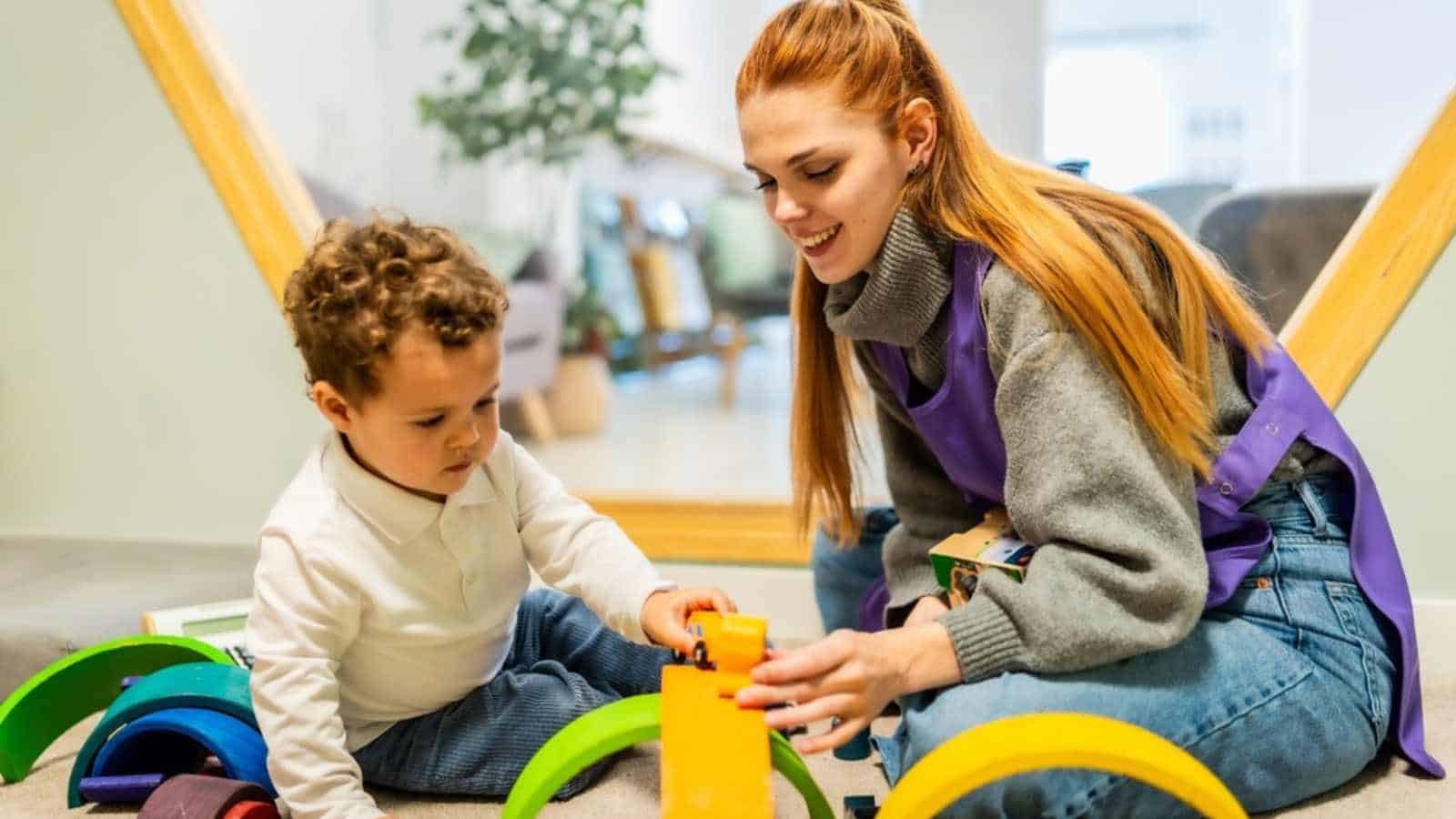
Early childhood educators are trained professionals who specialize in specific developmental milestones. They design environments optimized for peer-to-peer socialization, sensory exploration, and emotional regulation. A single parent at home, simultaneously managing laundry, meal preparation, and financial stress, rarely has the energetic capacity to curate a continuous curriculum of art, gardening, and constructive play.
Data from the National Institute of Child Health and Human Development suggests that high-quality childcare can provide distinct advantages in language development and behavioral readiness for school. Recognizing this does not diminish the value of parental bonding. Rather, it acknowledges that specialized educators possess a distinct toolkit that complements parental care.
When parents reframe daycare from a guilt-inducing necessity to a conscious developmental choice, the domestic dynamic shifts. The parent is no longer a burnt-out supervisor struggling to fill twelve hours of daylight. Instead, they can focus on high-quality, attentive parenting during evening and weekend hours.
Navigating the structural barriers
While the emotional and developmental benefits of outsourced care are clear, this cultural shift exists alongside severe economic constraints. The ability to choose daycare over stay-at-home parenting remains a luxury out of reach for millions of families.
The cost of childcare has outpaced inflation for years, turning a developmental asset into a major financial burden. In many metropolitan areas, infant care costs consume a substantial percentage of a household’s net income. This economic reality creates a stark divide: affluent families can leverage professional childcare to maintain career trajectory and mental wellbeing, while lower-income parents are often forced into precarious patchwork care arrangements or involuntary stay-at-home parenting.
Furthermore, the childcare industry itself faces an operational crisis. Early childhood educators are among the lowest-paid professionals relative to their educational requirements, leading to high turnover rates and chronic staffing shortages. The mother celebrated a teacher who felt like family, but systemic instability means many parents face a rotating door of caregivers, complicating the formation of deep, trusting bonds.
Redefining parental guilt

The cultural conversation surrounding childcare has long been infected by an undercurrent of maternal guilt. Critics of early enrollment often argue that institutional care commodifies the maternal bond, detaching children from their primary anchors too early.
The reality, however, is far more nuanced. The definition of a good parent is shifting away from physical proximity and toward emotional availability. A mother who acknowledges her limitations as a full-time caregiver is making a calculated decision to optimize her child’s environment while preserving her own psychological health. Children do not benefit from a chronically stressed, unfulfilled parent who is physically present but emotionally depleted.
By embracing daycare as a co-parenting partner, families are constructing a modernized version of the historic village. The relationship is built on mutual respect between parents and educators, who share the collective goal of fostering a child’s growth.
Society must reconcile the clear psychological benefits of collaborative raising with the systemic economic hurdles that restrict access to it. The admission that one is not cut out for the isolation of full-time domestic parenting is not a confession of failure. It is a rational response to an unnatural social structure and a validation of the professionals who step in to fill the gaps.
Disclaimer – This list is solely the author’s opinion based on research and publicly available information. It is not intended to be professional advice.
Like our content? Be sure to follow us.