A stadium QR code turned fans into a light show, and the internet saw both magic and risk
A viral clip from a World Cup football match captured the kind of stadium moment that feels designed for both the people in the seats and the people watching later on their phones.
A QR code appeared on the giant screen, fans pointed their cameras toward it, and within moments, thousands of phone flashlights across the stands began moving together in a coordinated display. What looked at first like another small piece of matchday tech quickly turned into something larger: the crowd itself became part of the production.
The phones were no longer just recording the spectacle. They were helping create it.
That is what made the clip so striking. A stadium that once might have relied on colored cards, wristbands, or carefully placed lights suddenly had thousands of tiny bulbs already waiting in people’s pockets. With one scan and one permission prompt, spectators became pixels in a giant living screen.
How the QR Light Show Works

The technology behind the display is less mysterious than it looks, but it is still clever enough to feel futuristic in a packed stadium.
A QR code does not control a phone on its own. It usually works as a shortcut to a web address, and in this case, the code sends fans to a browser-based light show page. Once the page opens, the phone asks for permission to access the feature needed for the show. This is often done through the camera or torch system because the flashlight is tied to the phone’s camera hardware.
If the fan grants permission and keeps the page open, the website can trigger the flashlight in sync with the stadium’s music, timing, and visual cues. If the fan denies permission, closes the page, loses signal, or simply ignores the QR code, their phone does not become part of the display.
That low-friction setup is exactly why event organizers like it. Fans do not need to download a separate app days before the match, create an account, or collect a wristband at the gate. They can scan, tap, and join in, which makes the whole thing feel almost effortless when the stadium network cooperates.
Of course, that “when” matters. In a crowded venue, weak mobile data, overloaded Wi-Fi, slow-loading pages, older devices, and hesitant users can all create delays. That is why some synchronized shows look perfectly smooth, while others appear patchy in certain sections. The technology may be elegant, but it still depends on thousands of people and thousands of phones behaving at nearly the same time.
This Is Becoming Normal at Major Events
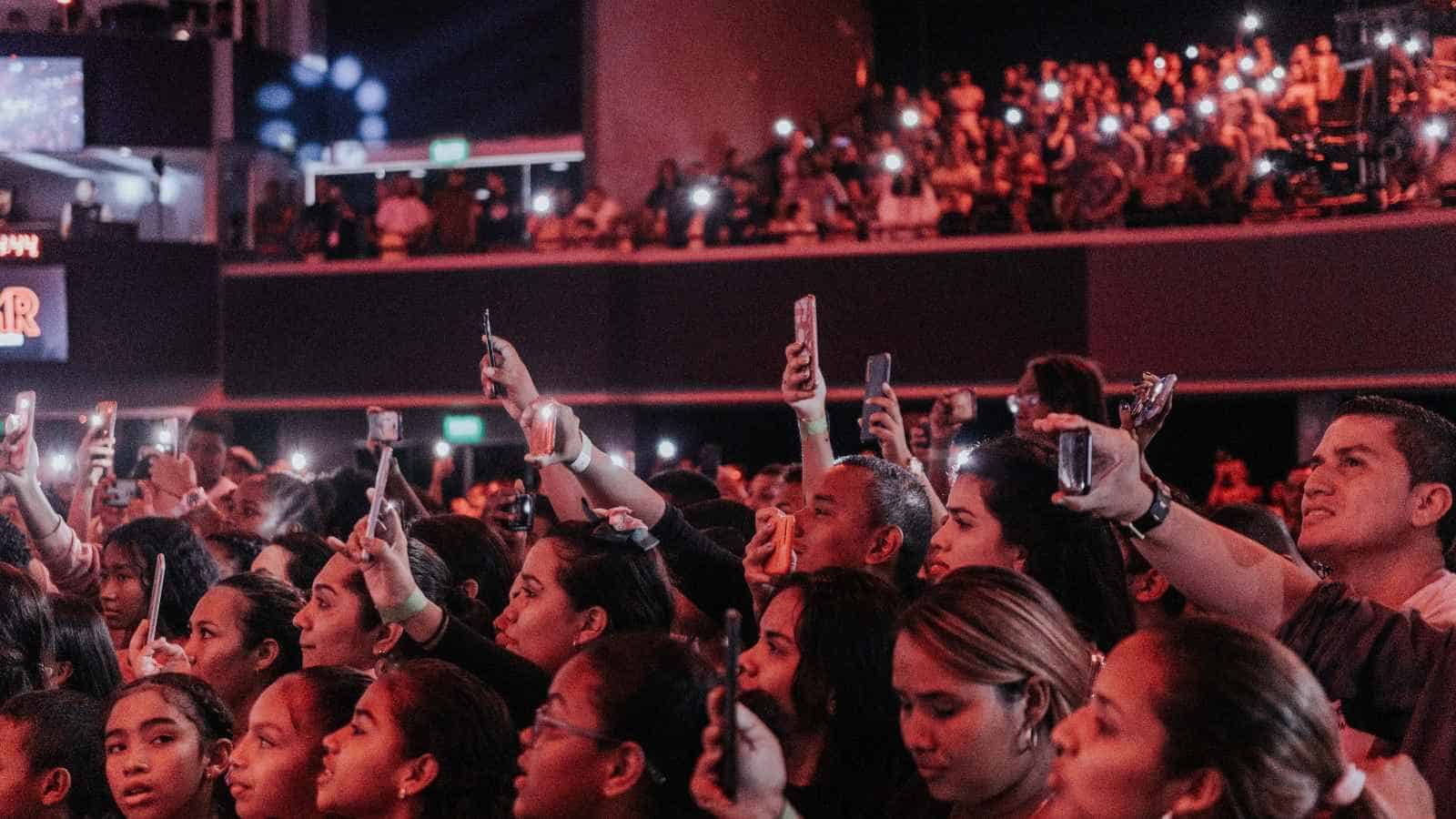
The World Cup clip looked new because of its scale, but synchronized phone light shows are already becoming part of the live-entertainment playbook.
Several sports teams and venues have used similar QR-based or app-based systems that ask fans to sync their phone flashlights during introductions, halftime shows, concerts, or major game moments. The idea is simple: instead of giving every spectator a separate light-up device, the venue turns the device they already brought into part of the atmosphere.
That shift says a lot about where stadium culture is heading. QR codes are no longer just a convenience tucked onto a poster or a menu. They are increasingly becoming part of how live events guide people through the entire experience. This includes digital tickets at the gate, food ordering, merchandise sales, fan promotions, stadium maps, replays, and now crowd-wide visual effects.
The modern fan already expects to use a phone throughout the event. The phone holds the ticket, finds the seat, captures the goal, checks the replay, pays for the drink, texts the group chat, and helps navigate the ride home. The light show simply adds one more role: for a few seconds, the phone becomes part of the stadium itself.
The World Cup Has Already Trained Fans to Scan

The reason the viral moment landed so strongly is that World Cup fans are already being pulled deeper into mobile-first matchday systems.
For the 2026 FIFA World Cup, tickets are being delivered through a mobile-only entry system rather than printable PDFs or ordinary email attachments. FIFA’s ticketing guidance says the stadium-entry QR code appears only a few hours before the gates open on matchday as a security measure. As a result, fans are already expected to watch their phones closely, refresh apps, follow prompts, and trust official digital systems in real time.
That creates a new kind of behavior inside stadiums. People are prepared to scan, tap, authenticate, transfer, display, and troubleshoot on the spot because the event increasingly depends on it.
So when a giant screen tells a crowd to scan a QR code for a light show, the request does not feel strange anymore. It fits into the same digital routine that now controls entry, payments, information, and entertainment.
That convenience is powerful, but it is also why some viewers reacted with suspicion rather than delight.
The Security Concern Is Not Paranoia

A lot of people who watched the clip had the same uneasy reaction: scanning a random QR code in a packed stadium sounds like exactly the kind of habit cybersecurity experts warn people about.
That instinct is not ridiculous. The QR code itself is not dangerous in the way a weapon is dangerous, because the code is usually just information that points somewhere else. The real risk is the destination. A malicious QR code can send someone to a fake login page, a fraudulent payment portal, a malware download, or a site that asks for permissions it does not need.
That kind of scam is often called “quishing,” a QR-code version of phishing. It works because people cannot read the pattern inside a QR code by sight, and in public places, they are often distracted, rushed, or socially pressured to keep moving.
Cybersecurity agencies have warned that QR code fraud often occurs in public spaces such as parking lots, train stations, event areas, and payment points. In many cases, a fake sticker can be placed over a legitimate code with little effort. A person trying to pay for parking or access venue information may scan quickly, trust the page, and only realize later that the link was not official.
The stadium light show is different because the QR code appears on an official video board in a controlled venue. Still, the anxiety in the comments is really about the habit it encourages. The more normal it becomes to scan first and think later, the more useful that behavior becomes to scammers elsewhere.
The World Cup Is a Perfect Target for Scammers

The concern becomes sharper when the event is as large as the World Cup.
A global tournament brings together massive ticket demand, international travel, emotional urgency, language barriers, expensive purchases, and millions of fans trying to solve problems quickly. That is exactly the kind of environment where fake links, counterfeit ticket pages, parking scams, merch fraud, streaming traps, and fake support portals can thrive.
Cybersecurity researchers have already warned about suspicious World Cup-related domains, including fake sites built around tickets, merchandise, streaming, travel, and promotions. In one recent analysis, more than 13,000 World Cup-related domain names had been registered within five months, with roughly 9% flagged as suspicious or malicious.
That matters because scammers do not need to compromise an official stadium screen to exploit the same behavior. They can place a fake QR code on a parking sign or share a bogus “ticket help” link in a fan group chat. They may also post a fake upgrade offer near a venue or create a fraudulent page that looks close enough to an official tournament site to fool people who are in a hurry.
The light show is a charming version of QR culture. The scam version uses the same muscle memory and strips away the fun.
Why Some Fans See Magic and Others See a Trap

The split in the comments makes sense because both sides are reacting to something real.
Supporters see a harmless, memorable stadium experience that asks for a narrow permission and gives fans a collective moment in return. From that perspective, the risk feels small, especially when the code comes from the official screen and the reward is immediate. You scan, your phone flashes, the stadium glows, and everyone gets a story to tell.
Skeptics see something else. They see a large crowd being trained to follow a digital prompt without much thought. In that setting, excitement, noise, social pressure, and fear of missing out can push people to tap “allow” before they have fully checked what they are permitting.
That is the quiet tension behind the spectacle. A stadium is one of the easiest places in the world to make people participate. The big screen tells you what to do, the crowd around you is already doing it, and the moment will be over if you hesitate too long.
You are not just scanning a code. You are joining the crowd.
The Safer Way to Think About Stadium QR Codes

The answer is not to treat every QR code like a threat, because that is not realistic in a world where tickets, menus, payments, maps, and fan experiences increasingly rely on them.
The better answer is to treat QR codes the way people should treat links in text messages and emails: useful, but not automatically trustworthy.
A code shown on an official stadium screen is different from a sticker on a parking meter. A QR link inside a verified team app is different from a random flyer handed out near the gates. A page asking only for flashlight permission during a light show is different from a page asking for banking details, passwords, location access, microphone access, or a download from outside an official app store.
Fans should check the URL preview before opening the link, look for misspellings or strange domains, avoid entering sensitive information through QR links, and close the page once the show is over. If the site asks for more than the moment requires, that is the sign to leave it alone.
For a flashlight show, the page should not need your payment card, your contacts, your password, or your location history. If it asks for too much, closing the page is not difficult. It is being sensible.
The Crowd Is Becoming Part of the Interface

The most interesting thing about the viral clip is not simply that the technology worked. It is that thousands of people agreed, almost instantly, to let a stadium turn their phones into part of the show.
That says something about where live entertainment is going. The stadium is no longer only a place where fans sit, cheer, chant, and watch. It is becoming an interactive platform where every phone can serve as a ticket, wallet, camera, map, data point, promotion channel, and light source.
That can feel magical when it is done well, because it turns strangers into one coordinated body for a few seconds. It can also feel intrusive when the same tools start to blur the line between participation, marketing, surveillance, and habit.
The old crowd lifted scarves, waved flags, and held colored cards at the right time. The new crowd scans codes, opens pages, grants permissions, and becomes part of the software layer of the event.
That is what makes the World Cup clip more than a neat trick. It looks like a light show, but it is also a preview of the next stadium experience, where fans are not only watching the spectacle but helping power it through the devices in their hands.
The challenge for organizers is clear: make the moment worth the scan, make the permission honest, keep the request narrow, and do not teach people to ignore the same digital caution that protects them once they leave the stadium.
Like our content? Be sure to follow us