AI is everywhere. That does not mean people trust it
The backlash against artificial intelligence is no longer just ‘noise’ coming from tech skeptics or online comment sections. It has moved into polling data, workplace conversations, lawsuits, town halls, union fights, political campaigns, and local battles over the massive data centers needed to keep the whole thing running.
That shift matters. For a while, AI was sold to the public as a kind of digital assistant: faster emails, quicker research, cleaner spreadsheets, fewer boring tasks. The promise was simple enough. Let the machines handle the grind, and people would have more room for creativity, care, judgment, and better work.
But the public mood has changed. A 2025 Pew Research Center survey found that 50% of U.S. adults are more concerned than excited about AI’s growing role in daily life, while only 10% are more excited than concerned. That is not a small branding problem for the tech industry. It is a warning that the public is not buying the cheerful inevitability story as easily as it once did.
The discomfort is not just about AI as a technology. It is about how AI is being deployed: quickly, unevenly, and often without much public consent. People are asking harder questions now. Who benefits? Who loses work? Who pays the power bill? Who gets watched? Who gets copied? Who gets a say before these systems are placed inside schools, offices, hospitals, government services, creative industries, and local communities?
Those questions are not going away.
The AI Backlash Is Really About Power
Much of the AI resistance is dismissed as a fear of change. That is too easy. Most people are not rejecting every possible use of AI. Many are perfectly willing to let technology help with medical research, accessibility, weather forecasting, fraud detection, translation, or tedious paperwork. The problem is that most people are not seeing AI as a public good first. They are meeting it as a chatbot replacing customer service, a workplace tool quietly changing expectations, a flood of synthetic content online, or a corporate announcement about doing “more with less.”
That phrase has become one of the unofficial slogans of the AI era. Workers know what it often means: fewer people, more pressure, faster turnaround, less security, and more output expected from whoever is still on the payroll.
Pew’s workplace data clearly capture that anxiety. In one 2025 survey of U.S. workers, 52% said they were worried about the future impact of AI in the workplace. About a third said AI would lead to fewer job opportunities for them in the long run, while only 6% believed it would create more.
That is the part executives often seem to miss. The fear is not only that AI will replace workers overnight. It is that AI will weaken workers’ leverage long before it replaces them. A company does not have to eliminate an entire department to change the mood inside it. It only has to imply that the same team should now produce twice as much because “AI can help.”
That pressure is already showing up in white-collar and creative fields that once felt harder to automate: journalism, design, programming, marketing, customer service, translation, paralegal work, content moderation, and administrative support. The threat does not always arrive as a layoff notice. Sometimes it arrives as a new software subscription, a new productivity target, or a manager asking why a first draft took so long.
People Are Using AI While Distrusting It
The strange thing about this moment is that AI use and AI distrust are rising together. That is not really a contradiction. It is how modern technology often works. People use platforms they do not fully trust. They scroll social media while worrying about privacy. They use delivery apps while disliking the labor model. They rely on search engines, even though they know the results are shaped by incentives they cannot see.
AI is entering that same uncomfortable category: useful enough to be hard to avoid, unsettling enough to never feel fully welcome. Pew found in late 2025 that 21% of U.S. workers said at least some of their work was being done with AI, up from 16% roughly a year earlier.
That is a meaningful jump, but it does not mean people feel good about it. For many workers, AI adoption is less like enthusiasm and more like self-defense. They use it because coworkers use it, because clients expect faster drafts, because managers want more output, or because nobody wants to be the person who falls behind.
That is the mood many companies should be paying attention to: not open rebellion, but resentful adoption. A global study from KPMG and the University of Melbourne found the same tension on a larger scale. The study surveyed more than 48,000 people across 47 countries and found that 66% of people use AI regularly, yet only 46% are willing to trust AI systems. Even more telling, 70% said AI regulation is needed.
That is the public speaking in two voices at once: yes, we use it; no, we do not fully trust the people building and deploying it.
Data Centers Have Become the Physical Face of AI Anxiety
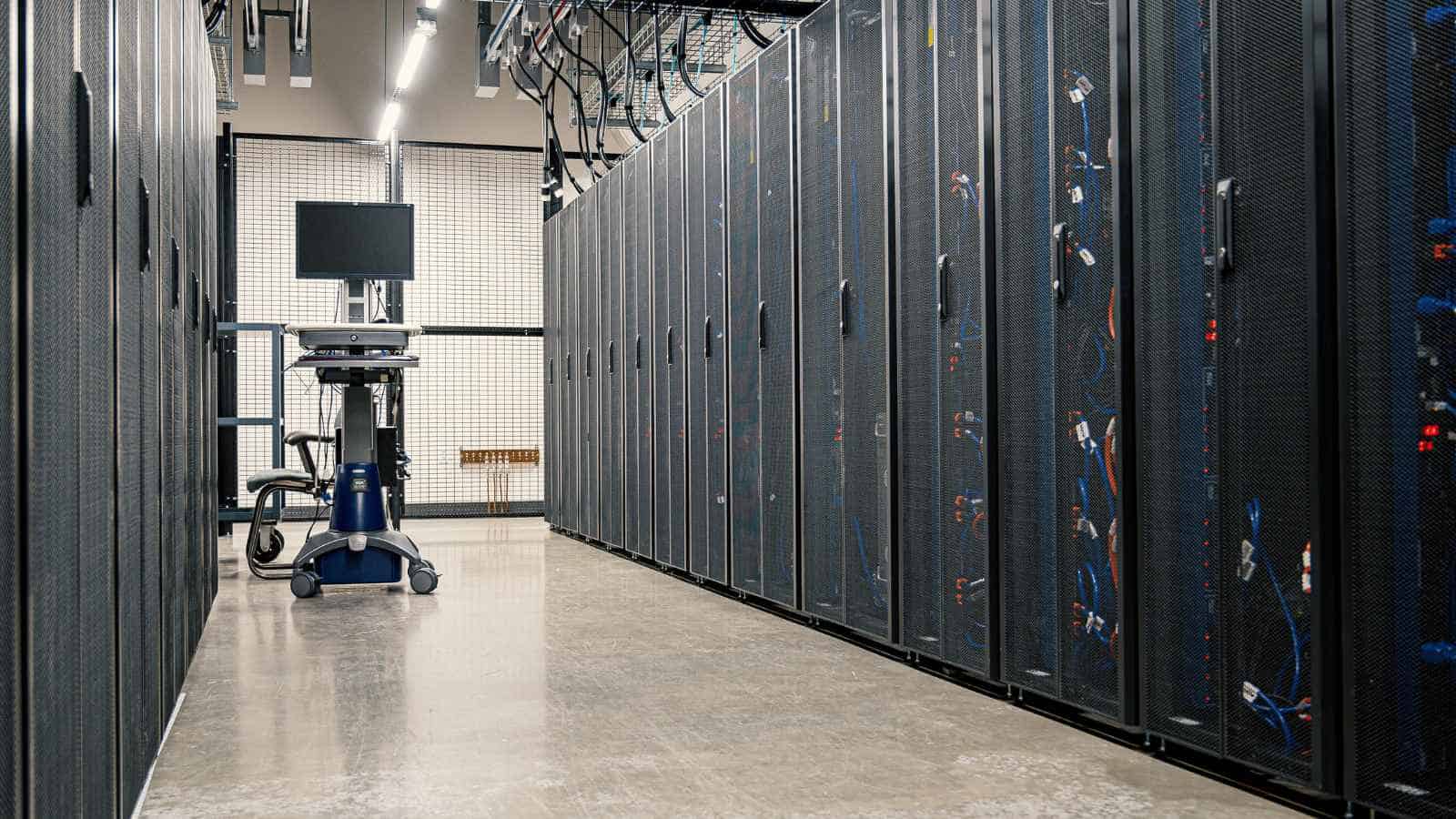
For years, AI felt invisible to most people. It lived in recommendation feeds, workplace tools, search bars, apps, and software updates. Data centers changed that. They gave the AI boom a physical address.
Now the public can see the warehouses. They can see the land deals. They can hear the arguments about power, water, tax breaks, grid strain, and local disruption. Suddenly, AI is not just something inside a laptop. It is a huge building at the edge of town, tied to electricity demand, water use, noise concerns, and infrastructure pressure.
That is why local fights over data centers have become one of the clearest signs of AI backlash. Axios recently reported polling from Milltown Partners showing that nearly half of surveyed registered voters supported a temporary moratorium on new data center construction, while only 16% opposed one. The same poll found that 38% would support a data center near their home, while 34% would oppose it.
Those numbers show a public that is not uniformly anti-data center, but deeply wary of the speed and terms of the buildout. People want to know whether these projects will actually help their communities or simply turn local land, water, and power into inputs for distant corporate profits.
The water issue is becoming especially difficult to ignore. Axios also reported that roughly 70% of Americans said they would oppose data centers in their communities, with water and energy use ranking as top concerns. There are fair arguments on both sides. Data centers may use less water than some major industries, and companies are investing in more efficient cooling systems.
But aggregate comparisons do not always comfort a town worried about its own aquifer, grid, utility bills, or drought risk. People do not live inside national averages. They live near the project.
Creative Workers Saw the Problem Early
Artists, writers, musicians, photographers, actors, and other creative workers were among the first groups to understand the stakes of generative AI. Their anger is not just sentimental. It is economic.
Many creators believe their work was scraped, copied, absorbed, and repackaged into systems that can now compete with them. That is not a small complaint. Creative labor is already unstable and often underpaid. AI has intensified the fear that original work will be treated as raw material for machines while the people who made it are told to adapt, accept exposure, or use the very tools built from their labor.
The legal fight is widening. Reuters has described 2026 as a pivotal year for AI copyright battles, with courts weighing whether tech companies can rely on fair use when training models on copyrighted material. Reuters also reported that authors secured a $1.5 billion class-action settlement with Anthropic in 2025, the largest known copyright payout in U.S. history. In another case, music platform Jamendo sued Nvidia, accusing the company of misusing hundreds of thousands of audio files and related metadata to train AI audio systems.
Whatever the courts ultimately decide, the cultural damage is already visible. The phrase “AI slop” has stuck because ordinary users recognize the problem immediately: a flood of automated articles, fake-looking images, synthetic videos, recycled captions, and cheap engagement bait clogging feeds and search results. It is not always obviously bad. Sometimes it is almost convincing, which may be worse. It makes people work harder to figure out what is real, what is copied, what is human, and what was produced only to fill space.
For creators, that fog has a cost. It devalues care. It rewards speed. It turns originality into something that has to fight for oxygen.
The Transparency Problem Is Getting Worse

AI companies often talk about trust as if it can be repaired with better messaging. Publish a safety statement. Add a disclosure. Release a polished video about responsible innovation. Tell users the company takes ethics seriously. But trust is not a public relations feature. It is built through behavior.
People want basic answers. What data was used to train the system? Was copyrighted work included? Are user conversations stored? Can people opt out? Who checks for bias? What happens when the system makes a harmful decision? Is there a human appeal process? Who is responsible when the machine gets it wrong?
The industry has not always been eager to answer those questions clearly. Stanford’s 2025 Foundation Model Transparency Index found that average transparency among major AI developers fell from 58 out of 100 in 2024 to 40.69 in 2025. The report said companies remain especially opaque about training data, training compute, and post-deployment usage and impact.
That decline matters because transparency is not a nice extra. It is the starting point for accountability. If people cannot see how systems are built, tested, governed, and corrected, they are being asked to trust a black box with real-world consequences.
And the public already has reason to be skeptical. It remembers the social media era, when platforms promised connection, openness, and democratized speech. It also remembers privacy scandals, harassment, misinformation, addictive design, and business models built around attention extraction. AI companies are not starting from a clean slate. They are inheriting the distrust created by the last generation of tech giants.
Safety Has to Be Explained Like It Affects Real People

Part of the communication failure stems from how AI safety is discussed. The industry often uses language that sounds meaningful inside research labs, but does not answer the questions ordinary people are asking. A worker does not want a lecture on “alignment.” She wants to know whether an AI system will unfairly judge her productivity. A patient does not want vague promises about innovation. He wants to know whether a human doctor is still making the final call.
A parent wants to know whether a child’s data is being collected. A voter wants to know whether deepfakes will distort an election. A city resident wants to know whether a data center will raise local costs or strain local infrastructure. A writer wants to know whether her work helped train a product she will never be paid for.
These are not anti-technology questions. They are questions about consent, governance, fairness, and accountability.
The public also wants help identifying what is real. Pew found that 76% of Americans say it is extremely or very important to be able to tell whether pictures, videos, and text were made by AI or by people. Yet 53% say they are not too confident or not at all confident in their ability to detect AI-generated content.
That gap is dangerous. When people cannot tell what is real, trust erodes beyond AI. It spills into news, politics, art, education, business, and everyday communication.
Regulation From Below Is Already Happening
Governments are trying to catch up, but the public is not waiting patiently for perfect legislation. Communities are challenging data centers. Creators are suing. Workers are organizing. Some institutions are limiting AI use before national rules are fully settled.
Local resistance, lawsuits, strikes, moratoriums, and public pressure are becoming a rough form of regulation from below. That approach is messy. It can overcorrect. It can block both useful and harmful projects. It can be hijacked by politicians who turn legitimate concerns into broad anti-science theater.
But it also reflects something real: people do not feel they were asked before AI began reshaping their workplaces, feeds, classrooms, cities, and creative lives.
The demand underneath the backlash is not complicated. People want a say.
The Path Forward Is Not Blind Optimism or Blanket Rejection

The AI debate is often presented as a choice between believers and doomers. That framing is convenient, but it misses where many people actually are. Most are somewhere in the middle. They can see that AI may help with useful tasks. They can also see that it may deepen inequality, weaken labor power, muddy the information environment, strain local resources, and make powerful companies even harder to challenge.
That middle position is not hypocrisy. It is realism. The future of AI will not be decided only by what the technology can do. It will be decided by whether people believe these systems are fair, accountable, useful, and governed in the public interest. Right now, that trust is fragile.
AI companies can still change course, but not with better slogans. They will have to make trust part of the product itself. That means clearer data practices, stronger human oversight, independent audits, real opt-outs, fair compensation models, visible safety testing, and a willingness to slow down in high-stakes settings.
The backlash against AI is not proof that people hate progress. It is proof that people have learned to ask harder questions about progress. Who pays for it? Who profits from it? Who gets replaced, monitored, copied, mined, or ignored? Who gets a voice before the system goes live?
Those questions may mark the beginning of the real AI era: the moment when the public stops being treated as an audience for innovation and starts acting like a stakeholder in its future.
Like our content? Be sure to follow us