14 discoveries the world ignored until it realized they were right
Some discoveries change the world overnight. Others can sit unnoticed for decades before anyone realizes just how important they are.
Scientific history is filled with ideas that arrived before the world was ready for them. Some challenged accepted beliefs so dramatically that other scientists dismissed them. Others lacked the technology needed to prove them, threatened powerful commercial interests, remained classified for national-security reasons, or simply failed to attract attention until someone rediscovered them years later.
And being overlooked may be an increasingly important part of the story of scientific progress. Research highlighted by the University of Virginia School of Data Science found that scientific papers and patents have become less likely to make the kinds of disruptive departures from previous work that characterized many earlier breakthroughs—raising fascinating questions about how genuinely transformative ideas emerge and get recognized.
History also shows that being right doesn’t guarantee anyone will listen.
From medical discoveries initially rejected by experts to inventions developed behind closed doors and ideas that waited decades for vindication, these stories reveal how politics, money, scientific convention, secrecy, and sometimes plain bad timing can determine when knowledge finally gets its moment.
Here are some remarkable discoveries that took far longer to receive attention than their significance might suggest.
The Radar Technology That Changed Modern Warfare
Radar is one of the most important technologies in modern aviation, weather forecasting, navigation, and defense, but its development was surrounded by secrecy for years because of its military value. During the early 20th century, scientists in several countries explored the possibility of using radio waves to detect distant objects, but the technology became especially important during World War II. British scientists developed advanced radar systems that helped detect incoming German aircraft during the Battle of Britain, giving pilots critical warnings that helped protect the country from invasion.
The public knew very little about the full capabilities of radar during the war because governments classified much of the research. The technology remained hidden behind military restrictions until after the conflict ended, when its broader applications became clear. Today, radar systems help guide airplanes safely, predict storms, track ships, assist emergency services, and support space exploration, showing how a once-secret military tool became part of everyday life.
The Medical Breakthrough Behind Penicillin
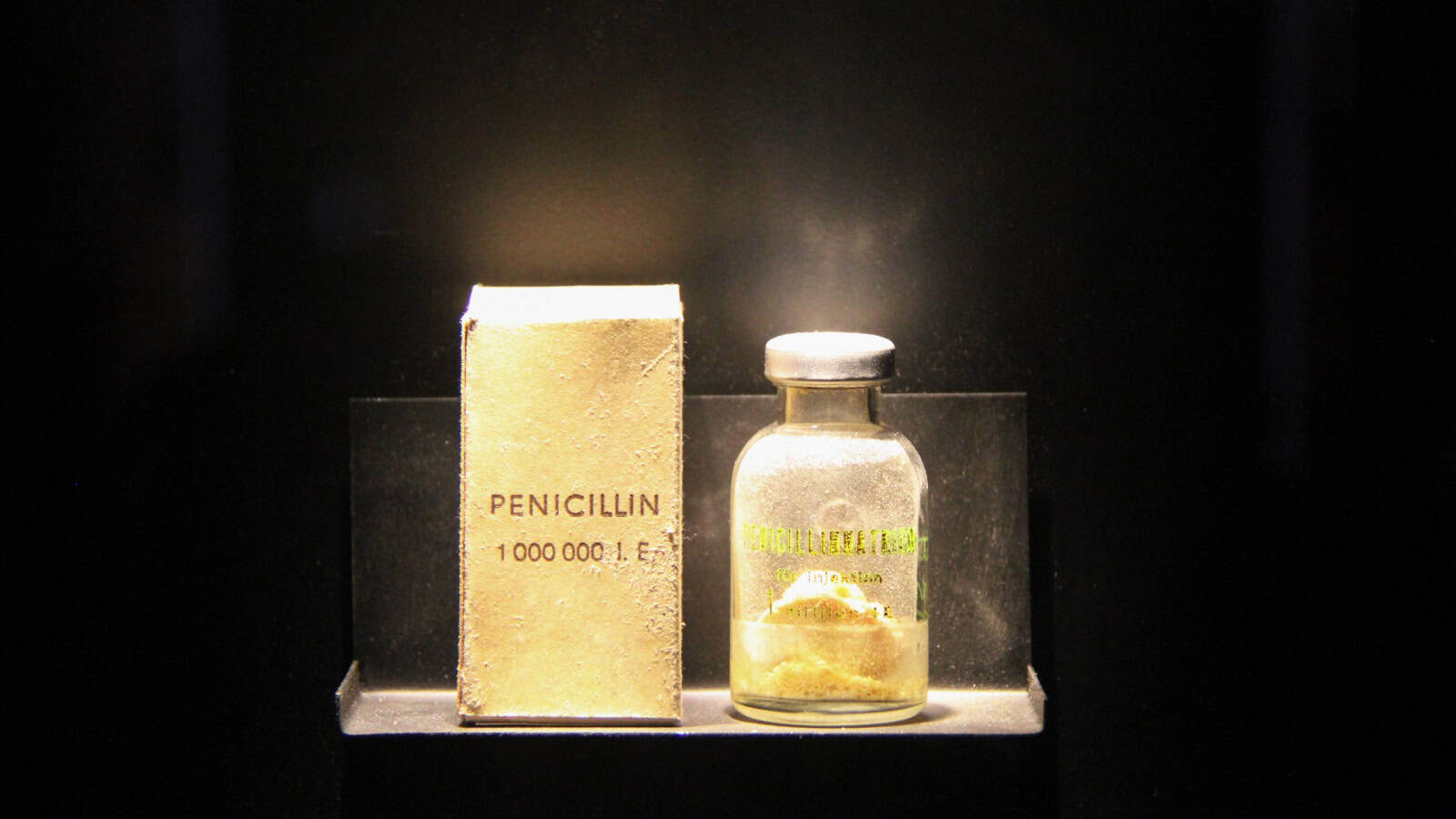
Penicillin is often remembered as one of medicine’s greatest discoveries, but its early development was far less straightforward than many people realize. Scottish scientist Alexander Fleming discovered the antibacterial properties of penicillin in 1928 after noticing that mold had stopped bacteria from growing in a laboratory dish. However, the discovery did not immediately become a widely available treatment because scientists struggled to produce enough of the substance and understand how to use it effectively.
For more than a decade, penicillin remained largely a laboratory curiosity until researchers developed methods to manufacture it on a large scale during World War II. The delay meant millions of people lived without access to what would eventually become a life-saving antibiotic. Once production expanded, penicillin transformed healthcare by helping doctors treat infections that had previously been deadly, including pneumonia, blood infections, and wounds caused by battlefield injuries.
The Woman Behind the Discovery of Pulsars
In 1967, graduate student Jocelyn Bell Burnell discovered unusual signals coming from space while analyzing data from a radio telescope in the United Kingdom. The strange repeating signals were eventually identified as pulsars, rapidly rotating neutron stars that send beams of radiation across space. The discovery changed astronomy by revealing a new type of cosmic object and providing scientists with a powerful tool for studying extreme conditions in the universe.
Despite her major contribution, Bell Burnell was not included when the 1974 Nobel Prize in Physics was awarded for the discovery. The prize went to her supervisor, Antony Hewish, and another researcher, leading to decades of discussion about recognition in science. Bell Burnell later received major scientific honors, including the 2018 Breakthrough Prize in Fundamental Physics, but her story remains one of the most discussed examples of important work receiving delayed recognition.
The Secret Research That Created the Internet
The internet feels like a technology built by millions of people around the world, but its early foundations were laid by a government-funded research project that many ordinary citizens knew nothing about. In the late 1960s, the U.S. Department of Defense created ARPANET, a network designed to allow computers at research institutions to communicate with each other. The project introduced ideas such as packet switching, which became essential to modern digital communication.
For years, ARPANET remained mostly limited to universities, researchers, and government organizations. The public did not experience the internet revolution until decades later, when personal computers became common and commercial internet services expanded. What started as a restricted research network eventually became one of the most influential inventions in human history, reshaping communication, business, education, and entertainment.
The Cancer Research That Faced Long Resistance
Cancer research has produced many discoveries that changed medicine, but some important findings were initially ignored or underestimated. One example is the connection between certain viruses and cancer, a concept that many researchers questioned for years. Scientists studying human papillomavirus, or HPV, eventually proved that certain strains of the virus could cause cervical cancer, leading to new prevention strategies and vaccines.
The acceptance of this discovery took decades because cancer was often viewed mainly as a result of genetic changes, environmental factors, or lifestyle choices rather than infections. German virologist Harald zur Hausen’s research on HPV helped change that understanding and earned him the Nobel Prize in Physiology or Medicine in 2008. Today, HPV vaccines are considered a major public health achievement because they can prevent infections linked to several cancers.
The Renewable Energy Ideas Ahead of Their Time
Solar power may seem like a modern solution to climate challenges, but the scientific foundation behind solar technology goes back more than a century. French physicist Alexandre Edmond Becquerel discovered the photovoltaic effect in 1839, showing that certain materials could create electrical currents when exposed to light. However, practical solar panels remained expensive and inefficient for generations, limiting their widespread use.
For much of the 20th century, solar technology received limited attention compared with fossil fuels because coal, oil, and natural gas dominated global energy markets. Improvements in materials science and manufacturing eventually made solar panels more affordable and efficient. What was once considered an experimental technology is now becoming a major source of renewable energy used by homes, businesses, and governments worldwide.
The Forgotten Contribution of Rosalind Franklin’s DNA Work
The discovery of DNA’s double-helix structure is one of the most famous moments in biology, but the story behind it includes a scientist whose contribution was not fully recognized for many years. Rosalind Franklin produced critical X-ray diffraction images that helped reveal the structure of DNA. Her famous “Photo 51” provided important evidence that supported the model developed by James Watson and Francis Crick.
Franklin’s role became widely discussed only after her death in 1958, as historians and scientists examined how credit was distributed among researchers. While Watson, Crick, and Maurice Wilkins received the 1962 Nobel Prize in Physiology or Medicine, Franklin was not eligible because Nobel Prizes are not awarded posthumously. Her work is now recognized as a crucial part of one of science’s most important discoveries.
The Climate Research Warnings That Arrived Too Early
Scientists began studying the relationship between carbon dioxide levels and global temperatures more than a century ago. In the 1950s, researchers such as Charles David Keeling developed methods to measure atmospheric carbon dioxide, producing the famous Keeling Curve that continues to track rising greenhouse gas levels today. These findings provided early evidence that human activity could influence the planet’s climate.
Despite decades of research, climate science faced political debate, public skepticism, and organized opposition. The information itself was not hidden, but widespread acceptance and action lagged behind the growing scientific evidence. Today, climate research influences energy policy, environmental planning, and international discussions about reducing greenhouse gas emissions.
The Artificial Intelligence Research That Went Quiet
Artificial intelligence has recently become one of the most talked-about technologies in the world, but its history includes several periods when progress slowed and public interest disappeared. Early AI researchers in the 1950s and 1960s created ambitious systems that showed machines could solve problems, process language, and perform logical tasks. However, technical limitations and unrealistic expectations led to declines in funding and attention during periods known as “AI winters.”
For years, many AI breakthroughs remained mostly inside research communities rather than reaching everyday users. Advances in computing power, data availability, and machine learning eventually brought AI back into public attention. The technology now influences search engines, medical research, transportation, education, and creative industries, proving that some ideas simply need the right conditions to reshape society.
The Hidden Potential of Lithium Battery Technology
Lithium-ion batteries power smartphones, laptops, electric vehicles, and renewable energy storage systems, but their development took decades of research before becoming commercially successful. Scientists explored lithium battery concepts throughout the 20th century, but safety concerns and technical challenges slowed progress. Researchers had to solve problems involving battery life, stability, and production costs before the technology could become practical.
The breakthrough came through the work of scientists, including John Goodenough, M. Stanley Whittingham and Akira Yoshino, who developed key parts of modern lithium-ion battery technology. Their work earned them the 2019 Nobel Prize in Chemistry. Today, lithium batteries are central to the transition toward cleaner transportation and large-scale renewable energy systems.
The Lost Recognition of Indigenous Agricultural Knowledge
Many agricultural techniques used today are based on practices developed by Indigenous communities long before modern science studied them. Methods such as controlled burning, companion planting, and sustainable land management were often overlooked or dismissed during periods when Western farming systems dominated research discussions. Over time, scientists began recognizing that these traditional approaches contained valuable knowledge about ecosystems and environmental balance.
The renewed interest in Indigenous agricultural practices has helped reshape conversations about sustainability and climate adaptation. Researchers now study these methods alongside modern technology to improve farming systems. The story highlights how important knowledge can be outside traditional institutions and how it may take generations to receive wider recognition.
The Technology Behind Touchscreens Took Decades
Touchscreen technology feels like a recent invention because it became common through smartphones and tablets, but its foundation dates back several decades. Engineers developed early touchscreen systems in the 1960s and 1970s for specialized uses such as air traffic control and industrial equipment. At the time, the technology was expensive and limited, preventing it from becoming part of everyday consumer devices.
As computing became smaller and more affordable, touchscreen technology evolved into a practical feature for millions of people. The introduction of smartphones accelerated adoption and changed how people interact with digital devices. A technology that once seemed too specialized eventually became one of the most familiar tools in modern life.
The Gene Editing Discovery That Changed Biology
CRISPR gene editing is one of the most powerful biological technologies ever developed, but its origins were not immediately recognized. Scientists first noticed unusual DNA sequences in bacteria in the late 1980s, but the purpose of these sequences remained unclear for years. Researchers later discovered that CRISPR functions as a natural defense system that bacteria use against viruses.
The breakthrough came when scientists developed ways to use CRISPR as a precise gene-editing tool. The technology opened new possibilities for treating genetic diseases, improving agriculture, and advancing medical research. Its rapid rise shows how seemingly insignificant discoveries can eventually become revolutionary once scientists understand their true potential.
Why Some Discoveries Wait Before Changing the World
The history of innovation shows that discovery alone does not guarantee immediate impact. Scientific breakthroughs often require funding, public acceptance, improved technology, or social change before they can influence everyday life. Many discoveries that seemed unimportant at first eventually became essential parts of modern society.
The idea of hidden or delayed discoveries is not always about secret organizations or deliberate suppression. Sometimes the biggest barrier is timing, limited resources, or simply the difficulty of convincing people to accept something new. These stories remind us that some of the most important ideas may already exist, waiting for the right moment to finally be understood.
Final Word
Many of the world’s most important discoveries did not become famous overnight. Whether delayed by secrecy, limited technology, funding challenges, or public skepticism, these breakthroughs often needed years or even decades before their true value was recognized. Their stories reveal that innovation is not only about making a discovery but also about having the right conditions, support, and timing to allow that discovery to transform society.
More fascinating ideas:
- 12 theories about what happens after death that will make you think
- 16 unbelievable discoveries made on construction sites
- 12 inventions that seemed impossible at the time