

The Army is about to blow up 68 barrels of explosives in Iowa, sending toxic lead into the air above nearby communities and wildlife
The Army says the deteriorating explosives are too dangerous to move. But why were they allowed to become that unstable, and who will protect the people, animals, and land left to deal with the aftermath?
On Friday, November 20, the U.S. Army plans to detonate 68 barrels of deteriorating lead azide at the Iowa Army Ammunition Plant near Middletown, Iowa. The explosions will send lead-containing particles into the air, where they can travel beyond the installation before settling onto the surrounding landscape.
Think about that for a moment.
In 2026, with all our advances in science, engineering, and environmental protection, we’re preparing to deliberately release a toxic heavy metal into the environment because the military says it has no safer option.
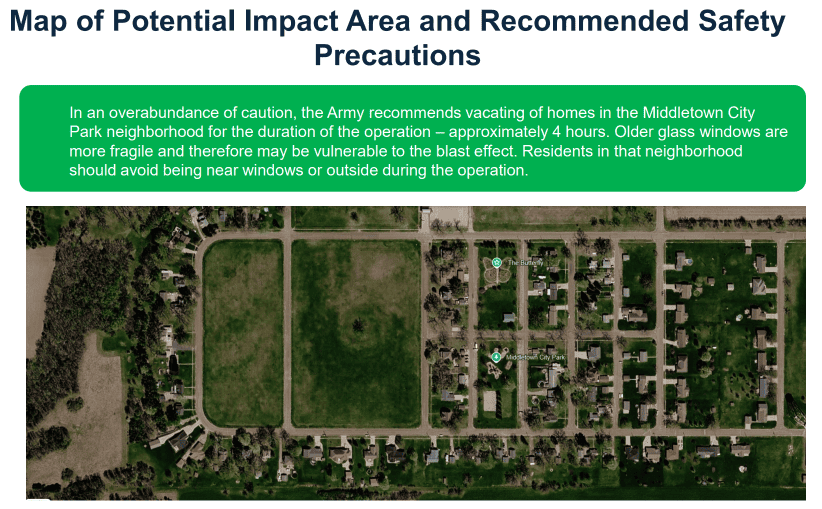
And people living nearby are being told to close their windows, stay indoors, or, in some cases, evacuate because the explosions could shatter their windows.
According to the Army’s updated November 17 public advisory, airborne lead particles could travel across a broad area, with some settling on the ground. The amount of contamination at any particular location will depend on weather, deposition, and other factors.
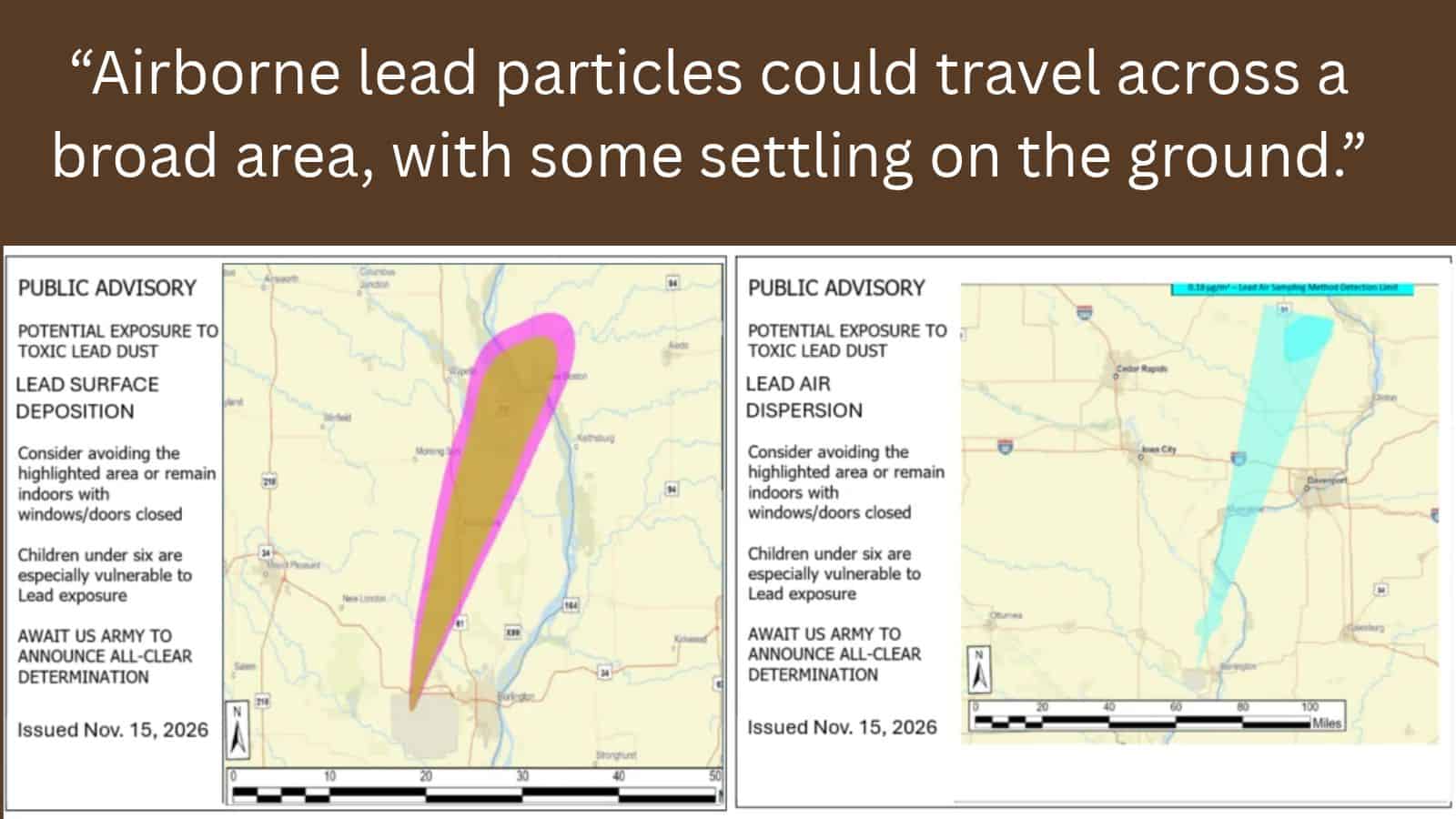
The Army acknowledges two potential exposure pathways: breathing airborne lead particles and coming into contact with lead-contaminated dust on surfaces.
That doesn’t mean everything beneath the projected plume will become dangerously contaminated. But it raises serious questions about what happens after the explosions.
What about the children playing outside? The vegetable gardens? The livestock grazing in fields? The birds, deer, rabbits, and other wildlife that cannot shelter indoors?
And perhaps most importantly, how did the Army allow this situation to develop in the first place?
How do you let 68 barrels of explosives become too dangerous to move?
The lead azide has reportedly been stored at the installation for approximately 20 years.
Over time, the material deteriorated and recrystallized, becoming increasingly sensitive to friction and shock. The EPA says disturbing the containers now presents an unacceptable risk of accidental detonation.
That’s a serious problem, and nobody should minimize the danger to workers or nearby communities.
But it begs an obvious question: Who was watching this material deteriorate, and why wasn’t it safely disposed of years ago?
In its October 15 community FAQ, the Army maintains that its safety procedures worked as intended. According to the document, inspections identified the danger, the area was isolated, and specialists were brought in.
Fine. Then show us the records.
When was the material last considered safe to handle? When did its condition begin to change? What inspections were performed over those two decades? When was the decision made that moving it was no longer possible?
There may be legitimate explanations. But the public deserves more than an assurance that everything worked as intended when the end result is an emergency operation involving the release of toxic material.
We can contain explosions. Why not this one?
This is another question that deserves a detailed answer.
We have technologies capable of containing certain explosive detonations and capturing hazardous emissions. The EPA has documented alternatives to open burning and open detonation, including contained treatment systems.
That does not automatically mean those technologies could safely handle these particular explosives. Their condition, quantity, and location create extraordinary engineering challenges.
The EPA says alternatives were evaluated before in-place detonation was selected.
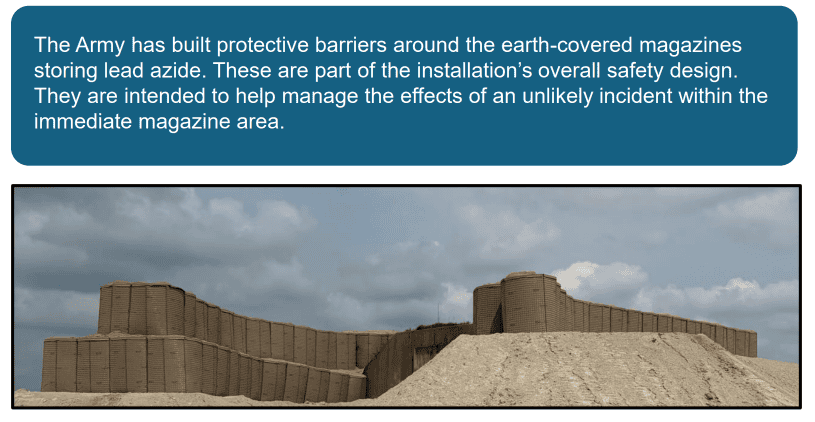
The Army’s October open-house presentation describes protective barriers around the earth-covered storage magazines and measures intended to reduce the environmental impact of the operation.
But blast protection and dust suppression are not the same as containing toxic emissions.
Could temporary containment be constructed around the material? Could additional systems capture more of the lead? Were independent engineers asked to evaluate alternatives?
If the answer to every option is no, the Army should be able to explain precisely why.
The EPA issued an emergency hazardous-waste permit on November 13. Its public notice says it is not accepting comments on the permit.
That makes public access to the supporting evidence even more important.
An emergency may justify expedited action. It should not eliminate transparency.
The dust cloud may clear. The lead remains.
This is what concerns me most.
The Army’s environmental protection handout describes water sprays, soil wetting, continuous air monitoring, and cleanup measures intended to reduce the release and spread of contaminated particles.
It also promises off-site monitoring and sampling of air, soil, surfaces, and surface water.
Those are important protections. But they also acknowledge that contamination beyond the immediate blast site is a possibility that needs to be measured.
An Army spokesperson told KWQC on November 17 that most lead is expected to remain near the detonation site.
I hope that’s accurate.
But lead doesn’t biodegrade. Once deposited, it can remain in soil and sediment for decades, potentially becoming a source of exposure depending on its concentration and chemical form.
The CDC makes clear that no safe blood lead level has been identified in children. Lead exposure can interfere with brain development, learning, behavior, and other aspects of health.
So what happens when airborne particles settle on a child’s sandbox, a backyard vegetable garden, or a school playground?
The Army has already offered voluntary pre-detonation property sampling and says it will clean up soil exceeding applicable regulatory thresholds.
Its environmental handout explains that property owners must sign a voluntary right-of-entry agreement before sampling can occur on their land. The Army says the testing will be performed at no cost to participating owners.
But how many properties are being tested? Are the testing areas large enough? What happens to people who didn’t volunteer before the detonation? Will homeowners receive understandable results, including comparisons with pre-detonation conditions?
What specific lead levels will trigger cleanup? And what happens when measurements fall below those thresholds but still raise concerns for families with young children?
A regulatory cleanup threshold is not the same thing as a guarantee of zero health risk.
And what happens five or ten years from now if health concerns emerge?
There should be a publicly accessible environmental record, a clear process for requesting additional testing, and a plan for long-term monitoring wherever contamination warrants it.
Public-health officials should explain whether baseline or follow-up blood lead testing is appropriate for residents in potentially affected areas.
An all-clear announcement shouldn’t mean the government’s responsibility ends.
What happens to livestock and wildlife?
The Army’s environmental handout addresses agricultural leases associated with the installation. It says fields will be assessed after the detonations and acknowledges that cleanup could temporarily interrupt agricultural use.
But there are farms, animals, and natural habitats beyond its fences.
If lead particles settle on pasture, hayfields, livestock feed, or water sources, who determines whether those resources are safe?
Will farmers receive testing? Who pays for veterinary evaluations or lost production if contamination is found? What happens if feed or agricultural products must be discarded?
And then there’s wildlife.
Deer don’t receive evacuation notices. Birds can’t close their windows. Frogs, fish, insects, and other animals can’t decide to remain indoors until the plume passes.
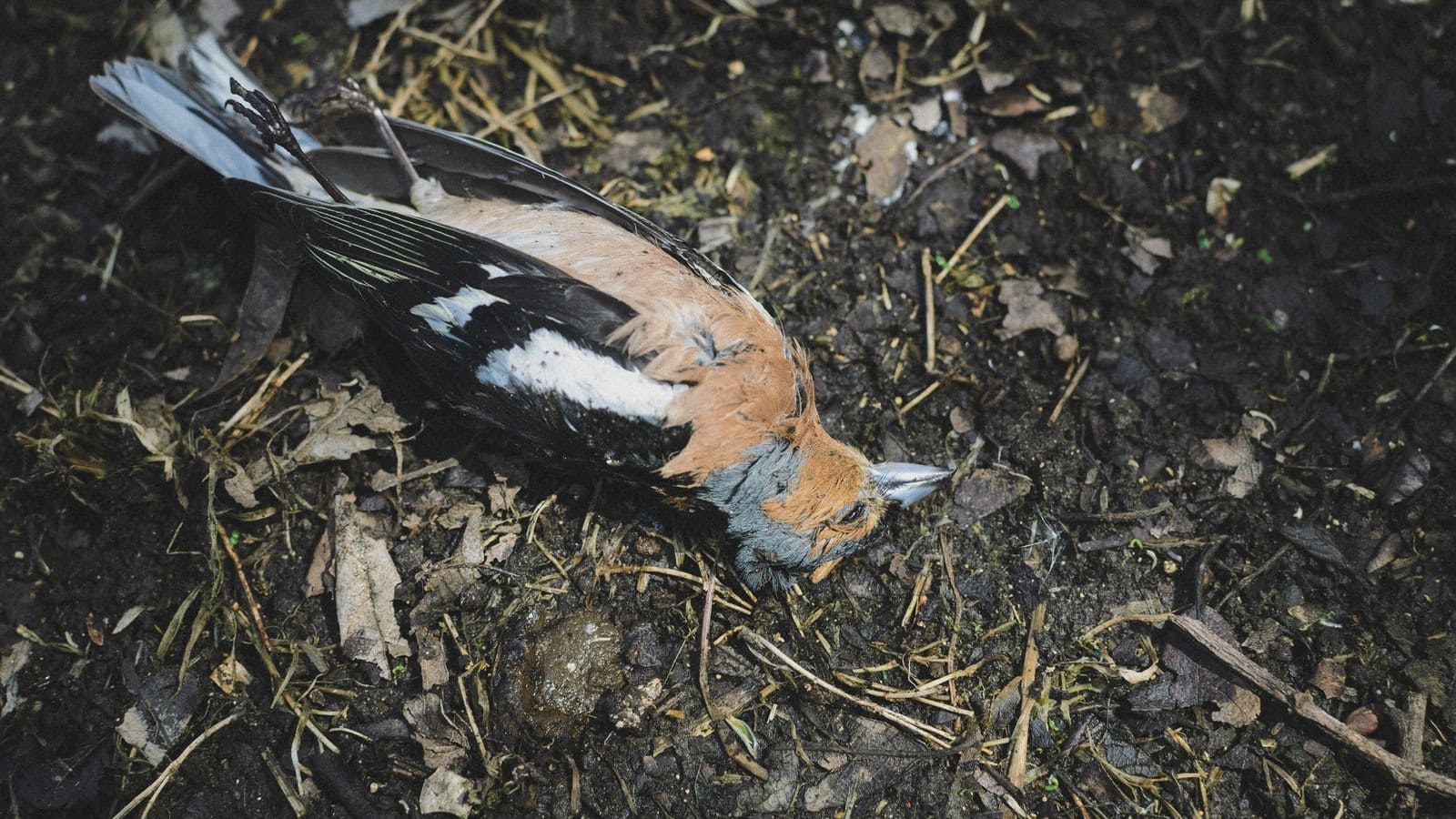
Ground-feeding birds can ingest contaminated soil. Grazing animals can encounter lead in vegetation and soil. Aquatic organisms may be exposed if particles enter waterways and accumulate in sediment.
Lead can affect neurological function, growth, reproduction, and survival in wildlife.
That doesn’t establish that these detonations will cause widespread harm. It establishes why measuring environmental exposure matters.
The Army’s public materials discuss natural resources and agricultural land, but they do not describe a comprehensive, species-specific wildlife monitoring program.
Has the Iowa Department of Natural Resources been involved in developing one? What about the U.S. Fish and Wildlife Service?
Will streams, wetlands, and wildlife habitats within the potential deposition area be sampled? Will anyone track ecological effects if elevated lead concentrations are discovered?
What happens if lead is found in areas where cleanup would disturb sensitive habitats? Who decides how the competing risks are managed?
Protecting people while failing to account for the animals and ecosystems that share the same environment would not be a comprehensive environmental protection plan.
Who pays when something goes wrong?
The Army has provided a process for submitting property-damage claims using Standard Form 95. Its official FAQ handout states that residents may file claims for alleged damage resulting from the detonations, potentially under the Federal Tort Claims Act or Military Claims Act.
The handout identifies a two-year filing deadline and directs residents to the Fort Leavenworth claims office.
That’s useful information.
But filing a claim is not the same as being compensated.
What happens if a family believes its property has been contaminated but the Army disagrees? Who pays for independent testing? What if a farmer loses income? What if a resident discovers elevated lead levels months later?
Will people have to hire attorneys and spend years proving that the contamination came from the detonations?
The federal government should make clear what costs it will cover, how disputed findings will be handled, and what recourse residents have if their claims are denied.
Communities should not be left carrying the financial burden of a hazardous situation they did not create.
Residents deserve a meaningful opportunity to challenge this decision
10.15.2026
Photo by Lori McFate / Public Domain-
Iowa Army Ammunition Plant
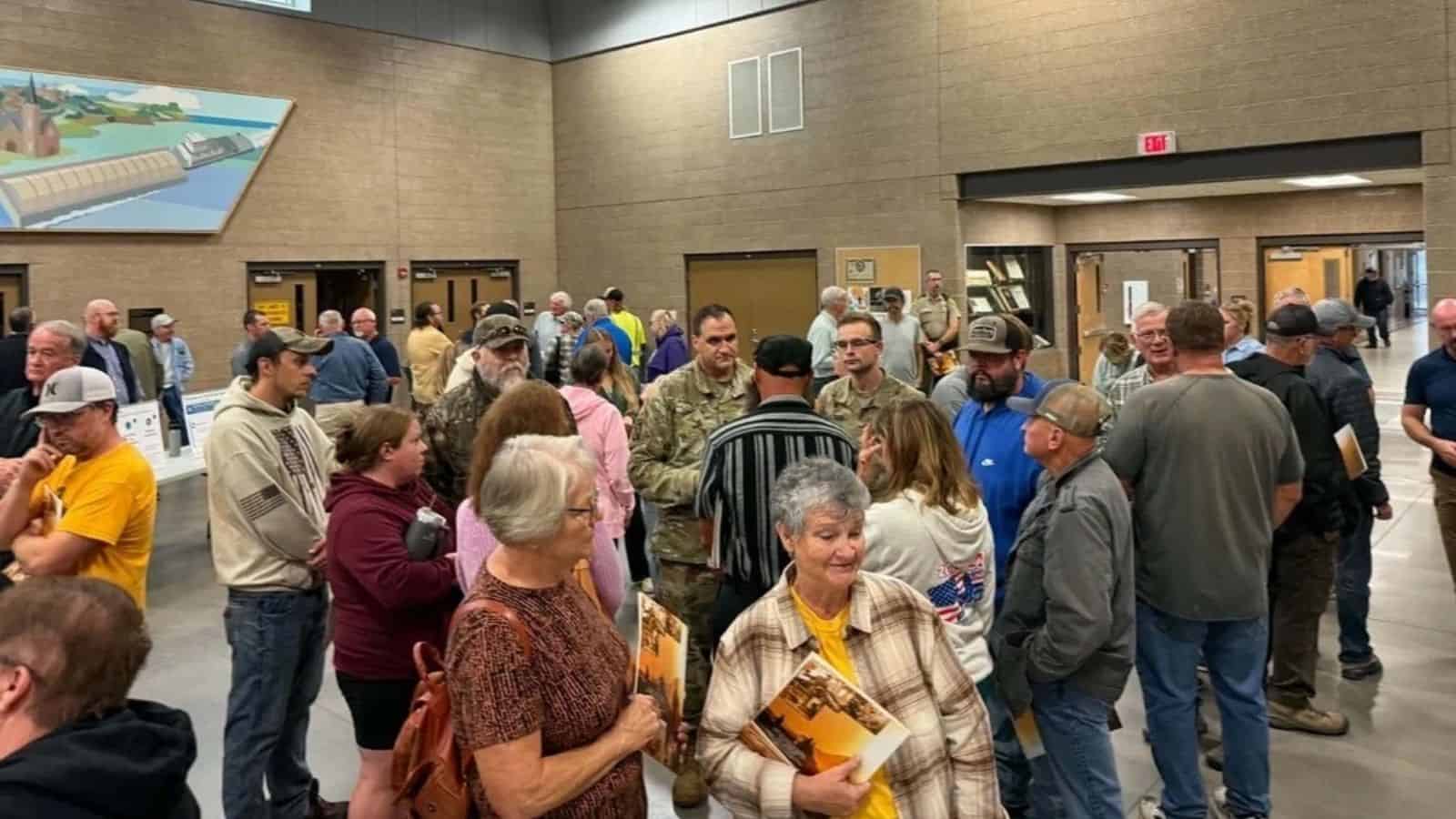
The Army held an October 15 open house attended by nearly 200 residents and community leaders, according to its account.
In a letter to the community following the open house, installation commander Lieutenant Colonel Daniel V. Nosse thanked residents for attending, emphasized the Army’s commitment to transparency, and encouraged people to contact the installation with remaining questions.
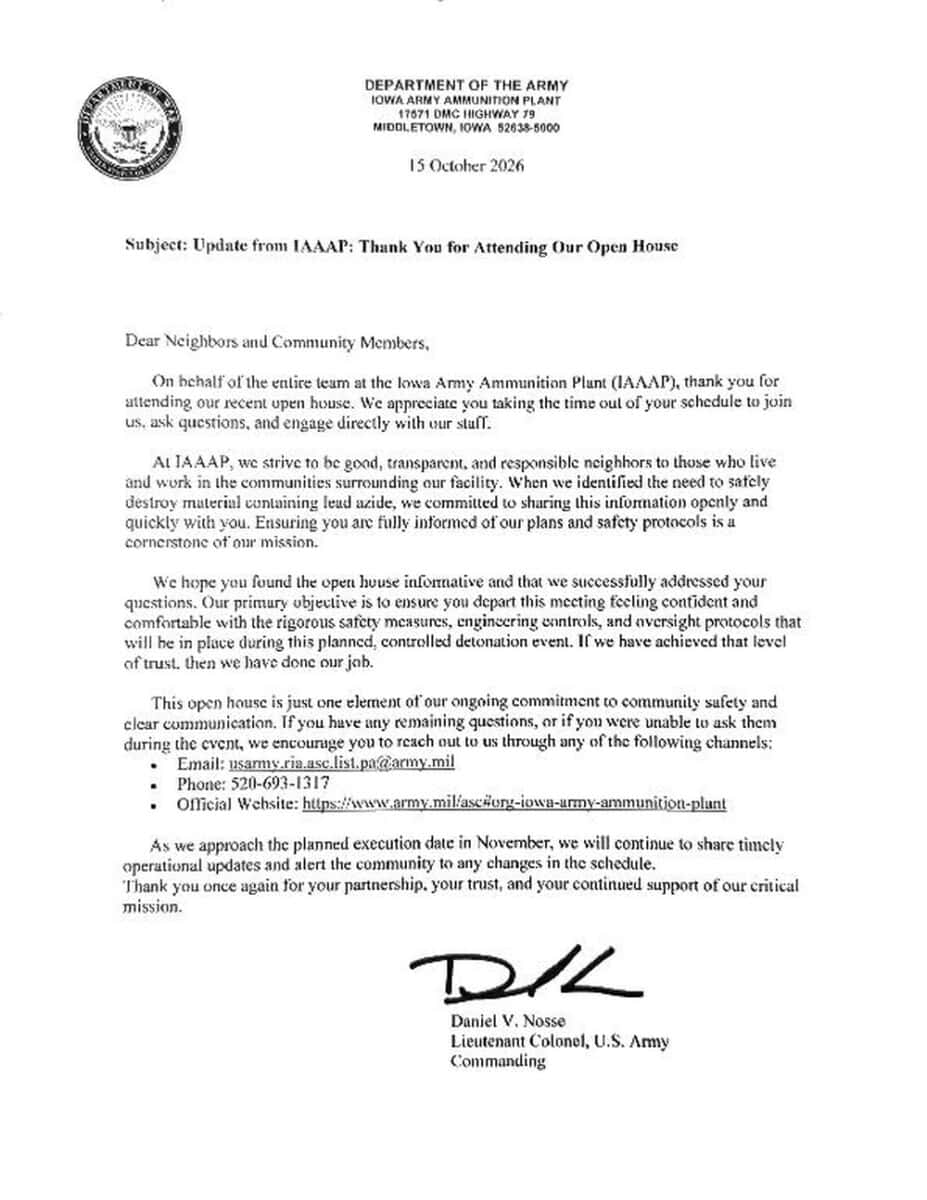
The Army also distributed environmental information, FAQs, and presentation materials explaining the planned operation.
Making these documents available is important. So is having officials answer questions directly.
But an informational meeting is not the same as community consent.
In KCRG’s November 16 reporting, nearby resident Daren Paul Morris said he understood why the explosives needed to be destroyed but worried about damage to his home and dust settling on his lawn.
That’s hardly an unreasonable position.
Residents and local governments should be able to request an immediate independent review of the disposal decision and seek reconsideration or postponement if that can be done safely.
They can also consult environmental attorneys about possible administrative or judicial challenges, although emergency permitting rules, legal deadlines, and the instability of the explosives could make intervention difficult.
There is no guarantee a legal challenge could stop Friday’s operation. But the public should know what options exist and should have access to the evidence needed to evaluate them.
Being told what the government intends to do is not the same as having a meaningful voice in whether it should happen.
The Army may be right about the immediate danger. That doesn’t settle everything else.
Nobody is suggesting that 68 barrels of unstable explosives should simply remain where they are indefinitely.
If moving them risks an accidental explosion, that danger must be taken seriously.
But this isn’t just about choosing the safest way to address an immediate emergency. It’s also about understanding how the emergency developed, whether alternatives were adequately considered, and what obligations remain afterward.
Before Friday, the Army and EPA should make the complete alternatives analysis, projected lead-release data, environmental monitoring plans, cleanup standards, and claims procedures readily accessible.
And if the explosions go forward, the public deserves prompt release of the results, independent verification where appropriate, and a clear commitment to continued monitoring wherever contamination is found.
We should also be asking who is responsible for reviewing the decisions that allowed this stockpile to reach such a dangerous condition.
Because here’s the larger problem:
We cannot continue accepting a system in which hazardous materials are allowed to become an emergency, the emergency is used to justify an environmentally damaging solution, and the public is left hoping the consequences won’t be too serious.
The Army may ultimately demonstrate that this is the safest feasible way to eliminate the immediate threat.
But it still owes the public an explanation of how we got here, what alternatives were rejected, and who will be responsible if the consequences extend beyond the blast site.
The people of Iowa, their farms, their animals, and the surrounding environment deserve that much.
The explosion may be over in seconds. The responsibility for what it leaves behind could last for generations.
Concerned about the Iowa Army detonations? Make your voice heard.
Residents, farmers, and anyone concerned about the potential impacts on human health, livestock, wildlife, and the environment have a right to ask questions and demand clear answers.
Contact the U.S. Army:
Justine Barati, Public Affairs Specialist, Army Sustainment Command
Office: 520-693-1317
Army advisories and updated exposure maps
Contact the U.S. Environmental Protection Agency (Region 7):
Patricia Murrow, EPA Project Manager: 913-551-7627
Patrick Hurley, Community Involvement Coordinator: 913-551-7202
EPA emergency permit information
Questions worth asking: Why were safer disposal options rejected? What testing will be conducted on private property, farmland, water, and wildlife habitat? Will results be independently verified and publicly released? Who pays for contamination, property damage, or long-term health consequences? Can the operation be independently reviewed before it proceeds?
Don’t wait until after November 20 to ask. Request the full emergency permit, environmental monitoring plan, and supporting technical analysis. Ask what options are available for requesting reconsideration or an independent review.
Contacts verified against the Army’s November 17, 2026 advisory and EPA’s November 16, 2026 public notice.