In these towns, Halloween isn’t one night—it’s an entire economy
Imagine living in a city of about 45,000 people—and having more than one million visitors show up downtown during October. That is not a hypothetical. It happened in Salem, Massachusetts, in 2025.
Halloween Day alone brought an estimated 96,600 people downtown, according to Destination Salem. Across the entire month, the city recorded 1.1 million unique downtown visitors and about 1.4 million visits. Salem is preparing to do it again.
Its 2026 Haunted Happenings celebration is underway now, with the city expecting more than a million visitors once again—this time during Salem’s 400th anniversary year.
For businesses, that’s an extraordinary opportunity. For residents trying to buy groceries or get home from work, it can feel like their city has been temporarily rented out. Welcome to America’s Halloween towns, where October isn’t merely a holiday season. It’s an industry.
Salem shows just how big Halloween economics can get
No American community illustrates the phenomenon quite like Salem. Its connection to the 1692 witch trials gives the city an obvious historical draw, but modern Salem has turned that legacy into an enormous tourism season built around museums, tours, restaurants, costumes, vendors, lodging, shopping and entertainment.
The financial effect shows up in city revenue. During October 2024, Salem collected approximately $1.77 million in meals and room taxes, up from roughly $1.44 million the previous October—a jump of nearly 23%, according to a city presentation on Haunted Happenings.
Local businesses clearly feel the surge. When the city surveyed businesses after the 2024 season, owners gave their October sales an average score of 7.3 out of 10. Among businesses selling online, 70% said online sales had increased from the previous October. That’s the upside of becoming internationally famous for Halloween.
Then comes the other half of the survey.
You may want to read: The Haunted Economy of Halloween: Why We Spend Billions to Be Scared
When too many customers become a business problem
Sixteen percent of surveyed Salem businesses said they couldn’t find enough staff for October. Some said employees were simply burned out by the end of the month. More than half identified parking as a problem, 38% said overcrowding and long lines hurt their business, and nearly three in 10 complained about too few bathrooms.
Those aren’t signs of a failed tourism season. They’re signs of a tourism season becoming so successful that it begins creating its own problems.
For residents, the tradeoffs are even more personal. October brings road closures, parking restrictions, overflowing sidewalks and a level of public-safety planning more commonly associated with major sporting events.
Salem now routinely asks residents how they feel about the season and uses those surveys to adjust traffic, policing, cleanup and crowd-control plans. The city’s 2026 October traffic plan includes extensive downtown road closures during peak events. In other words, Halloween isn’t simply something Salem hosts. It’s something Salem has to manage.
Sleepy Hollow turned a fictional nightmare into real tourism
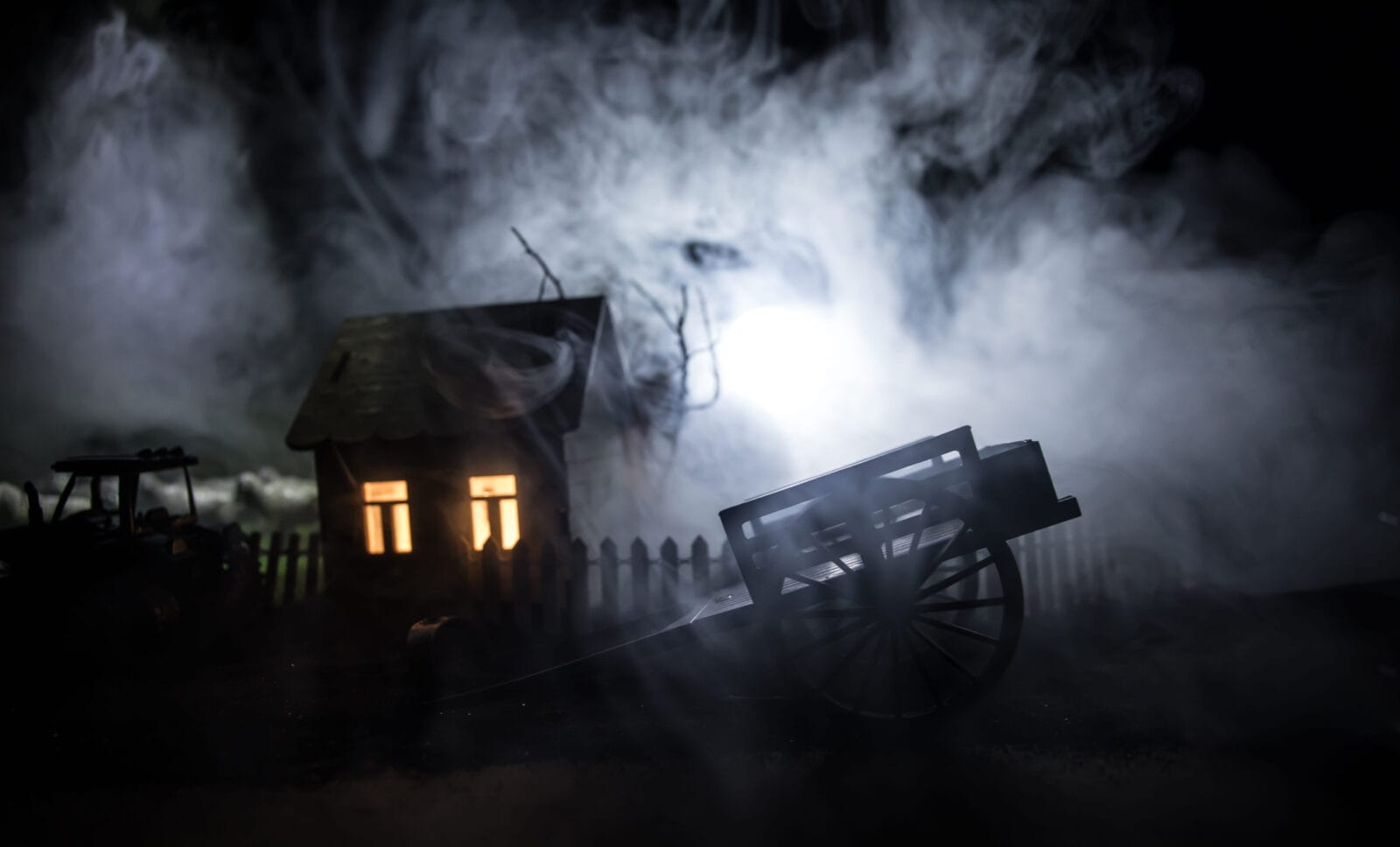
About 200 miles southwest of Salem lies another town whose very name does much of the marketing. Sleepy Hollow, New York, owes its Halloween identity to Washington Irving’s The Legend of Sleepy Hollow and the Headless Horseman who has been terrorizing imaginations for more than 200 years.
The modern village leans fully into the connection. October now includes pumpkin displays, races, markets, performances, family activities and the village’s famously popular Haunted Hayride, which follows part of Ichabod Crane’s legendary escape route.
For October 16 and 17 this year, Sleepy Hollow’s Haunted Hayride sold out its general-admission tickets before the event even arrived. A free block party puts visitors directly on Beekman Avenue with local vendors, restaurants, music and family activities.
That’s a recurring theme in successful Halloween towns. The attraction gets people there. The restaurants, shops, hotels, breweries and other businesses make money because they stay.
Anoka has been doing this for more than a century
Salem has witches. Sleepy Hollow has the Headless Horseman. Anoka, Minnesota, simply calls itself the “Halloween Capital of the World.” It has been building that identity for more than 100 years.
The nonprofit Anoka Halloween organization traces the community celebration back more than a century and uses sponsorship and festival revenue to help support local scholarships and elementary schools.
Its biggest event illustrates the scale. During a 2025 city discussion about crowd management, officials said Anoka’s Grand Day Parade can draw more than 100,000 spectators. Anoka itself has fewer than 20,000 residents.
On parade day, visitors can outnumber the town’s population several times over. For restaurants, bars and retailers, that’s an enormous pool of potential customers squeezed into a very small area. For police, emergency services and residents, it is also a logistical puzzle.
One Oregon town built a season around a Disney movie
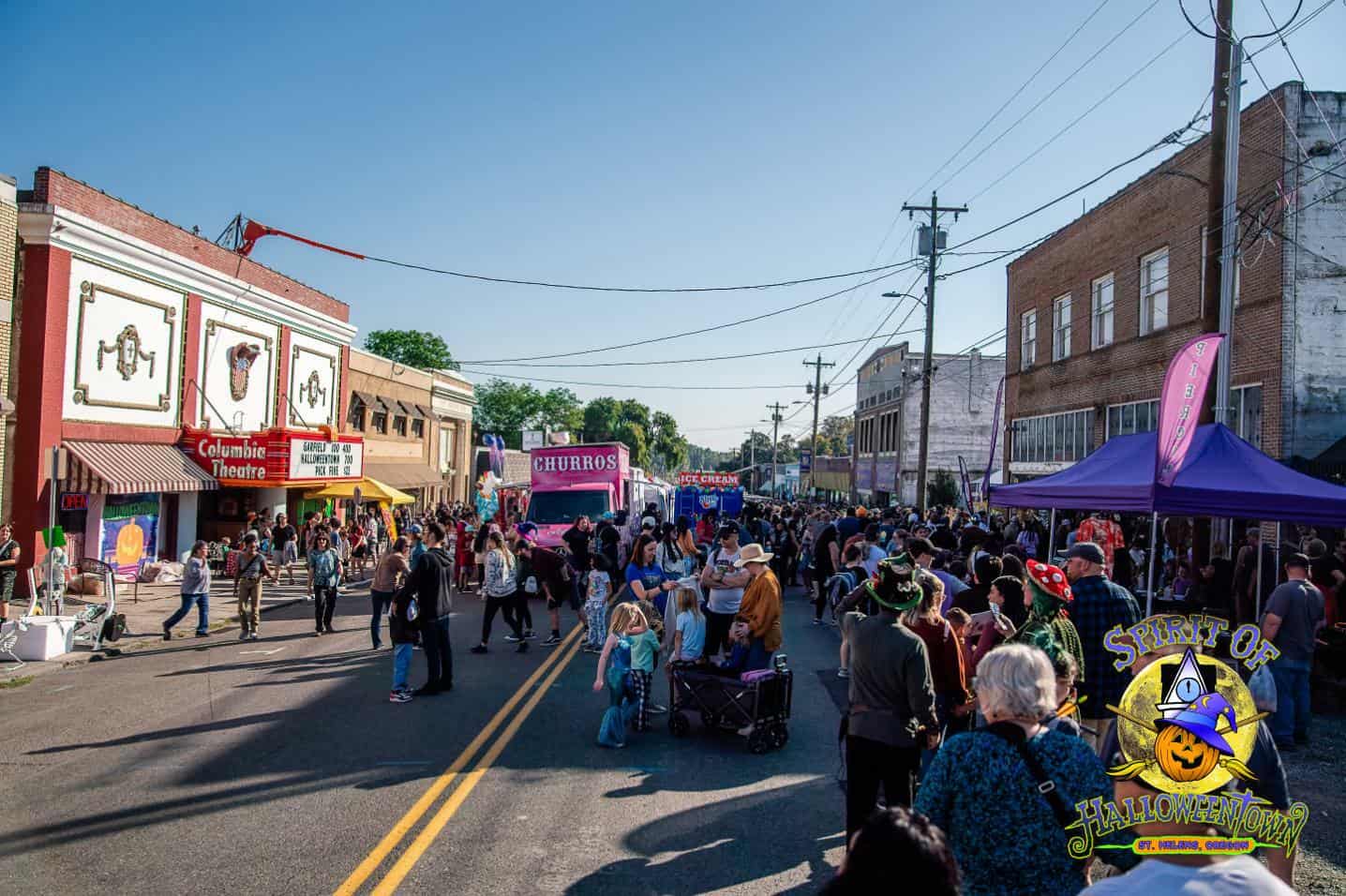
St. Helens, Oregon, found its Halloween identity in a completely different way. The 1998 Disney Channel movie Halloweentown was filmed there. Instead of treating that as a piece of movie trivia, the city turned it into a tourism brand.
Today the Spirit of Halloweentown festival stretches across weekends from late September into November, filling downtown with movie nostalgia, pumpkin displays, performers, costumes and themed attractions.
The numbers show why local businesses care. A 2024 event report estimated more than 67,000 event-day visitors. Forty-four percent of surveyed attendees said they visited local businesses such as restaurants, cafes, breweries and antique shops.
More than half reported spending over $100 during their visit before event tickets and merchandise were counted, while 28% stayed overnight rather than making a day trip. For a community of roughly 15,000 people, that’s serious tourism. It’s also revealing that St. Helens continues expanding the festival despite the costs and logistical headaches. Halloween has become part of the city’s economic identity.
The real Halloween attraction may be the town itself
There is an important difference between a haunted house and a Halloween town. A haunted house sells admission. A Halloween town sells an entire place.
Visitors buy coffee in the morning, lunch in the afternoon and drinks at night. They pay for parking, hotel rooms, souvenirs, tours and tickets. They wander into stores they never knew existed. The community becomes the attraction.
That explains why places with very different histories—colonial Salem, literary Sleepy Hollow, small-town Anoka and movie-famous St. Helens—have ended up pursuing versions of the same economic strategy. They found a story visitors wanted to step inside, then stretched Halloween from one night into a season.
You may want to read: Harmless or Offensive? 10 Halloween Costumes to Avoid This Year
But somebody still has to live there on November 1
The catch is that successful tourism doesn’t happen in an empty theme park. People live in these communities. They need to park their cars, walk their dogs, get to work, take children to school and sleep at night.
Businesses need workers who can reach their jobs. Police and firefighters have to move through crowded streets. Cities need bathrooms, trash collection and transportation systems capable of handling populations that suddenly multiply.
Salem’s experience is particularly telling because its business surveys simultaneously show strong sales and frustration with staffing, parking and overcrowding. Both things can be true.
Halloween can be tremendously good for a local economy while making October exhausting for the people who live there. That may be the real trick behind the treat. For America’s most successful Halloween towns, the goal is no longer getting people to come. It’s figuring out how many visitors a real community can absorb before the season stops feeling magical.
You may want to read: How Halloween became America’s next billion-dollar holiday