Is Critical Theory changing Christianity from the inside?
What happens when churches begin changing not just what they say about sin, but how they define it?
For centuries, Christianity has wrestled with both personal morality and social injustice. Scripture contains commands concerning individual sin and repentance alongside repeated demands for justice, mercy, care for the poor, and protection of the vulnerable.
But a newer argument has emerged within American Christianity. Some Christians believe ideas associated with Critical Theory—particularly its emphasis on power, oppression, privilege, identity, and institutions—have become increasingly influential in the way some churches talk about racism, inequality, gender, and social justice.
Supporters argue that examining unjust systems is entirely consistent with Christianity’s obligation to confront oppression. Critics see something much more consequential: the adoption of a competing framework that can change how Christians understand sin, guilt, repentance, justice, and redemption.
The disagreement isn’t really over whether Christians should care about injustice.
It’s over which worldview gets to define what injustice is—and what Christianity asks believers to do about it.
The Great Commission meets social justice
Christianity’s Great Commission calls followers of Jesus to make disciples. But Christianity has never been concerned exclusively with what happens after death. Christian churches have historically built hospitals, schools, charities, abolition movements, missions, shelters, and countless other institutions intended to address suffering in this world.
The controversy begins when Christians disagree about how central structural injustice should become to the church’s mission.
Critical Theory is not one single doctrine, and the term is often used far too loosely. Broadly speaking, critical-theory traditions examine society partly by asking how institutions, cultural assumptions, and power relationships can create or perpetuate inequality.
That can produce very different ways of diagnosing the same problem.
A traditional Christian analysis might begin by asking how individual sin—greed, hatred, dishonesty, prejudice, selfishness—produces injustice.
A structural analysis may instead ask how laws, institutions, economic arrangements, or cultural practices can continue producing unequal outcomes even when individual participants don’t consciously intend them.
Those explanations aren’t necessarily mutually exclusive. In fact, scholars examining Christianity and social justice have described the tension between individual responsibility and social structures as a recurring issue within Christian thinking about justice.
The theological fight begins when either explanation becomes exclusive.
If everything becomes individual sin, Christians can overlook genuinely unjust institutions.
If everything becomes systems and power, critics argue, Christianity risks reducing human beings to categories of oppressed and oppressor.
Who gets to define sin?

This may be the most important question in the entire debate.
Christian theology traditionally treats sin as a rupture in humanity’s relationship with God that manifests itself both personally and collectively.
Critical approaches tend to pay greater attention to power relationships and systemic consequences.
Those frameworks can overlap. Racism, for example, can involve both individual prejudice and institutions shaped by generations of discriminatory policy.
But critics worry about what happens when concepts such as privilege, complicity, positionality, and oppression begin functioning as moral categories themselves.
Under traditional Christian theology, guilt ultimately attaches to sin, repentance involves turning away from it, and forgiveness is available through grace.
What happens if responsibility also attaches to social identities or participation in systems that individuals did not personally create?
Advocates of structural approaches answer that people can have responsibilities concerning injustices they did not personally cause. Christians routinely recognize obligations to repair harm, protect neighbors, and reform unjust institutions.
Critics counter that collective responsibility can become dangerously detached from individual moral agency.
The underlying disagreement is therefore profound: Can Christianity incorporate structural understandings of wrongdoing without fundamentally changing its understanding of guilt?
Christianity has institutional sins to confront
This debate becomes considerably harder when history enters the picture.
Christian institutions have not merely witnessed injustice. At various points, some have participated in or defended it.
American Christians were involved on both sides of slavery and abolition. Churches were divided over segregation and civil rights. Christian institutions participated in colonial systems, while other Christians challenged those same systems.
Acknowledging that history isn’t inherently an abandonment of Christianity. Repentance is, after all, an unmistakably Christian concept.
The difficult question is what institutional repentance should require generations later.
Should churches simply acknowledge wrongdoing?
Should they apologize?
Should they provide restitution or reparations?
Should present-day congregations accept responsibility for actions committed by institutions or members generations earlier?
There isn’t a single Christian answer.
And that’s where arguments about historical responsibility can become particularly heated.
When does repentance end?
Christianity traditionally contains a remarkably powerful sequence:
Sin. Repentance. Forgiveness. Reconciliation. Renewal.
Critics of some contemporary social-justice frameworks worry that this sequence can break down when applied to inherited or institutional guilt.
If someone’s social position continually identifies that person with historical oppression, what constitutes sufficient repentance?
Can the debt ever be discharged?
Supporters respond that repentance doesn’t erase consequences. A church that acknowledges historical discrimination may still have an obligation to address effects that persist today.
That’s a legitimate distinction.
But churches adopting concepts of collective responsibility still confront a theological question worth taking seriously:
A religion centered on forgiveness must ultimately explain what forgiveness looks like.
If acknowledgment can never lead to reconciliation, critics argue, repentance risks becoming an indefinite moral status rather than a pathway toward restoration.
Has political language entered the pulpit?
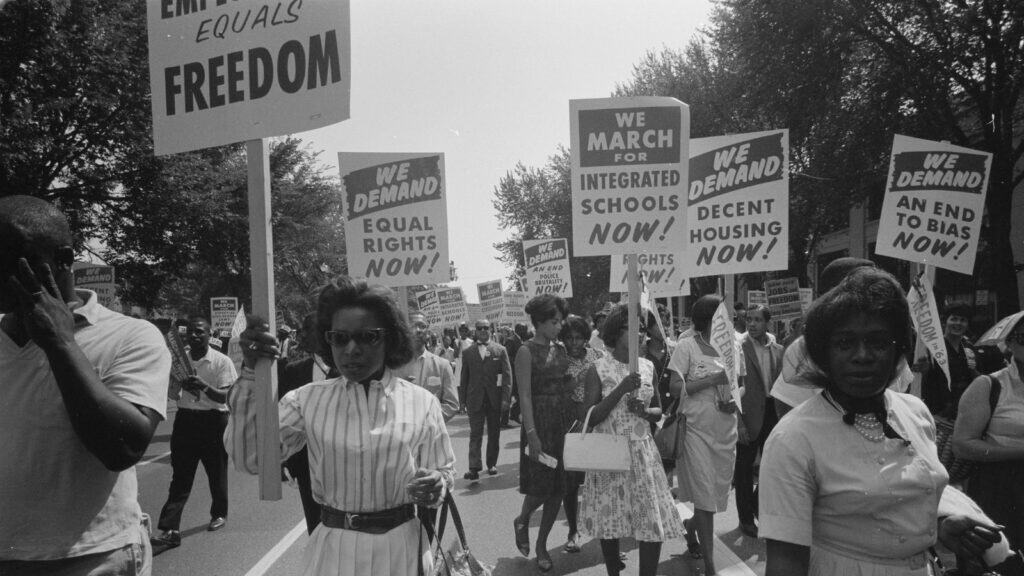
Churches have always interacted with politics.
Abolition was political.
The civil rights movement was political.
Opposition to abortion is political.
Immigration, poverty, war, capital punishment, marriage, religious liberty, and economic justice all have political dimensions.
So simply saying that churches have become “political” doesn’t tell us very much.
But new research suggests that social and political issues are indeed a significant presence in American churches. A 2026 Pew Research Center survey found that 66% of Americans who attend religious services at least monthly had recently heard their clergy address at least one of seven political or social issues, including abortion, Israel, homosexuality, immigration, environmental policy, transgender identity, and U.S. military action.
What people hear varies considerably by religious tradition. Among regular churchgoers, 42% of White evangelical Protestants said their clergy had recently addressed homosexuality, compared with 22% of White non-evangelical Protestants. Meanwhile, 41% of Catholics said they had heard clergy address immigration, compared with 18% of White evangelicals.
The findings complicate any simple argument that political activism inside churches belongs exclusively to the left or right.
The more revealing question may be whether churches are allowing partisan categories to determine their theology rather than allowing theology to shape their engagement with politics.
That danger exists on both sides.
A sermon that sounds indistinguishable from a progressive activist meeting has potentially surrendered something distinctive about Christianity.
So has a sermon that sounds indistinguishable from a conservative political rally.
Christianity is supposed to challenge the culture—not merely reproduce one faction of it with Bible verses attached.
The problem with turning every person into an identity category
Race, sex, class, disability, sexuality, nationality, and other characteristics undeniably shape people’s experiences.
Ignoring those differences can make real inequalities invisible.
But Christianity simultaneously makes a radical claim about identity.
In Paul’s letter to the Galatians, he writes that there is neither Jew nor Gentile, slave nor free, male nor female, because believers are “all one in Christ Jesus.”
That passage doesn’t mean human differences cease to exist. Paul obviously knew that men and women, Jews and Gentiles, and enslaved and free people still occupied very different social positions.
His claim was about which identity was ultimately defining.
That’s where some Christians see tension with modern identity politics.
If people are continually categorized according to race, gender, class, privilege, and oppression, does the church strengthen understanding—or reinforce precisely the divisions Christianity claims to transcend?
Supporters argue that unity cannot simply mean ignoring inequality. A congregation cannot declare everyone equal in Christ while refusing to confront discrimination occurring within its own walls.
Both concerns deserve attention.
Christian unity that ignores injustice can become superficial. But justice pursued in ways that permanently divide people into competing identity groups can undermine unity itself.
You may want to read: If there is no God, how do we explain these 8 things?
When church starts sounding like a graduate seminar
Then there is the language problem.
Words such as intersectionality, positionality, privilege, decentering, heteronormativity, lived experience, systemic oppression, and deconstruction developed within particular academic and activist contexts.
Some describe genuinely useful concepts.
But they aren’t self-explanatory.
When churches adopt specialized political or academic language without carefully defining it, parishioners can find themselves navigating an entirely new vocabulary alongside the traditional language of Christianity.
That creates an accessibility problem.
Christianity already possesses an extensive moral vocabulary: sin, justice, mercy, repentance, forgiveness, reconciliation, sacrifice, neighbor, dignity, humility, grace, and love.
New terminology isn’t automatically incompatible with old theology.
But churches should be able to answer a basic question whenever they adopt it:
Does this language help people understand Christian teaching more clearly—or does understanding Christianity now require fluency in a separate ideology?
Social justice isn’t foreign to Christianity
This point is essential because otherwise the debate becomes historically distorted.
Concern for social justice did not suddenly enter Christianity through Critical Theory.
The Hebrew prophets repeatedly condemned exploitation of the poor and vulnerable.
Jesus spoke extensively about wealth, poverty, mercy, hypocrisy, and treatment of marginalized people.
Christian movements have played major roles in abolition, prison reform, education, healthcare, poverty relief, and civil rights.
The argument therefore shouldn’t be framed as:
Christianity versus justice.
The real question is:
What makes an understanding of justice specifically Christian?
Some Christian thinkers argue that Critical Theory can identify patterns of power and inequality that churches have sometimes failed to see.
Others contend that Christianity already contains the intellectual and theological resources necessary to diagnose injustice without importing assumptions they believe conflict with Christian anthropology.
There are also thinkers who occupy the middle ground: willing to learn from critical theories without treating them as comprehensive explanations of human beings or society.
That distinction is much more interesting than simply declaring one side “woke.”
The danger of performative righteousness
There is another concern that Christianity can address without invoking Critical Theory at all.
Jesus repeatedly warned against performing righteousness for an audience.
Social media has created an environment in which institutions can receive immediate public approval for issuing statements, changing logos, announcing initiatives, or adopting the preferred language of a cultural moment.
That doesn’t mean those actions are insincere.
But churches should be especially equipped to ask uncomfortable questions about motivation.
Is an institution taking a stand because it believes doing so is morally required?
Is it trying to help people?
Or is it signaling membership in a socially desirable group?
The same question applies across the ideological spectrum. Public displays of conservative Christianity can become every bit as performative as progressive activism.
Christian teaching offers an inconvenient standard for both:
Righteousness isn’t determined by applause.
What about reparations?
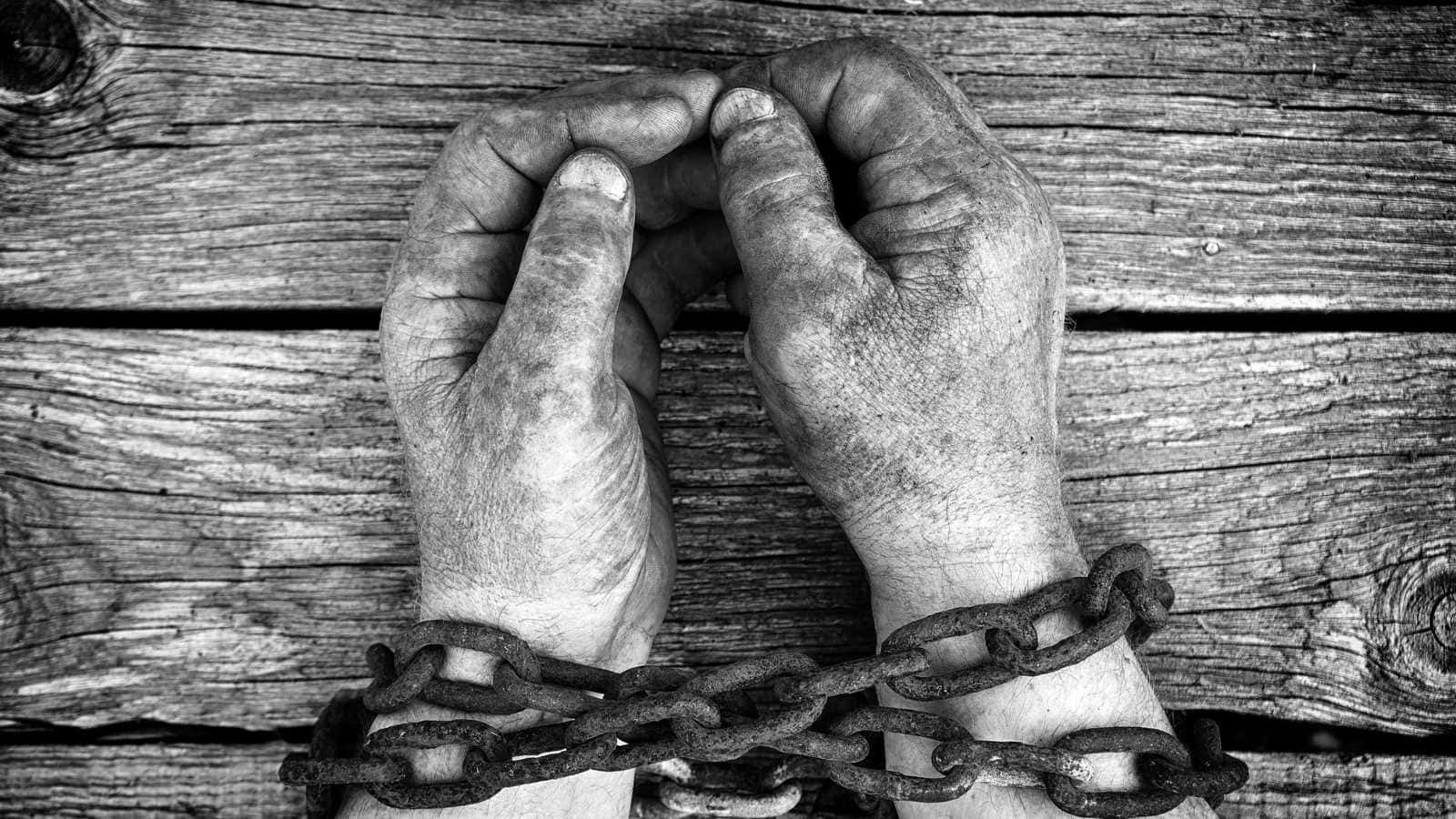
The debate becomes concrete when churches move from statements to money.
Some Christian denominations and institutions have examined reparations, restitution, scholarship programs, investments in historically disadvantaged communities, and other responses to their involvement in slavery or discrimination.
Supporters regard such actions as tangible forms of repentance rather than symbolic apologies.
Critics raise questions about responsibility, effectiveness, competing charitable priorities, and whether people today should financially compensate for actions committed generations earlier.
Churches considering these programs have to wrestle with both sets of questions.
Resources are finite. Money directed toward one priority cannot simultaneously support another.
But that doesn’t automatically mean spending money to repair historical harm represents “mission drift.” A church could reasonably conclude that restitution is part of its religious mission.
The important question is whether those decisions emerge coherently from the institution’s theology rather than simply from cultural pressure.
The church’s most distinctive offering may be transcendence
Religious communities must ultimately offer people something meaningfully religious if they are going to remain distinct religious communities.
A church can operate food banks, fight discrimination, advocate for public policy, provide disaster relief, support refugees, or campaign against abortion.
But secular organizations can do many of those things too.
What they cannot offer is Christianity’s central claim:
that human existence has transcendent meaning, that reconciliation with God is possible, that death is not the end, and that grace can accomplish something neither politics nor human effort can achieve.
That doesn’t make earthly justice irrelevant.
It puts earthly justice inside a larger story.
Critical Theory may not be the real danger
Perhaps the most useful conclusion is also the least comfortable one.
Critical Theory isn’t the only secular worldview capable of reshaping Christianity.
- Nationalism can do it.
- Consumerism can do it.
- Individualism can do it.
- Partisan politics can do it.
Capitalism, socialism, therapeutic culture, celebrity culture, and the pursuit of institutional power can all become lenses through which Christians reinterpret their faith.
That means churches worried about progressive ideology should apply the same scrutiny to ideas arriving from the political right.
The test cannot simply be:
Does this idea sound woke?
It has to be:
Is Christianity evaluating this idea—or has this idea begun evaluating Christianity?
The question churches ultimately have to answer
Christianity has survived enormous cultural transformations precisely because Christians have repeatedly translated ancient teachings into new historical circumstances.
Sometimes that adaptation allowed churches to recognize moral failures they had previously ignored.
Sometimes churches accommodated themselves so thoroughly to prevailing culture that they eventually had little distinctive left to say.
Distinguishing between those two processes is extraordinarily difficult while you’re living through them.
Critical Theory can raise questions churches should not dismiss: Who has power? Who is being harmed? Can institutions perpetuate injustice? Whose experiences are being ignored?
Christianity raises additional questions that Critical Theory alone cannot answer: What is a human being? What is sin? Who is guilty? What does repentance require? Is forgiveness possible? What ultimately reconciles people to one another—and to God?
Churches don’t have to ignore the first set of questions to preserve the second.
But they do have to decide which framework has the final word.
Key takeaways
- Social justice isn’t new to Christianity. Concern for poverty, oppression, dignity, and injustice runs throughout Christian scripture and history.
- Critical Theory adds a structural lens. It directs particular attention toward institutions, identity, power, and systemic inequality.
- The dispute concerns authority. Christians disagree over whether those concepts can serve as useful analytical tools or whether they import assumptions that conflict with Christian theology.
- Collective guilt creates difficult theological questions. Churches acknowledging historical wrongdoing still have to determine what repentance, restitution, forgiveness, and reconciliation require.
- Identity can illuminate and divide. Recognizing different experiences can expose injustice, while making identity categories morally definitive can conflict with Christianity’s emphasis on unity in Christ.
- Political capture can happen from either direction. Progressive activism isn’t the only ideology capable of reshaping Christianity; nationalism and conservative partisan politics can do the same.
- The central question is bigger than “wokeness.” Churches ultimately have to decide whether they are using contemporary ideas to understand the world—or allowing contemporary ideas to redefine the faith.
QUESTION FOR READERS: Do you think churches can embrace modern ideas about social justice without allowing politics or ideology to reshape their core religious beliefs?