Sam’s Club can save you money—but these 12 things may drive you crazy
Sam’s Club has plenty going for it. Buying in bulk can lower the per-unit price of everyday staples, Scan & Go can help you skip the checkout line, and the thrill of stumbling across an unexpectedly good deal is part of the appeal.
But warehouse shopping comes with its own peculiar set of annoyances.
Sometimes that enormous package isn’t actually a bargain because you can’t use it fast enough. A product you loved can disappear between visits. And saving 20 minutes inside the store feels a little less impressive when you spend the next 10 navigating a packed parking lot.
None of these frustrations means a Sam’s Club membership isn’t worthwhile. The company reported $93 billion in U.S. net sales in fiscal 2026, and its membership income continued to grow, suggesting plenty of shoppers still see value in belonging.
But if you’re a regular Sam’s Club shopper, these 12 frustrations may sound very familiar.
Buying produce in bulk can be a race against the clock
A giant container of strawberries looks like a fantastic bargain—until half of them turn fuzzy before your family can eat them.
That’s one of the fundamental trade-offs of warehouse shopping. Even when the price per pound is excellent, buying fresh food in large quantities only saves money if you can actually use it.
For big families, parties or serious meal planners, bulk produce can make perfect sense. For smaller households, that bargain-sized package of avocados, berries or salad greens can become an expensive addition to the trash.
Sometimes the better deal is the smaller package you’ll actually finish.
Weekend crowds can wipe out some of the convenience
There’s a reason experienced warehouse shoppers often develop strong opinions about when to go.
A quiet weekday morning can feel like an entirely different store from a busy Saturday afternoon. Parking lots fill up, oversized carts clog aisles, food samples create miniature traffic jams and checkout areas can get crowded.
Sam’s Club has invested heavily in technology designed to move shoppers through stores faster, including Scan & Go and automated exit technology. But technology can’t make hundreds of other shoppers disappear.
Saving money feels considerably less exciting when getting through the warehouse becomes the day’s main event.
Your favorite product can suddenly disappear
You discover the perfect snack. Everyone in the family loves it. You buy it three visits in a row.
Then it’s gone.
Changing merchandise is part of the warehouse-club model. Sam’s Club itself has described some merchandise as a “treasure hunt,” with special and seasonal products appearing for limited periods.
That makes shopping more interesting, but it can also be frustrating when something you considered a household staple vanishes from the shelf.
Sometimes the product comes back. Sometimes it’s available online. And sometimes you’re left staring at the spot where it used to be wondering why you didn’t buy two.
At a warehouse club, finding something you love doesn’t necessarily mean you’ll find it again next month.
The package size can turn a bargain into waste
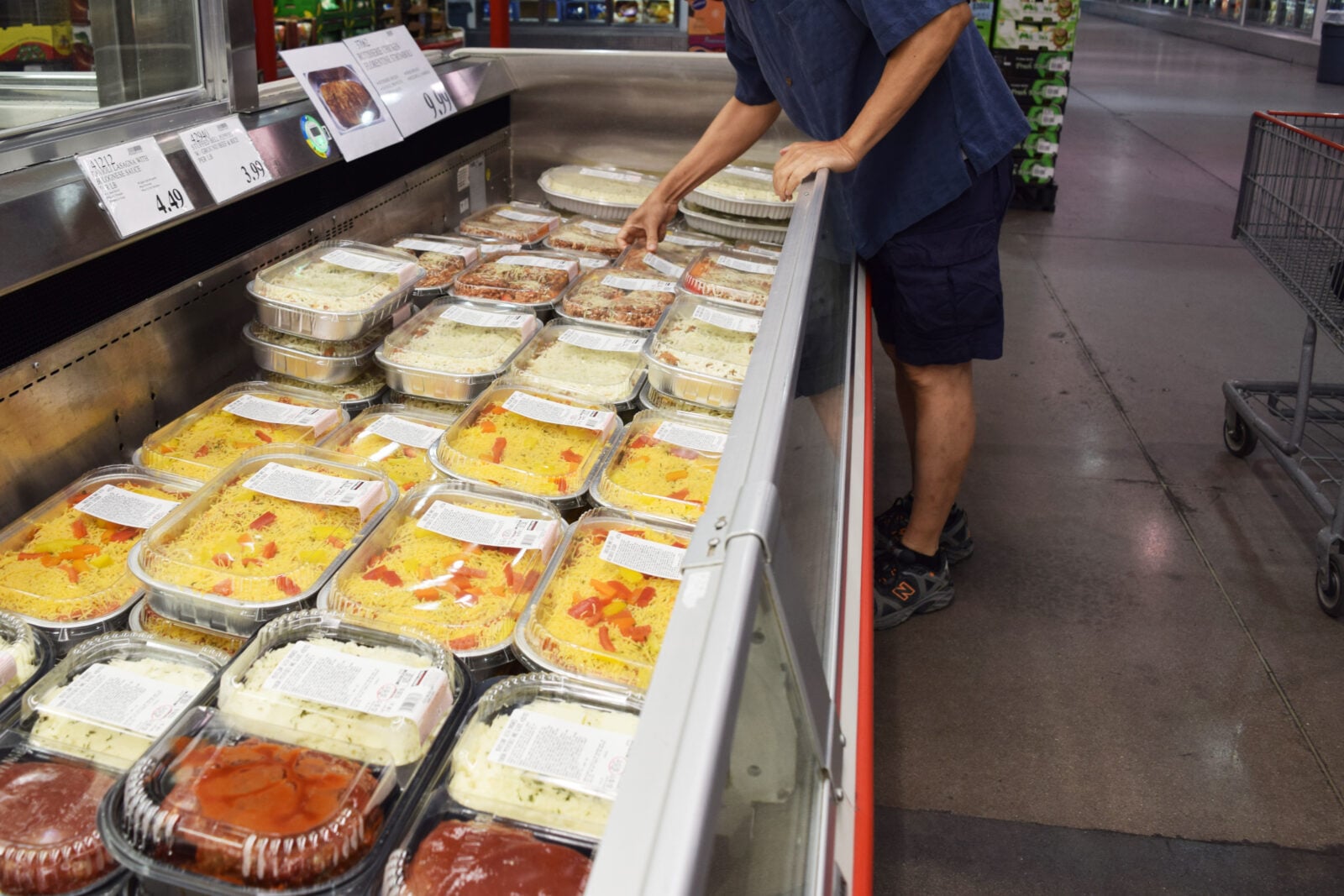
A warehouse club’s greatest strength can also be one of its biggest weaknesses: everything is enormous.
Buying 30 rolls of toilet paper isn’t much of a gamble. Eventually, you’re probably going to use them.
Buying restaurant-sized quantities of mayonnaise, salad dressing, baked goods or fresh food is different.
The price per ounce may be lower, but that doesn’t matter if food expires before you finish it. Bulk buying also requires storage space, something apartment dwellers and smaller households may not have.
Before putting something in the cart, it helps to ask a different question from “Is this cheap?”
Will I actually use all of this?
The treasure hunt can make comparison shopping harder
Warehouse stores are deliberately different from conventional supermarkets.
Instead of offering six brands and 12 sizes of the same product, they often offer a much narrower selection. That can make shopping simpler—and help keep prices competitive—but it also gives shoppers fewer direct comparisons.
A giant package can look like an obvious bargain even when you’ve never calculated what the same amount would cost elsewhere.
The easiest defense is your phone calculator. Compare the unit price rather than the package price, particularly on products you can easily buy at supermarkets, discount stores or online.
Big package doesn’t automatically mean big savings.
You may want to read: 12 worst grocery store traps targeting people over 60
Scan & Go is fantastic—until it isn’t
Scan & Go may be one of Sam’s Club’s most useful features.
Shoppers scan merchandise with the Sam’s Club app as they put it in the cart, pay on their phones and head toward the exit instead of standing in a traditional checkout line. Walmart reported that Scan & Go adoption continued to increase during 2026.
When it works smoothly, it can make warehouse shopping dramatically easier.
But relying on an app creates a different set of potential headaches. Your phone can lose its connection. An item may refuse to scan. Your battery can run low. Sam’s Club even provides troubleshooting instructions for occasions when the Scan & Go service itself is temporarily unavailable.
Skipping the checkout line feels magical—right up until your phone decides not to cooperate.
The parking lot can feel like an obstacle course
You survived the giant shopping cart. You navigated the aisles. You paid.
Now you just have to escape the parking lot.
Warehouse stores generate a particular kind of parking-lot chaos because shoppers aren’t walking out with a single grocery bag. They’re maneuvering oversized carts loaded with cases of water, paper towels, televisions and enough groceries to stock a small restaurant.
That means longer loading times, carts moving between vehicles and drivers waiting for spaces while other shoppers attempt to fit everything into the trunk.
There’s no technology that completely eliminates that problem.
Sometimes the most stressful aisle at Sam’s Club is the one between the parking spaces.
The food court bargain can come with a crowd
A cheap post-shopping meal is one of the pleasures of warehouse-club shopping.
Unfortunately, plenty of other shoppers have the same idea.
At busy times, getting the pizza or hot dog may be easier than finding somewhere to sit and eat it. Families with children, overflowing shopping carts and trays of food can make a relatively small seating area feel crowded quickly.
The inexpensive food is still inexpensive. The question is whether you’re willing to eat it while hovering hopefully near a table that looks as though it might become available.
The bargain meal is even better when it comes with an actual chair.
Membership renewal can sneak up on you

Warehouse savings aren’t free. You have to pay for the privilege of shopping there.
Sam’s Club offers Club and Plus membership tiers, with Plus providing additional benefits such as Sam’s Cash on qualifying purchases and other perks.
For regular shoppers, the savings can easily justify the annual fee. But someone who doesn’t shop there often—or who primarily buys products that aren’t substantially cheaper than elsewhere—may not get the same value.
Auto-renewal makes maintaining a membership convenient, but it can also make it easy to pay for another year without stopping to consider how much you actually use it.
The best warehouse-club bargain is only a bargain if your savings exceed the cost of belonging.
You may want to read: Max your Costco card: Membership perks you’re overlooking
Inventory can vary from one trip to the next
You’ve driven across town specifically for the giant package of paper towels you always buy.
The pallet is empty.
Sam’s Club makes clear that merchandise is subject to availability and that inventory isn’t guaranteed. That’s hardly unusual in retail, but it can be especially irritating at a warehouse club because shoppers often rely on it for large quantities of household staples.
And because individual clubs can carry different merchandise, finding something online or at another location doesn’t necessarily mean it will be sitting on the shelf at yours.
Checking the app before making a special trip can help, although inventory can still change.
A warehouse full of merchandise somehow makes the one empty pallet you needed particularly annoying.
A generous return policy doesn’t make giant returns easy
Sam’s Club’s return policy is actually quite generous.
Most merchandise can be returned at any time under its satisfaction guarantee, although some categories have specific limits. Electronics and major appliances, for example, generally have a 90-day return window, while other categories have different restrictions.
The annoying part may simply be getting the item back.
Returning a shirt is easy. Returning a giant television, piece of furniture or other warehouse-sized purchase can mean repacking it, wrestling it into your vehicle and hauling it to the membership desk.
Many online purchases can be shipped back, but merchandise bought at a physical Sam’s Club generally can’t be returned by mail.
The refund may be straightforward. Getting a 75-inch television back through the door is another matter.
Finding help in a giant warehouse can take time
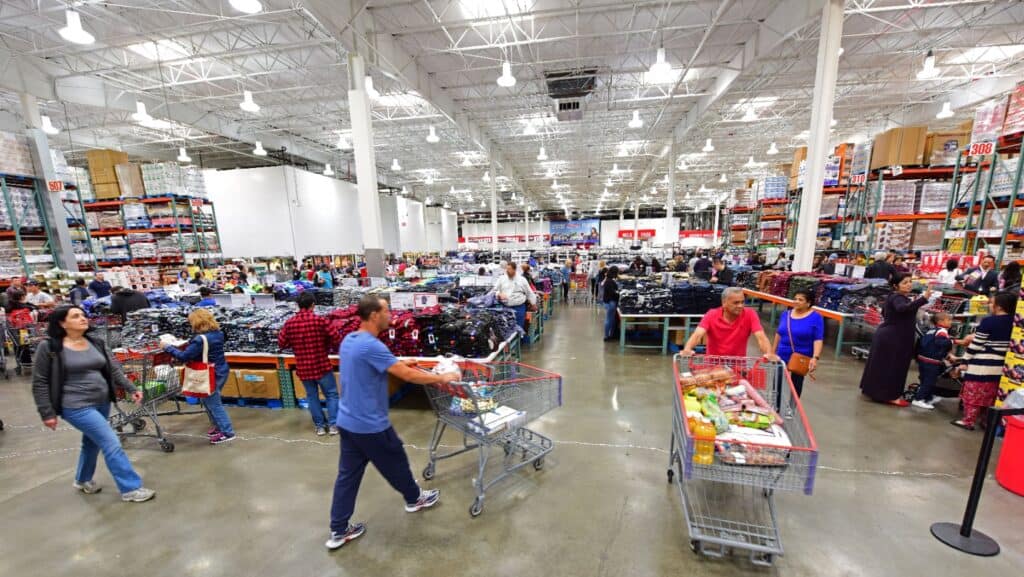
Warehouse clubs aren’t laid out like department stores with employees waiting in every section.
The model depends partly on efficiency: merchandise is often displayed on pallets, inventory is stacked high overhead, and employees may simultaneously be stocking, moving merchandise and helping customers.
Most of the time, shoppers don’t need assistance.
Then you need something from the top rack.
Or you can’t find the product the app says should be in stock. Or you have a question about an appliance. Suddenly the enormous warehouse feels considerably larger while you search for someone who can help.
Self-service is wonderfully efficient until you actually need service.
Final word
Sam’s Club wouldn’t attract millions of members if shoppers didn’t believe they were getting something worthwhile in return. Bulk pricing, fuel savings, Scan & Go, curbside pickup and other benefits can make membership genuinely valuable.
But warehouse shopping requires a slightly different strategy from ordinary grocery shopping.
The giant package isn’t always the cheapest choice if half of it goes to waste. The product you love may not always be there. And sometimes the money you save comes with a little extra time, patience and trunk space.
The trick isn’t buying everything in bulk. It’s knowing which Sam’s Club bargains actually make sense for the way your household shops.