The Capitalist Game Lost Its Players—14 Reasons Why
Modern capitalism, which truly took off with the Industrial Revolution in 18th-century Britain, lifted the world from feudal stagnation to unprecedented prosperity, promising that hard work would lead to success and ownership. Yet, that promise has cracked.
The foundational contract—the idea that growth benefits everyone—has been violently severed. This fracture is no accident: since the 1970s, worker productivity has soared, but real wages for the typical employee have barely budged, creating a vast ocean of unshared wealth.
The game still runs, but the vast majority of players—the workers—have realized the rules were rewritten behind their backs. The board is now tilted, and here are 14 reasons why the players are walking away.
CEO Multiplier

Today, the person running the company doesn’t just earn more; they live in a different solar system. CEOs at the largest publicly traded firms now make 281 times the typical worker’s compensation. This massive gulf, reported by the Economic Policy Institute (EPI) in 2024, is proof that the spoils aren’t being shared.
Compare that ratio to the 31-to-1 pay gap that existed back in 1978, and the shift becomes starkly clear. When leadership captures nearly all the value created, the workers who generate it can’t help but feel exploited. This obscene disparity fuels the narrative that the economic system works beautifully for a few, and not at all for the many.
Wage Flatline

Since the early 1970s, the typical worker’s hourly inflation-adjusted wage has barely risen, growing only 0.2% per year. Think of that: five decades of work, technological advancement, and increased output, all for a stagnant paycheck that buys less and less. Data shows that even as the economy grew, the primary way most people benefited from that growth stalled out, according to analysis by the Brookings Institution.
Meanwhile, the cost of essentials—rent, education, healthcare—has skyrocketed, squeezing the life out of middle and working-class budgets.
The House Key Is Gone

Millennials are buying fewer homes than expected, with only about 29% of recent buyers coming from this generation. The dream of a detached house with a white picket fence is fading, leaving younger adults to rent longer or rethink what “ownership” even means.
Even when desire remains strong, structural barriers block access, reshaping life plans and financial priorities. The shrinking millennial presence in the housing market signals a broader shift in who benefits from traditional wealth-building models. What was once a key milestone now feels more like a locked door than a stepping stone.
Student Loans Hold Us Back

Why can’t younger players save for a down payment? Debt. A staggering 22% of millennial non-owners blame student debt for why they can’t afford a house, reports a survey by Clever Offers. This debt is a ball and chain tied to a degree that once guaranteed a ticket to the middle class.
The promise that education pays off now comes with a crippling price tag that delays major life milestones, often by a decade or more. This massive liability prevents millions from fully participating in the wealth-building activities central to the capitalist promise.
A Break from Competition Rules

Corporate profits continue to rise year over year, showing concentrated power that allows firms to dictate terms. When massive companies face little competition, they can keep wages low, quality down, and prices high without fear of losing market share.
The U.S. Bureau of Economic Analysis (BEA) reports that profits from current production have trended exceptionally high through recent years, benefiting only the very largest shareholders. Lack of vigorous enforcement lets monopolies lock up the market, preventing smaller, more innovative players from emerging and challenging the status quo.
The Union Bust
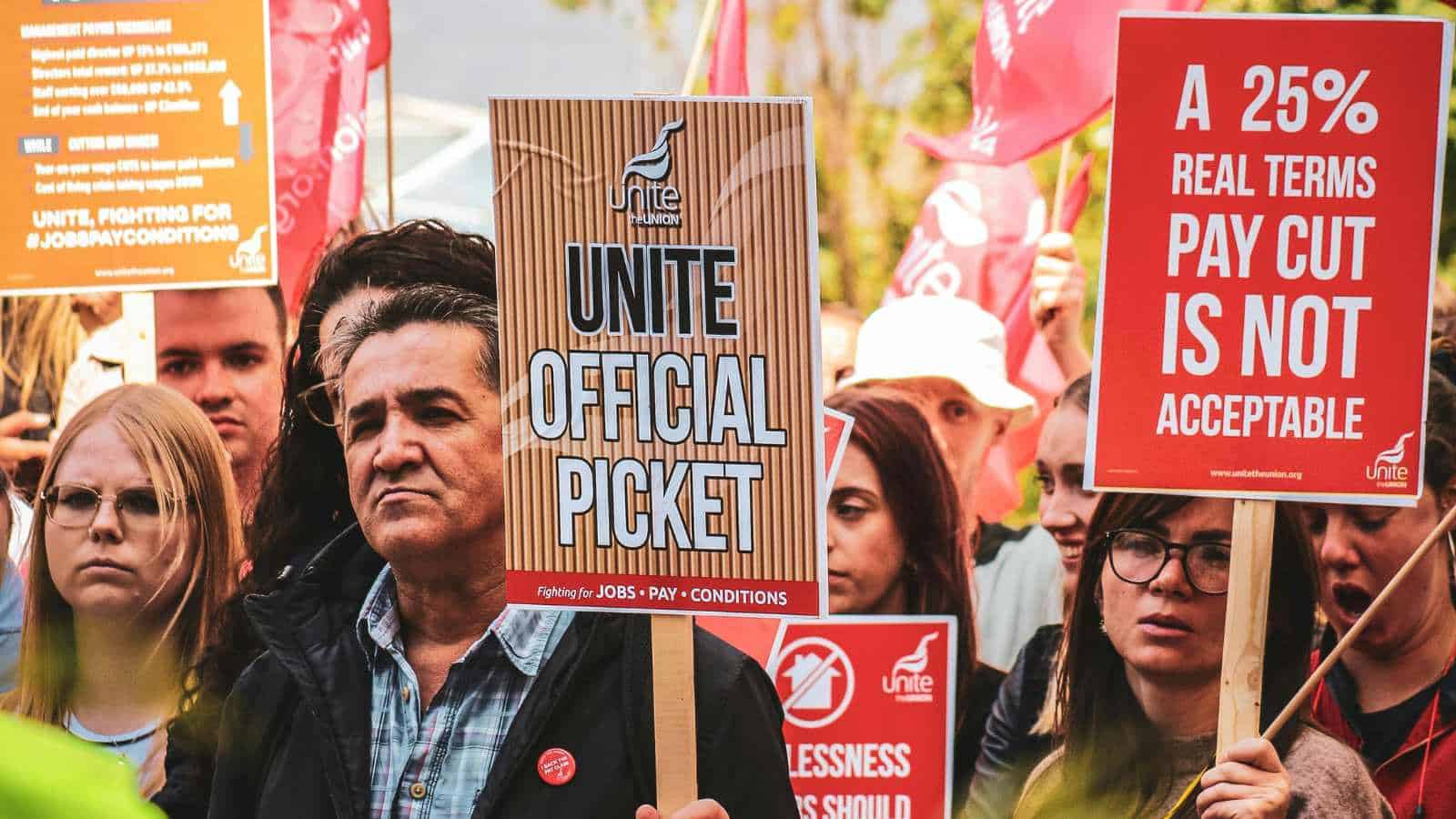
The national union membership rate stood at just 9.9% in 2024, according to the Bureau of Labor Statistics. This rate is well under half of what it was roughly 45 years ago, marking a systemic diminishment of collective bargaining power (EPI).
Simply put, the mechanism workers use to demand a fairer share of the profits has been largely neutralized and dismantled over decades. Without strong unions, individual workers are left isolated against billion-dollar corporations, leading directly to flat wages and worsening conditions.
Automation’s Cold Shoulder

By 2030, a substantial 30% of current U.S. jobs could be fully automated, according to projections from the National University. This mass replacement poses a clear threat to stability, sparking widespread anxiety across industries.
When the efficiency gains from automation primarily benefit capital owners —the shareholders —rather than being shared through shorter workweeks or redistributed income, the labor market faces a systemic shock. The system is currently optimized to replace people without providing a viable economic alternative for the displaced.
The Billionaire’s Edge

As of late 2022, 735 U.S. billionaires collectively held more wealth than the entire bottom half of U.S. households ($4.5 trillion versus $4.1 trillion, respectively), a stunning wealth gap. This is an economic structure where a tiny fraction controls the vast majority of resources and political influence.
Such extreme hoarding of wealth by the few starves the economy of broad-based consumption and investment. When a few dozen individuals hold more economic power than 165 million people, the claim of a functional democracy or fair market is simply absurd.
When Shareholders Come First

Since the 1980s, the doctrine that a company’s sole purpose is maximizing shareholder value has dominated corporate strategy. This short-term focus incentivizes executives to slash R&D investment, cut maintenance, and suppress wages, often just to trigger a quick stock pop.
It prioritizes the passive owner who wants quarterly returns over the essential long-term business health and the workers who create the product.
The Broken Social Contract

For decades after World War II, worker productivity and average wages rose together, offering widespread prosperity. However, since the 1970s, they have grown sharply apart. Productivity kept rising, meaning workers created substantially more value and output, but their actual pay did not keep pace with that increase, the EPI notes.
The increased wealth was simply skimmed off the top and funneled toward executives and shareholders. The fundamental deal—that as the country gets richer, so do its workers—is profoundly broken.
Growth on Pause

The rate of business formation—the creation of new firms—fell sharply starting in the late 1970s. For instance, the percentage of firms under a year old dropped from 14% to just 8% in recent decades, according to data from the Brookings Institution.
Fewer young, disruptive firms means less competition for labor, ultimately reducing the pressure on established companies to raise wages. The economy is aging, dominated by entrenched giants optimized for stability and extraction rather than rapid, job-creating growth.
Healthcare as a Wealth Destroyer

In the U.S., illness is often a financial calamity that drags down millions of families. While precise bankruptcy figures vary, medical costs remain the leading cause of personal debt collection and a major driver of bankruptcy filings, even for those with insurance coverage.
A single serious diagnosis can wipe out a lifetime of savings, pushing once-stable families into poverty. The constant threat of financial ruin from a sudden health issue undermines personal financial planning and stability across all but the wealthiest demographics. The health of the population is, counterintuitively, a massive and unique economic vulnerability built into the system.
Price Tag Problem

When money supply meets stagnant pay, workers are always the ones who lose purchasing power. The high inflation seen following 2021—especially in necessities—swiftly destroyed savings and undermined real wages. Data shows the financial strain is disproportionately felt by those whose nominal wages haven’t kept pace with cost spikes for essentials like food and housing.
Inflation acts as a hidden tax, silently reducing the value of every paycheck without technically lowering wages. This constant erosion of purchasing power leaves the typical household feeling permanently behind, no matter how hard they work.
Today’s Class Divide

We’ve replaced the landowning aristocracy with a financial one, where inherited advantage matters more than effort. This monumental gap means that economic mobility slows dramatically because the advantage of birth becomes impossible to overcome through labor alone. Capital begets capital much faster than work begets wealth.
The structure solidifies an economic system that favors those who already own everything, giving the entire setup a distinctly pre-modern, unequal feel.
Key Takeaway: The Rebalancing Act

- The Disconnect: Real wages for the majority stopped tracking productivity gains around 1970.
- The Ratio: CEO pay is now 281 times that of the typical worker, widening the chasm between top and bottom.
- The Wall: Generational homeownership is blocked; Millennials are buying fewer homes than expected, with only about 29 % of recent buyers coming from this generation.
- The Erosion: Worker collective power, represented by a union rate of 9.9%, is historically low.
- The Peril: Financial security is continually threatened by healthcare costs and the systemic risk of automation replacing workers without compensation.
Disclosure line: This article was developed with the assistance of AI and was subsequently reviewed, revised, and approved by our editorial team.
Why investing for retirement is so important for women (and how to do it)

Why investing for retirement is so important for women (and how to do it)
Retirement planning can be challenging, especially for women who face unique obstacles such as the wage gap, caregiving responsibilities, and a longer life expectancy. It’s essential for women to educate themselves on financial literacy and overcome the investing gap to achieve a comfortable and secure retirement. So, let’s talk about why investing for retirement is important for women and how to start on this journey towards financial freedom.