The identity ‘Berrisexual’ is becoming known.
When Gilbert Baker hand-dyed the first rainbow flag in 1978, he envisioned a single, inclusive spectrum for a community that had long been forced into the shadows.
However, as our understanding of identity has deepened, that original eight-stripe canvas has evolved into a vibrant archive of symbols. From the addition of the “Progress” chevron to the emergence of niche palettes for microlabels, the flag’s journey mirrors a shift from broad visibility to radical individual precision.
Baker’s legacy of representation has so far expanded to include identities like the Berrisexual term, which doesn’t just describe who you love but the specific “flavor” and weighted preference of that attraction.
From Pan to Berry
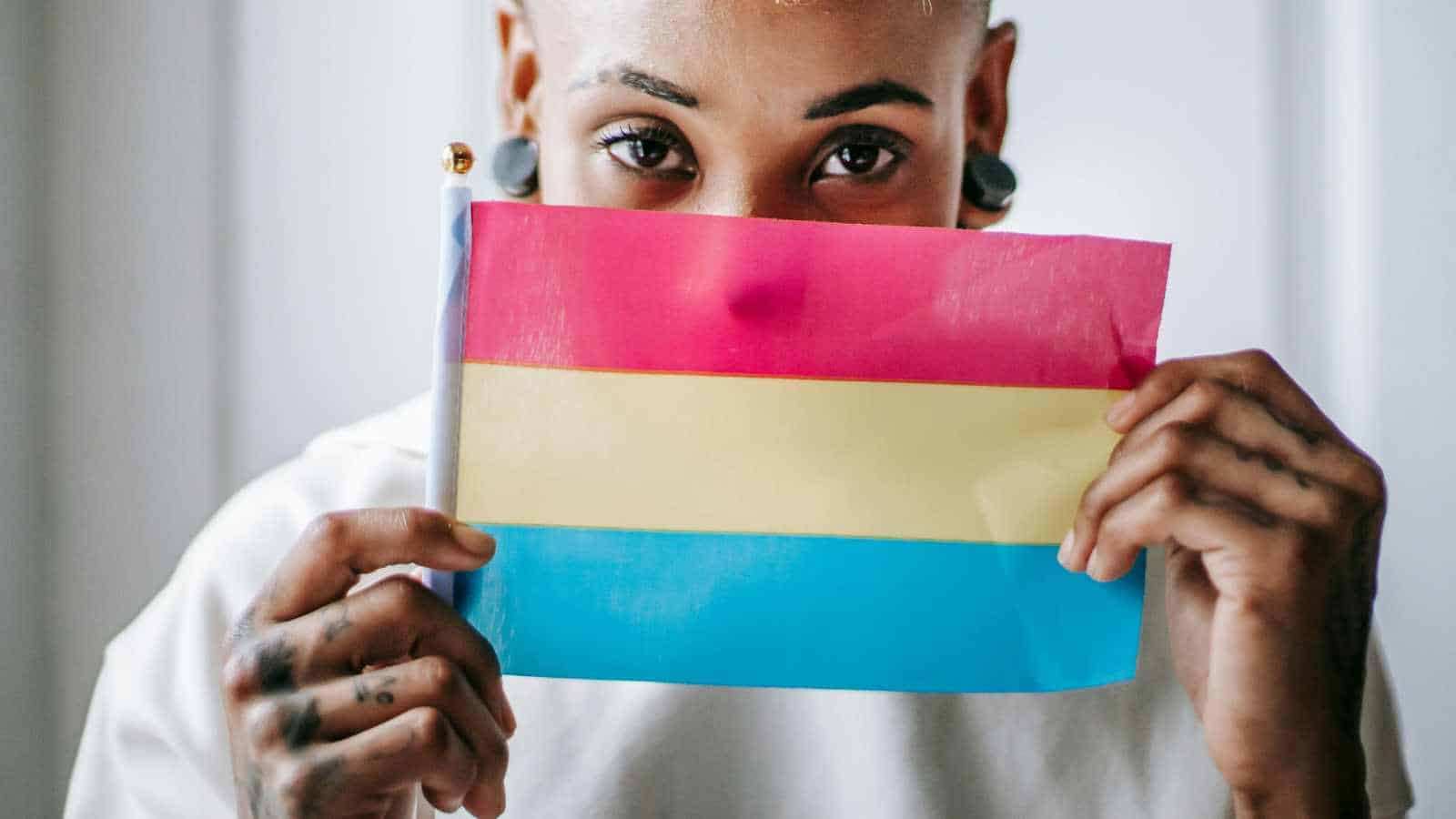
This specific identity began to gain traction during the early to mid-1990s, even though it was first invented in the early 1900s by Sigmund Freud. Its profile has since been elevated by prominent figures such as Miley Cyrus, Angel Haze, and Jazz Jennings, whose public coming-out stories served the dual purpose of centering the label in pop culture and fostering broader societal understanding. While Pansexuality opened the door by removing gender as a barrier, many find that their attraction isn’t “gender-blind,” but rather highly specific.
Berrisexual Explained: Attraction Beyond Gender Binaries
What exactly constitutes a Berrisexual identity? It is an orientation that sits under the Multisexual umbrella but adds a specific “pull” or weighted preference. A Berrisexual person is attracted to all genders, but with a heavy, consistent lean toward feminine and androgynous identities.
While they may experience attraction to masculinity, it is described as “minor,” “secondary,” or “rare.” It is essentially a map for those whose “North Star” is femininity, but whose compass still occasionally points toward the neutral or masculine. This resonates particularly with people who feel “mostly” lesbian or queer but find themselves experiencing rare, confusing crushes on men.
Finsexual vs. Berrisexual
The distinction between Finsexual and Berrisexual lies in the true nuance. Finsexual (Feminine Identified Nature) focuses on the expression. A Finsexual person is drawn to anyone who presents femininely, whether they are a woman, a feminine man, or a non-binary person. The “look” is the primary trigger. Berrisexual is more rooted in the internal gender identity of the partner. It implies an affinity for the lived experience of being non-binary, feminine, or androgynous. For the Berrisexual, the “essence” of the gender matters just as much as the aesthetic presentation.
The Spectrum of Gender and Sexuality: How U.S. Culture Frames Identity
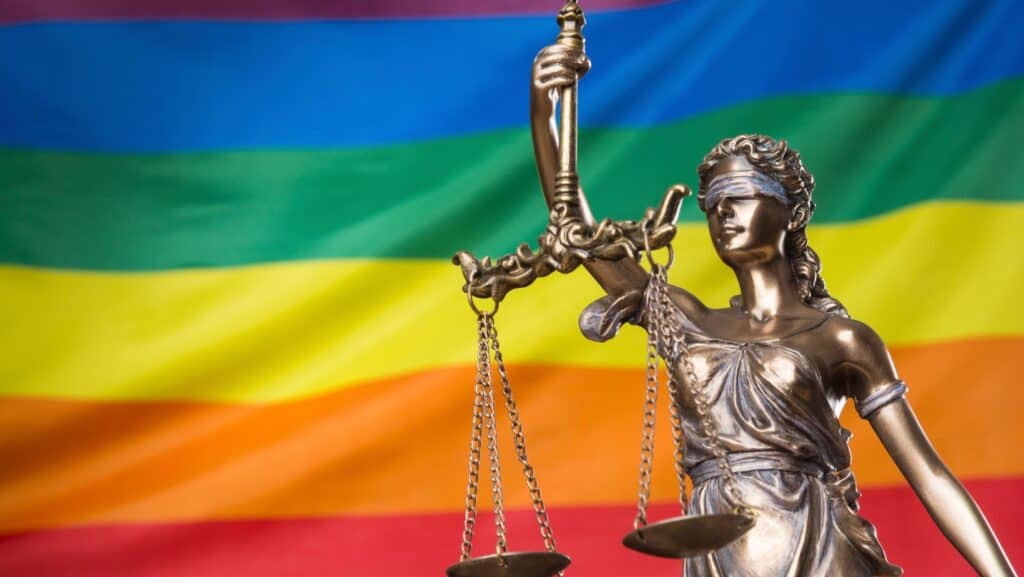
This explosion of labels isn’t a random trend; it’s a reflection of the “Continuum Model” of sexuality finally hitting the mainstream. Data from the Williams Institute at UCLA (2024) indicates that Gen Z is identifying as non-binary and gender-fluid at record rates.
Because the pool of “available” genders has expanded, the labels for attraction to those genders must evolve, too. In U.S. culture, identity is increasingly viewed as a “directional” map rather than a static box. Microlabels act as the GPS coordinates for navigating a landscape where gender is no longer an “either/or” choice.
Why Some People Are Drawn to Androgyny
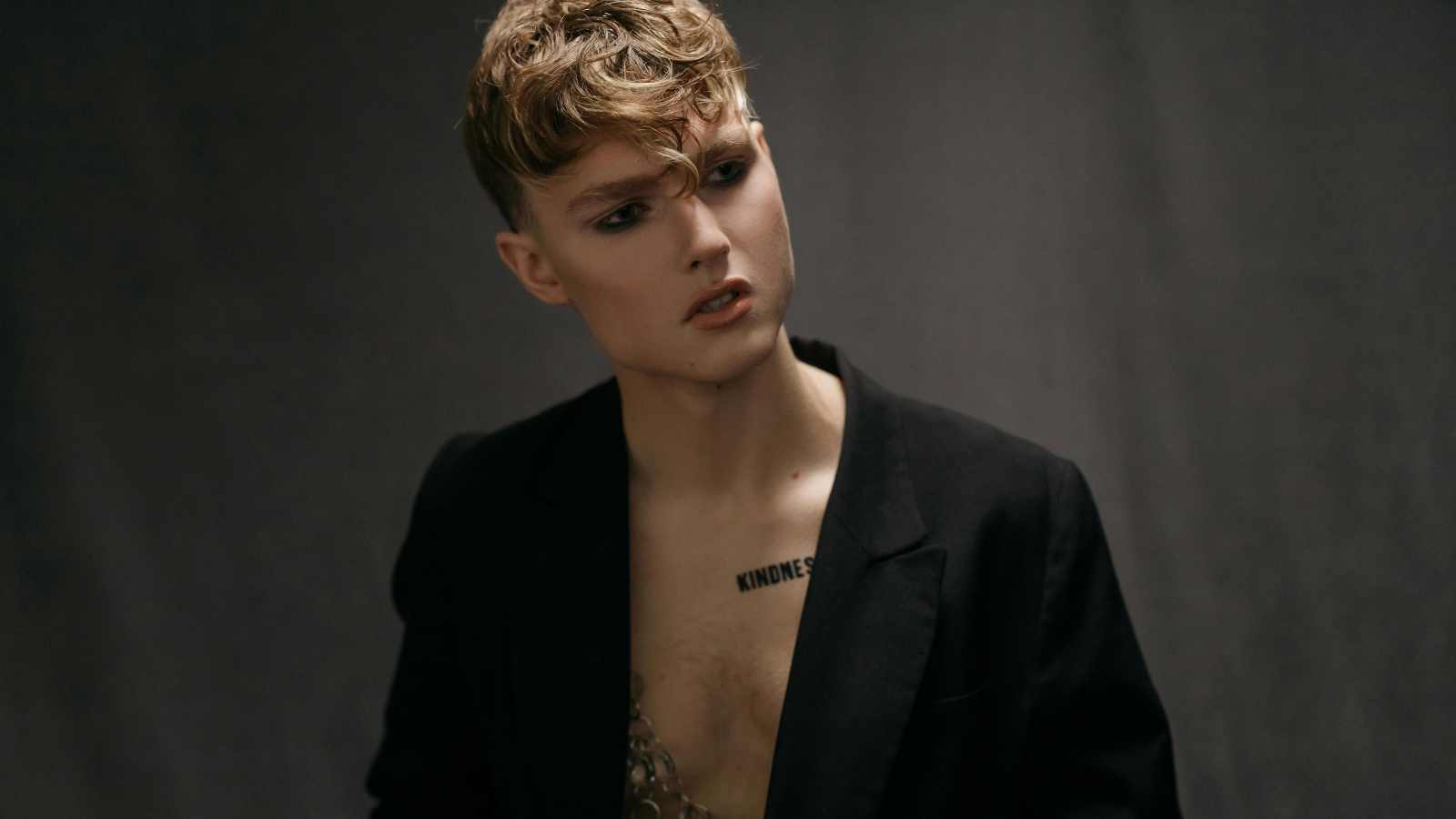
The attraction to androgyny, the “middle ground” of gender, is a core pillar of Berrisexuality. Research published in the Personality and Social Psychology Bulletin (Green & Kenrick) found that androgynous individuals are often perceived as more desirable partners across all relationship levels—from casual dates to long-term marriage.
Psychologically, androgyny is often linked to “high-order functioning” and adaptability. People are drawn to androgynous presentation because it disrupts the rigid “performance” of traditional gender roles. For a Berrisexual person, attraction to an androgynous individual often stems from a desire to believe that someone has bypassed societal rules to create their own unique self-expression.
Jeffree Star’s Take on Gender and Sexuality
The rise of these hyper-specific labels hasn’t gone unchallenged. Beauty mogul Jeffree Star ignited a firestorm during his appearance on the Bussin’ With The Boys podcast, where he explicitly rejected “non-binary” as a label and mocked the use of they/them pronouns. Star’s critique that the community has “gone overboard” with labels represents a significant internal rift. While Star himself has lived an androgynous life for decades, he frames his identity through a lens of “biological reality” and “being real,” whereas proponents of Berrisexuality see their labels as an essential evolution of self-knowledge. This clash shows that even within the queer space, the debate over “how much labeling is too much” is intensifying.
Pronouns, Attraction, and Identity
In reality, pronouns are a mode of presentation, while Berrisexuality is an orientation. Microlabels function as “social shorthand” in the digital age. On dating apps and social media, a word like Berrisexual saves time. It signals to potential partners exactly what “frequency” you operate on, reducing the friction of explaining a complex, non-binary attraction pattern from scratch. It is a way to take control of one’s own narrative in a world that often seeks to simplify it.
Counterparts and Complements
Berrisexuality is part of a broader “flavor profile” of identities that work together to describe the full spectrum of desire:
- Almondsexual: The inverse of Berrisexual, describing a primary attraction to masculine and androgynous genders with a minor attraction to femininity.
- Leafsexual / Petalsexual: Complementary labels that describe specific “strengths” of attraction within the multisexual spectrum.
- Neptunic: A close relative describing attraction to women and non-binary people, excluding men entirely.
These terms allow for a “relative orientation,” meaning your identity is defined by where you stand on the gender spectrum.
How Many Flags Can LGBTQ+ Communities Have?
The Berrisexual flag, typically featuring stripes of soft pink, white, and cream, is more than just a graphic. While critics point to “flag fatigue,” supporters argue that this proliferation is a result of Digital Tribalism. In the physical world, a rainbow flag is a broad symbol of safety. But in digital spaces, subreddits, Discord servers, and TikTok niches, iconography needs to be specific. Each flag is a visual shorthand for a very specific lived experience, allowing people to find their “tribe” in a sea of millions.
How Emerging Microlabels Reflect a More Nuanced Sexuality Landscape
The rise of Berrisexual is a signal that our “sexual vocabulary” is finally catching up to our “sexual reality.” We are moving away from a world where desire must be symmetrical or easily categorized by a census worker. The language is changing because we are finally giving ourselves permission to be complicated. The real story is the fact that the world finally has enough “linguistic oxygen” for people to breathe as their true selves. So maybe the better question isn’t “why do we need these words,” but “what took us so long to find them?”
Key takeaways:
- Radical Precision: Berrisexual is a “microlabel” that offers more detail than broad terms like bisexual, focusing on the specific “vibe” of attraction.
- Weighted Preference: The identity centers on a strong attraction to feminine and androgynous people, with only a minimal or rare interest in masculinity.
- Essence Over Image: Unlike labels that focus purely on looks, Berrisexuality is drawn to the internal gender identity and the “blurring” of traditional roles.
- Scientific Backing: The preference for androgyny is supported by psychological research (Green & Kenrick), showing that gender-flexible traits are often perceived as more desirable and healthy.
- Cultural Shift: The rise of this term reflects a broader move in U.S. culture away from binary boxes and toward a spectrum-based understanding of desire.
- Social Shorthand: These labels serve as modern tools for self-expression, helping individuals find community and navigate dating in a high-definition landscape.
Disclosure line: This article was developed with the assistance of AI and was subsequently reviewed, revised, and approved by our editorial team.
The 15 Things Women Only Do With the Men They Love

The 15 Things Women Only Do With the Men They Love
Love is a complex, beautiful emotion that inspires profound behaviors. We express our love in various ways, some universal, while others are unique to each individual. Among these expressions, there are specific actions women often reserve for the men they deeply love.
This piece explores 15 unique gestures women make when they’re in love. From tiny, almost invisible actions to grand declarations, each tells a story of deep affection and unwavering commitment. Read on to discover these 15 things women only do with the men they love.