Top 12 religious groups by college graduation rate in America
For years, the data has been sitting in plain sight, in Pew Research Center surveys, immigration studies, and university enrollment records, yet the broader cultural conversation has never fully caught up with what the numbers reveal. Which religious group has the highest share of college graduates in the United States? The answer surprises many people, and the reasons behind the rankings are even more compelling than the rankings themselves.
What follows is a ranking of 12 religious groups by college graduation rate, based on data from Pew Research Center’s 2023–24 Religious Landscape Study, a survey of 36,908 American adults conducted between July 2023 and March 2024.
Widely considered one of the most comprehensive snapshots of American religious life in recent years, the study measures the percentage of each group’s adult members who hold at least a bachelor’s degree. For comparison, the national average among all U.S. adults is 35%.
Jehovah’s Witnesses

Before the numbers, the policy. For decades, the Watchtower Society published explicit warnings against higher education in its official magazine, Awake!, and a 2005 issue described college campuses as notorious for drug abuse, immorality, and cheating. Only 9% of Witnesses held an undergraduate degree – the lowest of any religious group surveyed, nearly 26 points below the national average.
For most of the Witnesses’ history, the organization predicted Armageddon within specific lifetimes, making a 40-year career trajectory feel pointless. Watchtower publications repeatedly told members that spiritual education held greater value than secular education, and academic research documented how that messaging shaped members’ self-conception, leading most to rarely picture themselves at a university.
The Witnesses never technically banned college – they framed it as a risky personal choice, which functioned as a soft prohibition in a community where social standing depends on conformity. Members who pursued degrees reportedly faced being labeled a bad association, with family privileges quietly revoked. The doctrinal softening after 1995 may slowly shift these numbers, but the educational legacy of decades of discouragement doesn’t reverse in one generation.
Church of God in Christ (COGIC)

COGIC holds a distinct place in American Pentecostal history – founded in 1897 by Bishop Charles Harrison Mason in Memphis, Tennessee, it became one of the largest predominantly Black Pentecostal denominations in the country, claiming millions of members.
But within Pew’s 2023-24 data, COGIC ranks at the bottom of the historically Black Protestant tradition, with just 10% of its adult members holding a college degree. That is a notable gap even within its own faith family – the broader historically Black Protestant tradition sits at 24%, itself already below the national average.
COGIC congregations are concentrated in communities where generational poverty, underfunded public schools, and limited access to college preparation resources compound over time.
The absence of degree-holders in a community is rarely a product of values alone – it is often the accumulated weight of structural disadvantage wearing the shape of a statistic. The fact that 10% represents a floor rather than a ceiling is not purely a failure of aspiration. It is a number that carries decades of policy history.
National Baptist Convention, USA
The National Baptist Convention, USA, is one of the largest Protestant denominations in the country by membership, and yet only 24% of its adult members hold a college degree – exactly matching the broader historically Black Protestant average.
The denomination itself dates to the late 19th century and carries the legacy of churches that served as the primary educational and civic infrastructure for Black Americans during and after Jim Crow. Historically Black Colleges and Universities emerged partly from this ecosystem, institutions born of necessity that became engines of Black intellectual life precisely because mainstream universities were closed. That foundational investment in education is real and documented, and yet the aggregate graduation rate still falls 11 points below the national mean.
Population size is part of the story. A large denomination spread across economically diverse communities will always carry the distribution of those communities within its numbers.
Evangelical Protestants
Evangelicalism is the largest single religious category in America, representing roughly 23% of the adult population. That scale means its educational average – 29%, six points below the national mean – describes a huge slice of American life.
The internal variation is worth noting: within the evangelical tradition, the Global Methodist Church and the Presbyterian Church in America both sit at 57% college graduation, while the Assemblies of God comes in at just 18%. Evangelicalism is not a monolith; it is a spectrum of denominations whose educational profiles are shaped by geography, race, immigration history, and socioeconomic composition as much as by theology.
The cultural skepticism toward elite institutions that runs through parts of evangelical America is not simply anti-intellectualism – it is partly a response to the perceived hostility of secular universities toward religious belief, a hostility that polls consistently confirm is real and felt.
Pew found that Republicans were roughly forty points more likely than Democrats to hold a negative view of higher education, and evangelical communities skew Republican. That feedback loop – distrust of secular institutions, reinforcing lower enrollment, reinforcing a culture more skeptical of the degree credential – shapes outcomes across generations.
Catholics

American Catholics match the national average almost exactly at 35%, which sounds like a neat story about religious integration until you look inside the number. White Catholics graduate at 43%. Asian Catholics, who are among the most educated subgroups in the survey, account for 53%.
Hispanic Catholics, the fastest-growing segment of American Catholicism, sit at just 20%. Those three numbers exist under the same umbrella denomination, reflecting the reality that ethnicity and immigration history drive educational outcomes in ways that religious identity alone cannot explain.
The Catholic Church runs the largest private school system in the United States, serving over 1.6 million students in K-12 institutions. That infrastructure represents a significant investment in education, and yet the aggregate degree rate is average.
The more revealing data point is trajectory: Hispanic Catholic communities are younger and more recently arrived, meaning their educational numbers are likely to climb as generational depth increases – a pattern documented across nearly every immigrant group that has moved through American institutions over the past century.
Mainline Protestants
Mainline Protestantism – the umbrella covering denominations like the United Methodist Church, the Evangelical Lutheran Church in America, and the Presbyterian Church (U.S.A.) – sits five points above the national average at 40%.
These are historically the establishment denominations of American civic life, denominations that built universities, funded hospitals, and shaped the infrastructure of American philanthropy long before modern research universities existed. Harvard was Puritan. Yale began as a Congregationalist institution. Princeton started as Presbyterian. The educational prestige that now accrues to the Ivy League carries old Protestant fingerprints.
The irony is that mainline Protestantism has been in steady decline for decades. Pew’s longitudinal data show that mainline Protestants dropped from 18% of the U.S. adult population in 2007 to 11% in 2023-24. The people who remain are disproportionately older, more affluent, and more educated – a composition that inflates the graduation rate of a shrinking tradition rather than reflecting a broad educational achievement across a growing one.
Atheists
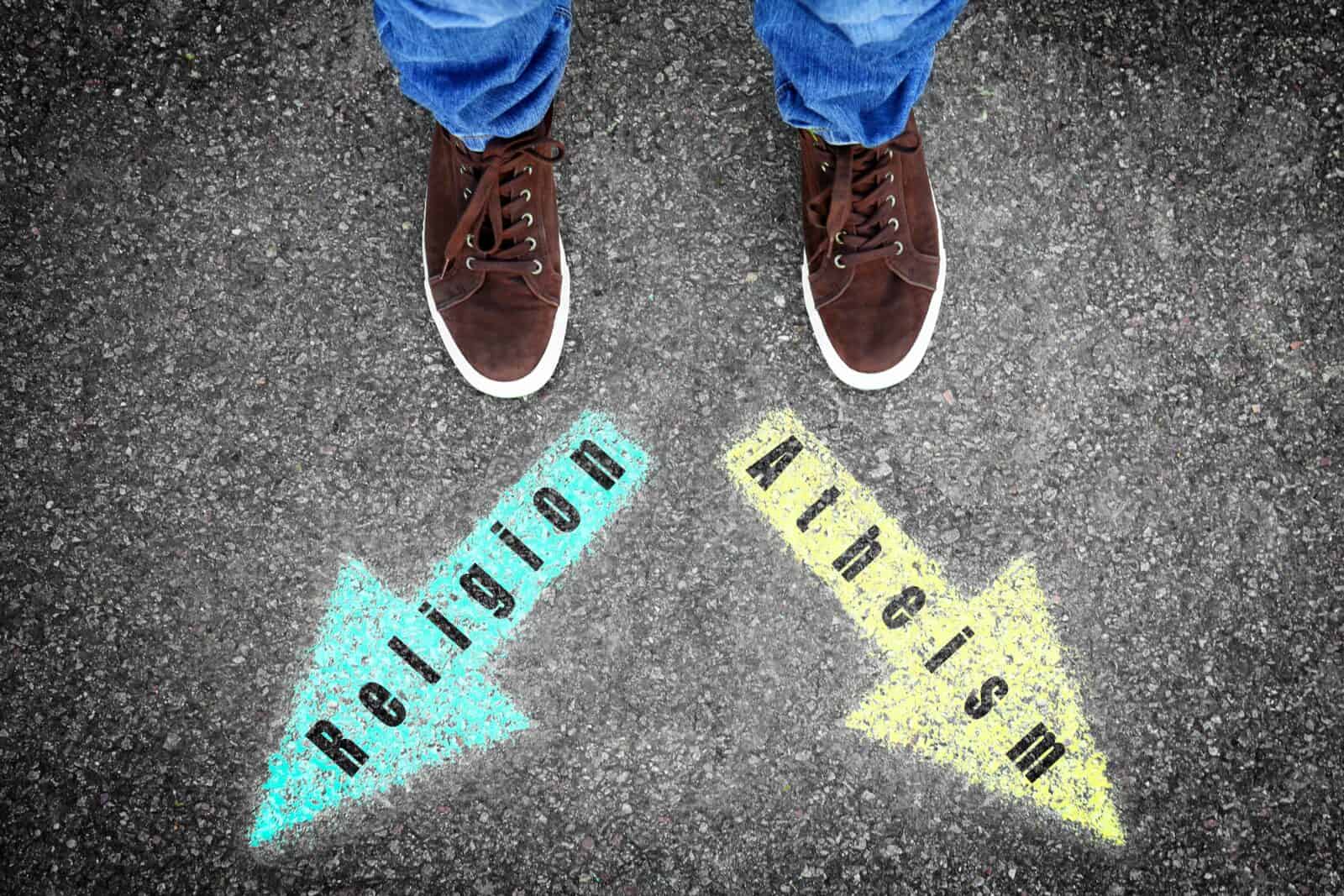
Among religiously unaffiliated Americans, atheists graduate at 48% – 13 points above the national average, higher than Catholics, mainline Protestants, and most other groups on this list. The relationship between irreligion and education runs in both directions: universities produce skeptics, and skeptics seek universities.
Research on religious disaffiliation consistently finds that higher education is one of the strongest predictors of moving away from organized religion, though the 2023-24 Pew data complicates any simple causality because several highly religious groups – Hindus and Jews in particular – graduate at even higher rates while remaining deeply affiliated.
What the atheist number actually captures is a selection effect with a demographic shape. American atheists are disproportionately white, male, and concentrated in coastal cities with dense knowledge economies – characteristics that correlate with higher education independent of theological position. The graduation rate is real, but attributing it purely to atheism as a worldview rather than to the demographic profile of people who currently identify that way would be an overclaim.
Agnostics

Agnostics edge past atheists by five points at 53%, which is slightly counterintuitive – the theological distinction between not believing and not knowing seems unlikely to track so cleanly to a diploma.
The likely explanation is demographic stratification within the unaffiliated category: agnostics may skew more toward educated professionals who retain intellectual caution about metaphysical claims, while atheists include a broader range of people who have simply drifted from religion without forming a specific intellectual identity around the departure.
The difference between the two numbers is probably more about who currently uses each label than about any philosophical commitment either group shares.
Episcopalians
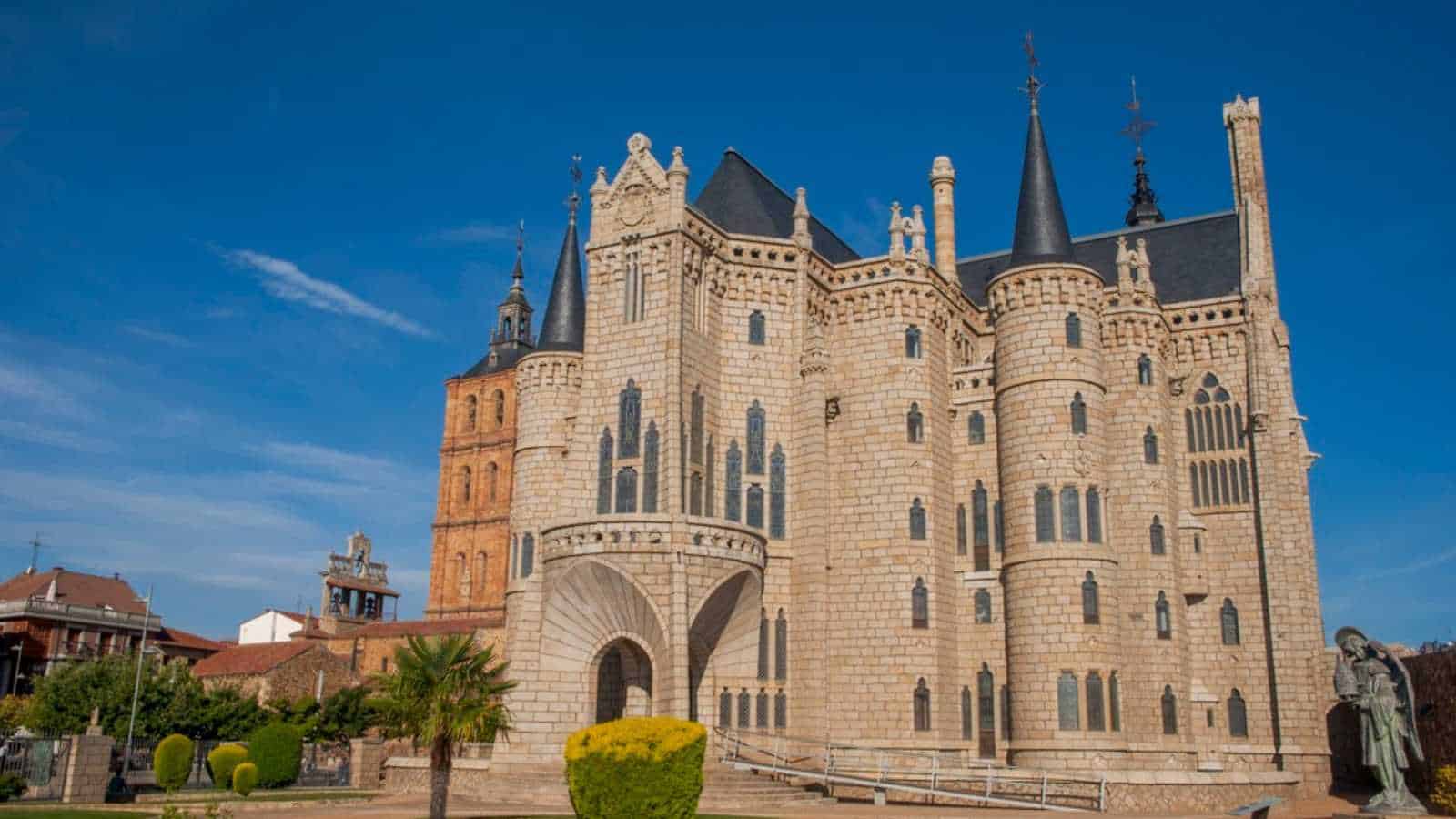
At 67%, Episcopalians are the most educated Christian denomination in America, nearly double the evangelical average and 32 points above the national mean. The Episcopal Church is small – about 1.6 million members – and notably concentrated among older, wealthy, coastal Americans.
A 2016 Pew study found that 35% of Episcopalians lived in households earning over $100,000 per year, the third highest of any religious group after Jews and Hindus.
The denomination’s history explains some of this. The Episcopal Church was the American heir to the Church of England, the church of the colonial establishment, and it maintained cultural dominance among the Northeastern professional class for generations after the Revolution.
Its membership never expanded into working-class or rural America the way evangelical denominations did, meaning its educational average has always reflected a narrow socioeconomic slice rather than a broad national cross-section. Being in fourth place here is partly a product of who Episcopalians have historically been allowed to become, not simply of what the church teaches about learning.
Jews

Among American Jews, 65% hold at least a bachelor’s degree, and roughly 28% hold postgraduate degrees – nearly three times the postgraduate rate of the general population. 44% of Jewish households earn over $100,000 per year, the highest of any religious group measured. These numbers do not emerge from nowhere.
Jewish educational culture has a specific and traceable origin. The centrality of textual study created a civilizational infrastructure of literacy and argumentation that predates modernity by roughly 2,000 years.
The Talmud Bavli is not read passively; it is argued with. Students are expected to identify contradictions, propose resolutions, and hold competing interpretations simultaneously, a cognitive training that maps precisely onto the analytical skills universities reward. Tractate Shabbat states that the world continues to exist for the sake of children who study, elevating learning to near-cosmological significance and shaping how Jewish communities organized themselves around schools and study houses across every diaspora they entered.
When Eastern European Jewish immigrants arrived in the United States in massive waves between 1880 and 1924, they brought that tradition with them to a country with an expanding public university system. The City University of New York became an engine of Jewish upward mobility in the mid-20th century, and its first-generation graduates went on to populate law, medical, and research universities across the country.
Hindus

Seven in ten Hindus in the United States hold at least a bachelor’s degree, the highest share of any religious group. Nearly half hold postgraduate degrees. By every metric – income, educational attainment, professional occupation – American Hindus sit at the apex of the data, a fact that raises an obvious question: why?
The answer is not Hinduism. Or rather, it is not Hinduism alone. It is the structure of American immigration policy, which has systematically selected for the most educated segment of a global religion and concentrated them inside the United States. India accounts for 71% of approved H-1B visa beneficiaries annually – a category requiring at least a bachelor’s degree by design.
Professor Devesh Kapur of the University of Pennsylvania, co-author of The Other One Percent: Indians in America, described this as triple selection: India selects for people educated enough to qualify for overseas migration, the American visa system selects for advanced degrees, and the destination labor market selects for high-skill occupations. An Indian-American, by his estimate, is at least 9 times more educated than the average person in India.
Among Hindus in India, who make up over 90% of the world’s Hindu population, educational attainment sits far below the figures recorded for American Hindus. The 70% graduation rate is not a product of what Hinduism teaches – it is a product of which Hindus the United States chose to let in.
That said, immigration selection alone cannot fully account for intergenerational transmission: the children of H-1B visa holders also graduate at extraordinarily high rates, suggesting the educational norms carried by the immigrant generation do perpetuate themselves. Both interpretations carry weight, but the foundational driver is structural rather than theological.
Agnostics and Hindus aren’t actually fighting for the top

Hindus top the bachelor’s degree chart at 70%, but their postgraduate degree rate – nearly 50% – is also the highest in the country. Jews are 2% of the American population and occupy a wildly disproportionate share of graduate school seats, law partnerships, and medical faculties.
Agnostics and atheists outperform most Christian denominations despite having no institutional educational infrastructure of their own. And Jehovah’s Witnesses, a denomination that once tied the value of a degree to the question of whether God was ending the world soon, sit at the bottom of every measure – numbers that reflect not individual failure but the accumulated cost of institutional discouragement across decades.
The map also reveals something about the categories themselves. Mainline Protestantism built the Ivy League and is now shrinking. Evangelical Protestantism accounts for 23% of the country and graduates at a below-average rate.
The Episcopal Church is tiny, wealthy, and one of the most credentialed denominations in America. Catholics match the national average while internally exhibiting a 33-point gap between their least- and most-educated subgroups. None of these groups is uniform. All of them carry histories.
What the data does not settle is the causal question: does religion drive educational outcomes, or do educational outcomes reshape religious identity? The evidence points in both directions simultaneously, which is exactly the kind of answer that makes good data inconclusive and good journalism necessary.
Key takeaways

- Seven in ten Hindus in the United States hold at least a bachelor’s degree, the highest share of any religious group – but that number reflects immigration policy more than theology, since India accounts for 71% of H-1B visa approvals annually.
- Jews and Hindus lead every other religious group by a wide margin, with 65% of Jews and 70% of Hindus holding a bachelor’s degree, compared to 35% of U.S. adults overall.
- Jehovah’s Witnesses sit at the bottom with only 9% holding an undergraduate degree – the lowest of any religious group – a direct consequence of decades of institutional discouragement toward higher education.
- Agnostics and atheists outperform most Christian denominations at 53% and 48% respectively, despite having no institutional educational infrastructure of their own.
- Catholics match the national average at 35%, but that headline number masks a 33-point internal gap – white Catholics graduate at 43% while Hispanic Catholics sit at just 20%.
Disclaimer – This list is solely the author’s opinion based on research and publicly available information. It is not intended to be professional advice.
Like our content? Be sure to follow us