Why Christian nationalism is becoming a defining force in American politics
On a Sunday afternoon in May, House Speaker Mike Johnson closed his eyes on the National Mall and prayed to “rededicate the United States of America as one nation under God.” Thousands had lined up for blocks to attend Rededicate 250, a nine-hour event promoted as a gathering to give thanks for God’s providence and rededicate America as one nation under God.
Of the nineteen faith leaders scheduled to speak, eighteen were Christian, and the lineup included cabinet secretaries, a Grammy-winning worship musician, and the star of a hit Jesus streaming series. It looked like a church service. It was staged with White House backing, on federal land, to mark the country’s 250th birthday.
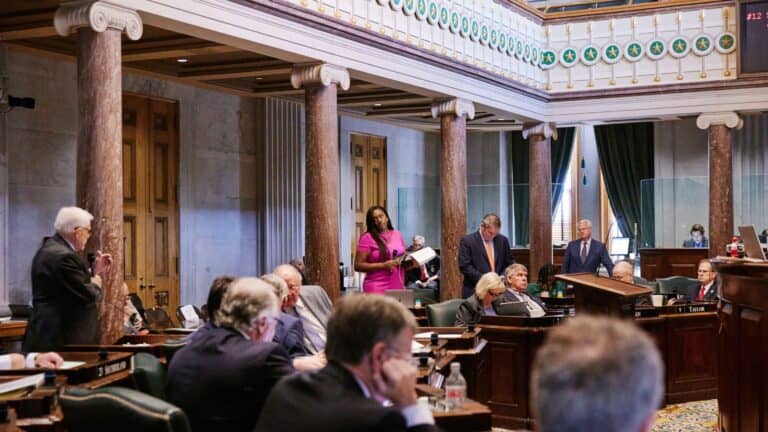
That contradiction, a government-sanctioned religious revival in a country whose founding document bars an official religion, is the clearest sign yet that Christian nationalism has moved from academic shorthand to a live political fault line.
Nearly a third of Americans now count as adherents or sympathizers
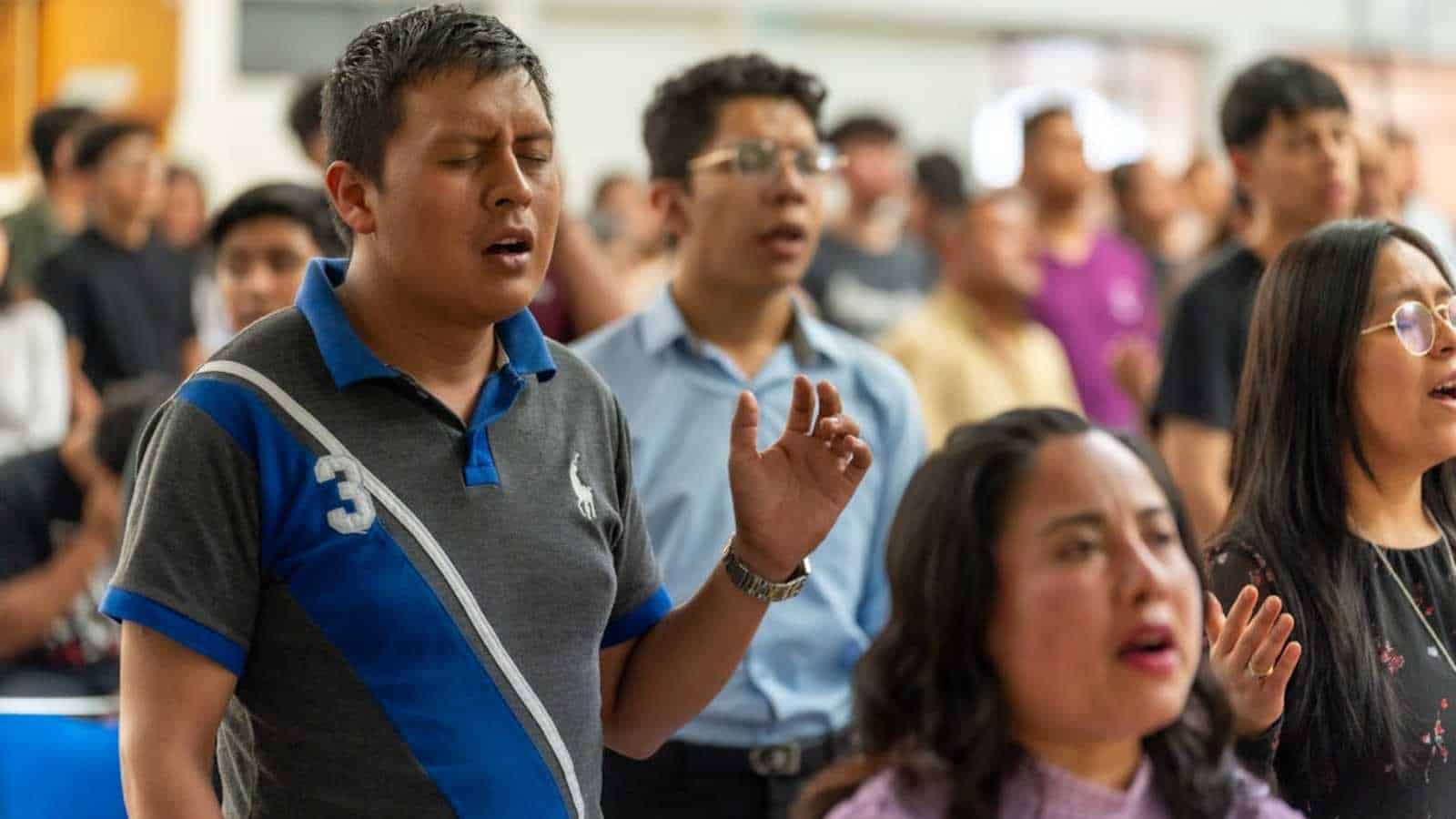
A February 2026 PRRI survey of more than 22,000 adults found that roughly one-third of Americans qualify as adherents or sympathizers of Christian nationalism, using a five-question scale that asks whether respondents think the government should declare the country Christian and whether laws should be grounded in Christian values. The number is not evenly spread. A majority of Republicans, 56%, qualify as adherents or sympathizers, compared with one in four independents and less than one in five Democrats.
Public familiarity with the concept has climbed just as fast. A Pew Research Center study released in May found 59% of Americans say they have heard of Christian nationalism, up from 45% in 2024. Pew’s researchers describe this as part of a broader shift: a growing share of Americans in both parties now believe religion is gaining influence in public life, with 43% of Republicans saying so, up 28 percentage points since 2024.
The rise tracks almost exactly with where Republicans hold power

States with heavily Republican-controlled legislatures, including Arkansas and Oklahoma, rank among the highest in support for Christian nationalism, while California, New York and Washington rank lowest.
The ideology correlates strongly with favorable views of President Trump, and PRRI’s researchers found that support for Christian nationalism moves in lockstep with trust in specific media outlets, with adherents and sympathizers making up two-thirds of the audience that most trusts far-right news sources.
What makes this more than a polling curiosity is what adherents believe follows from it. Majorities of adherents and sympathizers agree that immigrants are invading the country and replacing its cultural and ethnic background, and majorities support deporting undocumented immigrants to foreign prisons without due process.
30% of adherents agreed that true American patriots may have to resort to violence to save the country, compared with 10% of the movement’s skeptics.
Federal policy has started catching up with the sentiment

Belief is one thing. Rule changes are another matter, and several have arrived in the past year. In July 2025, the IRS settled a lawsuit brought by two Texas churches and a Christian Broadcasters Association, conceding for the first time that houses of worship can endorse candidates for office without losing their tax-exempt status, breaking with an interpretation of the Johnson Amendment that had stood since 1954.
That reversal did not go unchallenged. In March 2026, a federal judge rejected the proposed settlement, leaving the prohibition on churches endorsing candidates as enforceable law, a reminder that the legal terrain here remains contested rather than settled.
Separately, Trump signed an executive order creating a Task Force to Eradicate Anti-Christian Bias, chaired by the attorney general, tasked with reviewing federal agencies for policies deemed hostile to Christians.
Critics call the premise unfounded. Political scientist Melissa Deckman, who studies the movement, has argued the task force functions less as a response to real persecution than as validation for a base that experiences the loss of cultural dominance as an attack.
Even scholars who study the term disagree on what it measures

Other researchers have questioned whether the standard polling scale actually isolates a coherent ideology or simply catches general religious conservatism, since agreeing that “the United States’ success is part of God’s plan” does not automatically mean someone wants Christians to govern.
A recent Christianity Today newsletter cited original survey research by its author, who tested an alternative framing directly with 38 conservative, Trump-supporting Christians and found that more of them recognized their politics in a description of conservative identity politics than in a description of Christian nationalism. The author’s point was not that the underlying behavior is benign, but that mislabeling its motive makes it harder to actually address.
That uncertainty coexists with a striking consensus on process. Nearly eight in ten Americans, across both parties, say churches should not endorse candidates in elections, and two-thirds say houses of worship should stay out of political matters entirely. Even a majority of Republicans in the Pew survey wanted the government to keep enforcing the separation of church and state. The public is not rejecting religion’s presence in civic life. It is rejecting the fusion of the two institutions, even as elected officials pursue exactly that fusion at the federal level.
What this reveals about where the country is headed
Christian nationalism’s growth is not simply a story about faith. It is a story about a minority position gaining outsized leverage because it is concentrated inside the governing party at a moment when that party controls the executive branch, much of the federal judiciary, and a majority of state legislatures.
A belief system held by roughly a third of the country is shaping tax policy, immigration enforcement rhetoric, and the ceremonial architecture of the federal government because it is held by a majority of the people currently in charge of writing the rules.
The gap between how ordinary Americans want religion and government to relate, mostly separate, mostly private, and how their government is currently modeling that relationship, increasingly fused and increasingly public, is where the real story sits.
Disclaimer – This list is solely the author’s opinion based on research and publicly available information. It is not intended to be professional advice.
Like our content? Be sure to follow us.