10 forces pushing the middle class toward permanent renting
Remember when the “American Dream” meant a white picket fence and a 30-year mortgage? Yeah, me neither, at least not lately. For many of us, that dream is starting to look more like a subscription service where you pay every month but never actually own the product.
FYI: You aren’t imagining it; the math has fundamentally changed. According to the National Association of Home Builders (NAHB), nearly 75% of U.S. households were unable to afford a median-priced new home in 2025. That is not just a market fluctuation; it is a systemic shift.
Let’s be real for a second: we are witnessing the transformation of housing from a “right of passage” into a luxury asset. IMO, it feels like the ladder to the middle class has been pulled up while we were all busy arguing about avocado toast. If you are wondering why your high-earning friends are still renewing leases, here is exactly what is happening behind the scenes.
The Price-to-Income Break That Quietly Redefined Affordability

Many middle-class households assume they can still buy the homes their parents owned, but median home prices have risen by more than 5.3 times wages over the last 40 years. Even when two adults are earning income, traditional mortgage underwriting standards, such as the widely used 28/36 rule, which recommends limiting housing costs to no more than 28% of gross monthly income, can make it difficult to qualify for and sustain homeownership.
Lenders often cap total debt at ~36–43% of income, meaning mortgage payments alone can easily push households beyond these thresholds when student loans, car payments, or other debts are included. In practice, this pricing structure forces many middle‑class couples to choose between stretching their budgets and continuing to rent.
The consequence is more households renting longer, seeing ownership as a distant milestone rather than a life-stage certainty. Across the country, aspirational buyers are increasingly trapped in a cycle in which even aggressive saving may never be enough to close the affordability gap.
The Down Payment as a Modern Gatekeeping Mechanism

A down payment today functions less as savings discipline and more as an intergenerational filter. Many middle-class households must rely on parental transfers or gifts to meet the mortgage threshold. Without inherited wealth, ownership often remains unattainable regardless of income stability.
What used to be a ‘manageable’ 10–20 % down payment has become a very different proposition in today’s most expensive markets. In high‑cost cities like San Jose and San Francisco, median required down payments now exceed $200,000–$280,000, and even a typical down payment nationwide runs into the tens of thousands, reflecting sharply higher home prices.
In some areas, such as San Diego, buyers recently faced median down payments near $169,000, underscoring how 20 % of a home’s cost can easily climb into six figures.
Student Debt as a Delayed Asset Engine

The psychological burden of debt creates risk aversion, discouraging mortgages even when technically feasible. Compounded interest and repayment obligations force households to prioritize liquidity over long-term assets, making renting the more rational option.
Older generations purchased homes without this crushing debt, allowing them to ride the wave of housing appreciation.
The modern middle class faces a financial paradox: education increases earning potential but simultaneously locks households out of homeownership in early adulthood.
Institutional Buyers and the Financialization of Shelter

Private equity and corporate landlords are increasingly treating single-family homes as high-yield investment vehicles, often snapping up properties before individual buyers can compete. Automated purchasing and investor cash reserves create bidding pressures that outstrip household budgets. This dynamic turns neighborhoods into income streams rather than communities, squeezing aspirational buyers into rental markets.
Housing ceases to be a foundation of wealth creation for the middle class; it becomes a liquid asset for investors. Ownership opportunities shrink while rental options expand, often at rising costs. For middle-class households, the dream of building equity through property feels perpetually out of reach.
Socially, this fosters a sense of dislocation, as entire generations are denied the traditional anchor of homeownership.
Also on MSN: 10 home inspector secrets every woman should know before buying
Zoning as Invisible Scarcity Engineering
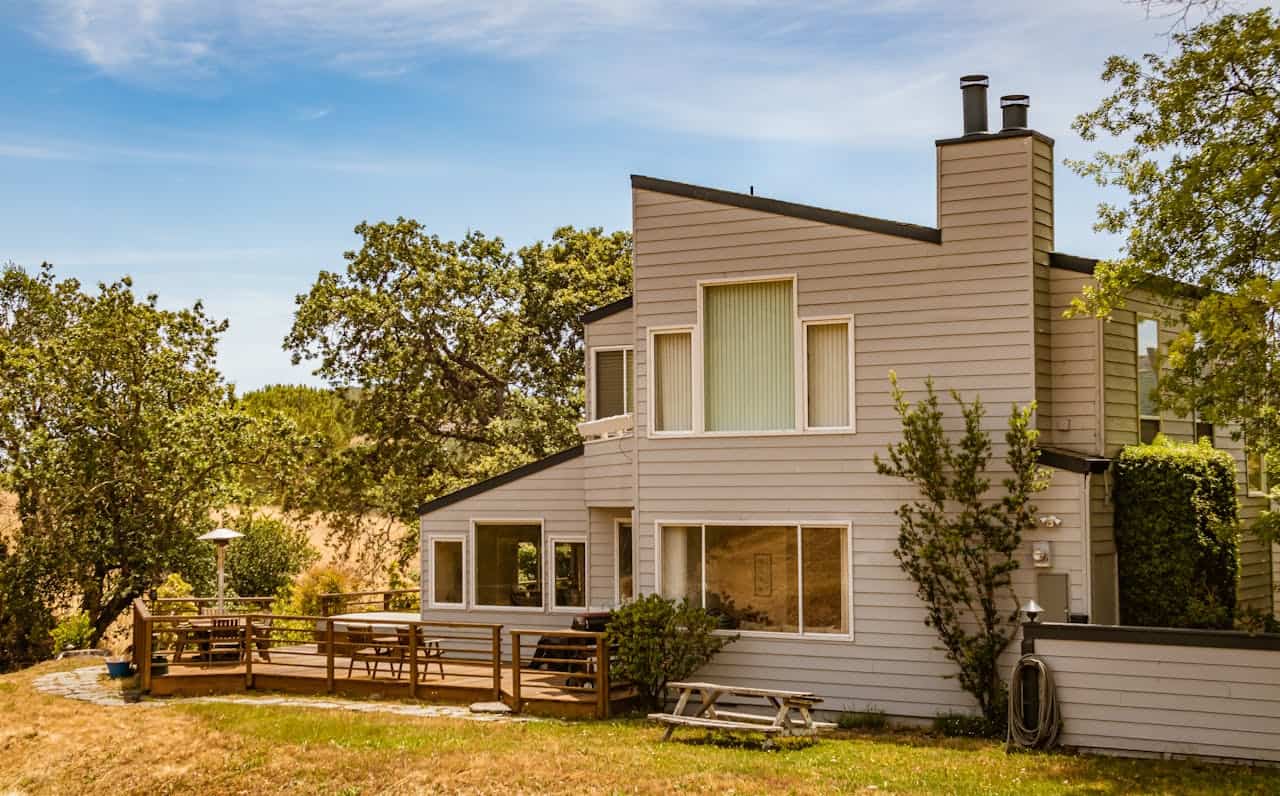
Economists like Jonathan Rothwell link density regulations directly to housing growth patterns, finding that roughly 20 % of the variation in metropolitan housing expansion can be explained by these rules, and that anti‑density zoning tends to inflate home prices in high‑demand cities.
In many U.S. cities, minimum lot-size requirements and height limits act as de facto barriers to denser, lower‑cost housing, preventing duplexes or triplexes from being built where demand is strongest. Exclusionary zoning practices disproportionately concentrate single‑family zoning in affluent neighborhoods, perpetuating socioeconomic and racial segregation by limiting access to lower‑cost housing options in opportunity‑rich areas.
Because these rules shrink the number of available homes relative to demand, they exert upward pressure on both prices and rents, making it harder for middle‑class buyers, even dual‑income ones, to enter homeownership.
Wage Growth vs. Asset Growth: The Divergence Story

While housing and investment assets have skyrocketed, middle-class wages have largely stagnated, creating a widening chasm between income and wealth accumulation. Even with consistent saving, households cannot keep pace with asset inflation.
Wealth appreciation now predominantly rewards inherited assets or early investments, sidelining first-time buyers. This divergence means renting is increasingly the rational economic choice, as ownership often requires speculative borrowing or extreme sacrifice.
The middle class is trapped in a cycle in which labor cannot participate in asset growth. Households work hard but cannot fully participate in wealth-creation mechanisms. For aspirational renters, ownership feels like a moving target, perpetually out of reach.
Property Maintenance as Time Scarcity, Not Irresponsibility

The stereotype that middle‑class homeowners are simply “irresponsible” about upkeep ignores a growing body of evidence showing that maintenance is both time‑intensive and increasingly expensive. Homeowners now spend hundreds of hours annually on repairs and upkeep, with some estimates suggesting over 500–600 hours per year on maintenance and improvements, effectively turning homeownership into a part‑time job for many families.
Labor shortages in skilled trades make finding qualified help difficult and costly, with over half of homeowners reporting trouble securing contractors due to high fees, limited availability, or delays. Rising costs add another layer of strain: surveys find that nearly 60 % of homeowners are postponing needed repairs because they can’t afford them, and many lack emergency funds for unexpected issues.
Instead of signaling irresponsibility, these patterns reflect time poverty and budget constraints that middle‑class families face while juggling work, childcare, and other financial pressures. Recognizing this shifts the narrative from moral judgment to systemic critique, highlighting that maintenance burdens disproportionately disadvantage households without the time or savings cushion to keep up with costly repairs.
Mobility Culture and the Gig Economy

Modern employment patterns reward flexibility, making long-term property ownership less appealing or viable.
Gig workers often struggle to meet mortgage underwriting criteria because their income is inconsistent. Job mobility requires geographic flexibility, which renting accommodates better than ownership.
Ownership, once a symbol of stability, becomes a liability when career paths are fluid and uncertain. Psychological effects reinforce the trend; committing to a property feels riskier than maintaining flexible housing arrangements.
The Risk Premium of Ownership in an Uncertain Era

Homeownership is increasingly a risk calculation rather than just a financial choice. Climate change has raised insurance premiums and limited coverage in disaster-prone areas, making ownership more expensive and unpredictable.
Memories of the 2008 housing crisis also linger: surveys show that many middle-class households now prefer renting to avoid market volatility and the risk of foreclosure. Renting shifts major risks from unexpected repairs to price crashes onto landlords, offering flexibility and security that buying no longer guarantees.
Even when homeownership is attainable, families often prioritize risk mitigation over long-term equity, making renting a rational strategy in today’s uncertain markets.
From Ownership as Identity to Access as Norm

Cultural shifts are redefining what it means to “own.” Subscription and service models for everything from media to vehicles normalize access rather than ownership.
Younger generations increasingly prioritize experiences, mobility, and flexibility over long-term asset commitments. The psychological attachment to homeownership as a status symbol is weakening.
Property is shifting from a legacy asset to a utility, reducing the perceived value of permanent ownership. For the middle class, this cultural shift intersects with structural pressures, solidifying permanent renting as both rational and normalized.
Key takeaways

- Modern middle-class status is defined more by income than ownership, a stark departure from post-war definitions of agency and wealth.
- Structural barriers, including zoning laws and high down payments, as well as time scarcity and labor shortages, systematically limit homeownership opportunities.
- Economic and environmental risks, including market volatility, natural disasters, and insurance costs, make owning a home a high-stakes gamble.
- Social perceptions of irresponsibility around maintenance or debt often mask structural constraints, reinforcing rental as the default option.
- Renting is increasingly a rational strategy, offering flexibility, risk mitigation, and access to housing that ownership no longer guarantees for the middle class.
Disclosure line:
This article was developed with the assistance of AI and was subsequently reviewed, revised, and approved by our editorial team.
Like our content? Be sure to follow us