11 reasons public transportation continues to fail outside major cities
Transit ridership rises sharply only in areas with 7,000–12,000 residents per square mile, densities most suburbs fail to reach. Outside major city cores, transit service is patchy and often underfunded; historically, about 80% of federal transportation funding has gone to highways, leaving only 20% for public transit.
Aging infrastructure compounds the problem. In Boston, the Big Dig ballooned from an estimated $2.8 billion to over $24 billion, while New York’s century-old tunnels demand constant maintenance. Cultural factors also play a role: by 1990, nearly 95% of U.S. households owned at least one car, up from 60% in 1950.
Combined, these factors create a system that exists more as an idea than as a reliable service, where poor design, infrequent service, and dispersed jobs make transit inconvenient, slow, and unattractive.
Aging Infrastructure Makes Upgrades Costly

Boston’s Central Artery Tunnel Project, known as the Big Dig, ballooned from an estimated $2.8 billion in the 1980s to over $24 billion by the time it was completed, illustrating the staggering cost of retrofitting legacy systems. In New York City, century-old tunnels like the Holland and East River crossings require ongoing, intensive maintenance, with the MTA capital program dedicating 90% of its budget to maintaining a state of good repair.
The financial burden of repairing and modernizing infrastructure often dwarfs the cost of creating new transit corridors, discouraging expansion. Contrastingly, European systems such as Paris Métro and Berlin’s U‑Bahn, though older, have managed upgrades more cost-effectively, suggesting governance and procurement practices matter as much as age.
Experts like Bent Flyvbjerg, in Megaprojects and Risk, highlight how underestimated costs plague large-scale infrastructure projects, reinforcing the perception that transit is perpetually “too expensive.” Consequently, aging infrastructure traps cities in a cycle of repair over innovation, stalling transformative transit development.
Car-Oriented Urban Design Discourages Riders

The urban landscape itself can be a cage, favoring cars over people. Postwar suburban zoning in the U.S. created sprawling, single-family home neighborhoods with cul-de-sacs and segregated land uses, which dilute the concentration of potential transit riders. Ridership rises sharply only above 7,000–12,000 residents per square mile, densities many suburbs fail to reach.
Between 1950 and 2010, urbanized land area in the U.S. expanded three times faster than the population, cementing low-density sprawl as the default pattern. Transit in such areas becomes slow, infrequent, and financially inefficient, discouraging use and reinforcing dependence on cars.
Authors Peter Newman and Jeffrey Kenworthy in The End of Automobile Dependence highlight the strong correlation between mixed-use density and transit success. Without the spatial concentration necessary to sustain service, public transportation struggles to justify even modest improvements in suburban settings.
Political and Corporate Pressure Favors Cars

In the United States, policy has long tilted the scales toward asphalt over rails. The so-called General Motors Streetcar Conspiracy narrative, while debated, underscores a broader reality: auto-industry lobbying and highway-focused coalitions in the mid-20th century shaped federal and state transportation priorities.
Historically, about 80% of federal transportation funding went to highways, leaving only 20% for transit, according to Transportation for America. Even today, state Departments of Transportation possess institutional power, culture, and expertise heavily skewed toward road construction.
Political incentives continue to favor universally visible road projects, leaving transit investments as politically riskier propositions.
Early Underperformance Triggers a Funding Spiral

Jarrett Walker in Human Transit emphasizes that transit needs consistent, high-frequency service over the years to build user habits, yet agencies often lack patience. Todd Litman’s work at the Victoria Transport Policy Institute reinforces the idea that short-term performance metrics can mask long-term potential, leading systems to be prematurely judged failures.
A transit system can fail before it even has a chance to succeed. When initial service is sparse or inconvenient, riders abandon transit, and agencies respond by cutting frequency and routes, which further depresses ridership, a cycle known as the “death spiral.”
Reductions in frequency are the single strongest predictor of declining ridership. This dynamic is particularly severe outside major cities, where low initial population density already limits the pool of potential passengers.
Routes Follow Historical Job Patterns, Not Current Needs

Transit networks are frozen snapshots of past urban economies. New York City’s subway, for instance, was designed to move workers from residential boroughs to centralized manufacturing and office hubs; post-industrial shifts left many lateral and inter-suburban routes underdeveloped.
Globally, radial systems built in the 20th century reflect a centralized employment geography, but modern urban labor is far more dispersed. Polycentric employment centers demand networks that connect multiple nodes, yet many U.S. transit systems remain predominantly radial.
Misalignment between job locations and transit corridors depresses ridership potential outside city cores. Even where Manhattan-centric ridership patterns remain strong, the mismatch elsewhere creates systemic inefficiencies that planning tweaks alone cannot fix.
Complexity and Transfers Reduce Convenience

Every transfer introduces friction that riders feel acutely, even if agencies count service coverage as “adequate.” Perceived transfer penalties significantly reduce ridership, as users value reliability and directness above nominal route reach.
Cities like Hong Kong and Tokyo demonstrate that integrated, frequent transfers can sustain high per-capita use, highlighting the contrast with many U.S. systems. In sprawling metropolitan regions, planners often branch routes widely to increase coverage, but this amplifies transfers, dilutes frequency, and complicates connections.
Consequently, routes may exist on paper but feel fragmented in practice, discouraging potential riders.
Transit Agencies Perceived as Out of Touch

Riders often feel agencies operate in a bubble, evaluating success by metrics that matter little to everyday users. On-time performance, revenue hours, and boardings per hour may satisfy administrative goals, yet passengers care about total journey reliability, wait times, and safety.
Surveys from AAPOR repeatedly report dissatisfaction with confusing schedules, service unpredictability, and inadequate communication. Even when agencies recognize these gaps internally, structural limitations, from labor agreements to traffic signal control, constrain responsiveness.
Perception matters as much as reality: users who feel ignored are less likely to advocate for, or use, transit. The cumulative effect is a trust deficit that compounds operational challenges.
Highways and Roads Dominate Budgets

When infrastructure budgets tighten, roads always win the fight for funds. Maintenance backlogs are massive; the ASCE Infrastructure Report Card frequently gives U.S. roads mediocre grades due to deferred upkeep. Federal matching funds and bond structures for highway expansion are politically and financially advantageous, while transit rarely qualifies for equivalent mechanisms.
Local transit agencies must compete for limited discretionary funds, which are often directed to visible, widely used road infrastructure.
This budgetary prioritization entrenches car dependence and leaves transit underfunded in perpetuity.
Suburban Sprawl Creates a Vicious Cycle

Sprawl isn’t merely aesthetic; it constrains the very economics of transit. Low-density, disconnected street networks disperse trips, reducing rides per revenue hour and making frequent service financially unsustainable.
Many U.S. suburbs built since 1970 fall below the density thresholds required for high-frequency transit, reinforcing reliance on automobiles. Research by Reid Ewing emphasizes that sprawl perpetuates social, economic, and cultural patterns that inhibit public transportation.
Longer trip distances and scattered destinations amplify operational costs, further depressing ridership. In this way, suburban form creates a built-in ceiling on transit performance that planners must navigate.
Cultural Preference for Cars Undermines Transit
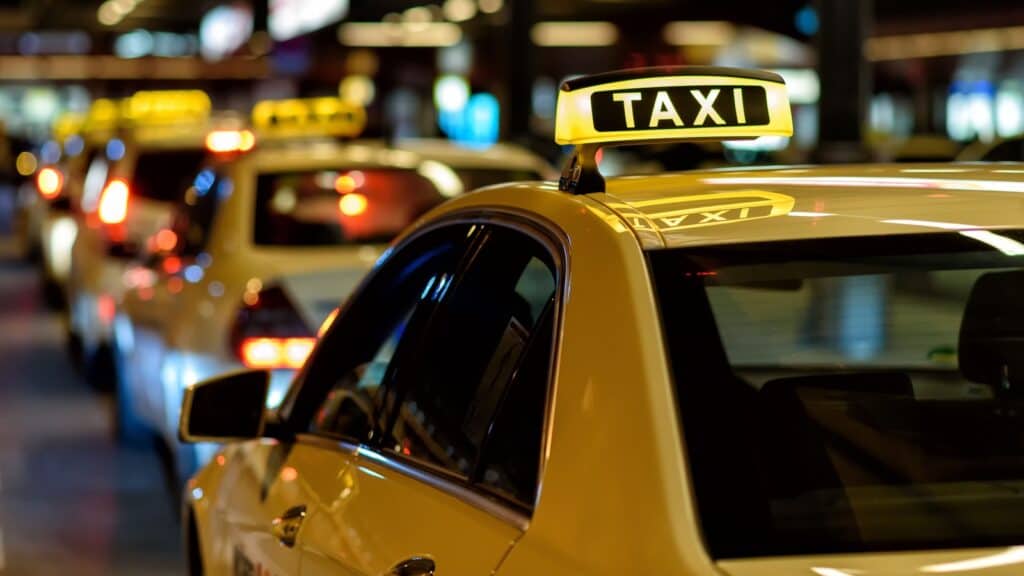
Car ownership is woven into the American identity, with nearly 95% of households owning at least one vehicle by 1990, up from 60% in 1950. The “freedom of the car” narrative amplifies cultural bias against shared mobility, even where viable transit is available.
Even in denser metro cores, where Millennials and Gen Z show stronger multimodal preferences, infrastructural and social norms often tilt behavior back toward automobiles.
Cultural expectations thus compound structural obstacles, reducing the political and social impetus for transit investment.
Transit Investment Requires Long-Term Patience

Transit is a marathon, not a sprint, yet political cycles favor immediate results. Ridership growth often lags behind service improvements by years, requiring consistent, high-frequency service to embed behavioral change, according to habit-formation studies.
Federal and local political cycles of two to four years incentivize projects that offer quick visibility into long-term network maturity. Full benefits of network redesigns materialize only after persistent service and land-use adjustments.
Riders need time to discover, trust, and incorporate transit into routines. Without institutional patience, even well-designed systems fail to achieve their potential, leaving communities stuck with underperforming networks.
Key takeaways

- Infrastructure and design matter: Aging tunnels, sprawling suburbs, and car-oriented urban layouts make transit expensive, slow, and difficult to use outside major cities.
- Policy and funding biases favor cars: federal and local priorities have historically allocated far more to highways than to transit, limiting resources for expansion and improvement.
- Service quality drives ridership: Frequency, convenience, and network alignment with jobs are critical; early underperformance and transfer penalties discourage users.
- Culture and systemic inertia reinforce dependence on cars: High vehicle ownership, political cycles, and public expectations make long-term transit investment and adoption challenging.
Disclosure line:
This article was developed with the assistance of AI and was subsequently reviewed, revised, and approved by our editorial team.
Like our content? Be sure to follow us