11 gentle bedtime ideas for parents whose kids cannot seem to settle down
Some children treat bedtime like an unexpected invitation to negotiate a major international peace treaty. They suddenly need water, another hug, a different stuffed animal, and a detailed discussion about why dinosaurs disappeared. Meanwhile, their exhausted parents start wondering whether anyone in the house will sleep before midnight.
That nightly struggle affects plenty of American families. A 2024 C.S. Mott Children’s Hospital poll found that 27% of parents described putting their young child to bed as difficult, while 23% said worry or anxiety delayed sleep. The same poll found that 19% of parents sometimes or often gave their child melatonin, even though only 15% had discussed sleep problems with a healthcare provider.
Sleep needs vary by age, but the numbers add up quickly. Children ages 6 to 12 generally need 9 to 12 hours of sleep, while teenagers need 8 to 10 hours each night. Yet CDC researchers found that about 35% of American children and adolescents slept less than experts recommend.
The good news? Parents rarely need an elaborate bedtime system with color-coded charts, expensive gadgets, and a minor degree in sleep science. Gentle routines, clear expectations, and a calmer environment can make a real difference.
Choose a bedtime window and protect it

Children often settle more easily when bedtime follows a predictable rhythm. Pick a realistic 20- to 30-minute window instead of chasing an impossibly precise minute every night. For example, you might aim for lights out between 8:00 and 8:20 p.m. That small amount of flexibility allows real life to happen without turning bedtime into a free-for-all.
CDC data shows why regularity matters. In 2020, 84.4% of American children ages 5 to 17 followed a regular bedtime every day or most days. Only 5.9% of children with regular bedtimes felt tired during the day on most days, compared with 13% of children who rarely followed a regular bedtime.
A 2024 Penn State study also found that children with more consistent sleep timing managed their emotions and behavior more effectively. Researcher Adwoa Dadzie put it simply: “Children who had consistent bedtimes were generally able to regulate their behavior and emotions.”
Build a short routine that repeats every night

A bedtime routine should feel pleasantly boring. That sounds like an insult, but predictability gives a child’s brain fewer surprises to process.
Choose three or four calm steps, such as using the bathroom, brushing teeth, changing into pajamas, reading, and saying goodnight. Keep the order mostly the same, even when a babysitter or grandparent handles bedtime.
The Mott poll found that 90% of parents already used some type of bedtime routine. Among those families, 90% included toothbrushing, 67% included a story, and 54% included a bath.
Research on young children also connects consistent routines with earlier bedtimes, shorter settling periods, fewer nighttime awakenings, and longer sleep. The routine does not need twelve stages and its own soundtrack. A short sequence that parents can repeat five or more nights each week usually beats an ambitious routine that collapses by Wednesday.
Create a screen-free landing zone

Tablets and television can keep a quiet child occupied, which makes them extremely tempting at the end of a long day. Unfortunately, quiet does not always mean sleepy. Games, fast-moving videos, group chats, and cliffhanger-filled shows keep the mind engaged when it needs to slow down.
Ever tried to stop watching a series after the episode ends with a dramatic secret? Children do not possess magical immunity to that problem. The American Academy of Pediatrics recommends switching off screens at least one hour before bedtime. A 2024 randomized clinical trial asked families to eliminate screen use for an hour before their toddlers went to bed.
Researchers found preliminary improvements in sleep efficiency and nighttime awakenings. The Mott poll also found that only 41% of parents included turning off devices in their bedtime routine, while 13% left a video or television show playing as their child fell asleep. Charge phones and tablets outside the bedroom, then replace the screen with drawing, puzzles, books, or quiet conversation.
Dim the room before asking the brain to power down
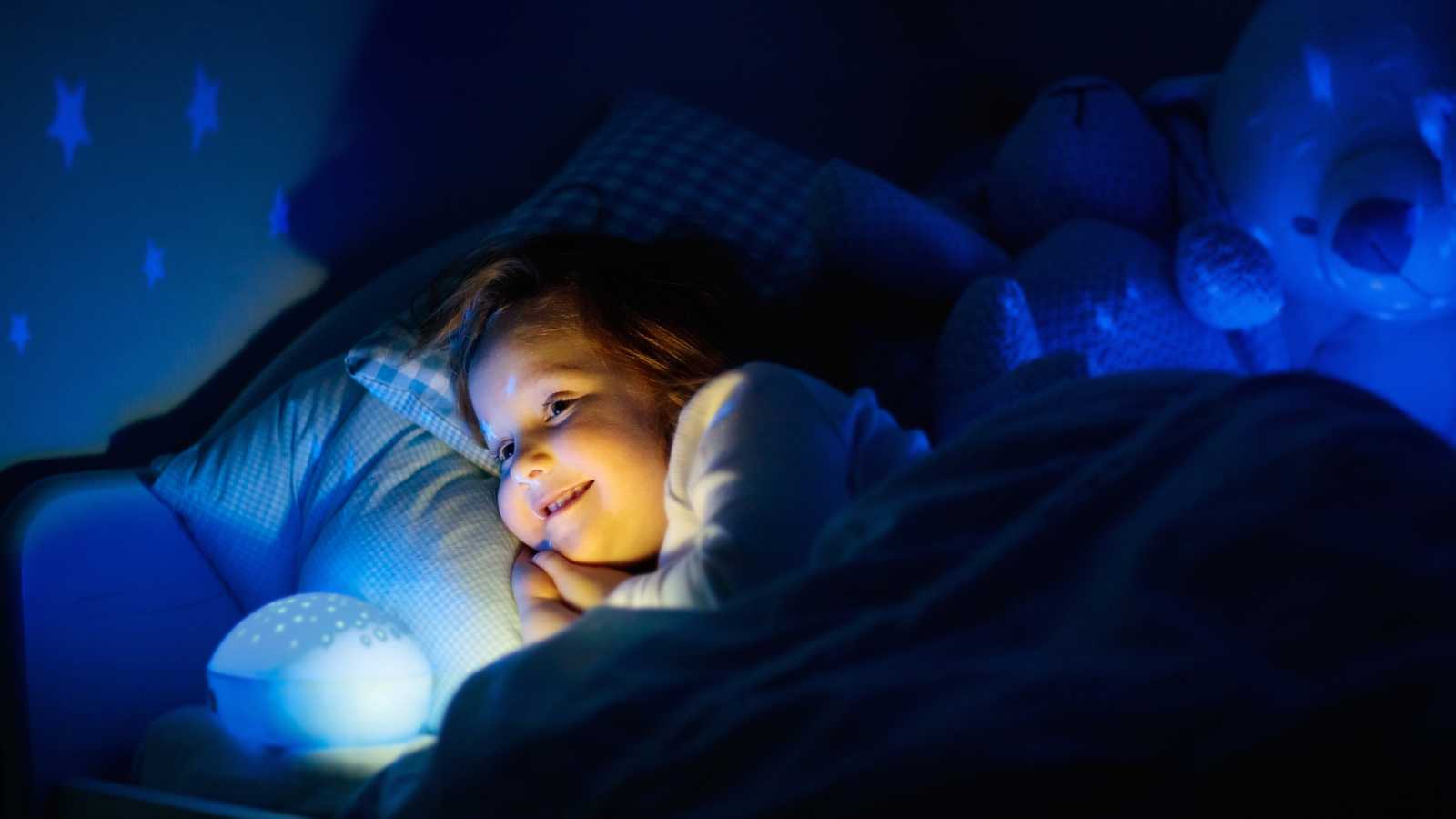
Bright overhead lights tell the body to stay alert. About 30 minutes before bedtime, switch off harsh ceiling lights and use a softer lamp instead. Close curtains, reduce hallway glare, and avoid turning the bathroom into a brightly lit operating room during the final toothbrushing session. This gradual change gives the evening a clear visual signal: activity ends now.
The American Academy of Pediatrics explains that darkness supports the body’s natural melatonin rhythm. The Mott poll found that 61% of parents left a night-light on, 14% cracked the bedroom door for light, and 25% kept the room dark. A frightened child does not need total darkness immediately, of course.
Place a dim night light in the hallway or low to the floor, rather than shining it toward the bed. Comfort matters more than perfection, and nobody earns a parenting trophy for forcing a nervous five-year-old to face a pitch-black room.
Use a warm bath as a transition, not a water park

A warm bath can separate the noisy part of the evening from the quiet part. Keep it calm and reasonably short, then move directly into pajamas and the rest of the routine. Avoid bath toys that encourage shouting, racing, splashing, or recreating a hurricane. The goal is to lower the energy level, not to launch a second play session.
In the Mott survey, 54% of parents included bathing in their young child’s bedtime routine. Research on warm baths and showers also suggests that passive body warming before bed can support faster sleep onset as the body releases heat afterward. Studies involving young children have found that routines combining a bath, massage, and quiet activities improved sleep within a relatively short period.
I like this approach because the bath gives children a physical cue that the day has changed gears. Keep water comfortably warm, supervise closely, and skip the bath on nights when it creates more excitement than calm.
Read something calm and pleasantly predictable

Reading gives children a connection without adding much stimulation. Let a younger child choose between two books, or ask an older child to read one chapter independently. Familiar stories often work especially well because the child already knows what happens.
Bedtime may not represent the ideal moment to introduce a terrifying sea monster, a missing child, or a mystery that ends with “to be continued.” Reading also ranks among the most common American bedtime habits. The Mott poll found that 67% of parents read bedtime stories to young children.
The American Academy of Pediatrics promotes the simple “Brush, Book, Bed” routine, which combines dental care, reading, and a regular bedtime. Reading aloud also creates space for quiet conversation and shared attention. Keep the discussion relaxed, though. A five-minute story can quickly become a 40-minute literary seminar when a child discovers that questions delay lights out. Set the limit before opening the book: one long story, two short stories, or one chapter.
Offer small choices without reopening the whole schedule

Children often resist bedtime because it ends their control over the evening. Small choices can reduce that resistance without handing them full management authority. Ask, “Would you like the blue pajamas or the green ones?” or “Should we read on the bed or in the chair?” Both choices move the routine forward, which gives the child some control while keeping the parent in charge of bedtime.
This approach works better than asking, “Are you ready for bed?” because many children will answer that question with a confident no and possibly a counterproposal. The Mott poll found that 65% of parents said play sometimes or often delayed their child’s sleep. A predictable transition can help children detach from an enjoyable activity without feeling that bedtime arrived as a sudden punishment.
Give a ten-minute warning, then a five-minute warning, and follow through calmly. The choice should concern how the routine happens, not whether the routine happens.
Give worries somewhere to go before lights out

Children often save their biggest questions for the quietest part of the day. School problems, friendship worries, scary news, strange noises, and imaginary monsters can suddenly crowd into their minds. Instead of saying, “There is nothing to worry about,” give the worry a little attention. Ask what feels difficult, acknowledge the feeling, and help the child choose one thing they can do tomorrow.
The Mott poll found that 23% of parents said worry or anxiety sometimes or often kept their young child from falling asleep. The American Academy of Pediatrics recommends regular family routines because predictability can help children feel safe. Try a worry notebook, a small box for written worries, or a five-minute “tell me anything” conversation before the final story.
Keep this conversation outside the bed when possible, so the bed remains connected with rest rather than lengthy problem-solving. What happens when the five minutes end? Reassure the child that the worry can wait safely until morning.
Try one simple breathing or muscle-relaxation game

Relaxation exercises work best when they feel easy rather than clinical. Ask your child to smell an imaginary flower slowly through the nose, then blow out an imaginary candle through the mouth. Repeat the pattern four or five times.
Another option involves squeezing the hands, shoulders, or toes for 3 seconds, then releasing them. Turn it into a quiet game instead of announcing that everyone will now begin “formal nervous-system regulation.” Researchers continue to explore how mindfulness and breathing support children’s sleep.
One Stanford study followed children who learned paced breathing, mindful movement, and stress-management skills through a school program. Children in the program averaged about 74 minutes of sleep per night over the study period, though the full curriculum involved much more than a quick bedtime exercise.
That result does not mean five breaths guarantee an extra hour of sleep. It suggests that children can learn skills to help them calm their bodies. Practice during the daytime first so the exercise feels familiar at night.
Add one safe comfort cue

A familiar blanket, a stuffed animal, a quiet fan, or soft music can signal safety and sleep. Choose one or two cues and use them consistently. Too many items can turn the bed into a toy store, and a toy store rarely encourages peaceful surrender. For children over age 1, a favorite comfort object may ease separation and help them settle after nighttime awakenings.
The Mott poll found that 47% of young children slept with a blanket or stuffed animal, while 33% of parents used white noise. Keep sound machines low and place them well away from the child’s head; the poll’s researchers recommended a level no higher than 50 decibels and a distance of at least seven feet. Infant safety requires different rules.
The American Academy of Pediatrics tells parents to keep pillows, blankets, stuffed animals, and other soft objects out of a baby’s crib during the first year. A bare, firm sleep surface protects babies far better than any fashionable sleep accessory.
Use calm check-ins and know when to seek help

Some children need reassurance after the parent leaves the room. Instead of staying beside the bed until sleep arrives, promise a brief check-in after two minutes, then five, then ten. Return quietly, offer one calm sentence, and leave again. Avoid adding another book, snack, debate, or puppet show. The child should receive reassurance, not a reward for staying awake.
The Mott poll found that 31% of parents often stayed in the room until their child fell asleep, while another 19% sometimes did so. Gradual check-ins can help some families reduce that dependence, but persistent sleep problems deserve medical attention. Contact a pediatrician when a child regularly snores, gasps, pauses while breathing, experiences severe daytime sleepiness, or struggles to sleep despite several weeks of consistent routines.
The AAP also advises parents to discuss melatonin with a pediatrician before giving it to a child. Melatonin may help certain children for short periods, but it should not replace an evaluation, a safe sleep environment, or healthy bedtime habits.
Key takeaway

Children rarely settle because a parent discovers one magical trick. They settle when the evening repeatedly sends the same calm message: play has ended, the environment feels safe, and sleep comes next. Start with a regular bedtime window, a short routine, dim lighting, and a screen-free final hour. Then add one idea at a time, rather than changing everything in a single heroic Monday-night experiment.
Give each change several nights before judging it. Some children adjust quickly, while others test a new routine with the dedication of a highly trained quality-control inspector. Stay warm, stay consistent, and watch for small improvements.
A calmer bedtime does not need to look perfect. It only needs to help everyone move toward rest with fewer negotiations, fewer glowing screens, and perhaps one fewer emergency request for water.
Disclaimer – This list is solely the author’s opinion based on research and publicly available information. It is not intended to be professional advice.
Like our content? Be sure to follow us