12 people who can rightfully claim reparations (and who can’t)
Behind the fierce political debates over historical justice lies a cold, strict legal reality that many completely overlook.
Most people do not realize that international legal bodies look for very specific lines of direct inheritance and measurable economic damage before awarding financial compensation. A Human Rights Watch framework explains that modern reparations typically require victims to demonstrate clear, state-backed harm.
Understanding these legal baselines helps clear up the widespread confusion surrounding modern restitution programs. Clear proof of direct ancestry remains the critical factor in reviewing these requests, so vague historical data results in immediate failure. The breakdown below shows which groups meet these strict legal standards.
Forced labor survivors

Individuals who directly endured unpaid labor under official government policies possess the strongest legal standing for restitution. Their personal freedom was explicitly stripped away by state laws that enriched the national economy at their physical expense. Documentation such as camp registries, official corporate ledgers, and government tax receipts provides undeniable proof of their direct suffering.
This clear paper trail makes it nearly impossible for modern courts to deny the economic exploitation that occurred. These survivors can easily point to specific years of stolen wages and physical trauma inflicted by corporate or state actors. Because their personal experiences are fully documented, their legal claims stand as the most successful examples in global history.
Documented descendants

Family members who can trace their bloodline directly to an enslaved ancestor hold a valid moral and legal claim. They must present birth certificates, census records, or old property deeds that clearly link their family tree to historical bondage, in accordance with the lineage‑based eligibility standards described in recent California reparations debates. This meticulous compilation of family history demonstrates that the economic disadvantages of slavery affected their household wealth over generations.
The generational wealth gap becomes a measurable fact rather than a broad sociological theory when backed by records. These claimants can show exactly how state‑backed laws blocked their grandparents from accumulating property or investing in businesses. Having this unbroken genealogical line separates their specific legal petition from vague, generalized claims made by the public.
Property theft victims

Property owners who lost their homes or farmland to eminent domain without fair‑market‑value compensation have an excellent case. Governments sometimes seize valuable neighborhoods under the guise of urban renewal while targeting specific minority groups. When old land deeds and city maps prove the true value of the stolen real estate, the financial harm becomes clear.
The current family members are often forced to live in poverty because their inheritance was completely stolen. A WTTW/AP feature on Black enclaves lost to development shows how some local reparations programs now calculate current land value and missed housing opportunities when designing compensation for displaced families. This concrete financial calculation makes real estate theft one of the most straightforward ways to secure government compensation.
Assimilation survivors

Children who were forcibly removed from their families to attend state‑run boarding schools have a highly righteous claim. Governments explicitly designed these institutional programs to erase native languages, cultural traditions, and tribal family bonds. Official school rosters, church baptismal books, and medical records provide the necessary proof of this systemic cultural erasure.
The psychological and physical trauma from these schools often has lasting effects on the remaining survivors. CBC News reports details how recent residential‑school settlement agreements provide billions of dollars in compensation to former students, alongside public recognition of the abuses. The clear intent to destroy a community’s identity makes these individuals eligible for comprehensive mental health and financial support.
Redlined descendants
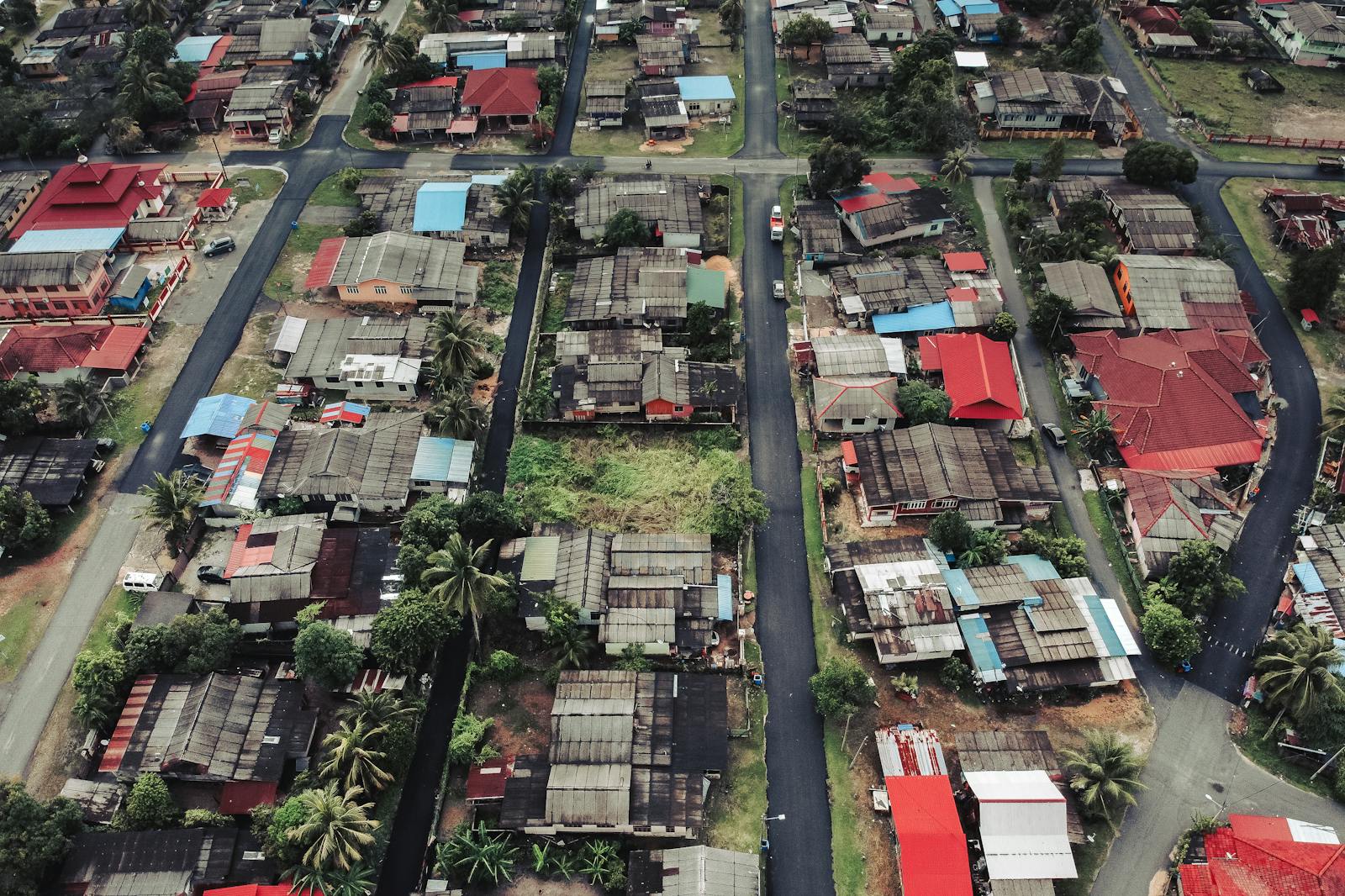
Families who tried to buy homes in neighborhoods explicitly denied bank loans can claim structural damage. Federal housing maps from the mid‑twentieth century clearly show how banks color‑coded specific communities to deny mortgages. When descendants provide rejected loan applications or old family addresses from those areas, the financial bias becomes obvious.
This systemic denial of credit prevented millions of families from building ordinary generational wealth through homeownership. A research brief from UC Berkeley’s School of Public Health finds that, even fifty years after redlining was outlawed, those historic maps still predict disparities in neighborhood wealth, health, and opportunity. This data‑driven approach provides these specific descendants with a strong case for targeted housing grants or direct payouts.
Medical trial victims

Citizens who were subjected to government‑sponsored medical trials without their explicit knowledge or consent deserve full restitution. Historical programs often targeted vulnerable populations like prisoners, soldiers, or low‑income patients for dangerous testing. Medical files, official military orders, and secret government memos usually provide the undeniable proof of these human rights violations.
The physical injuries and long‑term health complications from these hidden tests often pass down to children. An article in the International Review of the Red Cross describes compensation schemes created for victims of pseudo‑medical experiments, including structured payments and medical support for surviving participants. These victims can rightfully demand full coverage for ongoing medical bills alongside substantial pain and suffering compensation.
Undocumented claimants

Individuals who cannot provide any documentary proof linking their family tree to historical atrocities cannot rightfully claim compensation. Simply belonging to a specific racial or ethnic group is not enough to pass strict court scrutiny. Legal frameworks require a clear line of direct inheritance to ensure that funds reach the correct households.
Without census records, birth certificates, or old property documents, a petition will be dismissed immediately. Broad generalizations about historical suffering do not satisfy the specific demands of estate law or tort litigation. This standard keeps public funds from being distributed based on assumptions rather than verifiable historical facts.
Recent voluntary immigrants

People who moved to a country long after systemic historical injustices ended have no basis for an ancestral claim. For example, a modern immigrant from a sovereign African nation cannot claim American slavery reparations for themselves. Their ancestors did not experience the specific state‑backed laws that built the local wealth gap over the centuries.
Their family history belongs to a completely different national system with its own separate socioeconomic timeline. While they may face modern challenges, they did not inherit the specific generational trauma of local historical systems. This clear distinction prevents the misallocation of resources meant for families who suffered under regional laws.
Settled case petitions

Claimants who previously signed binding waivers in exchange for government payouts cannot file additional claims for the same event. Legal agreements often include specific clauses that permanently release the state from any future financial liability. Once a person cashes a settlement check, the court considers the case closed.
Trying to reopen a settled case requires proving that the original agreement was signed under extreme duress. Most judges will refuse to hear these duplicate petitions because the rule of law respects final contracts. This prevents individuals from receiving multiple rounds of compensation for a single historical occurrence.
DNA reliance alone

People who use commercial genetic tests to prove their connection to historical atrocities face immediate rejection in court. A simple pie chart showing a percentage of regional heritage does not establish a legal line of inheritance. These consumer tests cannot identify specific ancestors, point to exact dates, or name individual slaveholders.
Legal bodies require a paper trail of birth certificates and census data to validate a financial claim. A feature in The Lead explains that consumer DNA tests can help people find distant relatives but cannot, on their own, meet strict legal standards for eligibility for reparations. This rule keeps corporate marketing data from replacing the rigorous standards of forensic genealogy.
Unaffected group members

Individuals belonging to communities that enjoyed full legal protection and property rights throughout history cannot claim damages. While individual families may have experienced poverty, their struggles were not caused by explicit government laws. The legal system distinguishes between general economic misfortune and state‑sponsored campaigns of discrimination and asset theft.
Without a specific law that legally barred their ancestors from buying land or working in certain jobs, there is no tort. Poverty alone does not create a right to restitution unless the state actively engineered that poverty through law. This standard keeps the definition of reparations focused strictly on correcting official government misconduct.
Prior payout heirs

Family members whose grandparents received land grants or cash payouts during their lifetimes cannot claim more money today. If a government successfully fulfilled its restitution promises decades ago, the historical debt is legally resolved. The current generation cannot demand a second payout simply because the original wealth was spent or lost.
The law treats the original payment as a complete remedy for the initial historical injustice that occurred. Once the state returns stolen assets or pays an equivalent value, the legal obligation is fully satisfied. This rule ensures that modern restitution efforts focus strictly on unresolved historical crimes.
Disclaimer – This list is solely the author’s opinion based on research and publicly available information. It is not intended to be professional advice.
Like our content? Be sure to follow us.