12 simple ways to keep your cat off the kitchen counters for good
Have you ever walked into your kitchen only to find your cat proudly staring down from the counter? It’s a battle millions of American pet parents lose daily. Chewy research notes that an average 18-inch housecat can leap 8 to 9 feet vertically.
If you want to protect your dinner and your cat’s safety, you have to outsmart their natural urge to climb. Using spray bottles destroys the trust you have built with your furry friend. Here are 12 simple ways to keep your counters cat-free.
Stop the intermittent jackpot

Cats love a scavenger hunt, and your kitchen is the ultimate prize zone. If they find a single crumb of tuna once out of twenty tries, they will keep jumping. This intermittent reinforcement loop acts exactly like a slot machine payout.
The Pet Professional Guild warns that it is unrealistic to expect hungry pets to ignore unattended food.
Give them an official yes spot
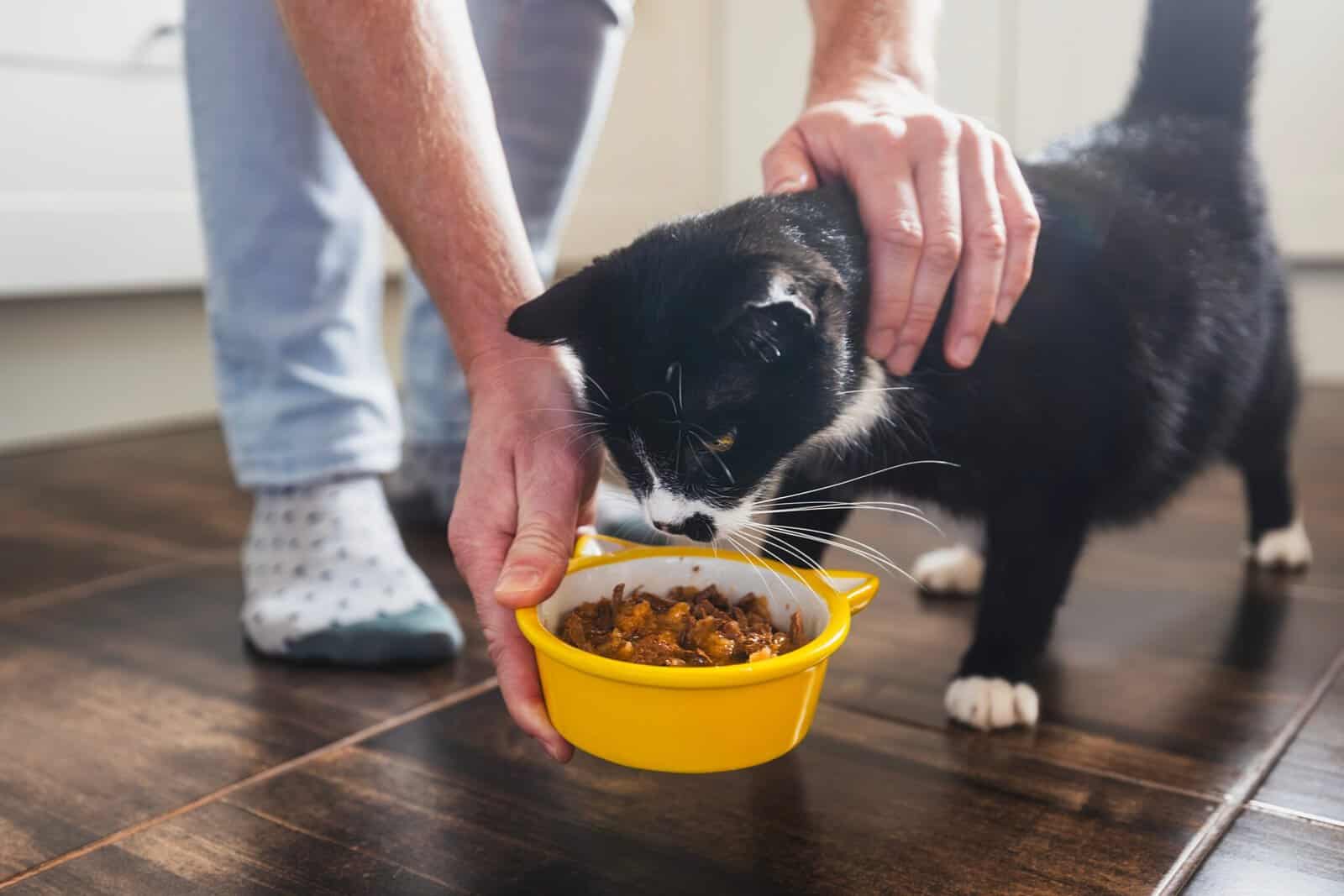
To stop your cat from climbing on off-limit spots, you must give them an approved vertical alternative. Jackson Galaxy famously teaches that for every “no,” we must provide a “yes.” Set up a sturdy cat tree or wall shelf right near the kitchen.
Offering treats on this new perch teaches your cat that their own furniture is way better than your counter.
Make the counters sticky

Felines are incredibly picky about what touches their sensitive paw pads. Try putting double-sided sticky tape on the areas where your cat usually lands. Stick this tape on removable placemats to easily clear the workspace when cooking. Once they realize jumping up results in a sticky surprise, they’ll quickly lose interest.
Let a motion-activated blaster do the work

Training your cat shouldn’t turn you into the bad guy. Using a motion-activated air canister like Ssscat is a brilliant, hands-free way to protect your kitchen. The device uses an infrared eye to detect motion and shoots a harmless puff of compressed air.
Because the scary air puff happens when you are away, your cat blames the counter, not you.
Lay down knobby plastic runners
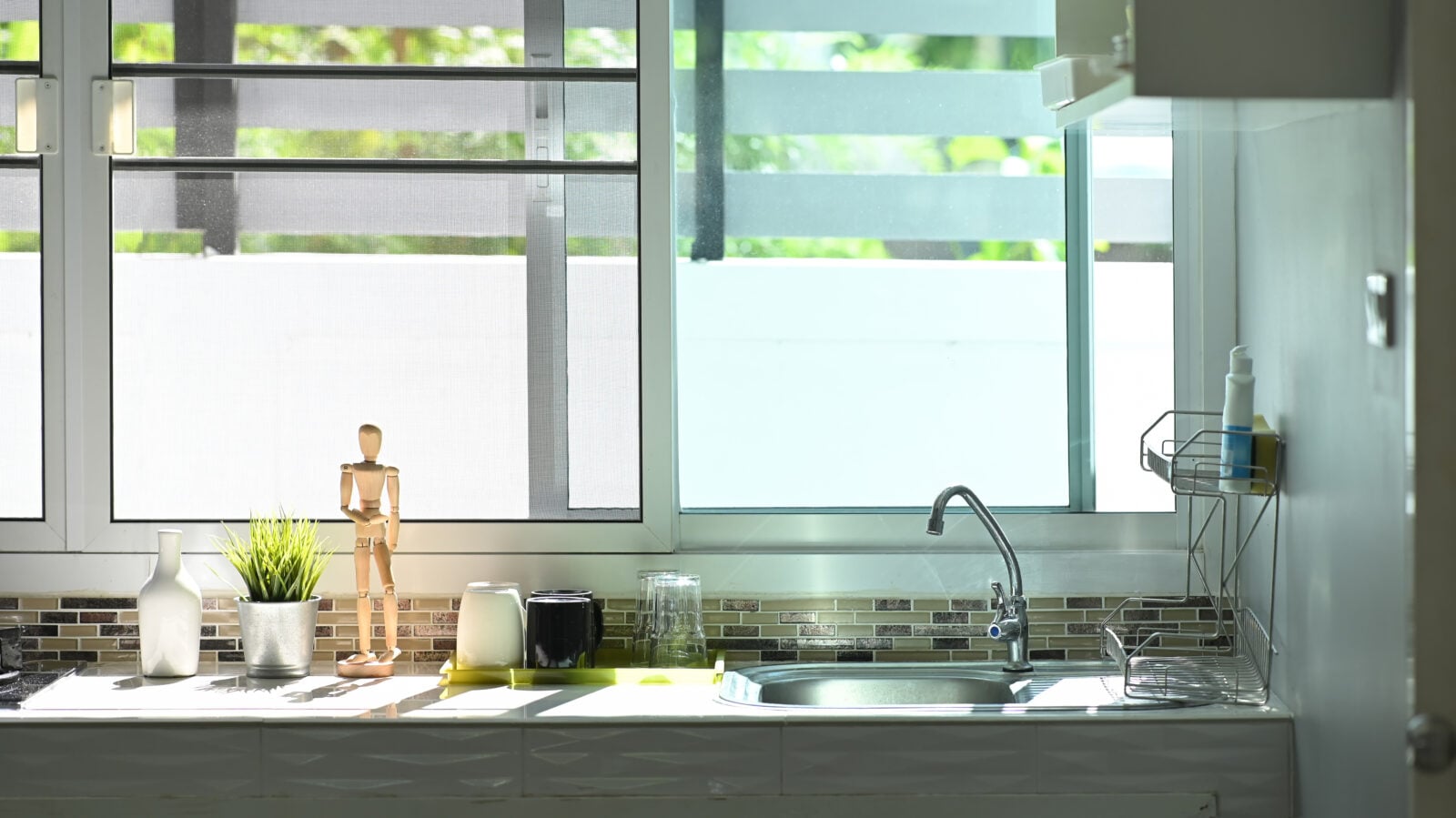
If you don’t like sticky tape, you can use texture to create a natural barrier. Lay an inexpensive plastic carpet runner upside down on your countertop. The tiny, flexible plastic spikes are totally harmless but feel uncomfortable under a cat’s soft paws.
Most cats will jump up, feel the weird bumps, and immediately hop back down.
Squelch the leaky faucet lure
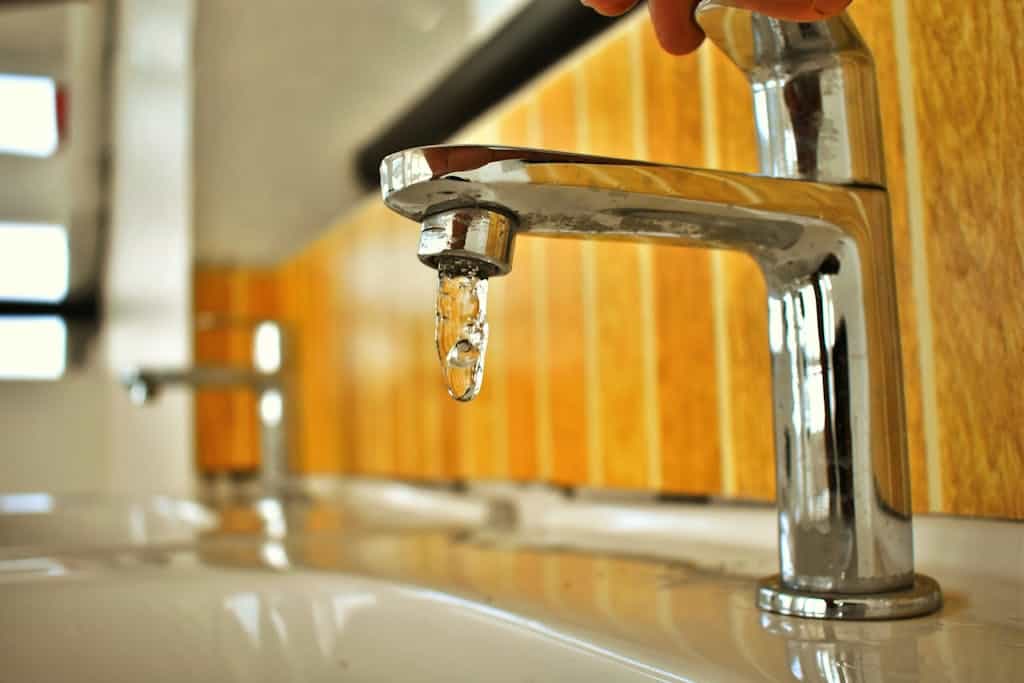
Many cats are obsessed with running water and will climb to great heights to find it. A dripping faucet is basically a blinking neon sign inviting your cat into the sink. Tighten up those leaky fixtures and place a bubbling cat fountain on the kitchen floor. Giving them access to fresh water on ground level makes the high sink lose its appeal.
Block the window television

Cats often use the kitchen counter as a launchpad to watch the great outdoors. If they can see birds through the window, they’ll climb up to get a closer look. Install a temporary window blind or privacy film to block the view. You can then place their favorite perch in front of a different window to keep them happy.
Split up their daily meals
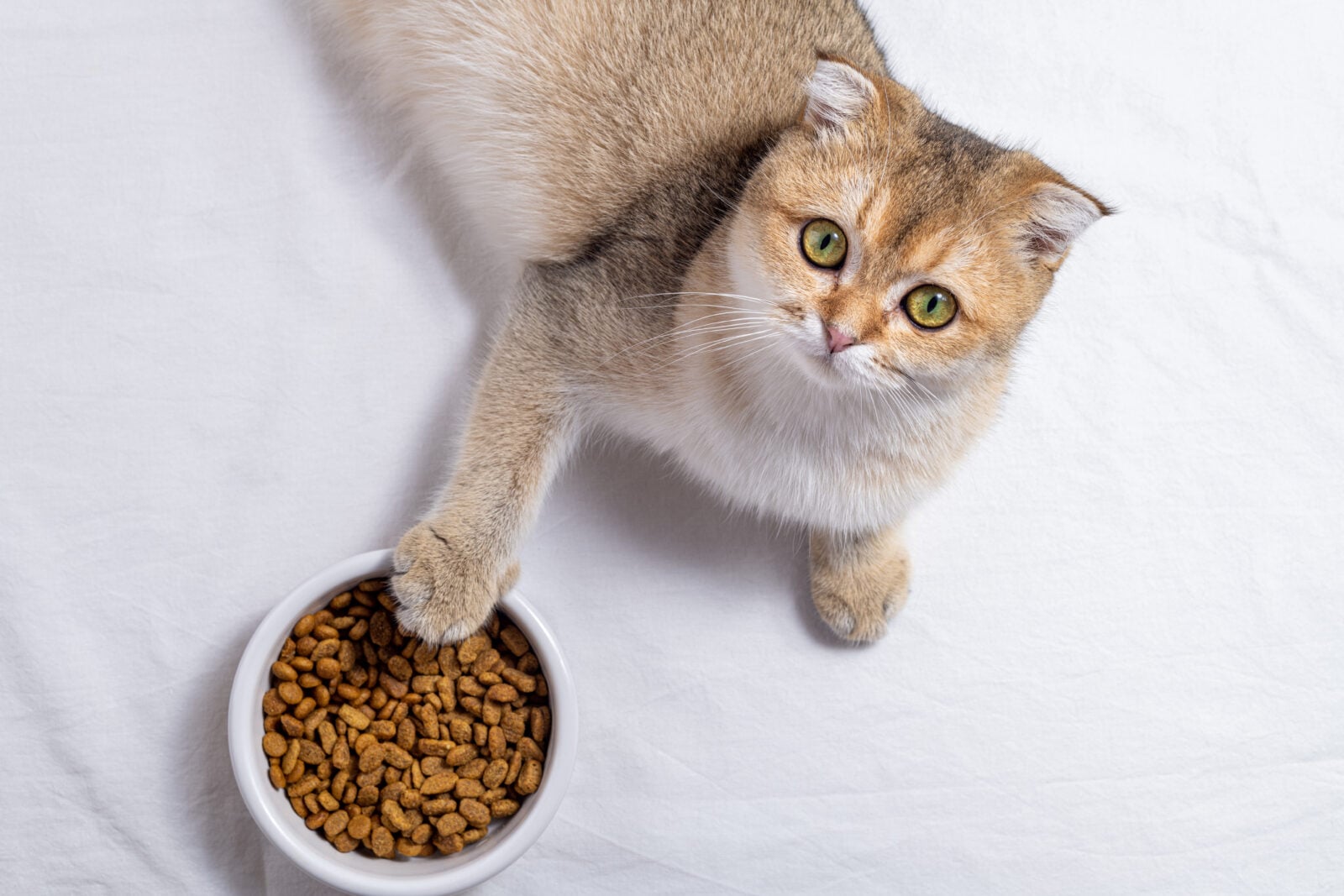
A hungry cat is a highly motivated, desperate little scavenger. If your cat is constantly looking for snacks, feeding several small meals can help. You can also feed them using interactive slow-feeder puzzles. Keeping their tummies full prevents them from hunting on your stove.
Rearrange your step-up furniture
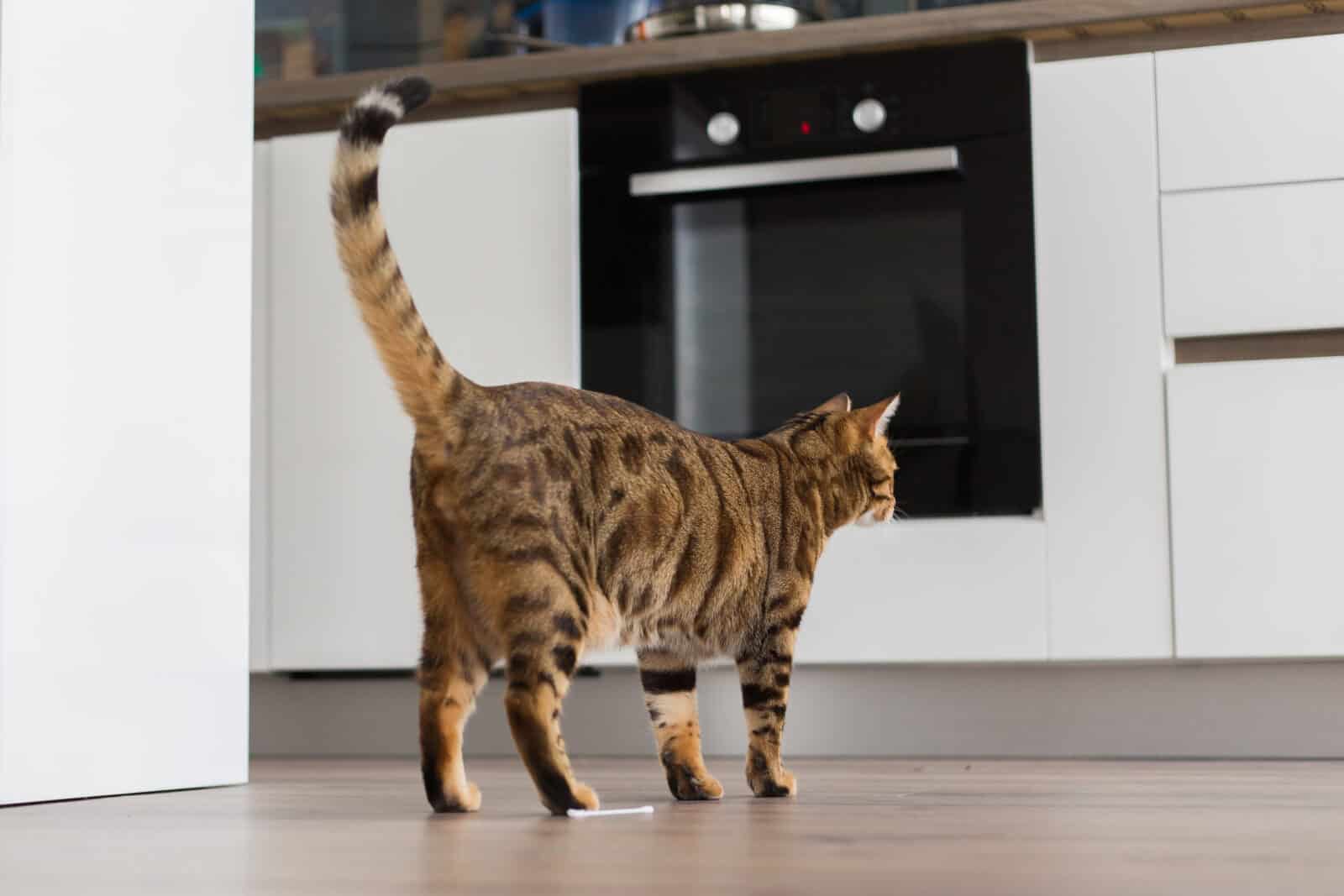
Our clever pets almost always look for the easiest way to climb up high. A dining chair, trash can, or kitchen desk can easily act as a built-in staircase. Pull those chairs away from the counter and keep the surrounding spaces clear.
Without a handy stepping stone, many cats will think twice before attempting a giant leap.
Wash down surfaces with citrus scents

While we love the smell of fresh oranges, cats find citrus absolutely offensive. Wipe down your counters with a pet-safe lemon or orange-infused cleaner to create a scent barrier.
Always wipe the counters dry immediately so your pet doesn’t accidentally get cleaner on their paws. This simple sensory trick makes your prep area smell great to you, but terrible to them.
Practice target mat training
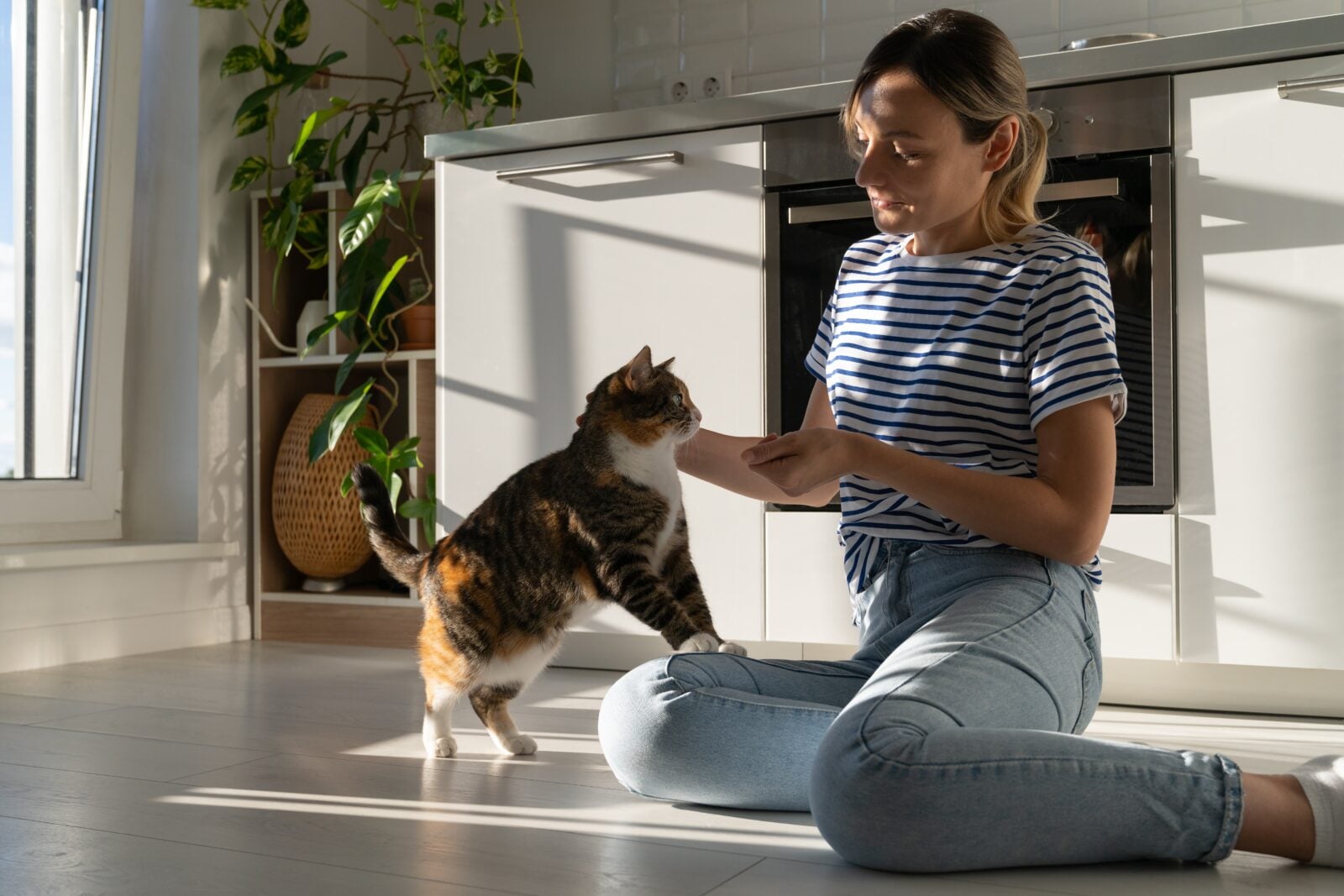
Teaching your cat what to do, rather than what not to do, is a game-changer in training. You can use the classic ABC model of behavior to train your cat to sit on a designated floor mat.
Whenever you prepare food, reward your cat only when all four paws are on the mat. Because they can’t be on the floor mat and the counter at the same time, the mat wins.
Run down their battery with active play

Sometimes, a cat jumps on the counter simply because they are bored and want your attention. Even negative attention, like yelling, can accidentally reward them for jumping.
Commit to a solid routine of interactive play using feather wands right before you cook. A tired, happy cat is much more likely to snooze on the rug than surf your counters.
Key takeaway

Keeping your cat off the counters isn’t about being bossy; it’s about channeling their natural instincts safely. Instead of using scary spray bottles that ruin your bond, combine clever management with fun vertical alternatives.
With a little patience, consistent rules, and the right target training, you’ll reclaim your kitchen for good.
Disclaimer – This list is solely the author’s opinion based on research and publicly available information. It is not intended to be professional advice.
Like our content? Be sure to follow us