12 things that would have gotten you stared at (or worse) in the 1950s
The 1950s sold America a shiny picture of normal, and that picture came with a pretty ruthless rulebook. Gallup found that only 4% of Americans approved of Black-white marriage in 1958.
Gallup also found that 75% of Americans said religion was “very important” in 1952, and that 49% had attended worship in the past week in 1958. The Bureau of Labor Statistics adds another clue, because only 33.9% of women participated in the labor force in 1950, and historian Elaine Tyler May says the era promoted a white, middle-class suburban family as the national ideal.
That polished image left very little room for anybody who stepped outside the script. Jim Crow laws shaped daily life across the South, and the Lavender Scare pushed thousands of LGBTQ Americans out of government work. So when people ask what would have gotten you stared at in the 1950s, the honest answer sounds less nostalgic and more blunt, almost anything that challenged the approved idea of race, religion, family, gender, or politics.
Interracial dating or marriage

Interracial romance could stop a room cold in the 1950s, and in many places it could invite the police, too. Gallup found that only 4% of Americans approved of marriage between Black and white people in 1958, which still feels jaw-dropping today. That same year, Richard and Mildred Loving married in Washington, D.C., returned to Virginia, and officers arrested them under that state’s anti-miscegenation law.
The Supreme Court did not strike down those laws nationwide until 1967, so yes, love really had to clear a legal obstacle course.
Sitting in a whites-only space

Using the “wrong” bus seat, waiting room, lunch counter, or restroom could bring far more than a hard stare. PBS notes that Jim Crow laws controlled schools, parks, libraries, drinking fountains, restrooms, buses, trains, and restaurants, and “Whites Only” and “Colored” signs constantly reinforced that order. The Library of Congress points out that the civil rights era had already begun to crack that system, but everyday segregation still dominated huge parts of American life through the 1950s.
In plain English, many Black Americans could not even move through public space freely without somebody deciding they had crossed a line.
Being openly gay

Open queerness could cost you your job, your housing, your safety, and sometimes your whole social circle. The National Archives says historians estimate that somewhere between 5,000 and tens of thousands of gay workers lost jobs during the Lavender Scare, and a 1950 Senate report labeled homosexuals “unsuitable” for federal employment. That language did not just sit on paper; it drove real purges and real fear.
Today, Gallup finds that 68% of Americans support same sex marriage, which shows how far public opinion has moved, even if the culture still argues about LGBTQ rights.
Living with a partner before marriage

Cohabiting before marriage would have looked scandalous to a lot of 1950s neighbors, landlords, churches, and parents. Family scholars say cohabitation in the United States stayed rare through the early postwar decades and then expanded sharply later, especially from the late 1960s forward. The Census Bureau reported that about 8% of the household population lived in cohabiting-couple households in 2020.
Pew found that large majorities of young adults now say unmarried couples living together is acceptable. That shift tells you a lot, because what now reads as ordinary once carried a giant neon sign that screamed: “improper.”
Having a baby outside marriage

Single pregnancy triggered some of the harshest moral judgments of the decade, especially for white middle-class girls. PBS says mainstream culture treated being single and pregnant as “totally unacceptable,” and families often pushed girls out of school or sent them away to hide the pregnancy. Yet the behavior that culture condemned never disappeared, because federal education data show that the birth rate for unmarried women ages 15 to 44 stood at 14.1 per 1,000 in 1950.
Today, the Census Bureau estimates 9.8 million one-parent households in 2023, up from 1.5 million in 1950, which shows how dramatically family life has changed, even though public judgment never fully packed its bags.
Getting divorced

Divorce carries a social mark that many people today underestimate. The 1960 Census found a record 67.4% of Americans aged 14 and older were married, up from 66.6% in 1950, which suggests how strongly the culture pushed marriage as the default adult destination. Later analysts note that fewer than 20% of couples who married in 1950 divorced, far below the rates later generations would see.
So if you divorced in the 1950s, people often did not treat you like someone making a hard personal choice; they treated you like someone who had stepped outside respectable life.
Staying single for too long

Remaining single into your late twenties or beyond could spark an exhausting parade of side comments, pity, and unsolicited matchmaking. Federal education data show that the median age at first marriage in 1950 was 23 for men and 20 for women, indicating that the culture expected people to marry young. By 2025, the Census Bureau says the median age at first marriage had climbed to 30.8 for men and 28.4 for women.
That jump matters because a 28-year-old single woman in the 1950s did not read as “taking her time,” she often read as a problem somebody felt invited to solve.
A married woman choosing a career over homemaking

A married woman who openly put her career first could make many people very uncomfortable in the 1950s. The BLS reports that only 33.9% of women were in the labor force in 1950, and PBS notes that American society in that era centered on marriage, children, and the family ideal. At the same time, that ideal never described every woman, because many Black women and working-class women worked outside the home out of necessity, not rebellion.
I always find this one revealing, because the decade sold the smiling housewife as the standard model, even though real women kept living more complicated lives.
A woman wearing pants or jeans in the wrong setting

A woman in slacks or jeans could still turn heads, especially in schools, courtrooms, churches, and other “proper” spaces. Britannica notes that women long wore pants mostly out of public view, and a history of women’s fight to wear pants records that a New York judge threw a woman out of traffic court in 1960 for not dressing “properly.” Denim carried its own baggage, too, because FIT explains that 1950s culture linked jeans with teenage rebellion and delinquency, and some schools banned them.
Meanwhile, Gallup says modern casual dress now dominates many U.S. workplaces, which makes the old panic over a pair of pants feel almost comically fragile.
Showing off visible tattoos

Visible tattoos could pull instant judgment in the 1950s, especially on women. The Brick Store Museum says tattooing had an established place in American society by that decade, but the majority still disdained it, and it adds a detail that really says the quiet part out loud: many parlors refused to tattoo women unless they were over 21 and accompanied by their husbands. That kind of gatekeeping suggests people did not treat tattoos as self-expression; they treated them as a moral warning label.
Today, Pew reports that 32% of Americans have at least one tattoo, so the old side eye has lost a lot of ground, even if grandma still acts like a forearm tattoo signals the fall of Rome.
Skipping church, or saying you did not believe
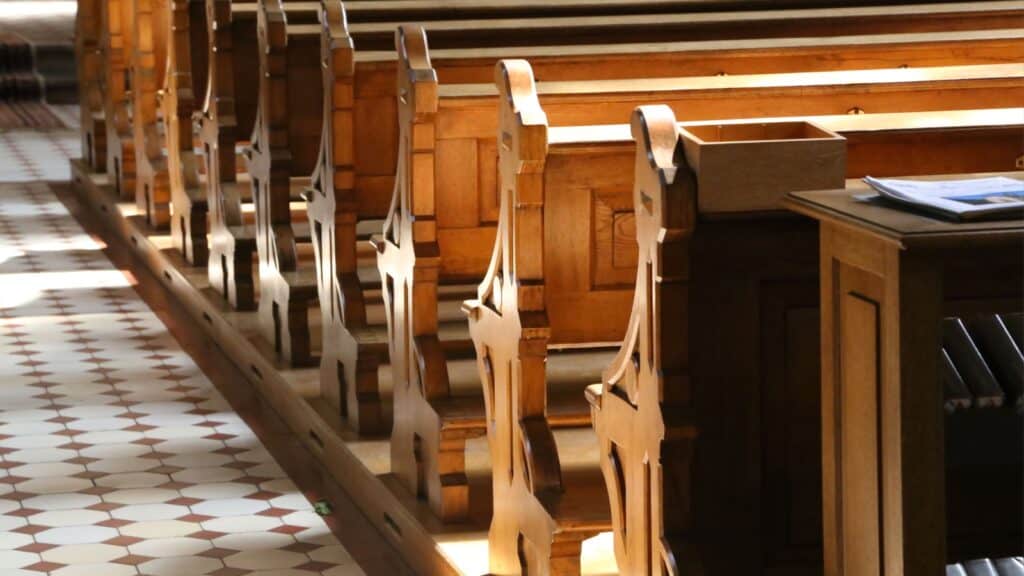
Open religious indifference stood out much more in the 1950s than it does now. Gallup says 75% of Americans called religion very important in 1952, more than 9 in 10 identified as Christian in the late 1940s and 1950s, and 49% reported attending services in 1958. By contrast, Gallup says only 32% reported attending services in 2023, and the share who call religion very important dropped to 47% in 2025.
So if you shrugged at church in the 1950s, people often did not read that as a private belief; they read it as a public statement about your character.
Sounding too left-wing during the Red Scare

Expressing sympathy for communism, or even sounding a little too far left, could wreck careers with frightening speed. The Miller Center says McCarthy’s fearmongering created a “climate of fear and suspicion” across the country between 1950 and 1954, and the National Archives shows that federal loyalty screening had already started before that.
The Library of Congress adds that Red Channels became a blacklist tool on radio and television, meaning accusations alone could slam doors shut. Talk about a decade that preached freedom and then panicked when people used it.
Key takeaway

The big lesson here feels pretty simple. The 1950s did not just reward conformity; they aggressively monitored it, especially around race, sexuality, religion, marriage, gender, and politics. Some people were only stared at, but many others were fired, arrested, shunned, or pushed out of public life altogether.
That is why this topic still matters: when we look back at “what would have gotten you stared at in the 1950s,” we are really looking at the social machinery that decided who counted as normal and who had to pay for being human in the wrong way.
Disclaimer: This list is solely the author’s opinion based on research and publicly available information. It is not intended to be professional advice.
Like our content? Be sure to follow us.