12 traditional crafts vanishing from modern life
Not long ago, fixing your shoes or repairing a watch meant visiting someone down the street—and now those people are almost gone.
Remember when fixing something meant taking it to a shop down the street rather than ordering a replacement on Amazon? We are living through a massive shift where speed and convenience often trump the slow, deliberate beauty of handmade goods, leaving many skilled trades in the dust. It is a quiet disappearance that chips away at our connection to the objects we use every day.
While we scroll through endless digital feeds, the tactile skills that built our history are fading into obscurity, often without us even noticing they are gone until it is too late. From the rhythmic clanging of a blacksmith’s hammer to the delicate patience of a watchmaker, these professions are becoming the ghosts of a bygone era. We are trading centuries of passed-down wisdom for the instant gratification of mass-produced, disposable items.
Neon Sign Making

Before LED screens lit up our cities with blinding digital ads, hand-bent neon tubes gave our downtowns a warm, buzzing glow that felt alive. Bending glass tubes over a gas flame to create letters and shapes is a dangerous, complex art form that requires years of practice to keep the glass from shattering.
The replacement of neon with LEDs has saved energy, but it has cost us the unique, vibrating ambiance that defined American nightlife for decades. There is a coldness to modern digital signs that lacks the human imperfection and artistry of a glass bender’s work. We are trading the soulful hum of electrified gas for the sterile pixels of a computer monitor.
The Village Cobbler

There was a time when a good pair of boots was an investment for life, maintained by a local expert who knew leather like the back of their hand. Today, cheap materials and fast fashion have made it easier to toss worn shoes in the trash than to have them resoled or repaired. IBISWorld reports that the number of shoe repair businesses in the U.S. has plummeted by 1.6% per year from 2019 to 2024.
Finding someone who can properly reconstruct a heel or stretch a leather upper is becoming a genuine treasure hunt in most American towns. The smell of polish and the whir of the finishing machine are being replaced by the squeak of plastic sneakers that were never meant to last more than a season. We are losing not just a service, but the philosophy that things should be built to endure.
Master Cooperage

The ancient art of making wooden barrels is a physical, demanding trade that requires a keen eye for geometry and the strength to wrestle oak staves into perfect circles. While whiskey and wine industries still need barrels, much of the production has moved to automated factories or metal alternatives that lack the soul of the handmade vessel. According to a recent survey 403 by Wine Business Monthly, only 13% of winemakers planned to increase their barrel purchases, reflecting a shift toward alternatives and cost-cutting measures.
A true cooper does not just assemble wood; they understand how the grain, the toast, and the interaction with air will shape the flavor of the liquid inside for years to come. It takes a long apprenticeship to master the “raising” of the barrel, a skill that machines can mimic but never quite replicate with the same intuition. Without these artisans, we risk losing the subtle, human element that defines our favorite aged spirits.
Traditional Blacksmithing
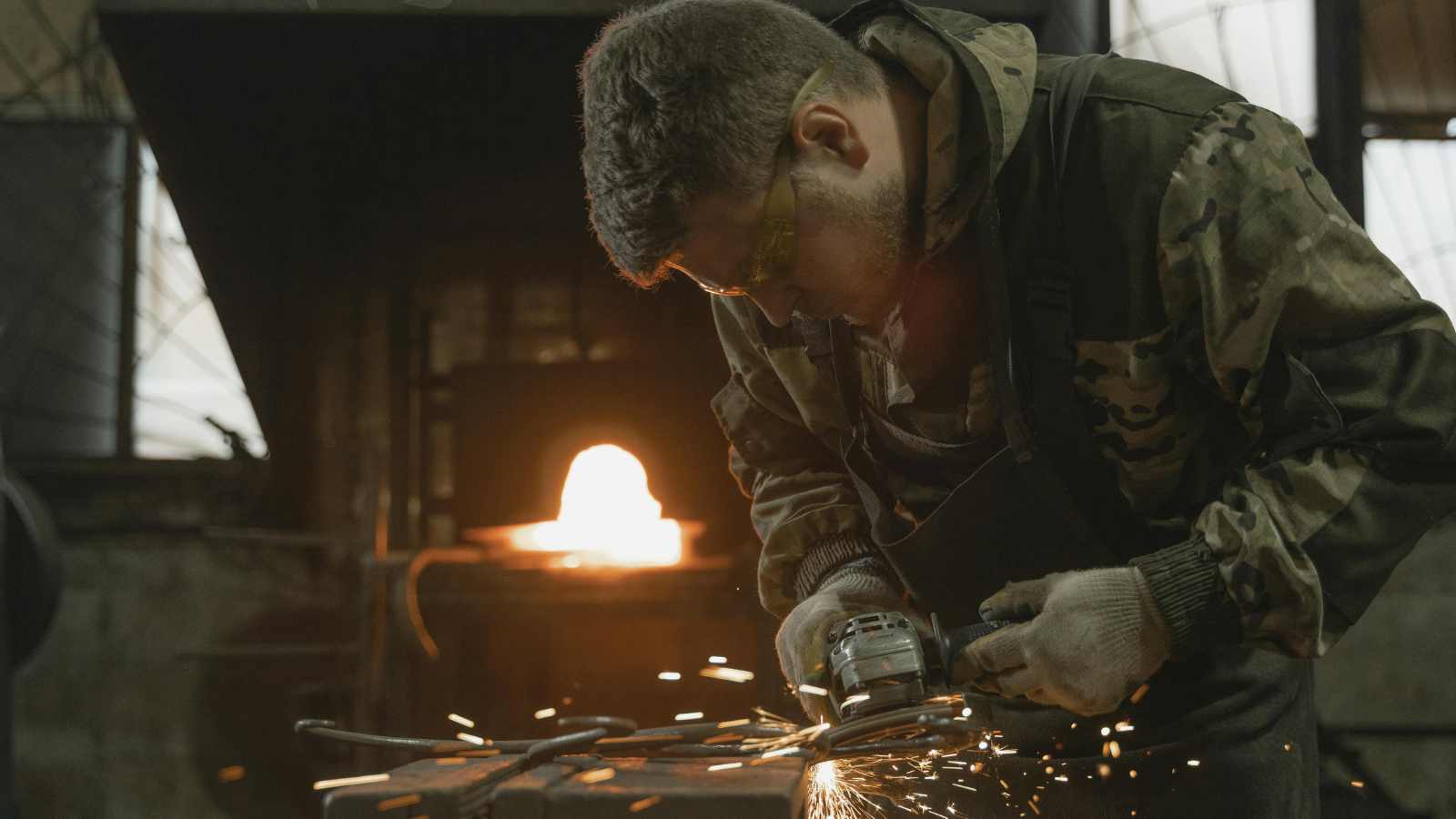
The image of a business owned by a village smithy standing under a spreading chestnut tree is now primarily the stuff of poetry and historical reenactments rather than a part of daily life. While hobbyists keep the art alive, the working blacksmith who makes essential tools, hinges, and gates for a community is a rarity in the modern scene.
Modern fabrication shops use welding torches and plasma cutters to do in minutes what a blacksmith would spend hours doing at the anvil. There is a specific magic in watching rigid iron turn to clay in the fire, shaped by nothing but heat, muscle, and a hammer’s blow. The resulting pieces have a character and durability that cold, industrial steel cannot match.
Horology And Watchmaking

We live in an age where our phones tell us the time, the weather, and our heart rate, making the intricate mechanical wristwatch feel like a beautiful relic. The patience required to assemble hundreds of microscopic gears and springs is a discipline few young people rush to learn in a digital-first economy. The Horological Society of New York notes that while the U.S. once boasted over 40 watchmaking schools in the 1950s, fewer than 10 remain today.
When a mechanical watch breaks now, the waiting list to see a qualified repairperson can stretch for months because there are not enough hands to do the work. It is a microscopic world of precision where a single grain of dust can bring the whole mechanism to a grinding halt. Losing these skills means losing the ability to maintain the tiny, ticking heartbeats of engineering history.
Hand Bookbinding

In a world dominated by e-readers and paperback glue that cracks after two reads, the sturdy elegance of a hand-bound book is a fading luxury. The process involves sewing pages together with linen thread, rounding the spine, and covering it in leather or cloth with care that ensures the book outlasts its owner. Bureau of Labor Statistics data highlights this shift, projecting a continued decline in printing- and binding-related roles as digital media continues to dominate the market.
You can feel the difference when you hold a hand-bound volume; it opens flat, the pages turn smoothly, and the cover feels like a part of the book rather than just a wrapper. We are moving toward a future where “books” are just temporary files on a screen rather than physical objects to be cherished and passed down. The permanent, physical record of our stories is becoming more fragile as we rely on servers instead of stitches.
Thatching

The iconic cottage roof made of dry vegetation is perhaps the ultimate symbol of a cozy, pre-industrial life that lived in harmony with the seasons. It requires a master thatcher to layer reeds or straw in a way that is waterproof, windproof, and able to last for decades without a single nail. This craft is so niche that homeowners often have to import specialists from overseas to maintain their historic properties.
Modern roofing materials are faster to install and require less maintenance, pushing this eco-friendly and beautiful tradition to the very fringe of construction. A thatched roof is a living thing that changes with the weather and ages gracefully, unlike asphalt shingles, which degrade over time. Seeing a freshly thatched roof today feels less like construction and more like witnessing a piece of living art.
Wheelwrighting

Building a wooden wheel is not just about making something round; it is about engineering a structure that can carry heavy loads over rough terrain while absorbing shock. The wheelwright must understand the properties of elm, oak, and ash, fitting them together with such precision that the wheel holds itself together under immense pressure. With the advent of rubber tires and steel rims, the need for wooden wheels has vanished, leaving this skill alive only in museums and carriage driving circles.
It is a complex dance of physics and carpentry that was once essential to movement, trade, and travel across the entire continent. Watching a wheelwright fit a hot-iron tire onto a wooden wheel—shrinking it as it cools—is a spectacular display of thermal dynamics and timing. We forget that for thousands of years, civilization literally rolled forward on the backs of these wooden masterpieces.
Millinery

There was a time when leaving the house without a hat was considered a breach of etiquette, and the milliner was a key figure in every fashion district. Today, hat-making has primarily been reduced to mass-produced baseball caps or beanies, lacking the structural elegance of block-felt or straw creations. The detailed hand-sewing and steam-molding techniques used by traditional milliners are now reserved for high-society events or costume design.
A true milliner sculps fabric and straw into shapes that defy gravity, balancing proportion and style to frame a person’s face perfectly. We have traded the personal expression of a custom hat for the uniformity of “one size fits all” headwear. The decline of this craft strips away one of the most expressive and individualistic layers of our daily wardrobe.
Stained Glass Glazing

While we still see stained glass in churches, the residential and commercial use of leaded glass windows has largely disappeared in favor of clear, insulated panes. The glazier cuts colored glass into intricate shapes and fits them into lead channels, creating a mosaic that transforms sunlight into a painting. Modern energy efficiency standards have made single-pane leaded glass impractical for most new builds, pushing this art form out of architecture.
The interplay of light and color that stained glass provides changes throughout the day, giving a room a shifting, dynamic atmosphere. It requires a steady hand to cut glass without breaking it and patience for soldering that few modern builders can afford to indulge in. We are prioritizing thermal insulation over the visual poetry that colored light brings into our interior spaces.
Hand Weaving

Before industrial power looms took over, cloth was made by throwing a shuttle back and forth across a wooden frame, a rhythmic process that created durable, unique fabrics. The connection between the weaver and the cloth is intimate, with every thread passing through human fingers before becoming part of the whole. The EPA estimates that 17 million tons of textile waste ended up in landfills in 2018, a symptom of a fast-fashion culture that has replaced quality hand-woven goods.
Hand-woven textiles have irregularities and textures that give them character, unlike the perfectly uniform, often lifeless sheets produced in modern factories. We have become so used to cheap, disposable clothing that we have forgotten what it feels like to wear something made with intention. The loss of hand weaving disconnects us from the very fibers that protect us from the elements.
Basketry

Basket making is one of the oldest human crafts, predating even pottery, yet it is one of the few that cannot be fully mechanized by heavy industry. It relies entirely on the tension and friction of natural fibers, woven by hands that know exactly how much pressure to apply. Despite its ancient roots, the availability of cheap plastic containers has decimated the local markets for hand-woven willow and oak baskets.
A plastic bin might last forever in a landfill, but it will never have the strength-to-weight ratio or the natural beauty of a well-made basket. This craft connects the maker directly to the land, often requiring them to harvest and prepare their own materials from the local environment. When we lose basketry, we lose a sustainable, biodegradable solution that has served humanity perfectly for millennia.
15 Things Women Only Do With the Men They Love

The 15 Things Women Only Do With the Men They Love
Love is a complex, beautiful emotion that inspires profound behaviors. We express our love in various ways, some universal and others unique to each individual. Among these expressions, there are specific actions women often reserve for the men they deeply love.
This piece explores 15 unique gestures women make when they’re in love. From tiny, almost invisible actions to grand declarations, each tells a story of deep affection and unwavering commitment.