13 everyday things Americans are losing to extinction right now
Futurist Thomas Frey predicts that over 250 everyday things, from steering wheels to keys, will vanish by 2040, and the latest data proves he’s right. We are living through a “Great Vanishing,” a silent extinction event in which the artifacts of the 20th century are being erased by algorithms and efficiency. Look around your house or your car, and you’ll spot ghosts of the recent past, things you used every day that are quietly vanishing into the ether of “progress.”
We are trading physical ownership and human connection for monthly subscriptions and QR codes, often without even realizing what we’ve lost until we try to buy a DVD or find a grocery store open past midnight. I’ve dug into the latest numbers from 2024 and 2025 to prove this isn’t just nostalgia talking; it’s a structural shift in how we live. So, grab a drink (while you can still pay cash for it) and let’s look at the endangered species list of the American experience.
The snow day is melting into virtual oblivion

Remember the sheer, unadulterated joy of waking up to a foot of snow and hearing your school’s name on the radio? That magic is being suffocated by the “Virtual Inclement Weather Day.” Thanks to the pandemic-era rollout of laptops and Learning Management Systems, schools can now pivot to remote learning at the drop of a snowflake, effectively cancelling the “free” day off.
Districts like Baltimore County have formalized policies that automatically trigger “asynchronous learning” on snow days to protect the summer schedule. The cost? Mental health experts argue we are losing a critical “gift of time.” Dr. Jessi Gold, a psychiatrist at the University of Tennessee, notes that these days provided a rare, guilt-free pause in a hyper-scheduled childhood. Now, we’re just teaching kids that not even an act of God is a valid excuse to stop working.
The city that never sleeps is taking a nap

If you get a craving for nachos at 2:00 AM, you are increasingly out of luck. The 24-hour establishment, once a badge of American convenience, has been decimated by inflation and theft. Major chains like Walmart, Kroger, and Wegmans have codified their pandemic-era hours, typically locking the doors by 11:00 PM to cut labor costs and reduce liability.
It’s not just your imagination; the economy has fundamentally shifted away from the night shift.
- The “Dark Store”: Shops aren’t empty at night; they’re just filled with workers picking online orders for morning delivery rather than wandering customers.
The physical menu is becoming a digital chore

Sit down at a restaurant, and instead of a leather-bound menu, you’re often greeted by a taped-on QR code. Despite a massive backlash, surveys show 88% of diners prefer physical menus, and restaurants are doubling down on digital. Why? It allows them to use “dynamic pricing,” instantly raising the price of a steak if beef costs go up that morning.
This shift turns dining out into a data-entry task. You have to squint at a PDF on your phone, navigate glitchy interfaces, and ruin the social vibe by staring at a screen the moment you sit down. It kills the serendipity of browsing a well-laid-out menu, replacing it with a transactional search bar. As one frustrated diner put it, it feels less like hospitality and more like self-checkout with a tip jar.
The landline is getting a busy signal for good

The copper wire network that connected America for a century is officially being decommissioned. Following FCC Order 19-72, carriers are no longer required to maintain these legacy lines, and as of October 2025, major providers like AT&T have implemented “service freezes” on new copper orders.
The stats are staggering:
- Less than 1% of U.S. adults live in landline-only households today, according to data from the Centers for Disease Control and Prevention (CDC).
- Price Hikes: Businesses trying to keep legacy elevator or fax machine lines are seeing bills skyrocket to $1,000 per month, forcing them to switch to digital alternatives. The problem? Old copper lines worked when the power went out. Your new Voice over IP (VoIP) system dies the second your modem loses juice, leaving us all a little more fragile during the next big storm.
The manual transmission is the new anti-theft device
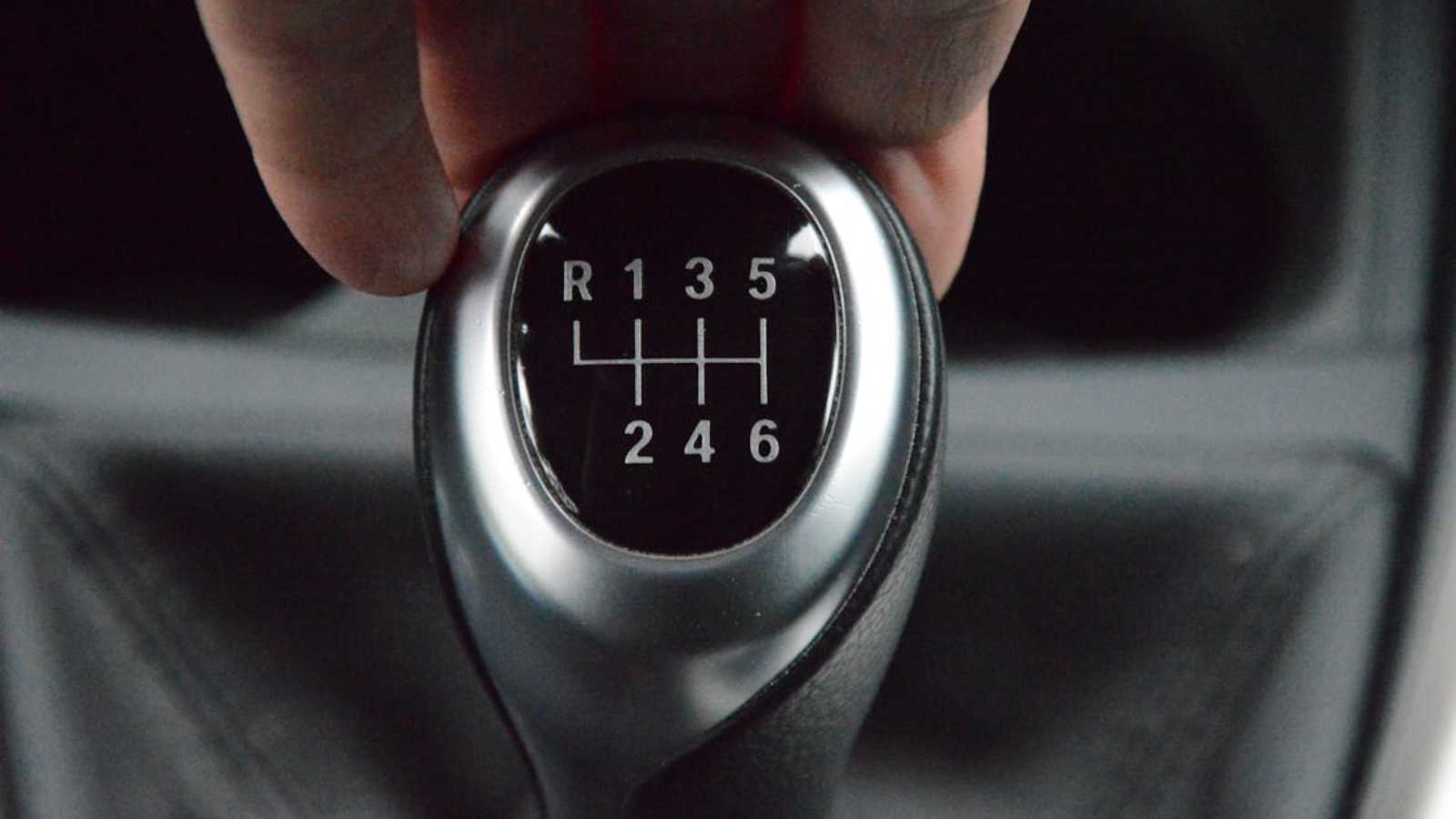
If you can drive a stick shift, you are officially a member of an elite, dying caste. The manual transmission held a tiny 2% market share in 2024, relegated mostly to niche sports cars like the Mazda Miata or Porsche 911. For the rest of the fleet, the clutch pedal is extinct.
This isn’t just about laziness; it’s about engineering incompatibility. Modern safety tech like automatic emergency braking needs to control the car’s speed, but it can’t do so if you’re controlling the gears. Plus, electric vehicles (EVs) don’t need multi-speed gearboxes. The result? We’ve seen carjackings fail hilariously because the thieves couldn’t figure out how to put the car in first gear.
Physical media is vanishing from shelves

The era of owning your favorite movie is ending. In 2024, DVD and Blu-ray sales crashed below $1 billion, a horrific 94% drop from their peak in 2006. Best Buy has stopped selling them entirely, and Target has shrunk its section to a single sad endcap.
To make matters worse, Redbox filed for bankruptcy in 2024, ripping out 24,000 kiosks that served rural areas with poor internet.
- The Risk: When you “buy” a digital movie, you’re just renting a license that can be revoked at any time.
- The Reality: Streaming services are now “delisting” shows to save on taxes, meaning some content is simply disappearing from history. If you don’t hold the disc, you don’t really own it.
Writing a check is now a “legacy” skill
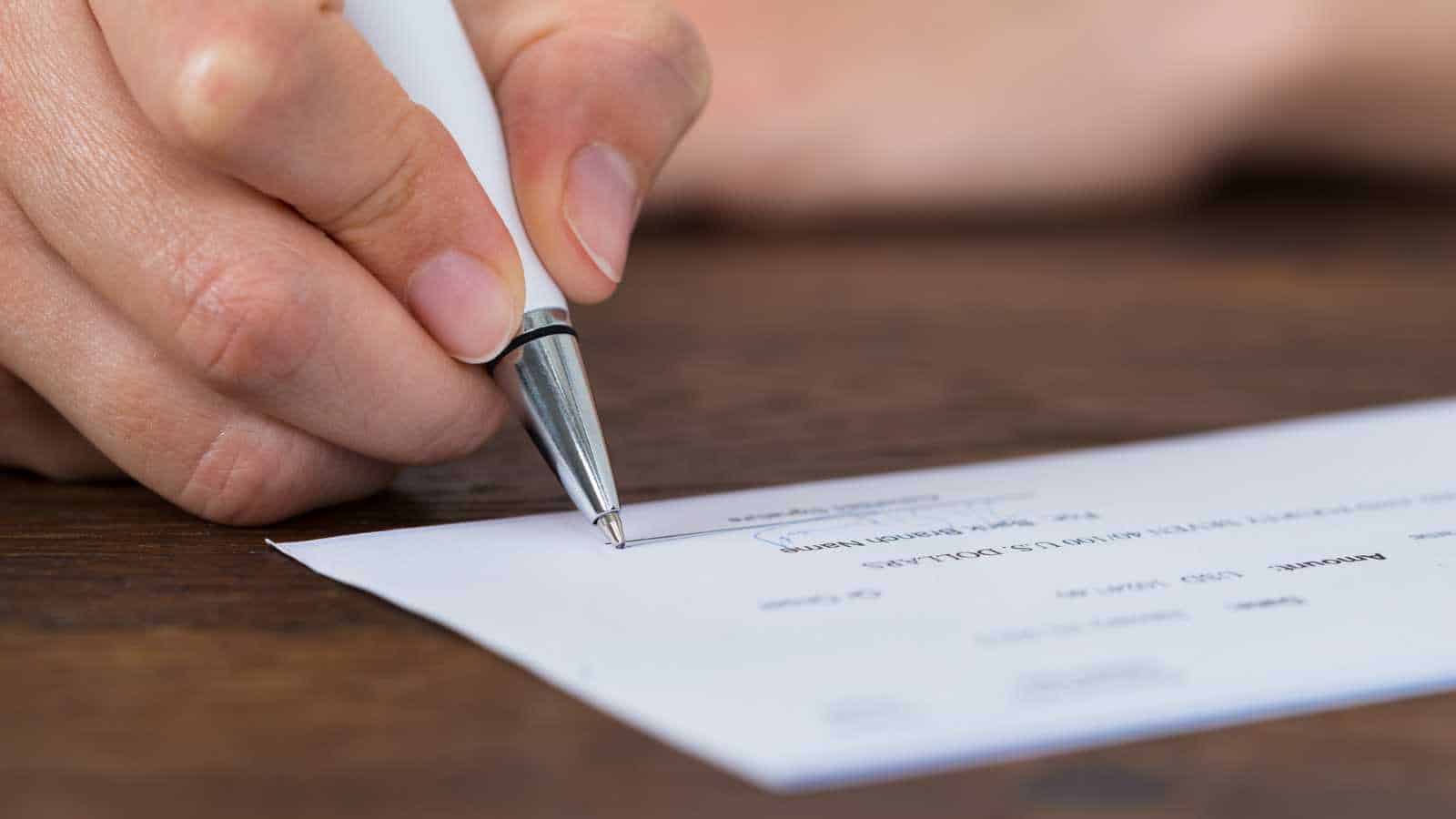
Cash isn’t dead yet, but the personal check is on life support. Checks now account for only 2.5% of consumer payments, mostly for rent or to pay contractors who refuse to pay credit card fees. Meanwhile, cash usage has hit a hard “floor” of about 14%, mostly for purchases under $25.
Generational data shows a massive divide. Gen Z is essentially a post-paper generation, with 45% of their transactions happening via mobile wallets. The days of balancing a checkbook are gone, replaced by instant push notifications. The downside? Every digital transaction is tracked, logged, and sold to data brokers, killing the anonymity that cash provided.
The spare tire is being sacrificed for MPG

Pop your trunk, and you might find a nasty surprise: a can of “tire sealant” and a cheap air compressor. By 2025, roughly 30% of new cars were sold without a spare tire. Automakers are ditching the “fifth wheel” to shave 30-50 pounds off, helping them meet strict government fuel-economy standards.
In electric vehicles, that space is even more valuable for battery cells. But here’s the rub: that sealant kit works fine on a small nail, but if you have a blowout or sidewall damage, you are stranded. We’ve traded self-reliance for a tow truck subscription, turning a 20-minute roadside fix into a three-hour ordeal.
The shopping mall is becoming a ghost town

The classic enclosed mall, the temple of 1990s teenage culture, is facing a mass extinction event. Analysts project the number of U.S. malls will shrink to just 900 by 2028, down from a peak of 2,500. Vacancy rates in 2025 hovered around 8.9%, depending on property typeand region, leaving gaping holes where anchor stores once stood.
But there is a twist: housing. With a shortage of 3.8 million homes in the U.S., developers are bulldozing “zombie malls” to build apartments. The place where you bought your prom outfit is likely becoming a condo complex. It’s a smart reuse of space, but it marks the end of the “retail commons” where people just went to hang out.
Human customer service is a luxury good

Trying to get a human on the phone is now a premium feature. By 2025, an estimated 95% of customer interactions were powered by AI, according toAI Business. Companies have realized that chatbots cost pennies while humans cost dollars, so they’ve trapped us in the “Doom Loop”, that circular hell where a bot asks you to rephrase your problem until you give up.
Real human empathy is now gated behind “elite” status. Airlines and banks reserve their direct phone lines for their biggest spenders. For everyone else, you’re left arguing with an algorithm that doesn’t understand sarcasm or frustration.
Teenagers are ditching the driver’s license

The driver’s license was once the ultimate ticket to freedom, but today’s teens aren’t buying it. In 1983, 46% of 16-year-olds had a license. By 2025, that number cratered to just 25%.
Why the drop?
- Anxiety: A recent survey found 93% of Gen Z drivers find driving “stressful”.
- The Virtual Hangout: You don’t need a car to see your friends when you have Discord and FaceTime. When they do need to move, they use Uber or Lyft. The car has gone from a symbol of independence to just another appliance they’d rather not deal with.
Cable TV is cutting its own cord

The “bundle” is unraveling fast. By 2025, the number of households paying for traditional cable TV dropped to 68.7 million, a massive slide from over 100 million in 2010. Streaming has officially taken the crown, capturing 44.8% of total TV viewing time in May 2025.
This kills the “monoculture.” We used to all watch the same shows at the same time. Now, we are fragmented into thousands of algorithmic niches. Even live sports, the last firewall of cable, is breaching; the WWE moving Raw to Netflix in 2025 signals the end of the broadcast era.
Public anonymity is being tracked and traded

The idea that you can walk through a crowd without being identified is becoming a myth. The retail biometric market is exploding. It is projected to grow at 18.3% and reach a market size of $12 billion by 2033. Stores are deploying facial recognition to spot shoplifters, track employee productivity, and identify VIPs the second they walk in the door.
68% of Fortune 500 companies now use some form of biometric tech. Experts warn that “opting out” of this surveillance, by wearing masks or avoiding smart tech, is increasingly viewed as suspicious behavior. We are losing the right to be a face in the crowd, replaced by a life where your physical presence is just another data point to be harvested.
Key Takeaway
We are witnessing the extinction of the self-reliant consumer. We are trading friction, the effort of shifting gears, fixing a flat, or dialing a rotary phone, for frictionless dependency. We own less, rent more, and rely entirely on the grid to power our lives. It’s convenient, sure, but it leaves us helpless the moment the server goes down.
Disclosure: This article was developed with the assistance of AI and subsequently reviewed, revised, and approved by our editorial team.
20 Odd American Traditions That Confuse the Rest of the World

20 Odd American Traditions That Confuse the Rest of the World
It’s no surprise that cultures worldwide have their own unique customs and traditions, but some of America’s most beloved habits can seem downright strange to outsiders.
Many American traditions may seem odd or even bizarre to people from other countries. Here are twenty of the strangest American traditions that confuse the rest of the world.
20 of the Worst American Tourist Attractions, Ranked in Order

20 of the Worst American Tourist Attractions, Ranked in Order
If you’ve found yourself here, it’s likely because you’re on a noble quest for the worst of the worst—the crème de la crème of the most underwhelming and downright disappointing tourist traps America offers. Maybe you’re looking to avoid common pitfalls, or perhaps just a connoisseur of the hilariously bad.
Whatever the reason, here is a list that’s sure to entertain, if not educate. Hold onto the hats and explore the ranking, in sequential order, of the 20 worst American tourist attractions.