15 things atheists only feel comfortable admitting to fellow atheists
Atheists are more visible in culture today, but many still feel they need to edit themselves around religious family, coworkers, and neighbors. A Pew Research Center Survey suggests that while 28% of U.S. adults now identify as religiously unaffiliated, only a small fraction are comfortable calling themselves atheists openly. Experimental estimates indicate the true share of atheists may be two to three times higher than traditional polls suggest, which researchers link directly to stigma and social pressure.
Nebraska Today reports that many atheists conceal their beliefs in everyday life because they fear discrimination, being seen as immoral, or being cut off from important relationships. Here are 15 things many atheists only feel safe admitting to other atheists.
They Often Hide Their Nonbelief From Family And Coworkers

A survey of U.S. atheists cited by the University of Kentucky found that about one in three respondents did not disclose their lack of belief when asked directly, highlighting just how strong the stigma around atheism can be.
A separate Dena Abbott study of 600 self-identified atheists found that many, especially women and people in rural areas, deliberately hid large parts of their worldview to avoid conflict and microaggressions. Concealment is most common in very religious communities, where nonbelievers fear being ostracized, losing jobs, or damaging family ties.
They Know People See Them As Less Trustworthy

Atheists are consistently rated among the least liked and least trusted groups in U.S. attitude surveys. According to the University of Minnesota Twin Cities, 40% of Americans disapprove of non-religion, making them one of the most negatively rated groups, along with evangelical Christians and Mormons, among outsiders.
Some Americans associate atheists with immorality to the point that they are rated less trustworthy than almost any other group, which atheists themselves are painfully aware of, even when it is never said out loud.
They Sometimes Use Softer Labels In Public

Because “atheist” carries such a heavy stereotype, many nonbelievers admit they are more comfortable calling themselves agnostic, secular, humanist, or just “not religious” outside trusted circles.
Atheist self-identification often does not map neatly onto beliefs about gods, and people may downplay or relabel their disbelief to manage social backlash. Nearly half of atheists also described themselves as agnostic, reflecting both philosophical nuance and a desire for a word that feels less socially explosive.
They Worry About Being Discriminated Against Or Harassed

The largest survey of nonreligious Americans by American Atheists found that most respondents reported experiencing some form of stigma or discrimination, especially in highly religious regions.
About a quarter said they had been rejected, avoided, or excluded from social events because of their nonbelief in the previous year, and smaller numbers reported job-related discrimination and even physical assault tied to their atheism. Those numbers help explain why many atheists only talk openly about their experiences of harassment or bias with other nonbelievers who understand the risks.
They Sometimes Pretend To Participate In Religion To Keep The Peace
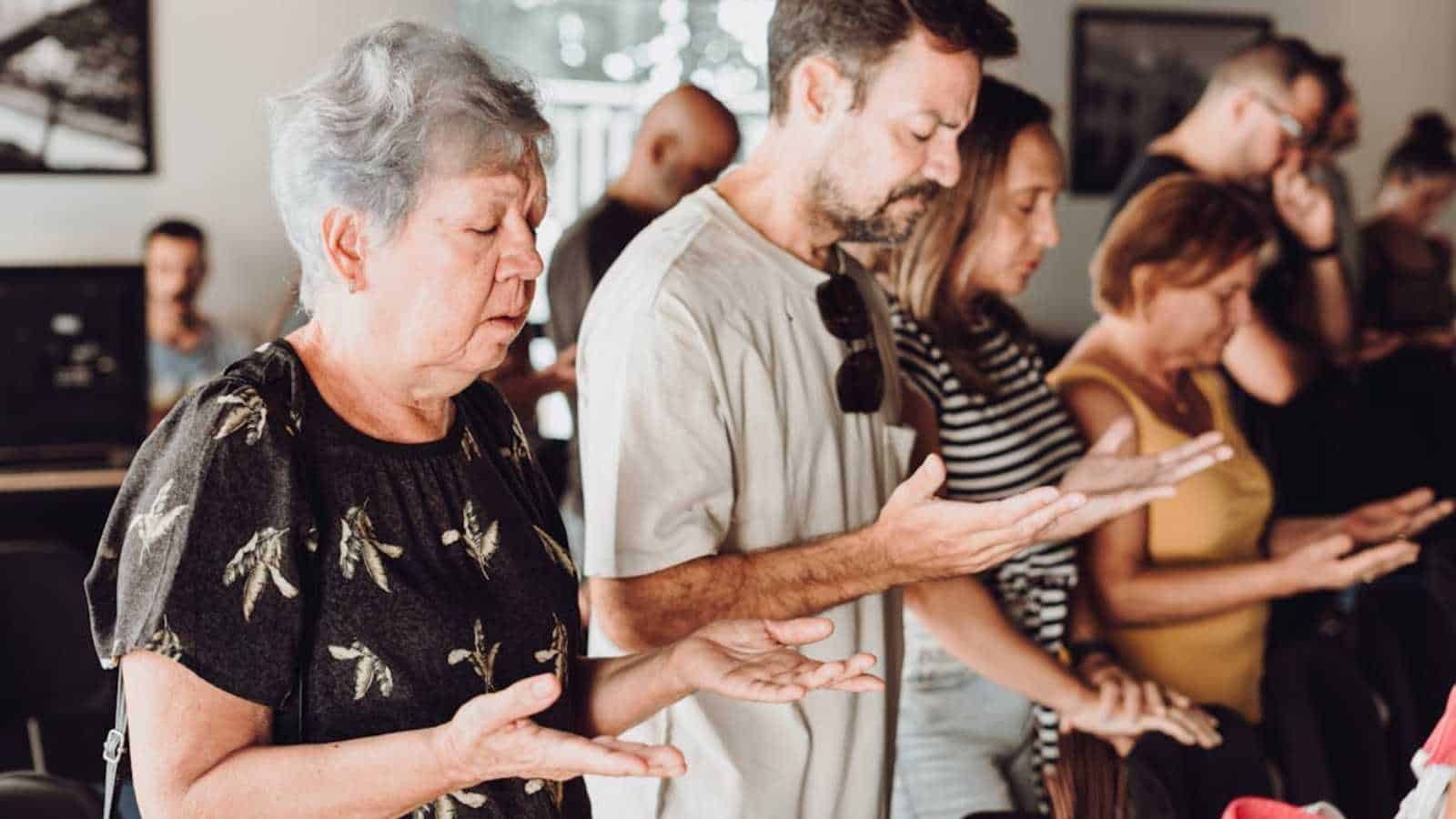
Atheists still bow their heads in family prayers, attend church on holidays, or keep quiet at religious ceremonies to avoid upsetting loved ones. Many atheists engage in this kind of “surface compliance” specifically to protect relationships with religious parents, partners, or children. They often remain silent in church or at family gatherings, even when they feel deeply out of place.
They Do Not Actually Hate Religious People

Despite online stereotypes, most atheists are not interested in attacking religious individuals. A HumanistsUK article defines most nonreligious respondents primarily in terms of what they valued, secularism, humanism, and critical thinking, rather than in terms of hostility toward religion.
While atheists as a group rate evangelical Christians and some other religious groups negatively, their attitudes toward Jews, Catholics, and mainline Protestants are often neutral or mildly positive rather than uniformly hostile. Many atheists only admit to fellow nonbelievers that they are tired of being treated as if they must be angry or anti-religious by default.
They Sometimes Feel Lonely Or Isolated Because Of Their Views

Atheists living in very religious areas report high levels of social isolation and describe feeling like they must keep a “big part” of themselves hidden. Religion Dispatches found that more than 26 percent of nonreligious respondents had frequently been rejected or avoided because of their identity in the prior year, and 17 percent said they had been excluded from social gatherings for the same reason.
Mental health research suggests that concealing a stigmatized identity is associated with higher psychological distress, which many atheists only feel safe discussing in explicitly secular spaces.
They Worry About Coming Out To Their Own Children

Some nonreligious parents quietly fear that being open about atheism could lead their children to be bullied at school or alienated from religious grandparents. Advocacy organizations regularly hear from parents who must navigate school events, religious instruction in public settings, and extended family pressure while trying to protect their kids.
These parents often only share their doubts, fears, and strategies with other atheist parents who understand what it is like to raise children in a culture that still treats belief as the default.
They Experience Microaggressions In Places That Are Supposed To Be Safe

There’s a significant relationship between concealing atheist identity and experiencing microaggressions in mental health settings. Participants reported subtle slights such as therapists assuming they must be angry, morally lost, or secretly religious, which in turn reduced their trust in psychological services.
Similar patterns appear in broader surveys of nonreligious people who describe frequent comments implying they cannot have morals or meaning without God, experiences they often process only with other atheists who have heard the same lines.
They Sometimes Question The Label “Atheist” Even When They Do Not Believe

Atheist identification involves social factors, not just personal belief, and some people who fully lack belief in gods still hesitate to use the word because of its stigma. In practice, many atheists privately debate whether to call themselves atheist, agnostic, secular, ex-religious, or “nothing in particular” depending on context and audience.
These nuanced conversations about labels and how they land are far more common within atheist circles than in mixed company, where the term is often flattened into a stereotype.
They Are Tired Of Being Treated As If They Have No Morals

Surveys of religious prejudice show that atheists are frequently seen as less patriotic and less moral than believers and are often assumed to have no shared vision for society. People have associated belief in God with basic trustworthiness, which leaves atheists at the bottom of moral rankings regardless of their actual behavior.
Many atheists only admit to each other how exhausting it is to constantly have to defend their ethics or explain that they care about honesty, fairness, and compassion for their own sake rather than because of divine reward or punishment.
They Sometimes Miss The Community Religion Can Provide

While many atheists are happy to be out of religious institutions, some quietly miss aspects of communal life, such as shared rituals, singing, potlucks, or built-in support during crises. As religious “nones” grow in number, some are rebuilding these functions through secular meetups, humanist chaplaincies, and online communities precisely because the social side of religion filled real needs.
Admitting to missing church in any way can feel taboo in atheist spaces that define themselves against religion, which is why this regret is often shared only among close nonbelieving friends.
They Know It Can Be Hard To Be An Atheist In Some Parts Of The World

Bias against atheists is strongest in more religious countries, including the United States, India, and some Middle Eastern nations. Atheists are aware that in some countries apostasy can carry legal penalties or violence, and many only discuss these fears and global solidarity openly with other nonbelievers who understand the risks.
They Are Cautiously Hopeful Things Are Getting Better

Despite the difficulties, there are signs of slow change. While atheists remain one of the least liked groups, their favorability scores have improved slightly in recent years and are now on par with or slightly above some other minority religious identities.
At the same time, nearly three in ten Americans now identify as religiously unaffiliated, and experimental estimates suggest the number of true atheists may be much higher than earlier polls indicated. Many atheists quietly share a guarded optimism that, as more people know a nonbeliever personally, some of the old stereotypes and taboos about saying “I do not believe” will finally start to fade.
Disclosure: This article was developed with the assistance of AI and was subsequently reviewed, revised, and approved by our editorial team.
20 Odd American Traditions That Confuse the Rest of the World

20 Odd American Traditions That Confuse the Rest of the World
It’s no surprise that cultures worldwide have their own unique customs and traditions, but some of America’s most beloved habits can seem downright strange to outsiders.
Many American traditions may seem odd or even bizarre to people from other countries. Here are twenty of the strangest American traditions that confuse the rest of the world.
20 of the Worst American Tourist Attractions, Ranked in Order

20 of the Worst American Tourist Attractions, Ranked in Order
If you’ve found yourself here, it’s likely because you’re on a noble quest for the worst of the worst—the crème de la crème of the most underwhelming and downright disappointing tourist traps America offers. Maybe you’re looking to avoid common pitfalls, or perhaps just a connoisseur of the hilariously bad.
Whatever the reason, here is a list that’s sure to entertain, if not educate. Hold onto the hats and explore the ranking, in sequential order, of the 20 worst American tourist attractions.