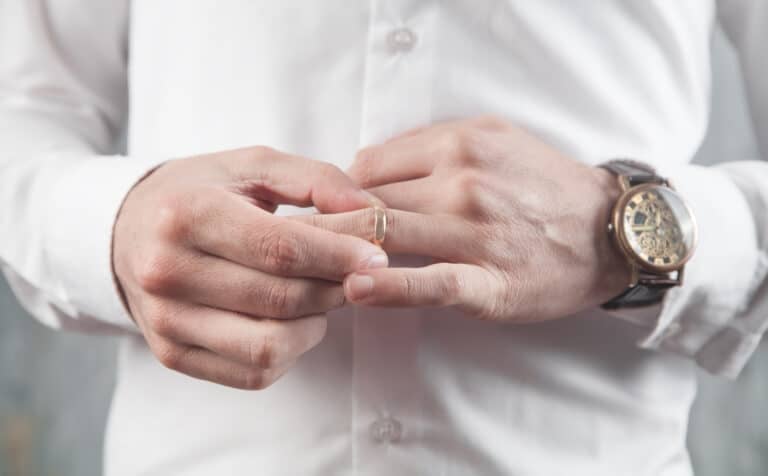
12 “Compliments” Women Secretly Can’t Stand
Ever gotten a “compliment” that made you smile at first… and then immediately frown?
You’re not overreacting. Those little phrases that feel like praise but leave a weird, stinging aftertaste are often backhanded compliments or microaggressions. And they’re everywhere. In fact, a LeanIn.org report found that for 64% of women, microaggressions are a daily reality at work.
So, what’s the deal? Why do people say these things? Research from Harvard Business School suggests it’s often a weird, subconscious play for status. The person wants you to like them, but they also want to subtly put you in your place.
The truth is, these seemingly innocent phrases are often loaded with hidden biases about gender, age, and competence, and their cumulative effect can do real harm. Let’s break down 12 of the most common offenders.
You look great for your age

On the surface, this sounds nice. But that little qualifier—”for your age”—is the poison pill. It implies that aging is a disease, and looking good is the exception to the ugly rule.
This is a textbook example of everyday ageism. The Pacific Neuroscience Institute explains that when you say this, “you’re implying that someone of that age should look ‘bad’ or that the standard for looking good gets lower as you get older.”
The fix is simple. Just say, “You look great!” End of sentence.
You should smile more

This isn’t friendly advice. It’s a command. It’s an order to perform a certain emotion for someone else’s comfort, and it’s almost exclusively directed at women.
It’s a deeply gendered command. One study found that 98% of women have been told to smile at some point in their lives, with 15% hearing it at least once a week.
This isn’t just a social annoyance; it has real career consequences. When a woman’s focused, neutral expression is read as “unhappy” or “unapproachable,” she’s being judged on a different set of rules than her male colleagues. This everyday bias directly impacts performance reviews, promotions, and even pay, forcing women to perform extra emotional labor just to be seen as team players.
You’re not like other girls

This is intended to be the ultimate compliment, painting you as a rare, unique unicorn. But it’s actually a massive insult to an entire gender. It only works by putting all other women down.
This is internalized misogyny in action. It comes from the sexist idea that femininity is “degrading” and that traditionally female interests are shallow or silly. The “compliment” is a reward for distancing yourself from your own gender.
Think of it as a major red flag. A person who says this is often revealing a deep-seated negative view of women.
You’re so articulate

This one feels like it should be a good thing. Who doesn’t want to be well-spoken? The insult isn’t in the words; it’s in the surprise. The subtext is, “Wow, I didn’t expect someone like you to be so intelligent.”
This is a classic microaggression, often aimed at women and people of color. It reveals the speaker’s low expectations, which were based on your identity. This ties into a pattern where women, especially Black women, constantly have to provide more evidence of their competence than men do. For example, studies show that Black women doctors are constantly mistaken for nurses, a daily reminder of the assumptions people make about their skills.
This kind of microaggression creates what researchers call a feeling of “invisibility.” It assumes your default state is incompetence. When someone is “surprised” by your intelligence, they’re really just admitting they didn’t see you as capable in the first place.
Calm down, you’re being too emotional

This phrase isn’t about de-escalation. It’s about dismissal. It’s a powerful tactic to completely shut down a woman’s argument by framing her passion as irrationality.
A study in the Psychology of Women Quarterly found that when a woman in a disagreement was labeled “emotional” or told to “calm down,” observers viewed her argument as significantly less legitimate. But here’s the kicker: the same study found that when a man was called “emotional,” his argument was NOT seen as less legitimate. Why? Because the observers simply didn’t believe the label applied to him.
Wow, you clean up nice!

This is a clumsy attempt to say you look great for a special occasion. But the insult is baked right in. It strongly implies that you don’t look nice on a normal day.
This is a perfect example of how a backhanded compliment works. It praises you by comparing you to a negative standard—in this case, your regular, everyday self.
So why say it this way? Psychologists and relationship experts say it often comes from the giver’s own insecurity or jealousy. By phrasing it this way, they subtly position themselves as the judge of your appearance, which is a small but sneaky power move.
You’re so brave to wear that
This pretends to be about your confidence. It’s not. What it really means is, “That outfit is weird, and I would be embarrassed to wear it.”
It frames your personal style as a social risk that requires “bravery” to attempt. This is passive-aggression at its finest. It lets the speaker voice their disapproval while giving them an easy escape route. If you get offended, they can just say, “What? I was calling you confident!”
It’s a way to land a punch while pretending to hand you a flower.
You’re too pretty to be single

This sounds like a compliment, but it’s packed with a whole bunch of garbage assumptions.
First, it reduces your value in the dating world to your physical appearance. Second, it treats being single like a disease that needs to be cured, not a valid and often happy choice. And third, it carries a whiff of suspicion: “If you’re so attractive but no one wants you, what’s secretly wrong with your personality?”
This is a textbook case of what sociologists call “benevolent sexism“—attitudes that seem positive but actually reinforce limiting gender stereotypes. It pushes the old-fashioned idea that a woman’s ultimate goal is to be chosen by a man. It may sound nice, but it’s rooted in a sexist worldview.
That was surprisingly good… for a woman/intern/beginner

The first part is praise. The second part is an eraser. The qualifier at the end completely negates the compliment by revealing the speaker’s incredibly low expectations.
Harvard researchers use this exact structure to define a backhanded compliment. The goal, whether conscious or not, is to place you at “the top of a relatively unfavorable” group. In other words, you’re the best of the worst.
This phrase is a verbal symptom of the bias that 64% of women face at work, according to Lean In, where they constantly have to prove their competence. And here’s the most insidious part: while these comments fail to make the giver look good, research shows they are successful at one thing. They damage the recipient’s motivation and self-perception. It’s a subtle form of sabotage.
I wish I were as confident as you to wear that / as relaxed as you about this clutter

This is a personal critique disguised as admiration. Let’s translate. “I wish I were as confident as you…” usually means, “I think your outfit is inappropriate, and I would never be caught dead in it.”
And “I wish I were as relaxed as you…” is a classic dig that means, “Your house is a mess.”
This tactic is sneaky because it frames the criticism as a failing of the speaker (“I wish I could be…”). This makes it almost impossible to argue with. If you get defensive, they can just play innocent: “I was complimenting you!” It’s a way to pass judgment without taking any responsibility.
You’re being a little bossy

This is the nuclear bomb of gendered double standards in the workplace. Research from the Center for Creative Leadership is crystal clear: women are twice as likely as men to be called “bossy” at work.
But here’s the thing: when researchers actually studied workplace behavior, they found that men and women are equally likely to exhibit behaviors that could be described as “bossy.” The behavior is the same; the label is different.
This creates a terrible “double-bind” for women leaders. If a woman is assertive and decisive (like a leader is supposed to be), she’s called “bossy” for violating female stereotypes. If she’s more collaborative and nurturing, she’s seen as weak and not a “real” leader. It’s a catch-22.
You’re so nurturing

This sounds like a lovely thing to say. And it can be! The problem is how this “positive” stereotype is used to box women in.
This is another example of benevolent sexism. It praises women for fitting neatly into a traditional gender role. While it feels much nicer than outright hostility, researchers say it’s just as harmful because it’s based on the same idea: that women are fundamentally different and suited for different (often less powerful) roles than men.
In the workplace, this means women who are seen as “nurturing” get saddled with the office housework—taking notes, planning parties, mentoring junior staff—while men get the high-profile “leadership” tasks. Even “positive” stereotypes can cause psychological harm. Studies show that being constantly pushed into a nurturing role can diminish a woman’s performance, lower her self-esteem, and, over time, create feelings of inferiority.
Key Takeaway
- Words Have Hidden Meanings: Many common “compliments” are actually backhanded insults, microaggressions, or forms of benevolent sexism rooted in biases about gender, age, and power.
- Intent vs. Impact: Even if someone doesn’t mean to be hurtful, the impact can still be damaging. These phrases often reveal the speaker’s own insecurities and can chip away at the recipient’s confidence and motivation.
- The Power of Genuine Praise: The best compliments are specific, sincere, and focus on a person’s choices, efforts, or character—without any sneaky comparisons or qualifications. Instead of “You look great for your age,” just say, “You look fantastic.” It’s cleaner, kinder, and a whole lot better.
Disclosure line: This article was developed with the assistance of AI and was subsequently reviewed, revised, and approved by our editorial team.
Why investing for retirement is so important for women (and how to do it)

Why investing for retirement is so important for women (and how to do it)
Retirement planning can be challenging, especially for women who face unique obstacles such as the wage gap, caregiving responsibilities, and a longer life expectancy. It’s essential for women to educate themselves on financial literacy and overcome the investing gap to achieve a comfortable and secure retirement. So, let’s talk about why investing for retirement is important for women and how to start on this journey towards financial freedom.
Science Tells Us What To Expect As We Age: Strategies for Thriving in Later Life
Science Tells Us What To Expect As We Age: Strategies for Thriving in Later Life
How does aging affect our bodies and minds, and how can we adapt to those differences? These are questions that pertain to us all. Aging gradually alters people over decades, a long period shaped by individuals’ economic and social circumstances, their behaviors, their neighborhoods, and other factors. Also, while people experience common physiological issues in later life, they don’t follow a well-charted, developmentally predetermined path. Let’s take a look at what science has told us to expect.