How the phone has become the third person in your marriage
Smartphones have become so embedded in daily life that most people no longer notice how much they have changed the texture of their closest relationships.
The Pew Research Center first documented the mixed effects of digital technology on couples over a decade ago, finding that while many partners felt closer through digital communication, a significant share also reported new forms of tension, jealousy, and distraction that did not exist before. Since then, devices have become even more present, more addictive by design, and more central to how couples communicate, argue, parent, and spend their downtime together.
New research using actual phone-use tracking, published in NIH’s PubMed Central, found that people used their phones during more than a quarter of the time they were physically present with their partner, and that higher use during shared time was directly linked to lower relationship satisfaction. For couples in midlife especially, where marriage is the primary social and emotional anchor, understanding how phones are changing the unwritten rules of partnership is not a minor lifestyle question. It is a question about what intimacy looks like now, and whether both people in a marriage are still choosing it.
Being There Without Being Present
The most foundational shift smartphones have introduced to marriage is the possibility of being physically together while being mentally and emotionally elsewhere. Research tracking objective phone use during time with a partner found this is not an occasional occurrence but a consistent pattern, with partners reaching for devices during meals, conversations, and shared leisure time in ways that quietly signal disengagement. Most people do not intend to disengage; the phone’s notifications, habits, and design make it almost automatic. But the receiving partner still experiences the distraction as a small, repeated message that the screen is more interesting than they are. Over time, those repeated messages accumulate into a recognizable wound.
Texting as a New Form of Intimacy
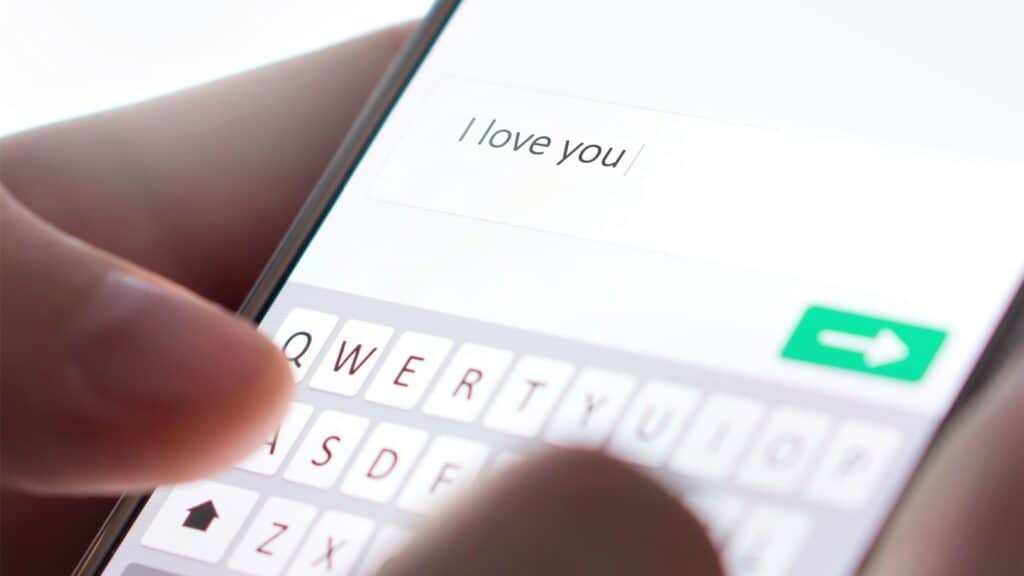
One of the more surprising findings from research on couples and technology is that many partners genuinely feel closer to each other because of digital communication. Pew Research found that a meaningful portion of couples use texts, voice messages, and check-in calls during the day to stay emotionally connected across busy schedules. For some couples, a funny meme sent mid-afternoon or a quick “thinking of you” text has replaced the kind of small, affectionate gestures that used to only happen face to face. This is neither shallow nor trivial; consistent micro-connections throughout the day appear to strengthen the sense of partnership for many couples. The shift is that emotional availability is no longer confined to shared physical space, which changes how couples experience and maintain closeness.
Arguments About Screen Time Fairness
Disagreements over how much time each partner spends on a phone have become a recognized and growing source of marital conflict. Pew’s research on couples and technology documented that a notable share of partnered adults had argued with their spouse about online time, and the figure has grown as phone use has intensified in the years since.
The tension is often not about the phone itself but about fairness: when one person is managing household tasks, children, or emotional labor while the other scrolls, the imbalance feels personal. These arguments rarely get resolved by logic, because the person on the phone usually does not believe they are doing anything wrong. What they often require is an honest joint conversation about how unstructured time in the evening gets shared, not assumed.
Privacy Expectations That Have Not Been Negotiated
Smartphones blend banking, personal messages, social connections, and private journals into a single device, raising fundamental questions about digital privacy that most couples have never explicitly discussed. Pew’s survey data shows that couples vary widely on whether they share passwords and account access, and that mismatched expectations around digital transparency can become a flashpoint for suspicion and resentment. Neither stance, total openness or full privacy, is universally right or wrong; what creates problems is when two partners hold different unspoken assumptions and neither has ever named them.
Modern marriages need explicit conversations about what privacy looks like in a shared digital life, because the old rules about what counts as an invasion of privacy simply were not written with smartphones in mind. Those conversations, while potentially uncomfortable, tend to build more trust than the silence they replace.
Social Media as a Third Party in Every Conflict
When couples fight, the argument used to stay between the two people involved. Now, with social media and group chats, frustrations can spill into wider audiences within minutes, and a post that feels like venting to the writer can feel like public humiliation to the partner being discussed.
Research on technoference, the interference of technology in couple interactions, links repeated phone intrusions into intimate moments, including conflicts, to higher levels of relationship dissatisfaction. The impulse to seek external validation during a fight is understandable, but it introduces an audience into a relationship that functions best as a private partnership. Many couples who have worked through this describe agreeing on a simple rule: no posting about each other or the relationship during or immediately after a conflict, a boundary that is small to set and significant to protect.
Comparing Your Marriage to Curated Feeds

Seeing constant images of other couples’ romantic dinners, vacations, and anniversary tributes can quietly distort a person’s perception of what a normal, healthy marriage looks and feels like.
Research on social comparison and well-being in midlife and older adults suggests that upward comparison, measuring yourself against people who appear to have more or do better, can worsen mood, increase dissatisfaction, and reduce gratitude for what you already have. The specific problem with social media is that it shows only the highlight reel of other relationships, never the difficult mornings, the boring evenings, or the long stretches of navigating ordinary life together. What looks like a thriving marriage online may be one that is as complicated as your own but better photographed. Developing the habit of recognizing curated content as performance rather than reality is a quiet but important act of protecting your own marriage from a distorted measuring stick.
Phones as Conflict Escalators and Peacekeepers
Smartphones play a contradictory role in marital arguments: they can escalate conflict by introducing a distracting notification at a sensitive moment, and they can de-escalate it by giving one person a way to cool down before responding.
Pew Research found that some couples specifically use texting to resolve arguments that stall face to face, finding that the slight distance of text communication allows them to choose words more carefully and respond less reactively. Neither use is inherently right or wrong, but couples who develop intentional habits, rather than letting phones wander in and out of tense moments without awareness, tend to have shorter, lower-damage conflicts. The difference between a phone that helps and a phone that hurts in a fight usually comes down to whether it was reached for deliberately or just reflexively. That distinction is worth naming together.
Parenting Differences Amplified by Screen Time
Disagreements about children’s screen time have become a new territory for parenting conflict between partners, and technoference research shows that a parent’s own phone use during family time is linked to higher levels of co-parenting conflict and lower quality of parent-child interaction. When one parent consistently enforces device limits while the other quietly allows exceptions, children quickly learn to work the gap, and the undermined parent’s frustration tends to spill into the marriage. What makes this particularly difficult is that both parents usually believe they are being reasonable.
Creating a shared household policy about devices, one that both parents have agreed to and both visibly follow, removes the dynamic where one person is the rule-maker and the other is the soft option. It also models for children a relationship where technology is managed rather than managed by.
Bedtime Phones and the Slow Erosion of Intimacy

The bedroom was once the part of the home most protected from outside intrusions; now for many couples it is where phones are charged overnight, where social media is checked last thing at night and first thing in the morning, and where the transition from the day’s busyness to genuine connection is most likely to be skipped.
Sleep research cited by the National Institute on Aging links late-night screen exposure to disrupted sleep, and disrupted sleep to worse mood, reduced patience, and poorer communication the following day, all of which affect the quality of a marriage. The ritual of lying beside your partner and both being on separate devices is so normalized now that it no longer registers as a choice, but it is one. Agreeing on even a modest phone-free window before sleep can restore a pocket of private, unhurried time that midlife couples especially report is among the things they miss most in their partnerships.
The New Rule: Intentional Use Over Unlimited Access
The central insight emerging from research on smartphones and marriage is that the couples who navigate this well are not the ones who use technology least; they are the ones who use it most intentionally.
Pew’s work on technology in relationships shows that when couples communicate openly about their digital habits, share expectations rather than assuming them, and treat phone-free time as a real value worth protecting, they are significantly more likely to describe technology as helpful to their relationship rather than harmful. The rules that governed marriage before smartphones, be present, be faithful, communicate, fight fairly, repair quickly — have not changed. What has changed is how much easier it is to violate them with a device that is always in your pocket and always asking for your attention. Choosing your partner over the screen in the moments that matter is not old-fashioned. It is the most forward-thinking relationship skill that couples can develop right now.
Like our content? Be sure to follow us on MSN and Newsbreak