13 signs she no longer cares what he wants
The scariest moment in a relationship is not always the fight. Sometimes, it is the day she stops fighting at all.
A relationship rarely dies in one loud scene. More often, it fades in small, quiet ways: fewer questions, shorter answers, less touch, no spark in her voice, and no real urgency when something hurts. That silence can feel peaceful at first, but sometimes it is the sound of someone emotionally leaving before they physically go.
Pew Research Center reports that more than 1.8 million Americans divorced in 2023, and Bowling Green State University’s National Center for Family and Marriage Research reports that 986,810 women divorced in 2024. Those numbers do not tell the whole story, but they point to a hard truth: many relationships end long before the paperwork begins.
This piece is not about blaming women for pulling away. Emotional withdrawal often comes after a long season of unmet needs, resentment, loneliness, burnout, or trying to repair the same wound too many times. A peer-reviewed study of divorced people found that 75% of participants cited lack of commitment as a major contributor to divorce. That pattern shows up quietly in homes everywhere: one person keeps reaching, the other keeps missing it, and eventually the reaching stops.
By the time she no longer seems to care what he wants, the relationship may not be exploding. It may be going cold.
She Stops Asking About His Day, Feelings, or Life

One of the earliest signs is the loss of curiosity. She used to ask how his meeting went, what was bothering him, what he wanted for the weekend, or why he seemed quiet. Now she barely asks anything.
The Gottman Institute’s 2025 discussion of emotional disconnection explains that when connection fades, partners may begin to feel as though they are living on separate paths rather than sharing one life. That is what this sign feels like in real time. It is not just that she forgot to ask about one hard day. It is that his inner world no longer pulls her attention.
The relationship starts to sound like two roommates exchanging headlines: dinner, bills, schedules, errands. No depth. No follow-up. No little emotional door left open. A woman who has checked out may still be polite, but politeness is not the same as care. When curiosity disappears, closeness usually follows.
She Doesn’t Initiate Contact or Connection Anymore

Healthy relationships have a rhythm of mutual reaching. One person texts first today, the other makes coffee tomorrow. One plans dinner, the other reaches across the couch. When she completely stops initiating, the relationship can begin to feel one-sided and heavy.
The Gottman Institute calls small attempts at connection “bids,” meaning little reaches for attention, affection, humor, support, or closeness. When one partner stops making those bids and no longer responds warmly to them, emotional distance can grow quickly. This sign often appears quietly.
She still replies, but she rarely starts. She still shows up, but she does not seem eager. She may answer messages with “okay,” “sure,” or “fine,” but the old warmth has left the words. The painful part is that she may not even be trying to punish him. She may simply have stopped expecting connection to feel good, so she no longer spends energy reaching for it.
She Avoids Physical Contact and Intimacy

Physical distance can say what words are too tired to say. She stops leaning into hugs, avoids kisses, pulls away in bed, no longer reaches for his hand, or treats intimacy like another task on an already full list.
This sign needs tenderness because intimacy can fade for many reasons: stress, depression, health changes, hormonal shifts, trauma, exhaustion, resentment, or unresolved conflict. Still, when physical affection disappears alongside emotional warmth, it can signal deep withdrawal.
Stanford sociologist Michael Rosenfeld’s research found that women initiated 69% of divorces in his nationally representative sample, though non-marital breakups were more evenly split. That does not mean women leave only because of intimacy problems. It does suggest that many women eventually act when marriage feels unsatisfying or unequal.
If her body no longer relaxes near him, the issue may not be attraction alone. It may be emotional safety, buried anger, or the sense that touch now asks for more than she has left to give.
She Talks Less About Her Own Emotions and Life

When a woman still feels invested, she usually shares pieces of her inner world. She tells him about the coworker who annoyed her, the dream she had, the fear she cannot shake, and the random thought that made her laugh in the grocery aisle. When she stops sharing, something important has gone quiet.
The Gottman Institute notes that emotional disconnection can leave partners feeling unheard and alone, even when they share the same home. That is the quiet ache inside this sign. He may ask, “What’s wrong?” and she says, “Nothing.” He may push, and she gives a short answer.
The strange thing is that the relationship may look calmer from the outside. Fewer tears. Fewer long talks. Fewer arguments. But sometimes peace is not peace. Sometimes it is resignation. A woman who once explained everything and now explains nothing may have stopped believing her feelings will be handled with care.
She Doesn’t Care About His Feelings

A checked-out woman may stop adjusting her words, tone, or choices in response to his emotional response. She may make plans without asking, speak more sharply, stop reassuring him, or shrug when he says he is hurt. This can look cold, but it often stems from a long history in which she felt her own feelings were minimized first.
A peer-reviewed study of divorced people found that 75% cited lack of commitment as a major contributor to divorce, while conflict and arguing were also common. Emotional disengagement often sits inside those numbers. Once someone stops believing the relationship can change, they may stop protecting the other person from the emotional fallout.
That does not make cruelty acceptable. It does explain how tenderness erodes. At first, she may have cared deeply about how he felt. Later, after too many failed repairs, his reaction may begin to feel like just one more storm she no longer has the strength to manage.
She’s Constantly Finding Fault With Everything He Does

When warmth fades, small things can start sounding unbearable. The way he chews. The way he leaves his shoes near the door. The way he tells the same story. The way he asks a question at the wrong time. Constant criticism is often a sign that frustration has calcified into resentment.
The Gottman Institute names criticism, contempt, defensiveness, and stonewalling as the “Four Horsemen” of relationship breakdown, and it describes contempt as especially damaging because it attacks a partner from a place of superiority. This sign is not about normal complaints. Every couple has those.
It is about a shift in which almost everything he does is interpreted through the lens of irritation. Even kindness may be treated with suspicion. Even effort may be dismissed as too late. When she is constantly finding fault, the issue is rarely just the socks or the dishes. It is the emotional story underneath: “I have been unhappy for so long that everything now feels like proof.”
Her Future Plans No Longer Include Him

Future talk is one of the clearest windows into emotional investment. A woman who still sees a shared path may talk about trips, holidays, moving, savings, home repairs, children, retirement, or even small plans like next month’s concert.
When she no longer includes him, the emotional map has changed. She may say “I” more than “we.” She may make plans with friends, family, or herself without checking how they fit into the relationship. The same divorce study published in the journal Couple and Family Psychology, which found 75% of divorced participants cited lack of commitment, helps explain why this matters. Commitment is not only a feeling. It is a future tense.
It shows up in planning, in sacrifice, in compromise, and in the assumption that tomorrow still belongs to both people. When she stops imagining him in that tomorrow, the relationship may still be standing, but the foundation is thinning. He may hear it first in one small sentence: “I’ve been thinking about what I want next year,” with no “us” anywhere inside it.
She Doesn’t Put Him First Anymore
No partner should be expected to center another person at all times. A woman has every right to care about work, children, friends, family, rest, health, hobbies, and herself. But when the relationship drops from priority to afterthought, the change is hard to miss.
The Pew Research Center reported that more than 1.8 million Americans divorced in 2023, underscoring how common relationship endings remain in U.S. family life. Behind many of those endings are months or years of shifting priorities. She may choose friends every weekend, stay late at work by choice, avoid date nights, stop making time for talks, or seem happier away from him than with him.
The issue is not that she has a full life. The issue is that he no longer seems to have a meaningful place in it. When someone still cares, they make room. When caring fades, even ten minutes can feel like too much to offer.
She Sees Him as an Obligation, Not a Priority

This sign has a particular sadness to it because the relationship may still function on the surface. She still answers. She still shows up. She still remembers what needs to be done. But the energy feels dutiful, not loving.
A 2023 study on emotional divorce among married women in Saudi Arabia found that depression, anxiety, and loneliness explained 61% of the variance in emotional divorce scores in that sample. That finding should not be stretched into a universal rule, but it captures something real: people can remain physically present while emotionally alone.
Emotional divorce is the stage where a partner becomes part of the schedule rather than part of the heart. She may cook dinner, attend the family event, or sit beside him on the couch, but he can feel the absence under the routine. It is the difference between “I want to be here” and “I am doing what I’m supposed to do.” The actions may look similar. The feeling is not.
She Avoids Conflict Instead of Working Through It
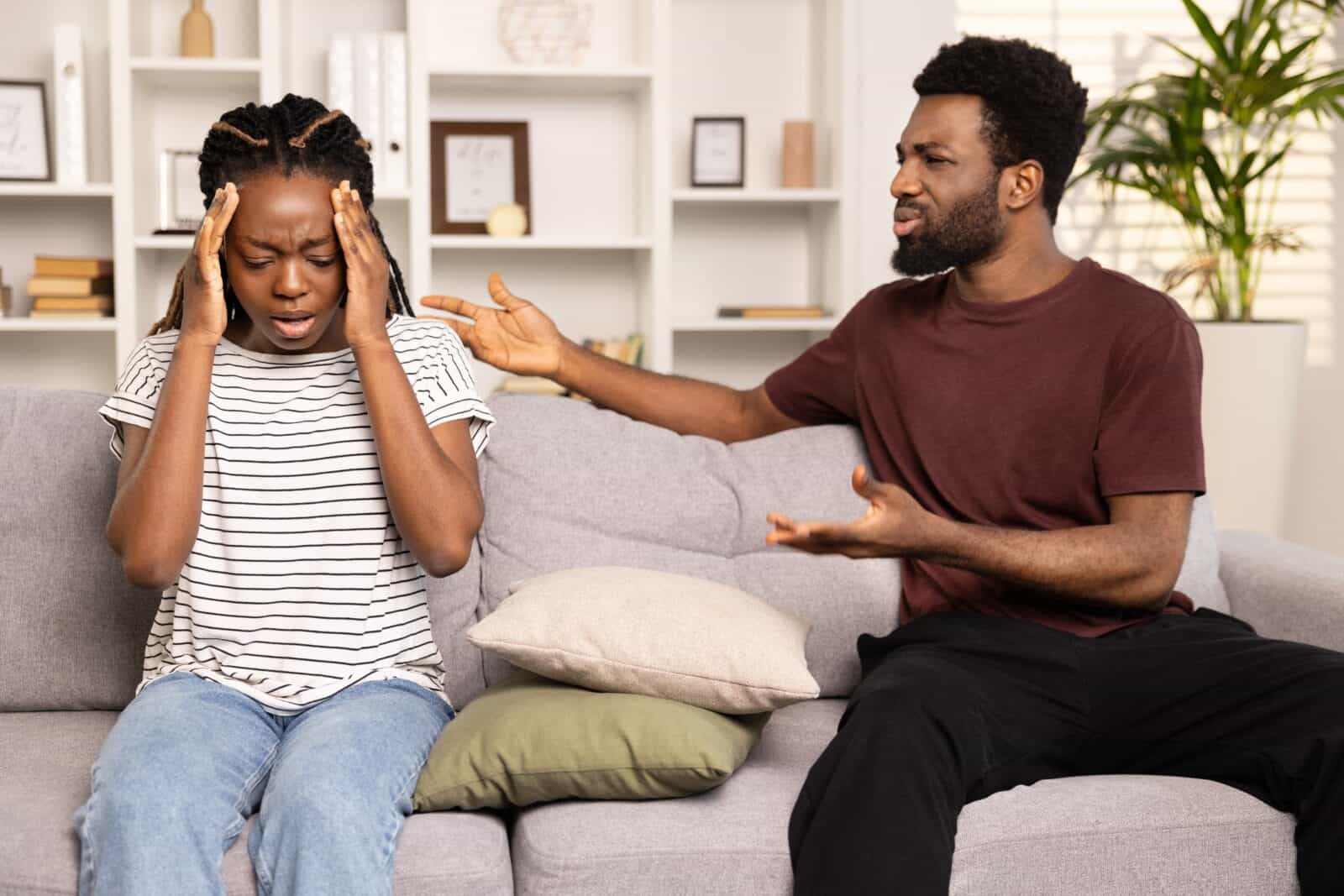
Many people think fighting is a danger sign, but silence can be worse. If she used to argue, explain, cry, ask, push, or beg for change, and now says “whatever,” that may not mean she is more peaceful. It may mean she has stopped believing conflict can help.
The Gottman Institute lists stonewalling as one of the Four Horsemen, and its work on the pursue-withdraw pattern shows how one partner can keep reaching out even as the other withdraws, which can lead to burnout. In a Gottman Institute interview, Scott R. Woolley, Ph.D., explains that couples can get trapped in cycles where one partner pursues and the other withdraws, creating a painful loop.
When the pursuer finally stops, the relationship can feel calm, but it is often the calm after hope has left. Avoiding conflict can be emotional self-protection. She may no longer want to spend another night explaining the same wound. The danger is that no conflict can mean no repair, and no repair can become the road out.
She Becomes Secretive About Her Plans and Social Circle

Privacy is normal. Secrecy is different. When a woman is emotionally withdrawing, she may stop sharing where she is going, who she is seeing, what she is thinking, or what her plans are. This does not automatically mean cheating, and it should not be treated as proof of betrayal.
Sometimes secrecy begins because she wants one part of her life that does not have to be negotiated, judged, questioned, or emotionally managed. Gottman’s work on emotional disconnection supports the broader pattern: partners can drift into separate lives while still technically being together. The warning sign is the loss of transparency.
He used to know her world because she wanted him in it. Now he hears about plans after they happen or not at all. She may protect her phone, close conversations quickly, or keep friends separate from the relationship. The feeling is clear: access has been revoked. That is often less about one secret and more about the door closing.
She’s Emotionally Exhausted and Constantly Tired

Emotional exhaustion can look like indifference from the outside. She seems flat. She sighs more. She has no energy for long talks. She stops reacting to things that once upset her. She may say she is tired, but what she means is deeper than sleep.
Relationship burnout has become a common theme in modern couples’ work, and the 2023 emotional divorce study connects emotional disconnection with loneliness, anxiety, and depression in its specific sample. That matters because withdrawal is not always a strategy.
Sometimes it is a nervous system running out of fuel. She may have spent years trying to be patient, to explain, to forgive, to initiate, to remind, to hope, and to soften. Then one day, she has nothing dramatic left to say.
This can be confusing for the man who suddenly wants to fix it, because from his view, the emergency just started. From hers, the emergency has been running for years. Exhaustion is often what love looks like after it has carried too much alone.
She’s “Mothered” Him for Years and Finally Burned Out

This may be the most under-discussed reason women stop caring what a man wants. She may have spent years reminding him of appointments, managing his moods, planning the social calendar, explaining basic empathy, coaching him through conflicts, smoothing family tensions, and keeping the relationship emotionally alive.
A 2024 peer-reviewed study on emotional labor found that this kind of hidden work is predominantly performed by women, especially in intimate relationships. Over time, that can turn romance into management. She stops feeling like a partner and starts feeling like a mother, therapist, assistant, and crisis team.
The Gottman Institute’s pursue-withdraw framework helps explain why burnout can happen after years of uneven emotional effort. A woman may not stop caring because she is cold. She may stop because caring became a job with no rest and no raise.
Once that burnout sets in, flowers and promises may not reach the part of her that needed help years ago. Repair is still possible for some couples, but only if he understands that she does not need one grand gesture. She needs a real redistribution of emotional weight.
A Short Reflective Close

When a woman no longer cares what he wants, it is easy to see only the coldness. But often, that coldness has a history. It may be built from unheard requests, lonely nights, repeated disappointments, emotional labor, resentment, or too many failed attempts to reconnect.
That does not mean every relationship can be saved. It does mean the signs deserve compassion before judgment. Emotional withdrawal is a warning, not a weapon. Caught early, it can lead to honest repair. Ignored too long, it becomes the goodbye before the goodbye.
Key Takeaways
Emotional withdrawal usually shows up in small patterns before it becomes a breakup. Less curiosity, less touch, less sharing, fewer plans, more criticism, secrecy, exhaustion, and conflict avoidance can all signal that she has stopped believing the relationship will meet her emotionally.
Some popular divorce statistics need careful wording. Stronger verified research shows that 75% of divorced participants in one study cited lack of commitment as a major contributor to divorce, and Stanford sociologist Michael Rosenfeld found women initiated 69% of divorces in his sample. Pew also reported that more than 1.8 million Americans divorced in 2023.
The most important lesson is simple: if she is still talking, asking, arguing, and reaching, she may still have hope. The most dangerous moment is not always when she cries. Sometimes it is when she stops trying to be understood.
Disclaimer – This list is solely the author’s opinion based on research and publicly available information. It is not intended to be professional advice.
Like our content? Be sure to follow us