11 red flags women often ignore before finding out the truth about their partners
Researchers at the Gottman Institute spent years observing real couples argue in a lab. They tracked everything: voices, body language, heart rates, and breathing. What they found wasn’t dramatic. There was no yelling or throwing plates. The most reliable sign of a failing relationship was much quieter.
One person just shuts down, turns away, and goes silent. The researchers called this “stonewalling.” In 85% of the cases, it was a man who did this. That number should make you think. If silence is such a strong warning sign, why do so many women sit across from a partner who has checked out and still tell themselves everything is fine?
Sometimes we ignore what’s right in front of us. It’s not because we’re naive, but because we hope love will win. We talk ourselves out of our gut feelings, make excuses for the pattern, and stay even after our instincts told us to go.
Communication Breakdowns

According to the Gottman Institute’s research, stonewalling happens when a partner becomes so physiologically overwhelmed during conflict that they shut down entirely. Their heart rate spikes. Stress hormones flood their system.
The body goes into fight-or-flight mode, making rational conversation nearly impossible. So the person goes quiet, looks away, acts busy, or pretends not to hear you.
Stonewalling is hard to spot because it doesn’t just end the conversation; it blocks any chance of resolving things. The more you try to push through, the more the other person shuts down, and the more frustrated and unheard you feel.
The Gottman data also found that when women stonewall, which is much less common, it strongly predicts divorce. This shows how seriously this pattern should be taken.
A relationship where hard conversations consistently go nowhere isn’t just a “communication style difference.” It’s a structural crack. And cracks don’t fix themselves.
Boundary Violations

Pay attention to what happens the moment you say no. A partner who respects you stops. A partner with a problem pushes back, circles around, or makes you feel dramatic for drawing a line in the first place.
Boundary violations rarely look like obvious aggression early on. They look like someone who “just wants to talk about it,” who keeps asking until you cave, or who mocks your discomfort as being “too sensitive.”
These patterns signal something deeper than poor communication. They reveal how someone sees your autonomy: as something to negotiate rather than honor. Repeated disrespect for your stated limits doesn’t get better with time. It gets more comfortable for the person doing it.
Pay attention to how someone reacts when you say no. That reveals more about their character than almost anything else.
Controlling Tendencies

Controlling behavior almost never announces itself. It arrives wrapped in concern, wrapped in love, wrapped in “I just worry about you.” PsychCentral outlines nine common patterns to watch for: micromanaging daily decisions, making choices without your input, excessive monitoring framed as protectiveness, demanding passwords, reading private messages, shifting blame when confronted, constant criticism, isolating you from friends and family, and gaslighting your reactions.
Research adds an important detail. A 2023 study found that accepting unequal treatment in relationships is linked to depression and even thoughts of suicide. This shows that losing your independence isn’t just an emotional issue; it can affect your mind and body, too.
If someone started directing your clothes, your friendships, your work schedule, and your social media, and you only noticed it in year two, that’s not love deepening. That’s control tightening.
Gaslighting Tactics
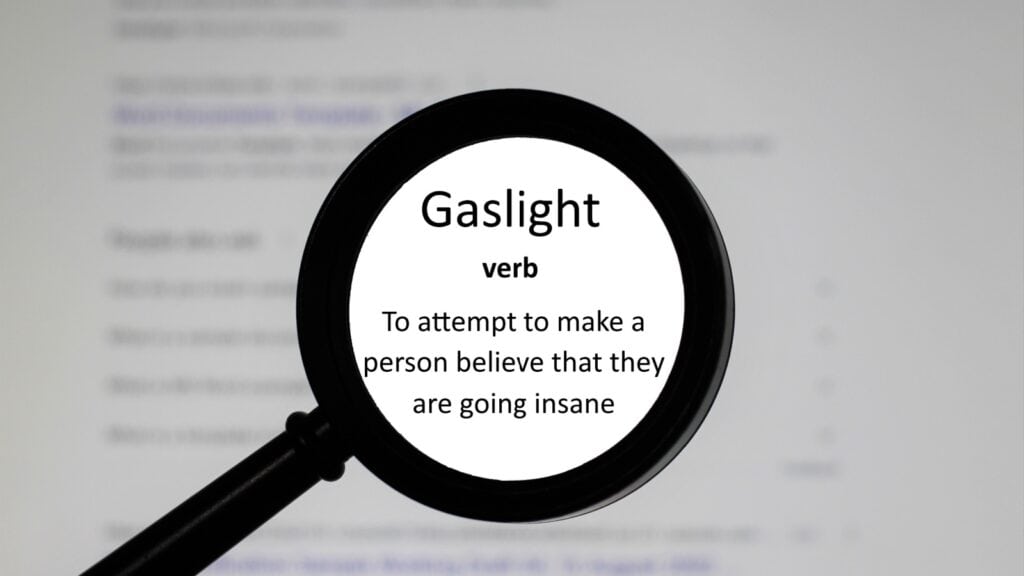
The term “gaslighting” comes from the 1938 play Gas Light, later popularized by Dr. Robin Stern in her 2007 book The Gaslight Effect. It describes a specific form of emotional manipulation where someone systematically makes you doubt your own memory, perception, and sanity. The tactics are recognizable once you know them. “Are you nuts? I never said that.” “You’re always turning everything into a big deal.” “You seem so confused lately.”
Gaslighting tends to move through three stages: first, you brush off the incidents as unusual. Then you start pushing back. Eventually, you absorb their version of reality just to avoid conflict. You start apologizing constantly, dropping hobbies, and reviewing your own words before you speak them.
If you’ve started questioning your memory of conversations that you’re certain happened, that’s worth paying attention to. Your instincts aren’t broken. Someone may be working very hard to make you think they are.
No Accountability

Psychotherapist Harper West notes: “The core problem in 99% of all relationships I see in couples therapy is that one or both partners have poor shame tolerance.” Partners with poor shame tolerance, what West calls “Other-Blamers,” can’t accept criticism without deflecting it straight back onto you. They deny, excuse, ignore, or twist the story until somehow you’re the problem.
West describes a common cycle: they refuse to take responsibility, you stop bringing up problems, resentment builds, and the relationship either ends suddenly or fades away. The real dealbreaker isn’t the mistake itself; it’s how someone responds when asked to change.
A partner who can never admit they’re wrong will never grow. And a relationship that can’t handle honest accountability won’t last.
Inconsistent Behavior

One moment they’re texting first, making plans, and talking about the future. Next, they go silent. Then they come back with apologies. This hot-and-cold pattern isn’t passion, it’s instability. Over time, this shows someone isn’t emotionally ready for what they want from you.
Watch the pattern, not the peak moments. Love-bombing followed by indifference, stories that shift with no accountability, promises that dissolve before they’re kept. These aren’t isolated mistakes. They’re a preview of what consistency will look like long-term.
One relationship researcher says, “Love is not enough. Consistency and safety are.” Sit with this for a second.
Public Disrespect

Disrespect in public rarely appears as a scene. It looks like an eye roll when you tell a story. It looks like a “joke” at your expense in front of friends, leaving you smiling awkwardly just to keep the peace. It looks like “don’t be so intense” after you express something real.
Impact matters more than intent. A partner who repeatedly minimizes your feelings in front of others, then claims they were just kidding, is teaching you something about how they see you. The longer you accept “I was joking” as a full explanation, the more acceptable that behavior becomes to both of you.
Trust the discomfort you feel after those moments. It’s not you being dramatic. It’s your dignity trying to get your attention.
Financial Secrecy

A Notre Dame study defines financial infidelity as engaging in a financial behavior a partner would object to, and then deliberately concealing it. That’s a broad definition by design. It covers hiding receipts, secret credit cards, undisclosed accounts, concealed raises, gambling, and, in severe cases, filing for bankruptcy without telling a partner.
Financial secrecy matters because money is one of the primary ways in which trust is built or broken in long-term relationships. Hidden debt and hidden spending don’t just damage joint goals like emergency savings or a mortgage. They create an information gap that quietly poisons everything that depends on honesty.
Imagine a couple planning a wedding, only for the bride to discover her fiancé has been carrying $40,000 in secret credit card debt. The money is manageable. The deliberate concealment isn’t. That’s the real wound.
Undermining Goals

“Little digs” are what researchers and therapists call the small, habitual comments that chip away at a partner’s confidence over time. Joking insults about your intelligence. Contradicting you in front of other people. Telling stories that consistently cast you as incompetent or foolish. Each incident seems minor. The pattern is not.
According to relationship researchers, undermining behavior often stems from a zero-sum belief about relationships: the idea that one person’s success diminishes the other. It can also grow from insecurity, past trauma, or an unresolved ego. Whatever the root is, the effect is the same. Over time, you begin to doubt yourself. You withdraw. You stop sharing the goals that no longer feel safe to say out loud at home.
If your partner consistently makes you feel smaller about the things you’re proud of, that’s not love. That’s sabotage wearing a familiar face.
Emotional Drain

Every relationship has hard seasons. But there’s a real difference between a hard season and a persistent pattern of depletion. An emotionally draining relationship is one where you give significantly more than you receive: more empathy, more patience, more emotional labor. And ordinary interactions leave you tired, tense, or hollowed out.
Research links this kind of chronic emotional strain to elevated cortisol, increased anxiety, low self-worth, and depressive symptoms. The body keeps score even when your mind is busy making excuses. Persistent exhaustion after time with your partner isn’t a personality clash. It’s a signal that something structural is off.
You’re allowed to want a relationship that gives back what it takes.
Gut Instincts

Licensed marriage and family therapist Cameron Murphey draws a sharp distinction between a gut feeling and relationship anxiety. Relationship anxiety is frantic. It drives you to compulsively re-read texts, seek reassurance in loops, and search desperately for certainty. A gut feeling is different. It’s calm. It’s clear. It gives you something specific to act on.
Murphey points out that searching for certainty is actually a compulsion. And compulsions make anxiety worse, not better. The gut feeling that something is wrong doesn’t need you to keep looking for proof. It already knows.
“True confidence,” Murphey says, “is living in uncertainty and moving forward.” So if your gut has been quietly speaking and you’ve been calling it anxiety to make it easier to ignore, maybe it’s time to listen.
Key Takeaways
- Patterns matter more than moments. An incident can be explained. The pattern is a blueprint.
- Healthy love feels secure, honest, and emotionally secure.
- Trust the calm, clear voice inside you. Not the frantic, anxious one that keeps searching for certainty.
- Early signs don’t disappear. They get normalized and even bigger.
- You don’t have to explain away what you consistently feel.
Disclaimer – This list is solely the author’s opinion based on research and publicly available information. It is not intended to be professional advice.
Like our content? Be sure to follow us.