12 thinking habits that often separate highly intelligent people
Most conversations about intelligence eventually collapse into the same handful of ideas: IQ scores, academic pedigree, and how fast someone processes information. These are measurable, which makes them convenient, and convenience is often mistaken for completeness.
What they don’t capture is the operating system underneath: the specific ways highly intelligent people habitually approach problems, revise their thinking, and structure their attention before a single answer is produced.
Psychologist Howard Gardner’s theory of multiple intelligences, introduced in Frames of Mind (1983), was among the first formal challenges to the idea that intelligence is a single, fixed quantity measurable by a single number.
Decades later, researchers studying real-world performance outcomes have found that cognitive habits- how someone thinks, not just how much- account for more variance in long-term output than raw processing speed alone. Strategies students use to approach learning predicted academic performance more reliably than baseline ability scores. The how outperforms the what.
They sit with uncertainty longer than most people can stand

There’s a name for what most people do when they hit an uncomfortable gap in understanding: they close it fast. A hasty conclusion, a borrowed opinion, an assumption dressed up as logic. Psychologists call this need for cognitive closure.
Researchers Arie Kruglanski and Donna Webster, who developed the Need for Closure Scale at the University of Maryland in the early 1990s, found that individuals scoring high on that scale made faster but systematically poorer decisions. Higher-IQ individuals scored significantly lower because they’d internalized that ambiguity is often where real answers live, not an obstacle.
High tolerance for uncertainty can read as indecisiveness from the outside. The colleague who stares at a problem longer than everyone else can appear slow. John Keats called it negative capability, and the idea has outlasted every productivity system invented since. Sitting with uncertainty is a practiced skill, not a fixed trait.
They update their beliefs when the evidence changes

There’s a documented asymmetry in how humans process information: confirming data gets absorbed effortlessly, while contradicting data triggers a mild immune response. The brain encodes beliefs with emotional weight, so dismantling them feels like a loss. Leon Festinger documented this in A Theory of Cognitive Dissonance (1957), showing people will perform impressive intellectual gymnastics to protect existing beliefs rather than simply update them.
Philip Tetlock’s 20-year forecasting study, later published as Superforecasting, tracked 28,000 predictions from nearly 300 expert analysts. The most accurate predictors updated their probability estimates 22% more often than average analysts. They didn’t need to be right from the start. They needed to be responsive to being wrong.
A competing view is worth naming: Nassim Taleb argues in The Black Swan that frequently revising probabilistic models based on noisy short-term signals can produce worse long-term outcomes than acknowledging the deep limits of prediction altogether. The superforecaster and the decision theorist don’t fully agree. Both, however, share one position: holding a belief beyond its evidential shelf life is the more common and more costly failure. A belief you can’t update isn’t knowledge. It’s allegiance.
They think in systems rather than isolated events

Ask most people why a company failed, and they’ll name one cause: a bad hire, a poor product, or a market downturn. Ask someone who thinks in systems, and they’ll map a web: feedback loops, dependencies, lagging indicators, second-order effects.
Jay Forrester, the MIT engineer who founded systems dynamics in the 1950s, spent decades showing that counterintuitive policy outcomes almost always trace back to feedback loops ignored in single-variable thinking. His student Donella Meadows distilled this in Thinking in Systems, arguing that most institutional disasters are predictable once you understand the delay structures and reinforcing loops present from the start.
Functional MRI research by Rex Jung and Richard Haier at the University of New Mexico found that smarter cognitive processing wasn’t about raw brain size but about the efficiency of information routing between distant brain areas. Neurologically, systems thinking requires more distributed processing than linear thinking. Whether that wiring causes the habit or the habit builds the wiring remains open, but the correlation is robust.
They notice what they’re assuming

Arguments don’t usually fail at the conclusion. They fail at the premise, quietly and invisibly. A bad assumption baked into the first line of reasoning can survive every logical step that follows and still produce a perfectly wrong answer.
The Wason Selection Task, designed by cognitive psychologist Peter Wason in 1966, illustrates how systematically people miss this. Presented with four cards and a conditional rule, fewer than 10% of participants solve it correctly, not because the logic is hard, but because they search for confirmation rather than falsification. When the identical logical structure was reframed as a social scenario, checking whether someone of legal age is drinking alcohol, success rates jumped above 70%. Context was doing the reasoning, and most people never noticed.
What high-intelligence thinkers do differently is make the assumption visible before it does damage. Before asking whether this conclusion is right, they ask what would need to be true for it to hold. Working backward from the answer to the premises underlying it is how infrastructure failures are prevented, how hypotheses are properly designed, and how negotiations avoid the catastrophic breakdowns that happen when two parties discover too late that they were solving different problems.
They read across disciplines without dilettantism

Dilettantism collects facts. Disciplinary breadth builds transferable models. The person who drops evolutionary biology into a conversation about organizational design can be doing either, which one becomes obvious within two sentences.
Charlie Munger’s concept of mental models, borrowing explanatory frameworks from physics, psychology, biology, and history, wasn’t about knowing a little of everything but about recognizing which problems in one domain are structurally identical to those already solved in another. In Poor Charlie’s Almanac, he put it plainly: a carpenter with ten tools can solve problems a carpenter with only a hammer cannot even see.
A 2013 analysis by Brian Uzzi and colleagues at Northwestern’s Kellogg School of Management, covering 17.9 million papers across five decades, found that the highest-impact research consistently combined atypical knowledge from distant fields with an otherwise conventional base. Not just pure novelty, but novelty placed inside a familiar structure. The anomalous insight arrived at border crossings more often than not. What the data didn’t show: most cross-disciplinary attempts produce noise.
They’re more honest about the limits of their own knowledge

David Dunning and Justin Kruger’s 1999 study found that people with limited competence dramatically overestimated their skill. While highly competent individuals consistently underestimated themselves, sometimes ranking themselves below peers they had objectively outperformed. The knowledge that expands skill in a domain simultaneously expands awareness of everything still unknown. Competence and calibrated humility travel together.
Richard Feynman had a term for the opposite condition: cargo cult science. His 1974 Caltech commencement address argued that most intellectual failures weren’t failures of intelligence but of honesty: specifically, the failure to consider all the ways you might be wrong before announcing you’re right. Feynman won a Nobel Prize in 1965 and spent the rest of his career insisting the most important sentence in science is I don’t know.
That said, intellectual humility taken too far becomes paralysis. True intelligent humility isn’t constant self-doubt. It’s accurate domain mapping: knowing precisely where your competence edges are, and behaving differently near those edges than at the center.
They generate multiple hypotheses before committing to one
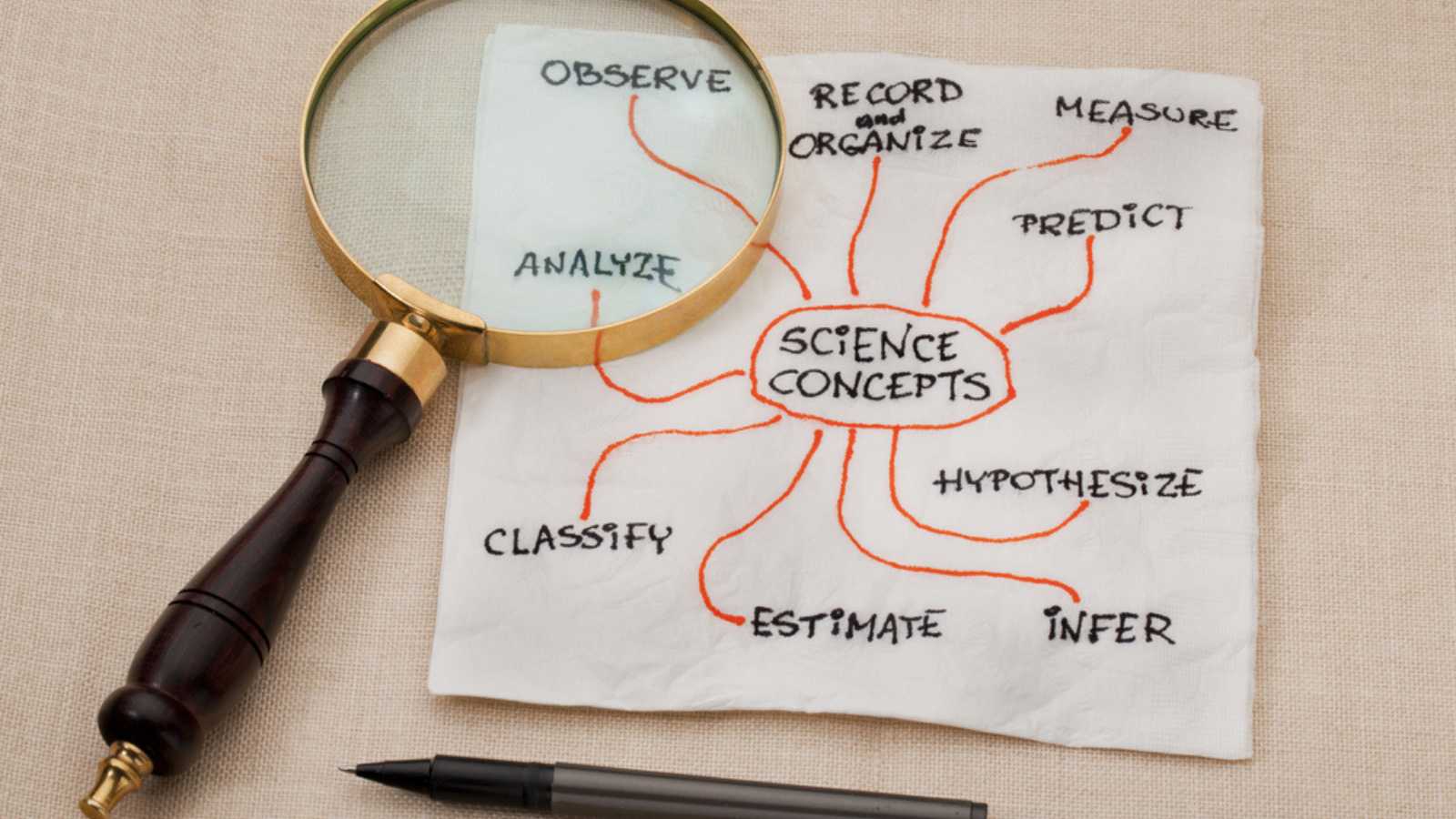
Once a candidate explanation exists, the mind begins organizing incoming information around it: supporting evidence gets cataloged, contradicting evidence gets rationalized.
Cell biologist John R. Platt analyzed why some scientific fields advanced quickly while others produced cycles of conflicting evidence that never resolved. Fast-moving fields designed experiments to eliminate multiple competing hypotheses simultaneously. Slow fields tested one favored hypothesis at a time. The experimental structure, not just the researcher’s intelligence, drove the pace of knowledge.
The diagnostic medicine literature makes the cost concrete. Cognitive biases, particularly premature diagnostic closure and anchoring, are the leading causes of medical misdiagnosis. Physicians who generate a differential diagnosis first have measurably lower error rates. One hypothesis, confirmation bias, and time pressure add up to a reliable recipe for catastrophic error, whether the stakes are a patient’s life or a business decision that can’t be undone.
They understand that fast thinking and slow thinking serve different jobs

Daniel Kahneman didn’t invent the dual-process model of cognition, but his 2011 book Thinking, Fast and Slow made it unavoidable in every serious conversation about intelligence and bias. System 1 is the recognition that the face in front of you is angry. System 2 is calculating whether a business acquisition is worth the liability exposure. The error most people make isn’t failing to use one system; it’s applying the wrong one to a given problem.
What distinguishes high-intelligence thinkers isn’t categorical distrust of fast intuition; they’ve typically developed fast intuition in specific domains that deserve trust. Gary Klein spent years studying firefighters, military commanders, and ICU nurses who make high-stakes decisions under pressure for his book, Sources of Power. Almost none of them deliberated as formal decision theory prescribes. They matched patterns and acted, but those patterns were built from years of structured feedback that most people’s intuitions never receive.
Expertise is domain-specific. A brilliant cardiovascular surgeon who trusts their gut on market predictions is not deploying the same capacity that earned their reputation. Moving fast-thinking to a domain where it has no accumulated calibration is where very smart people make some of their most spectacular errors.
They ask better questions than they give answers

Every breakthrough in science, every meaningful strategic pivot, all trace back to a question that reframed what was being looked at, not an answer that settled what was already known. Stuart Firestein, a Columbia neuroscientist, believed science education had inverted the sequence by presenting answers before questions. He argues that science is fundamentally a system for generating better questions, with answers serving as temporary scaffolding.
The quality of the question correlates with the specificity of constraint. What’s wrong here generates a different cognitive search than what assumption would need to be false for this approach to work. Barbara Minto observed that professional presentations often fail because communicators build up to their conclusion rather than starting with the audience’s core question.
To solve this, her Pyramid Principle dictates that you lead with your answer, group your arguments, and structure them logically to ensure your message is immediately understandable and actionable. Question-first thinking is, in that sense, also a communication technology.
They’re comfortable being wrong in public

Intellectual courage doesn’t appear on CVs, but it determines more about a thinker’s long-term output than most skills that do. Being wrong in public, proposing something incorrect, changing your view in front of people who watched you hold the other one, requires a separation between the self and the idea that most people never quite achieve. For most, public failure of an idea triggers the same psychological stress response as a physical threat.
David Eagleman describes the brain as a collection of competing systems, with the conscious self narrating a story about decisions already made. Protecting that self-narrative is automated, not voluntary. Which means being comfortable with public error requires an actively maintained override.
Bell Labs, at its peak between the 1930s and 1980s, produced more Nobel Prize-winning scientists per square foot than any other research environment in history. Jon Gertner’s The Idea Factory attributes this to one structural norm: presenting half-formed ideas was explicitly expected, failure was made cheap, and the ratio of attempted ideas to successful ones was enormous.
They manage their attention more deliberately than most

Intelligence without attention is potential without delivery. A 120-IQ person who focuses deeply for four hours will consistently outperform a 140-IQ person whose effort dissolves after forty minutes. Attention is the channel through which intellectual capacity converts into output; without it, the capacity has nowhere to go.
A study from King’s College London found that smartphone interruptions, even without the phone being picked up, reduced working memory performance by 18 to 23% during the interruption window and up to 9% for several minutes after, which researchers call attentional residue, first documented by Sophie Leroy at the University of Minnesota in 2009.
An eight-hour workday with fifteen interruptions is not the same as one without them. Structurally, it’s shorter. What distinguishes high-intelligence thinkers isn’t lower distractibility; it’s designing their environment before the session begins rather than relying on willpower mid-session. Willpower depletes. Architecture doesn’t.
They know the difference between intelligence and wisdom

High raw intelligence without wisdom produces a specific failure mode: brilliant arguments in service of poor ends. Long-Term Capital Management, the hedge fund that collapsed in 1998, was staffed by two Nobel laureates and a team of PhDs whose analytical firepower was probably unmatched in any investment firm at the time.
Their models were correct with respect to the assumptions they encoded. The assumptions about the world weren’t correct, specifically regarding rare correlated events. The fund lost $4.6 billion in four months and required a $3.6 billion bailout coordinated by the Federal Reserve. The failure wasn’t a failure of intelligence. It was a failure of judgment about the model’s own limits.
Aristotle distinguished between episteme (scientific knowledge), techne (practical skill), and phronesis (practical wisdom), arguing that phronesis was highest because it governed the application of the other two. Raw intelligence governs knowing. Wisdom governs when, whether, and how to use it.
What high-intelligence thinkers learn, often through failure, is that the smarter the argument, the more carefully it needs to be examined for motivated reasoning. Sophisticated intelligence produces the best rationalizations, not just the best analyses. The question of whether I am being smart or cleverly wrong doesn’t come up automatically. It has to be installed.
Key Takeaways:

- Intelligent thinking is less about raw ability and more about habits: how uncertainty is handled, how beliefs are revised, and how assumptions are surfaced before they cause damage.
- Sitting with discomfort, whether ambiguity, public failure, or contradicting evidence, is a practiced skill, not a fixed personality trait, meaning it can be built deliberately.
- The most costly thinking errors rarely happen at the conclusion; they happen silently at the premise, the hypothesis, or the moment fast intuition is applied outside the domain where it was earned.
- Breadth without transferable models is dilettantism; attention without architecture is wasted capacity. Both require intentional structure, not just exposure or effort.
- The gap between intelligence and wisdom is where the most spectacular failures live: sophisticated reasoning applied without judgment about the limits of the model doing the reasoning.
Disclaimer – This list is solely the author’s opinion based on research and publicly available information. It is not intended to be professional advice.
Like our content? Be sure to follow us