12 experiences people associate with being “cultured” today
The idea of being “cultured” has changed dramatically over the years. It is no longer defined only by formal education, expensive art collections, or knowing which fork to use at dinner. Today, cultural awareness is often tied to experiences, global exposure, curiosity, and adaptability.
According to a 2023 YouGov survey, younger generations increasingly associate being cultured with travel, trying diverse cuisines, understanding different perspectives, and staying informed about global issues, rather than with traditional status symbols alone. At the same time, data from the U.S. Bureau of Labor Statistics shows that spending on experiences, including travel, dining, and entertainment, continues to rise, particularly among Millennials and Gen Z.
Social media has also reshaped how people display cultural experiences. From food trends to international travel and language learning, modern culture is now closely tied to exposure, openness, and personal experiences rather than to social class alone.
Here are 12 experiences many people now associate with being “cultured” today.
Traveling solo to a country where you do not speak the language

There is a particular kind of disorientation that happens on the third day of a solo trip abroad, after the novelty fades and you have to genuinely negotiate reality with no buffer. You cannot charm your way through a menu in Kyoto or a bus schedule in Marrakech on English alone, and that friction is, arguably, the whole point.
Independent travel has become one of the most loaded proxies for cultural sophistication, largely because it resists being faked from a distance. Solo travel bookings have grown to nearly a quarter of international trips, a significant jump from just a decade ago, with adults aged 25 to 45 driving that growth.
What people tend to describe when they say someone is worldly is not the stamp count in a passport but the specific behavioral changes produced by genuine disorientation: a higher tolerance for ambiguity, a habit of observing before reacting, a reduced need to have the room organized around their comfort.
Maintaining a genuine relationship with classical music

Not attending a gala once or streaming a playlist called peaceful piano while you work, but knowing the difference between a Brahms intermezzo and a Schubert impromptu by ear, and caring about that difference.
Classical music occupies a strange position in contemporary culture: simultaneously coded as elite and, among people who grew up with it, treated with the same casual intimacy as any other genre. Research by the Royal Philharmonic Orchestra shows that 65% of people under 35 now listen to orchestral music regularly.
Nearly a third of current classical music listeners are under 35, and streaming platforms have been credited with bringing younger listeners to the genre. Composers like Max Richter and Johann Johannsson became bridging figures, pulling audiences toward Arvo Pärt and eventually toward Shostakovich.
What marks genuine engagement is not the ability to recite biographies but the kind of attention the music demands. A Mahler symphony asks for over an hour of uninterrupted listening, something increasingly rare in the age of two-minute content cycles, and that demand is not incidental to the experience but structurally constitutive of it.
Reading literary fiction, and reading it slowly

Speed-reading summaries of canonical novels for social capital is a different activity from reading literature, and most people who do both know the difference, even if they do not say it out loud.
Literary fiction as a marker of cultivation has deep roots. The habit of reading for its own sake, not for instruction or status, is one of the few genuinely equalizing pleasures available across economic lines. Reading literary fiction significantly improves scores on validated measures of empathy and social cognition, with the effect tied specifically to how literary fiction leaves characters’ inner lives unresolved, requiring readers to infer what is felt rather than simply absorbing what is narrated.
What people recognize as cultured reading is partly the book choices, but more specifically, the pace: someone who has genuinely sat with Pedro Páramo or The Master and Margarita and emerged changed brings a different quality of attention to every subsequent conversation.
Critics of this association, including scholar John Guillory, have pointed out that the literary canon has historically served as a gatekeeping mechanism. With which books does serious literature count, shifting according to who controls the curriculum and whose cultural inheritance gets institutionalized? The aesthetic value and the political function have always coexisted, and neither cancels the other.
Cooking with intention, not just competence

There is a meaningful line between someone who can feed themselves reliably and someone who has developed a relationship with ingredients, technique, and culinary history.
The cultured cook is identified less by their equipment and more by their curiosity: they know why a mirepoix works, what umami actually means chemically, and why bread from a high-hydration dough behaves differently than a sandwich loaf.
Home cooking has seen a significant revival since 2020, but the growth split sharply between convenience-driven meal prep and genuinely exploratory cooking, producing very different kinds of cooks.
Julia Child repeatedly argued that the willingness to produce something genuinely bad and to understand why was the essential ingredient in becoming a real cook, not technique manuals or professional equipment. The person who has made a consommé that clarified perfectly and one that did not, and who understands the protein chemistry behind the difference, holds a kind of knowledge that no restaurant meal transfers.
Engaging seriously with visual art beyond museums
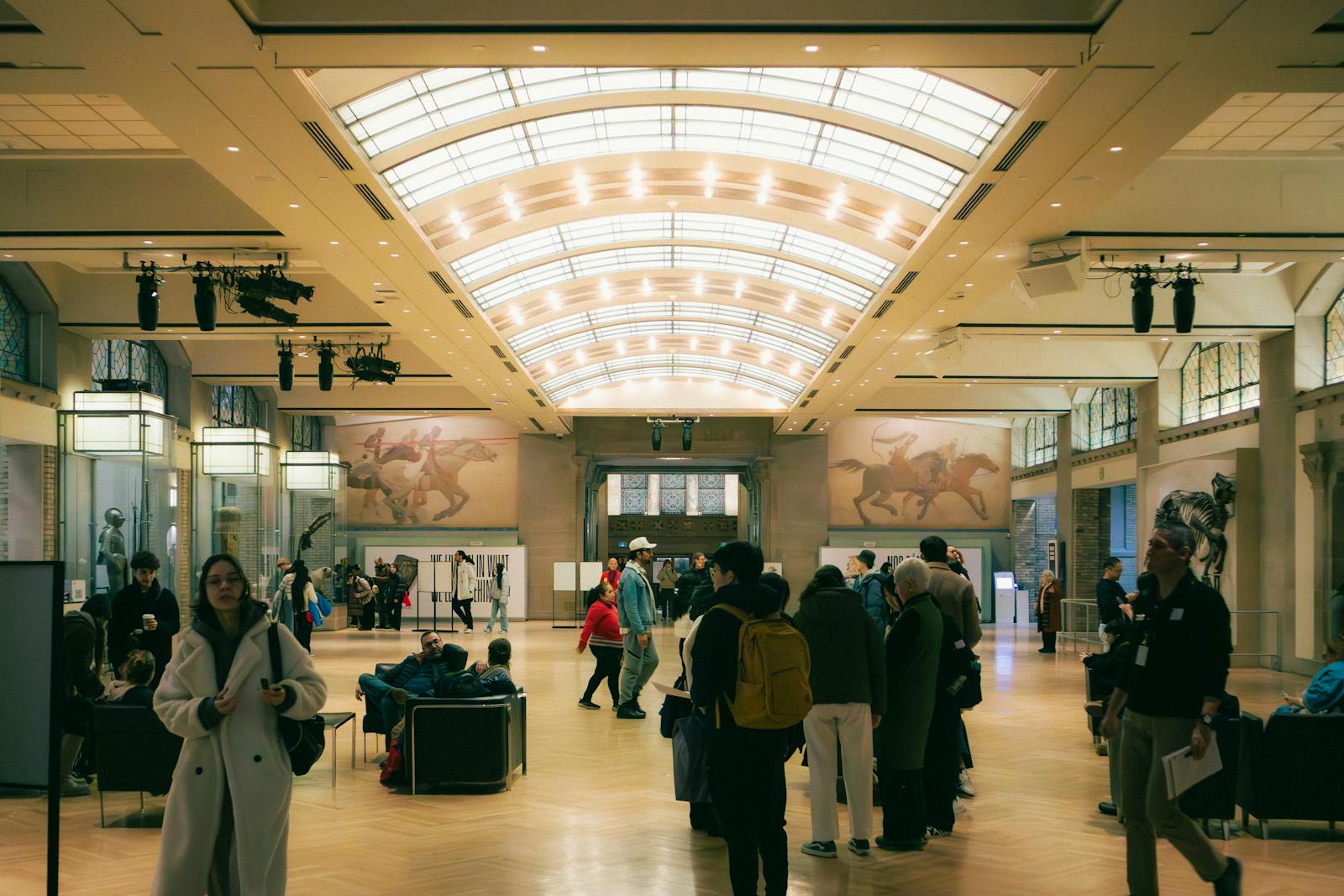
Museum visits count as cultural currency, but genuine visual literacy runs deeper than mere presence.
The person who has developed a real relationship with visual art tends to notice the composition of a street photograph, the deliberate ugliness in a Basquiat, the way light moves in a Hopper.
The Art Basel 2023 found that Millennial and Gen X collectors were the most active buyers, with 58% and 59% respectively planning to purchase art in the coming year, compared to 45% of Boomers, with younger collectors concentrating their spending on digital art, photography, and emerging artists rather than the canonical Western painting that dominated older collections.
Visual art engagement, however, remains one of the fields most vulnerable to performance. Attendance, vocabulary, and association can convincingly replicate serious engagement without producing it. Art historian T.J. Clark, writing on Impressionism, argued that the most important thing a painting can teach is how to be genuinely uncomfortable in front of something you do not understand, a state that is, by definition, invisible from the outside.
Learning a second language to achieve actual conversational fluency

Conversational fluency reshapes cognition in ways that decades of research have consistently confirmed. The bilingual or multilingual person has not just acquired a communication tool; they have internalized a second architecture for organizing experience, one that makes certain ideas available that their native tongue structurally forecloses.
Novelist and essayist Jhumpa Lahiri wrote in In Other Words, her memoir of learning Italian as an adult, that the new language gave her access to a version of herself her mother tongue could not produce, a self less defended and more capable of genuine observation.
Beyond cognition, fluency grants access to cultural material that does not survive translation: the specific humor of a Polish idiom, the social information encoded in the formal and informal second person in French and German, the way Korean grammatical structure encodes relational hierarchy.
None of that is available to the tourist with a phrase book. Reaching C1 proficiency in a language from a different family than one’s native tongue takes most adults three to ten years of sustained effort, and that timeline is part of what makes it culturally meaningful.
Developing a sophisticated relationship with cinema
The version of this that counts as cultured is not having seen the most films or being conversant in the right directors, but having developed a genuinely personal relationship with cinema as a medium that operates by different rules than any other narrative form.
Film theorist André Bazin argued that cinema’s fundamental promise is the preservation of duration, of time itself, which makes it philosophically unlike painting, literature, or theater. Someone who has spent time with the slow cinema of Andrei Tarkovsky or Chantal Akerman, and has developed the patience those films require, has not merely expanded their taste.
American cinema exports a storytelling grammar so dominant that it has become the unconscious default for most global audiences. Deliberately engaging with films structured differently is an active cognitive departure, a choice to resist the comfort of familiar resolution mechanics. The person who has genuinely grappled with Jeanne Dielman, Mirror, or Yi Yi has, in a real sense, expanded the range of what they can perceive, not just cinematically but in any experience that demands sustained, unresolved attention.
Practicing or deeply appreciating a performing art
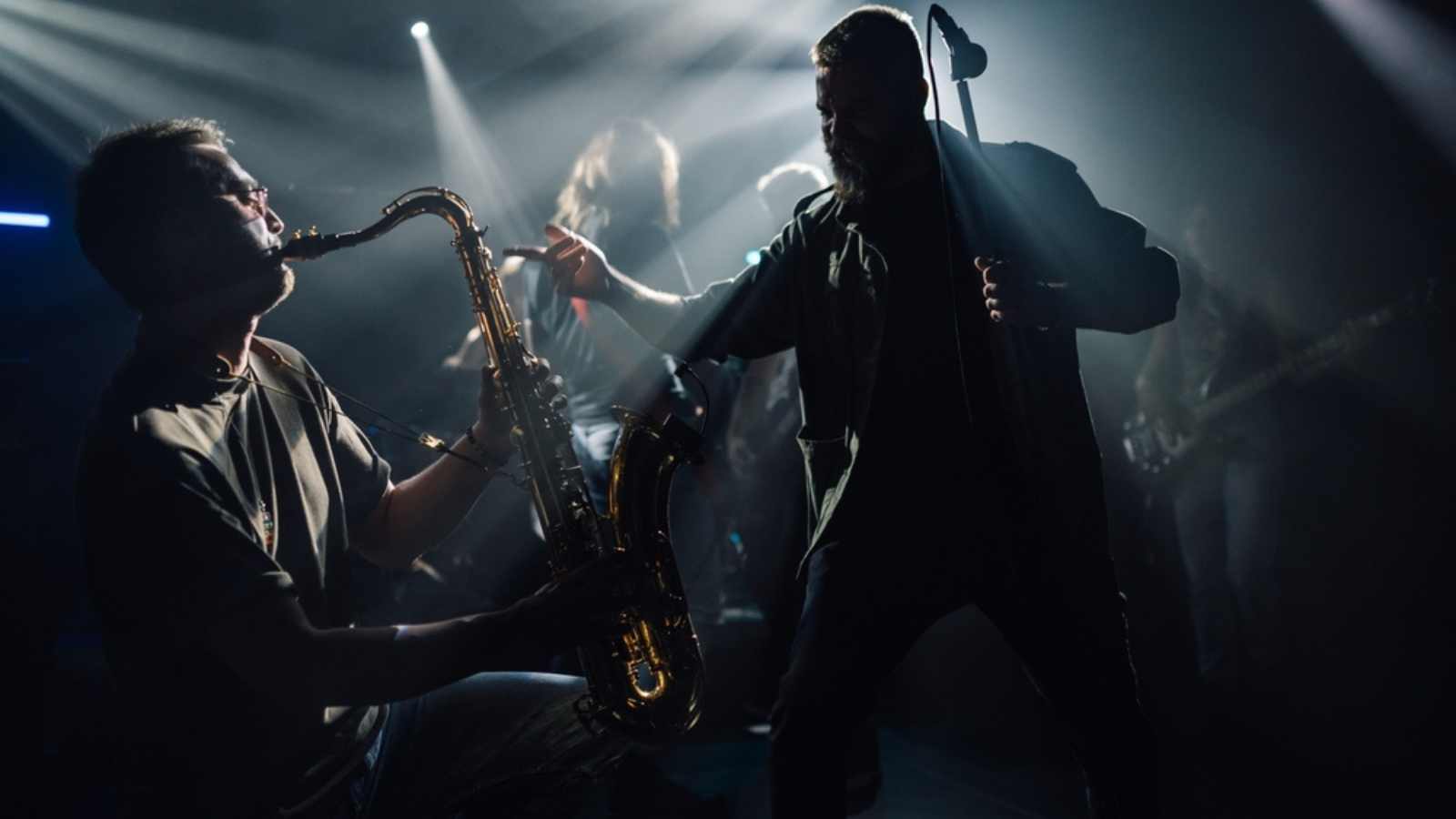
Ballet, opera, theater, jazz, traditional dance forms: these are the domains where cultivation has been most fiercely contested, and for good reason, because they require the longest commitment and offer the least immediately convertible social reward.
Playing jazz piano at a conversational level takes, by most expert estimates, a minimum of 8 to 10 years of focused practice. What serious practice in any performing art produces is not primarily performance skill but a reorganized relationship with the body, with time, and with precision, three things that cannot be learned from watching.
Deep appreciation without practice is also legitimate and distinct from familiarity. Someone who has attended enough opera to follow the dramatic structure of a three-hour work in a language they do not speak, to understand why a particular tenor’s phrasing matters in a specific phrase, has developed a form of aesthetic intelligence that took years of directed attention to build.
Engaging with philosophy outside of academic obligation

Reading Seneca on a Tuesday evening because you find it useful is a different activity from reading him to complete a course requirement, and the cultured relationship with philosophy is firmly in the first category.
Philosophy’s place in the markers of cultivation goes back further than most other items on this list. Contemporary philosophy has expanded well beyond its canonical Western lineage, and genuine engagement today increasingly requires awareness of that breadth: Ubuntu philosophy from sub-Saharan African thought, Daoist and Confucian traditions, and Buddhist epistemology, each offering frameworks that the Western analytical tradition lacks structurally.
Alain de Botton’s The Consolations of Philosophy was criticized by academic philosophers for its accessibility, but it reached an audience that Kant had never reached, and the question of whether popular philosophy is philosophy is itself a philosophical question worth sitting with.
What marks the genuinely philosophically oriented person is less the texts they have read and more the habits of mind those texts produced: the refusal to accept the first available explanation, the comfort with not knowing, the ability to reconstruct an argument from its premises rather than simply recognizing its conclusion. These are cognitive postures, and they are visible in conversation in ways that are difficult to fake.
Understanding fashion as a historical and cultural language
Dress has always been one of the most immediately readable cultural texts. The person who understands that a YSL tuxedo for women in 1966 was a political statement, that Dior’s New Look in 1947 was a deliberate argument about femininity and postwar social order, and that streetwear’s absorption into high fashion in the 2010s represented a renegotiation of whose aesthetics get legitimized, is reading costume as compressed cultural history.
Understanding the construction of a garment, the origin of a textile, and how Issey Miyake’s pleating technique emerged from his simultaneous interest in origami and industrial mass production is a form of design literacy that spans manufacturing, mathematics, and materials science.
Interdisciplinary fashion history curricula encourage students to analyze clothing through socio-economic, anthropological, and artistic lenses. This multidimensional approach strengthens cognitive abilities, such as visual pattern recognition and cross-cultural contextual reasoning, by teaching students to identify intricate historical and cultural codes embedded in design.
Building a personal relationship with a non-Western philosophical or spiritual tradition

The cultured engagement here is not appropriation or tourism, which are well-documented failure modes, but genuine, sustained study that produces a shift in how one thinks rather than a repertoire of vocabulary or aesthetic preferences.
Karen Armstrong traced the parallel development of mystical traditions across Islam, Judaism, and Christianity, revealing structural similarities that centuries of doctrinal conflict had obscured. Her underlying argument was that serious engagement with any tradition’s inner life tends to generate more questions than it resolves, and that this generative uncertainty is the point rather than a problem.
The academic study of comparative religion, which typically touches many traditions briefly, produces a different result from sustained, often embodied engagement with a single tradition’s practices and texts. A 2017 survey found that approximately 14% of American adults had tried some form of meditation, but practitioners with genuine depth across multiple years represent a far smaller and more distinctive group. The cultivation is in a long relationship, not an introduction.
Knowing how to be silent and present in conversation

This one gets overlooked in lists of cultural markers because it cannot be displayed, photographed, or quantified, and contemporary culture has an intense bias toward the visible.
Across nearly every tradition of cultivation, from Confucian rites of discourse to Quaker meeting practices to the conversational ideals of 18th-century Parisian salons, the ability to be genuinely present and quiet, without filling silence with performance, has been treated as a sign of serious interior development.
Journalist and author Celeste Headlee has pointed out that the average person listens for about 17 seconds before interrupting or redirecting. The cultured conversationalist, in virtually every historical account, is distinguished not by what they say but by what they make room for. It is also, in an irony that is difficult to miss, the marker that costs nothing and requires no travel or library, which may be precisely why it remains the rarest one.
Key Takeaways

- Being cultured is less about what you have consumed and more about how consumption has changed you, the residue it leaves in how you think, listen, and pay attention.
- Access is not the barrier. Sustained engagement is. The things that produce genuine cultivation have never required money as much as they require the willingness to be uncomfortable and altered by something.
- Performance and the real thing are easy to confuse from the outside, and most cultural markers, the passport, the bookshelf, the gallery visit, are more legible as signals than as evidence of actual depth.
- The experiences most consistently associated with cultivation share one structural feature: they all demand a quality of attention that contemporary life is systematically designed to erode.
- The rarest marker on this list costs nothing and requires no credentials, the capacity to be fully present in a conversation without filling every silence with proof of yourself.
Disclaimer – This list is solely the author’s opinion based on research and publicly available information. It is not intended to be professional advice.
Like our content? Be sure to follow us