12 ways wealth gives the rich more influence over the system
Wealth does not stop at the penthouse door. It walks straight into the rooms where power is arranged. It buys the dinner where a hard policy becomes softer, the donor call that gets answered, the lobbyist who studies the fine print before voters even know a bill exists, and the media megaphone that can make one idea sound responsible while another gets brushed off as fantasy.
Oxfam reported in January 2026 that billionaire wealth jumped by more than 16% in 2025 to $18.3 trillion, its highest level ever, and that billionaires are 4,000 times more likely to hold political office than ordinary people.
The St. Louis Fed’s wealth data shows the top 1% held 31.7% of U.S. household net worth in the third quarter of 2025, while the bottom 50% held about 2.4%. That is not comfort. That is a power grid with velvet ropes around the controls.
The unsettling part is that influence rarely looks like a movie villain sliding cash across a smoky table. It looks polished. It moves through campaign checks, super PACs, lobbying meetings, tax rules, private foundations, media ownership, investment access, and elite networks that keep the same doors open for the same kinds of people.
The World Inequality Report 2026 says the top 10% owns three-quarters of global wealth, while the bottom half holds only 2%. Concentrated money does not sit quietly in bank accounts.
It starts by deciding which problems get urgency, which voices get airtime, which policies get buried, and who gets invited into the room before everyone else is told there was a room at all.
Campaign Cash Buys the Loudest Microphone
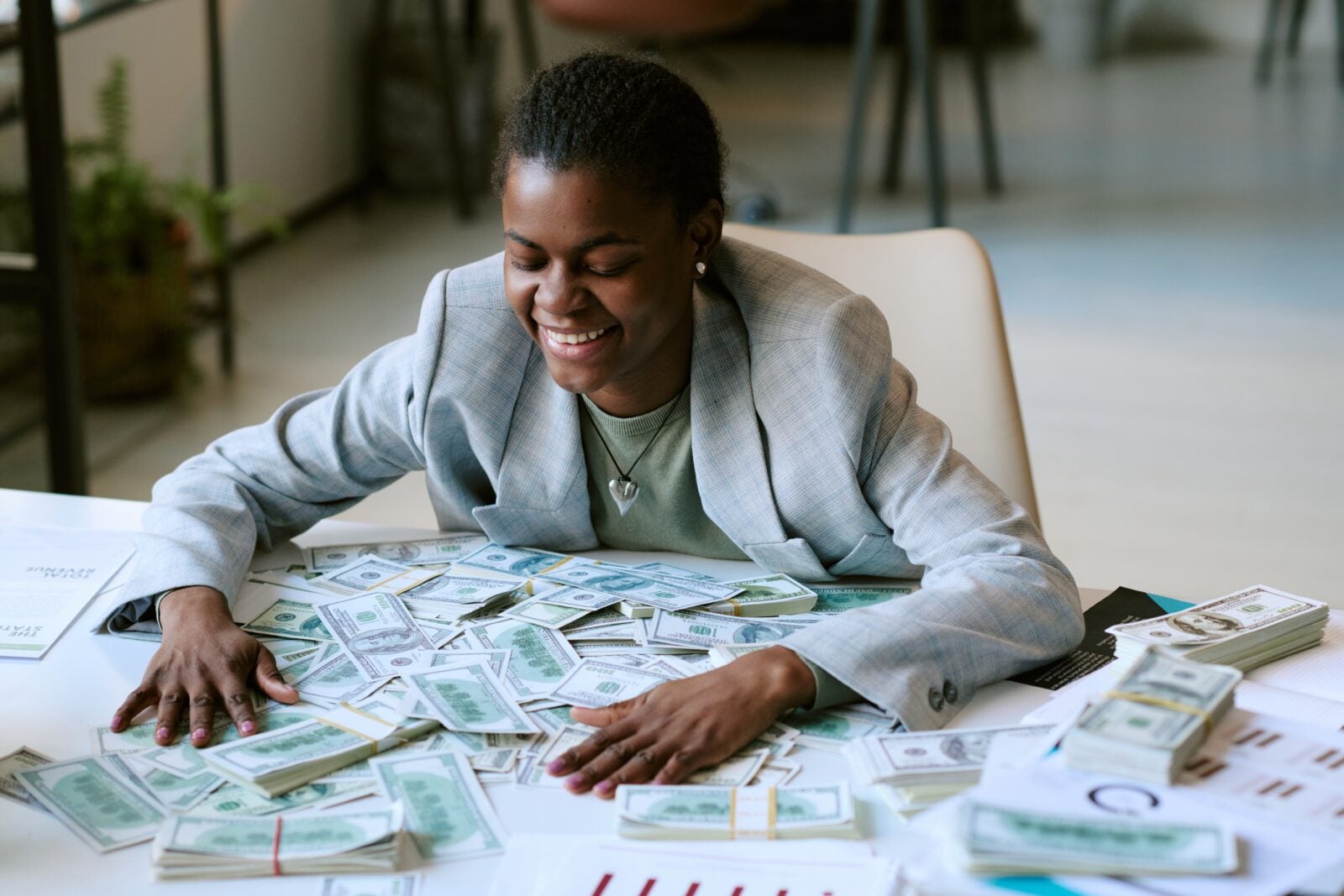
Campaign cash does not give a rich donor more votes on paper, but it can give them more chances to shape the menu before voters ever order.
Time reported on a New York Times analysis showing that fewer than 400 wealthy families accounted for almost half of the early money raised in the 2016 presidential campaign, a figure that still captures why campaign finance feels so lopsided to ordinary people.
Paul Krugman put the mechanism plainly in a New York Times excerpt republished by the Stone Center: “Wealthy donors have access to politicians in a way ordinary Americans don’t and play a disproportionate role in shaping policymakers’ worldview.” That access matters.
A voter may send an email and hope. A donor may get a meeting, a call, a private event, or a candidate who learns very early which tax ideas will make the money dry up. The ballot is equal. The microphone is not.
Super PACs and Court Rulings Supercharge Big Money

The rules around political spending gave wealthy influence a bigger engine. The Brennan Center explains that the Supreme Court’s 2010 Citizens United decision reversed long-standing limits and enabled corporations and outside groups to spend unlimited money on elections, as long as the spending did not go directly to candidates or parties.
The same explainer says the ruling helped fuel super PACs and dark-money groups, which can flood races with ads, define opponents before voters know them, and keep some donors hidden from public view.
This matters because influence does not need to “buy” a politician in the cartoon sense. It can drown the room in ads, scare candidates away from certain positions, and make donor-friendly ideas sound inevitable. Ordinary people can knock on doors, post online, and vote. Big money can buy the weather around the whole race.
Lobbying Lets the Rich Rewrite the Fine Print

Campaigns get attention, but lobbying is where the quiet work happens after the confetti is gone. An OpenSecrets analysis reported by the Tucson Sentinel found that federal lobbying spending hit a record $5.08 billion in 2025, up 11% from 2024 after inflation adjustment. That money does not usually chase glamorous slogans.
It chases details: tax exemptions, safety rules, enforcement budgets, industry definitions, merger reviews, benefit formulas, and language buried deep in bills most voters will never read. This is how influence turns from noise into architecture.
A lobbyist can shape the fine print that decides who pays, who gets a break, who faces oversight, and who escapes it. For ordinary citizens, policy often appears as a finished product. For wealthy interests, it can look more like a draft document with track changes still open.
Revolving Doors and Lucrative “Thank-You” Jobs

Influence does not end when someone leaves office. It can follow them into consulting firms, corporate boards, think tanks, media posts, law firms, lobbying shops, and speaking circuits.
Krugman’s Stone Center excerpt makes this point bluntly, noting that pro-plutocrat politicians who stumble can still quickly find lucrative roles in the private sector, right-wing media, or conservative think tanks. That does not prove bribery in every case, and it should not be treated that way. The danger lies in the incentive.
If public officials know that friendly treatment of powerful industries may lead to soft landings later, the public interest has to compete with future personal reward. The revolving door does not always slam. Sometimes it turns so smoothly that the public barely hears it. But the message travels: protect capital now, and capital may remember you later.
Wealth Buys Better “Rules of the Game” in the Economy

Money also gives the rich better ways to make more money, which then gives them more influence. IMF researchers found that wealthy people often earn higher returns even on more conservative investments, partly because they enjoy “returns to scale” from access to exclusive opportunities, better wealth managers, stronger information, and financial sophistication.
The IMF article notes: “Wealth begets wealth.” That matters because the rich can compound faster, survive downturns better, and hire experts to protect every corner of their portfolios. A middle-class saver may hope a retirement account grows.
A wealthy household can get private-market deals, tax-aware planning, estate strategies, and professional risk management. Over time, that investment edge turns into a political edge, because the people with the most assets have the strongest reason to shape laws around capital gains, inheritance, regulation, and financial markets.
Tax Codes Tilt Toward Capital, Not Paychecks

The tax code often treats capital income more favorably than labor income. The OECD’s work on labor versus capital income found that dividends and capital gains are generally subject to lower effective tax rates than wage income at the personal level.
That means a nurse, teacher, warehouse supervisor, or office worker may see taxes withheld from every paycheck, while an investor may benefit from lower rates, timing flexibility, deductions, exemptions, and advisers who know how to structure income.
This is not some minor paperwork issue. It shapes who builds wealth faster and who funds more of the public system through steady wage taxation. When capital gets special treatment, the people who live off assets gain another layer of advantage.
The person earning by the hour pays as they go. The person earning through assets often gets options. Options are power.
Ownership of Media Shapes What We Talk About

Wealth can also shape the national conversation by shaping who owns the platforms where that conversation happens. A 2024 paper on billionaire newspaper owners notes that media ownership affects what becomes news, how information gets transformed into news, and even ideological slant.
That does not mean every wealthy owner is secretly dictating every headline. The influence can be softer and still matter. Owners choose executives. Executives shape priorities. Advertising pressure can make some topics feel risky. Editorial habits can make deficit cuts sound sober, wealth taxes sound extreme, labor demands sound disruptive, and corporate concerns sound practical.
Media power works because it sets the frame before the argument begins. If people hear the same frame every day, it starts to feel like common sense. Wealth does not need to censor every idea. It can simply make some ideas easier to hear than others.
Social Media, Influencers, and Algorithmic Reach

The rich no longer need to own a newspaper to shape attention. They can buy digital strategy, fund influencer campaigns, hire data teams, run targeted ads, boost preferred narratives, build media brands, and flood feeds with messages that feel organic.
Axios reported that AI companies set lobbying records in the first quarter of 2026, with Anthropic spending $1.6 million and OpenAI spending $1 million, a reminder that new industries move quickly when regulation is on the table. The same logic applies to online persuasion.
Money can test messages, target narrow audiences, and turn policy arguments into snackable clips before ordinary citizens even know a bill exists. In the old world, power bought a billboard. Now it buys a thousand little whispers across phones, podcasts, newsletters, search results, and social feeds. The public square has gone digital, and digital attention is expensive.
Philanthropy as Soft Power and Agenda-Setting

Big philanthropy can fund real good, from vaccines to scholarships to local arts. But it also gives wealthy donors a quiet way to decide which problems deserve money, which solutions sound modern, and which organizations get long-term oxygen.
A 2026 British Academy paper says that giant private charitable foundations now play influential roles in global health, food security, science, education, the arts, and social programs. Their growing influence has drawn criticism from across the political spectrum. That is the tension.
A billionaire can write a check faster than Congress can pass a bill, which can help in a crisis. But private giving can also push public priorities toward donor preferences rather than democratic debate.
If a wealthy foundation funds tech-heavy school reform while ignoring teacher pay, or funds global health while avoiding labor rights, it changes the map of what counts as “serious.” Charity can help. It can also steer.
Wealth and Inequality Push Democracies Toward Erosion

The biggest danger is not just that wealthy people get nicer access. It is that extreme inequality can weaken democracy itself. A 2025 University of Chicago summary of a PNAS study found that economic inequality is one of the strongest predictors of where and when democracy erodes, even in wealthy, long-standing democracies.
The researchers traced the link through grievance, polarization, and public willingness to tolerate leaders who attack the press, courts, and other institutions. That is how money pressure turns into political danger. When people feel the system serves only elites, they are more easily pulled toward rage, suspicion, and strongman promises.
The rich may think they can manage the chaos with private security, private schools, private jets, and private doctors. But democratic erosion does not stay outside the gates forever. A country with broken trust becomes a rougher place for everyone.
Everyday Rules, From Labor to Competition, Skew Upward

Some of the most important rules are boring on purpose. Minimum wage laws, union rules, noncompete clauses, antitrust enforcement, workplace safety, merger approvals, consumer protection, and regulatory budgets rarely trend like celebrity scandals.
Yet these rules decide how much power workers have, how much companies can charge, how easily consumers can switch, and how hard it is for new firms to challenge giants.
Brookings has described the past 50 years as a period when the U.S. saw a sharp rise in both income inequality and the political influence of the ultra-rich, with campaign finance reforms allowing billionaires to pour unlimited money into elections.
The result can become a loop: wealth shapes rules, rules protect wealth, and wealth protected by those rules funds more influence. Ordinary people feel it as stagnant wages, weaker bargaining power, fewer choices, and markets where a handful of firms seem to own the exits.
Intergenerational Wealth Locks In Influence for Decades
Wealth influence becomes even more powerful when it survives one lifetime and hardens into a family system. The World Inequality Report 2026 says the top 10% owns three-quarters of global wealth, while the bottom half holds only 2%, and the IMF notes that wealth has a high degree of intergenerational correlation.
In plain English, rich families can pass along money, schools, networks, internships, neighborhood access, seed capital, lawyers, accountants, foundation roles, and political connections. One generation buys the access. The next inherits the guest list.
That does not mean every rich child succeeds or every poor child fails, but it does mean the starting lines sit in different zip codes. Influence becomes less like a ladder and more like a private elevator with a family code. Decades later, the same circles can still shape boards, campaigns, charities, media rooms, and policy tables.
A Short Reflective Close
Wealth does not have to purchase the whole system in one dramatic scene to bend it. It can work through access, repetition, patience, and paperwork.
A donor call here. A super PAC there. A lobbying memo in the right office. A tax rule left untouched. A foundation grant that defines the solution. A media frame that narrows the debate. A child born into the network before the rest of the country even sees the door.
Ordinary people still have votes, voices, and power when they organize. But the rich often start with the meeting, the microphone, the lawyer, the lobbyist, and the margin for error. That is the imbalance at the heart of the system, and pretending it is normal only makes it stronger.
Key Takeaways

- Wealth gives the rich access, agenda-setting power, legal strategy, media reach, and political influence, not just comfort.
- Oxfam reported that billionaire wealth hit $18.3 trillion in 2025 and that billionaires are 4,000 times more likely to hold political office than ordinary people.
- The Brennan Center says Citizens United helped expand the political influence of ultra-wealthy donors, corporations, and special interests through outside spending.
- Federal lobbying spending reached a record $5.08 billion in 2025, according to an OpenSecrets analysis reported by the Tucson Sentinel.
- IMF researchers found that richer people often earn higher returns because wealth gives them access to better opportunities, managers, and information.
- A 2025 PNAS study found economic inequality is one of the strongest predictors of democratic erosion.
Disclaimer – This list is solely the author’s opinion based on research and publicly available information. It is not intended to be professional advice.
Like our content? Be sure to follow us